Your Customers Leave, and Then What? The Follow-Up Problem Auto Shops Can't Ignore
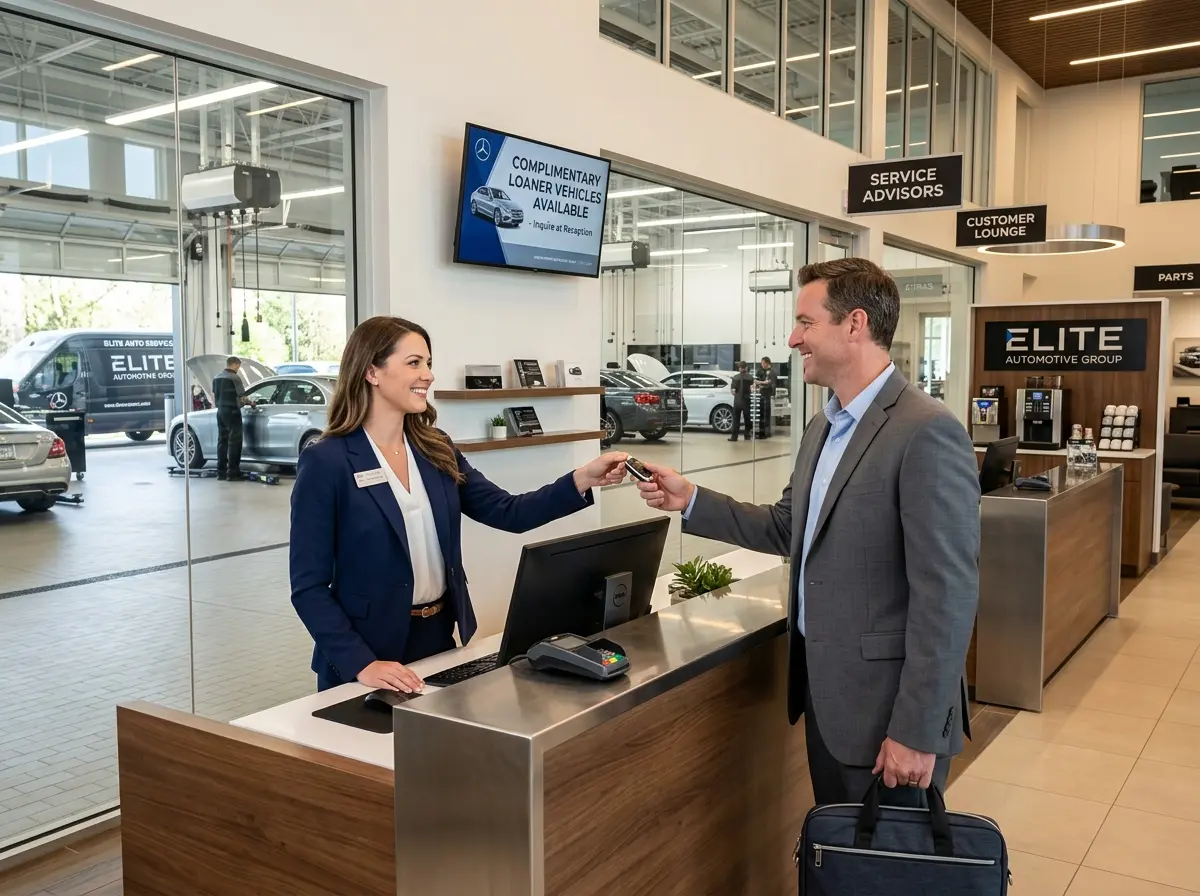
Here's a fun scenario: a customer brings their car in for an oil change, you do a great job, they leave happy, and then... silence. Months pass. Their next oil change comes and goes — possibly at the shop down the street — and you never hear from them again. Not because they were unhappy. Not because you did anything wrong. Simply because nobody followed up, and out of sight really does mean out of mind.
If that scenario sounds painfully familiar, you're not alone. Studies suggest that acquiring a new customer costs five to seven times more than retaining an existing one, yet most auto shops invest the bulk of their energy chasing new business while their existing customer base quietly drifts away. The good news? AI-powered follow-up systems are changing this equation in a serious way — and auto shops that adopt them early are seeing measurable jumps in return visit rates, customer loyalty, and revenue per vehicle.
Let's talk about how it works, why it matters, and what you can realistically do about it starting today.
The Follow-Up Gap: Why Most Auto Shops Are Leaving Money on the Table
The Forgetting Curve Is Real (and It's Not in Your Favor)
Human memory is not a reliable marketing strategy. A customer who visits your shop in March and has a genuinely positive experience will, by August, have a fuzzy recollection of your name and probably zero recollection of when their next service is due. This isn't a loyalty problem — it's just neuroscience. Without a structured follow-up system, you're essentially betting that customers will remember you, prioritize you, and take action entirely on their own initiative. Spoiler: most of them won't.
The businesses winning the retention game aren't necessarily better at fixing cars. They're better at staying in front of customers between visits. A well-timed reminder about an upcoming tire rotation or a seasonal brake inspection special can be the entire difference between a customer returning to you or defaulting to whoever pops up first on Google.
Manual Follow-Up Doesn't Scale — And Everyone Knows It
You could, theoretically, have a staff member call every customer a few weeks after their visit to check in, remind them about upcoming services, and offer a discount for their next appointment. And that would probably work beautifully — if your staff weren't already juggling phones, check-ins, invoicing, and the seven other things happening simultaneously at any given moment in an auto shop.
The reality is that manual follow-up gets deprioritized the moment things get busy. And in a well-run shop, things are almost always busy. AI follow-up systems solve this by automating the entire cadence — from post-visit thank-you messages to service reminders to seasonal promotions — without requiring a single minute of staff time after the initial setup. The system runs in the background, consistently, without forgetting, without calling in sick, and without needing a coffee break.
What "Good" Follow-Up Actually Looks Like
Effective AI follow-up in the auto industry typically includes a few core touchpoints. A post-visit message (sent within 24–48 hours) thanks the customer, summarizes the service performed, and sets expectations for their next recommended service. A service due reminder goes out 2–4 weeks before the anticipated next visit date, often personalized with the specific service type. Seasonal campaigns highlight timely offers — think winter tire packages in October or AC checks in May. And re-engagement messages target customers who haven't visited in a defined period, often with a compelling reason to come back.
When these touchpoints are automated and personalized using real customer data, the results are not subtle. Industry data indicates that shops using structured follow-up systems see return visit rates increase by 20–40% compared to shops relying on organic word-of-mouth alone.
How Stella Fits Into the Auto Shop Workflow
Capturing Customer Information Without Adding to Your Team's Workload
Every effective follow-up system starts with one thing: clean, accurate customer data. And this is often where shops struggle — not because they don't want the data, but because capturing it consistently at the front desk, while also managing a busy service queue, is genuinely difficult. This is where Stella, the AI robot employee and phone receptionist, becomes quietly indispensable for auto shops.
When customers walk in, Stella's in-store kiosk can greet them, collect their contact information through a conversational intake process, and feed that data directly into her built-in CRM — complete with custom fields, tags, and AI-generated customer profiles. On the phone side, she answers calls 24/7, handles service inquiries, and can collect intake information from callers who schedule appointments or ask about services. No data entry burden on your staff. No missed opportunities to capture a customer's details because the front desk was slammed. Every contact gets logged, organized, and ready to be used in your follow-up campaigns.
Building a Return Visit Strategy That Actually Works
Segmentation: Stop Sending the Same Message to Everyone
One of the biggest mistakes auto shops make with follow-up is treating all customers identically. The customer who just bought four new tires does not need a tire promotion next week. The customer who came in for an oil change but declined a recommended brake inspection absolutely does need a gentle follow-up about that specific service. AI systems excel at this kind of segmentation — automatically categorizing customers by service history, vehicle type, visit frequency, and behavior, then triggering the right message at the right time.
Effective segmentation turns generic marketing into something that actually feels relevant. A customer who receives a message that says "Hey, it's been about 3,000 miles since your last oil change — time to schedule?" is far more likely to respond than one who gets a mass blast about a sale that has nothing to do with their vehicle or situation. Personalization at scale is precisely what AI makes possible, and it's a significant competitive advantage for shops willing to invest in it.
Timing and Frequency: The Fine Line Between Helpful and Annoying
There is an art to follow-up frequency, and AI systems help you walk that line without guesswork. Too many messages and customers unsubscribe or tune you out. Too few and you lose the retention benefit entirely. A well-configured AI follow-up system will space messages appropriately based on service type, customer preferences, and engagement behavior — automatically suppressing messages to customers who have already booked, and increasing outreach to those who are overdue.
The key is to make every touchpoint feel useful rather than promotional. Service reminders, seasonal safety tips, and personalized recommendations all provide value to the customer beyond just "please come spend money with us." When customers feel like you're looking out for them, loyalty follows naturally.
Measuring What's Working and Iterating
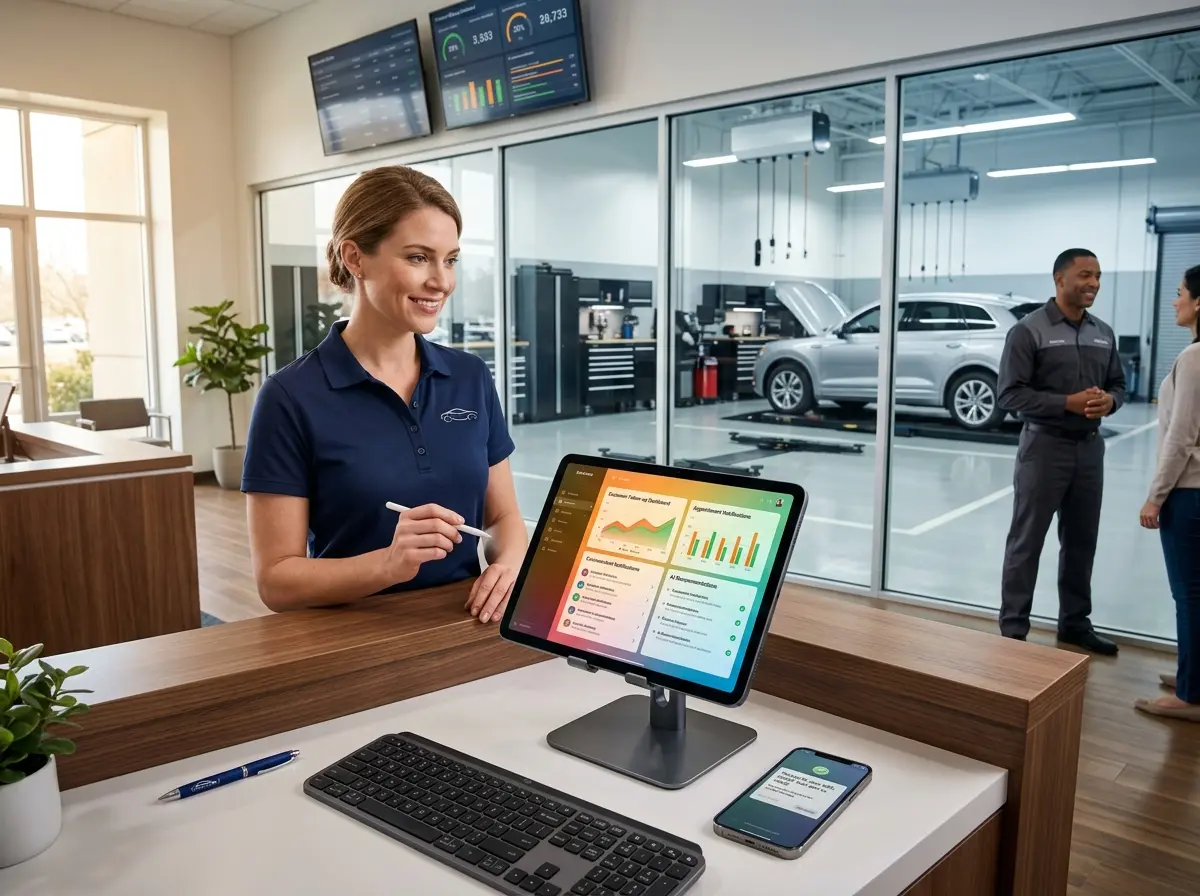
A follow-up strategy you can't measure is a follow-up strategy you can't improve. Modern AI systems provide clear visibility into open rates, click-through rates, conversion rates, and return visit attribution — giving you the data to understand which messages are driving appointments and which ones are landing in the digital void. Auto shops that review this data regularly and adjust their campaigns accordingly consistently outperform those that set up a system and walk away.
Start by establishing a baseline: what is your current return visit rate over a 90-day window? Then implement your follow-up system, run it for a quarter, and compare. Most shops see meaningful improvement within the first 60–90 days, with continued gains as the system learns and the customer data becomes richer over time.
Quick Reminder About Stella
Stella is an AI robot employee and phone receptionist built for businesses like yours. She stands in your shop as a friendly, human-sized kiosk that engages walk-in customers and collects information, while simultaneously answering your phones 24/7 with full knowledge of your services, pricing, and promotions. At just $99/month with no upfront hardware costs, she's the kind of employee who never calls in sick, never puts a customer on hold indefinitely, and never forgets to capture a lead.
Your Next Move: Turn One-Time Visitors Into Loyal Regulars
The auto shops thriving in today's competitive market have figured out something important: the work doesn't end when the customer drives off the lot. That departure is actually the beginning of a relationship — one that requires consistent, relevant, well-timed communication to maintain.
Here's what actionable progress looks like for your shop. First, audit your current follow-up process honestly. Are you sending any follow-up communications at all? If not, that's your starting point. Second, evaluate your customer data quality. A follow-up system is only as good as the information feeding it — if your CRM is incomplete or inconsistent, prioritize fixing that before launching campaigns. Third, choose an AI follow-up solution that integrates with your shop management software and supports segmentation, automation, and reporting. Fourth, set up your core follow-up sequences — post-visit, service due reminder, and re-engagement — before getting fancy with anything else. Get the fundamentals running first.
The shops that will dominate local auto service over the next five years aren't necessarily the ones with the biggest advertising budgets. They're the ones building genuine, ongoing relationships with every customer who walks through the door — and using smart technology to do it consistently, at scale, without burning out their teams. That's not a distant future. It's available right now, and the barrier to entry has never been lower.
The real question isn't whether AI follow-up systems work for auto shops. The data is pretty clear on that. The question is whether you're going to let your competitors figure that out before you do.