Pour Decisions: Why Your By-the-Glass Menu Is Leaving Money on the Table
Let's be honest — your by-the-glass menu is a beautiful thing. It's approachable, low-commitment, and lets guests explore without feeling like they've signed a mortgage. But here's the uncomfortable truth: if your staff isn't actively guiding guests from a $14 glass to a $65 bottle, you're essentially running a very elegant charity. A well-executed upsell strategy doesn't just pad your revenue — it elevates the guest experience, moves more inventory, and turns casual wine drinkers into loyal regulars who feel like they've been let in on a secret. The math is simple. Two guests ordering three glasses each at $14 a pop? That's $84. The same two guests with a bottle they're thrilled about? Possibly $55–$75, with a better experience and a higher perceived value. The upsell wins on every front — if you know how to execute it gracefully.
This guide breaks down exactly how to do that: how to train your staff, structure your menu, set the right conditions, and even leverage technology to make the whole process smoother.
Building the Foundation for Bottle Upsells
Know Your Numbers Before You Make Your Case
The most persuasive upsell is one grounded in simple math — and your guests can do it too. Train your staff to know the per-glass-to-bottle price relationship for every wine on your list. If a Chardonnay is $15 a glass and the bottle runs $48, that's a bottle at just over three glasses. For a table of two sharing wine over dinner, that's practically a steal — and the moment your server says, "The bottle actually works out to less per glass, and I'll keep it coming all night," the decision practically makes itself.
This isn't manipulation. It's information. Guests appreciate transparency, and when they realize the bottle is genuinely the better deal, they feel smart for saying yes. Make sure your staff can run this calculation quickly and casually for at least your top ten bottle sellers.
Curate a Strategic Glass-to-Bottle Pairing on Your Menu
Your by-the-glass menu should function as a sampler, not a destination. One highly effective technique is to feature bottles on your menu that are clearly adjacent to your glass pours — same region, same grape, but a step up in quality or story. When a guest orders a glass of Côtes du Rhône, your staff can say, "If you're enjoying that, we have a Châteauneuf-du-Pape bottle that's the next level up — it's actually one of my personal favorites on the list."
The key word there is story. Wine sells on narrative. Where it's from, who made it, what makes it special. Build brief talking points for your featured bottles and make them part of staff training. A server who can speak passionately and knowledgeably about a wine is worth more than any table tent or menu callout.
Timing Is Everything
The worst time to suggest a bottle upgrade is after the third glass has been poured and the guests are already halfway through their evening. The best time is early — ideally before or during the first pour. When guests are settling in, looking at the menu, and deciding what kind of night this is going to be, they're most open to a confident, friendly recommendation. Train staff to read the table: a couple celebrating an anniversary is a very different conversation than two colleagues grabbing a quick post-work glass.
How Technology Can Support Your Upsell Strategy
Let an AI Employee Handle the Groundwork So Your Staff Can Focus on the Table
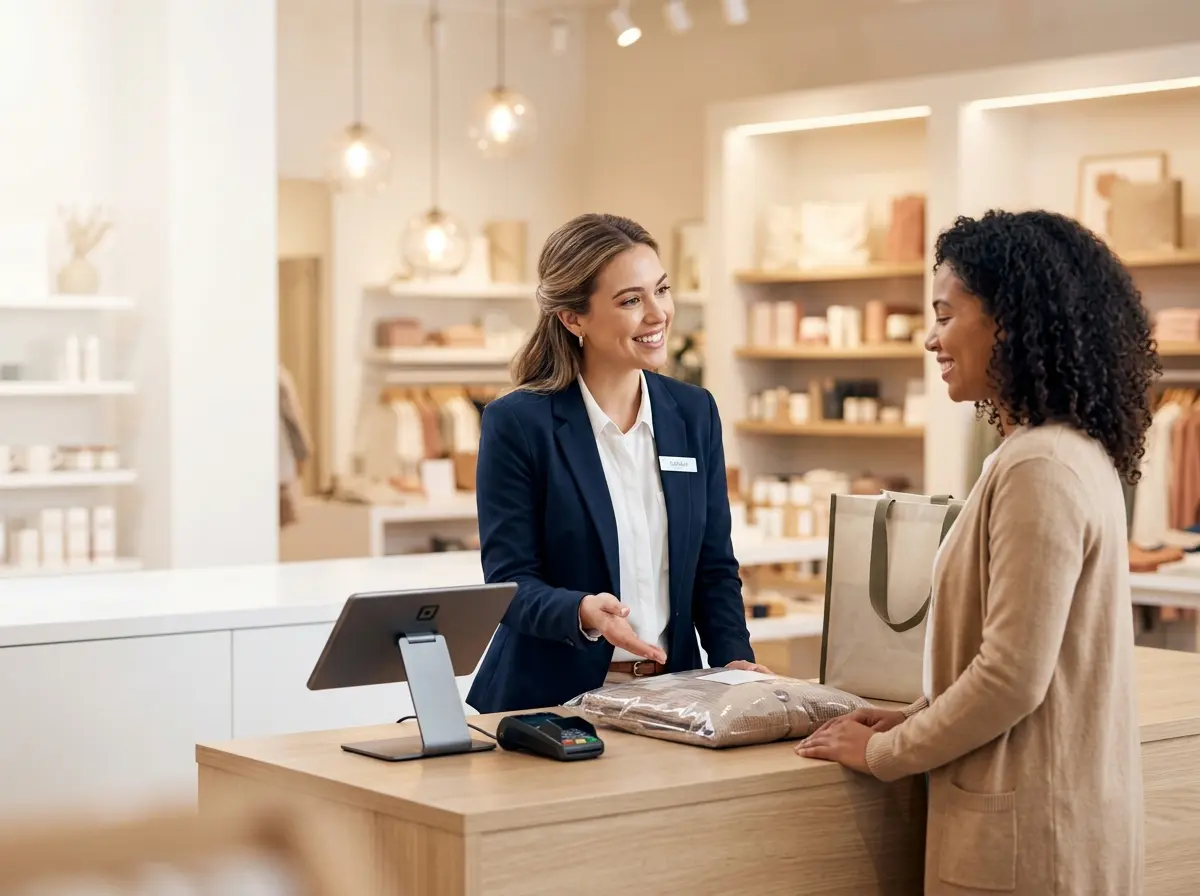
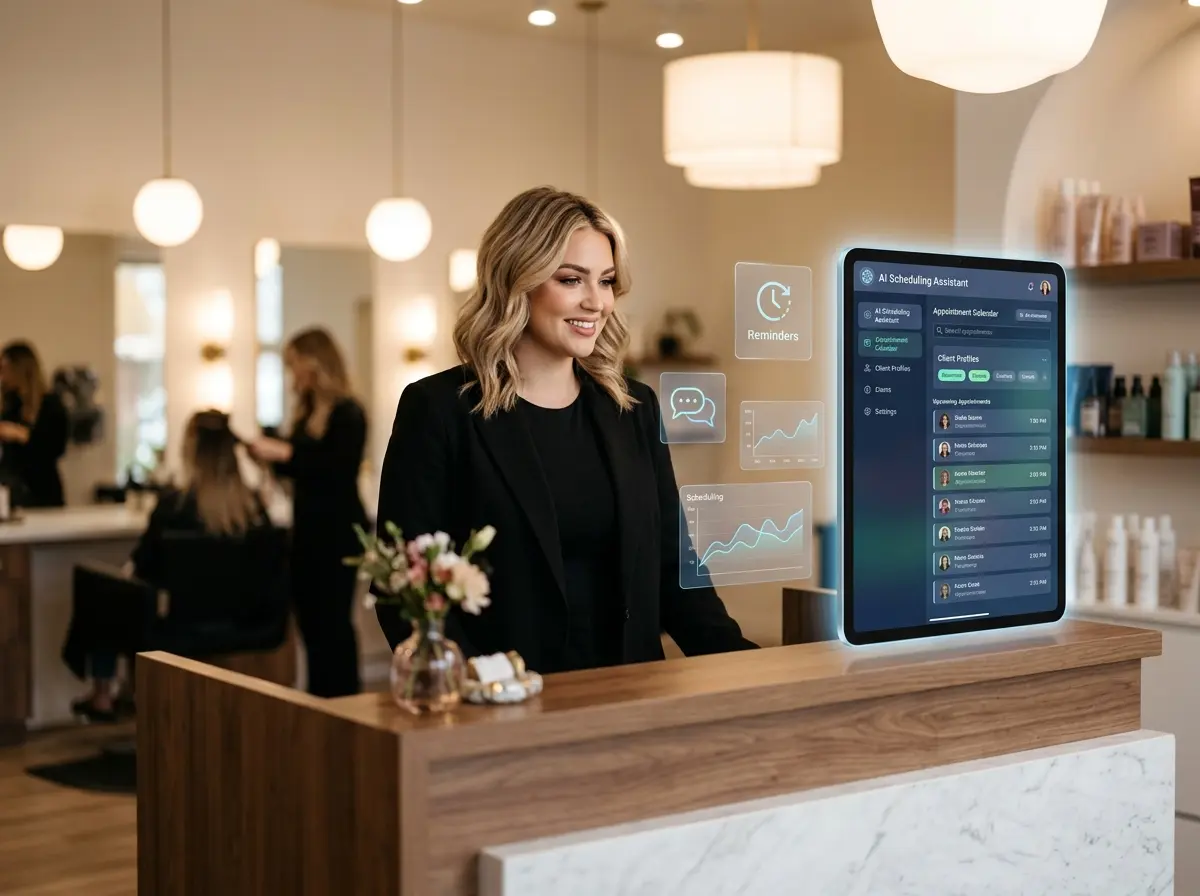
One underrated challenge in upselling is staff bandwidth. When your team is juggling tables, running food, and managing the floor, training them to have nuanced wine conversations on every interaction is a big ask. This is where Stella can quietly make a real difference. As an AI robot employee and phone receptionist, Stella can handle front-of-house tasks that typically eat into your staff's time — greeting guests who walk in, answering common questions about your menu and hours, and even highlighting current wine features or bottle specials at the kiosk before a guest ever sits down. That means your team hits the table already warmed up, not cold.
On the phone side, Stella answers calls 24/7 with the same knowledge she uses in person — so when someone calls to ask about your wine list or make a reservation, she can mention bottle specials or featured selections before they even walk in the door. It's a subtle but effective way to plant the seed early.
Training Your Staff to Upsell Without Being Pushy
Replace the Pitch with the Recommendation
Nobody likes being sold to, but everyone loves a great recommendation. The difference is framing. A pitch says, "Can I interest you in a bottle tonight?" A recommendation says, "You mentioned you like something fruit-forward — we actually have a Malbec by the bottle that I think you'd love, and honestly the bottle price is worth it for what's in the glass." One feels transactional. The other feels like the server is doing you a favor.
Train your staff to lead with curiosity. Ask guests what they're in the mood for, what they've been enjoying lately, whether they've explored a particular region. That conversation isn't just good hospitality — it's the intelligence needed to make a targeted, relevant bottle suggestion. A well-timed recommendation from someone who actually listened lands every time.
Use Social Proof and Confidence as Upsell Tools
Social proof is one of the most powerful forces in purchasing decisions, and it's underused at most wine bars. Brief, confident statements like "This has been our most popular bottle this month" or "We went through three cases of this last weekend" do more persuasive work than any written description. It signals that other people — people with good taste, presumably — have already vetted this choice. That reduces the risk in the guest's mind and makes the leap from a glass to a bottle feel much smaller.
Confidence matters just as much. Staff who hesitate, over-qualify, or seem unsure about their recommendations undermine the entire upsell before it starts. Regular staff tastings, even short ones, go a long way toward building genuine enthusiasm for the bottles you're trying to move.
Create Bottle-Friendly Table Moments
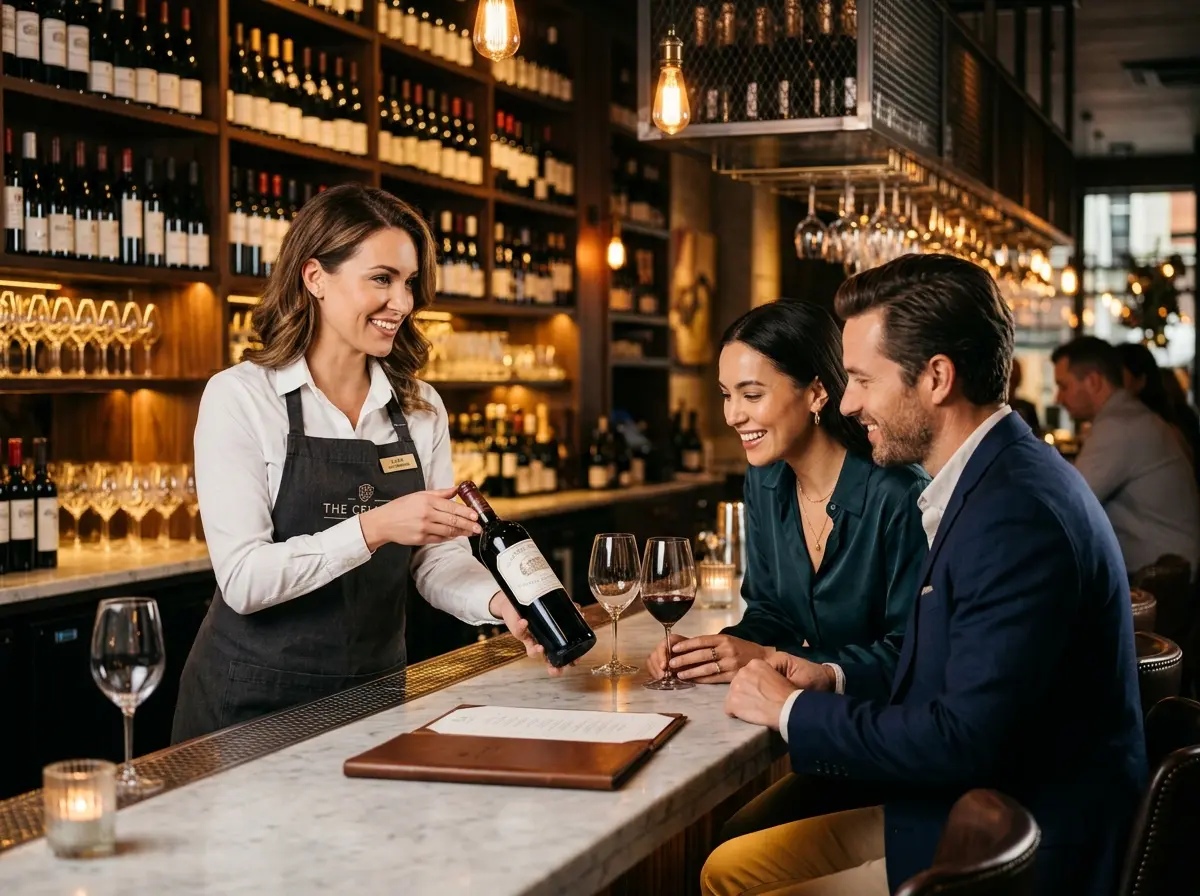
Think about the physical and experiential cues that make ordering a bottle feel natural and special. The way a bottle is presented at the table, the pouring ritual, the moment the label faces the guest — these aren't just ceremony, they're perceived value in real time. Consider small touches like a dedicated bucket stand for bottles, a brief verbal note about the wine at the pour, or even a printed card with tasting notes for featured bottles. These signals communicate that ordering a bottle is an experience, not just an expense.
You might also consider a "featured bottle of the week" that your team can rally behind with genuine enthusiasm. A shared target gives staff something specific to promote, simplifies the conversation, and lets you track what's working in terms of upsell conversion.
Quick Reminder About Stella
Stella is an AI robot employee and phone receptionist designed to help businesses like yours handle customer interactions with consistency and professionalism — whether she's greeting guests at your front door, promoting your featured bottle of the week at a kiosk, or answering calls after hours about your wine list. At $99/month with no upfront hardware costs, she's the kind of staff member who never calls in sick before a Friday night service. Worth knowing about.
Start Upselling Smarter, Not Harder
The path from a glass order to a bottle sale isn't paved with aggressive pitches or complicated tactics. It's built on staff knowledge, genuine recommendations, smart menu design, and the kind of hospitality that makes guests feel taken care of rather than targeted. When done right, a bottle upsell isn't a sales moment — it's a service moment. Your guests leave feeling like they got a better deal and a better experience. Your revenue reflects it. Everyone wins.
Here are your actionable next steps to get started:
- Audit your by-the-glass menu and identify the top five bottles that make mathematical and experiential sense as upsells from current glass pours.
- Build talking points for each of those bottles — origin, flavor profile, what makes it special, and the price-per-glass comparison.
- Run a staff tasting focused specifically on those bottles so your team develops genuine enthusiasm and vocabulary.
- Track upsell conversions by bottle for 30 days to see what's resonating and what needs a better story.
- Consider how technology — like an AI kiosk or phone receptionist — can support your team by handling routine interactions so they have more time to focus on the guest experience that drives those bottle sales.
Your glass menu brought them in. Your bottle strategy is what builds the business. Now go sell some wine — confidently, knowledgeably, and with just enough enthusiasm that your guests feel like they'd be missing out if they didn't say yes.