Still Waiting on That Confirmation Email? So Is Your Client.
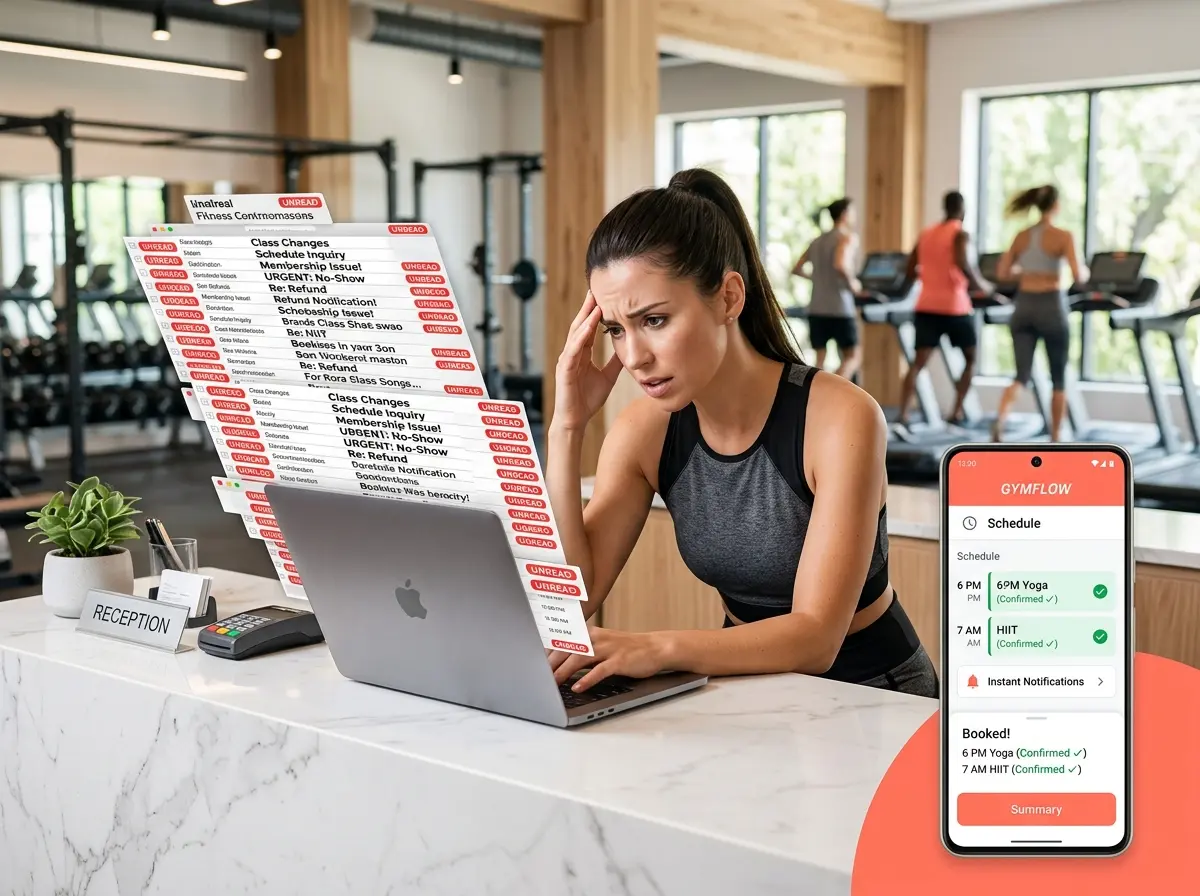
Let's set the scene: A new member signs up for your 6 AM spin class, gets an automated confirmation email, doesn't see it because it landed in their promotions folder, shows up anyway, finds the class is full, and leaves frustrated — possibly forever. Meanwhile, you're sipping your morning coffee completely unaware that your booking system just cost you a loyal customer.
Email confirmation for gym class bookings made sense in 2009. It was digital, it was "modern," and honestly, it was impressive at the time. But we're not in 2009 anymore. Your members are glued to their phones, expect instant communication, and have approximately zero patience for friction in their fitness journey. If your gym is still relying on email to confirm class bookings, it's time for a serious conversation — and this is it.
The good news? There are faster, smarter, and frankly more reliable ways to confirm bookings, reduce no-shows, and keep your members actually showing up. Let's talk about what's going wrong and how to fix it.
The Real Cost of Email Confirmation (It's More Than You Think)
Email Open Rates Are Not Your Friend
Here's a sobering statistic: the average email open rate across industries hovers around 21%. For fitness and wellness businesses specifically, it's rarely much better. That means if you send 100 booking confirmations, roughly 79 of your members might not even see them. And of the 21 who do open the email, how many actually read the details — the time, the location, the instructor change, the waitlist update?
Contrast that with SMS, which boasts open rates above 90%, with most messages read within three minutes of delivery. Your members have their phones in their hands constantly — at the grocery store, in line for coffee, probably during your classes if we're being honest. Text them, and they'll see it. Email them, and you're essentially shouting into a void and hoping for the best.
No-Shows Are Silently Killing Your Revenue
Every empty spot in a capped class is lost revenue. If your spin class holds 20 people, has a waitlist of 10, and three confirmed members don't show because they forgot or never actually saw their confirmation — that's three people on the waitlist who could have attended, three additional revenue opportunities missed, and three members who made it to class wondering why the room isn't full despite being "booked out."
No-shows also demoralize instructors, frustrate waitlisted members, and create operational headaches for your front desk staff. The fix isn't complicated — it's a communication upgrade. Timely, reliable reminders via SMS or push notification with a simple one-tap confirmation or cancellation option can reduce no-show rates dramatically. Some gyms report reductions of 30–50% after switching from email-based confirmations to SMS-based systems. That's not a small number when you run multiple classes per day.
The Waitlist Problem Nobody Talks About
Email confirmation failures don't just affect confirmed members — they devastate waitlist management. When a cancellation happens and your system sends an email to the next person on the waitlist, the clock is ticking. If that email sits unread for two hours, the spot goes unfilled. If it arrives in a spam folder, the person never knows they had a shot. By the time they check their inbox, someone else has been notified (also by email, also potentially unread), and the whole thing becomes a logistical mess that your front desk ends up manually sorting out.
A well-designed booking system with real-time SMS or push notification alerts for waitlist movement turns a frustrating process into a smooth, automatic one. Members appreciate the speed. Your staff appreciates not playing musical chairs with class rosters. Everyone wins.
Modern Tools That Actually Work — And One Robot Worth Knowing
Booking Platforms Built for Speed
There's no shortage of gym management and class booking platforms that support SMS confirmations, push notifications, and real-time waitlist management. Tools like Mindbody, Glofox, and Pike13 have largely moved past email-only communication — but only if you configure them correctly. Many gym owners set these platforms up once and never revisit the notification settings. Take thirty minutes this week, log into your platform, and audit every automated communication your members receive. You may be surprised how much is still defaulting to email.
Where Stella Fits Into Your Gym's Front-End Experience
While your booking platform handles the digital confirmation side of things, Stella — the AI robot employee and phone receptionist — handles the human touchpoints that booking apps can't replace. Stella stands inside your gym as a physical kiosk, greeting every member who walks through the door, answering questions about class schedules, instructor changes, membership options, and current promotions. When a member walks in confused about whether their class is still on, Stella has the answers.
On the phone side, Stella answers calls 24/7, which means when a member calls at 10 PM to ask about tomorrow's early class or wants to know if there's still a spot available, she handles it professionally and completely — no voicemail, no waiting until morning. Her built-in CRM and intake forms also mean that when new members call to inquire about joining, their information is captured automatically and organized without your front desk lifting a finger. It's the kind of seamless front-end experience that makes a gym feel well-run, even when the actual humans have gone home.
Building a Booking Confirmation System That Members Actually Respect
Design Confirmations for Mobile First
Even if you keep email as one layer of your confirmation strategy, every single message should be designed with mobile in mind. That means short subject lines, a single clear call-to-action (confirm, cancel, or add to calendar), and no walls of text. If a member has to scroll through three paragraphs to find the class time, you've already lost them. The confirmation experience should feel instant and effortless — because for your member, it's a small administrative moment, not the main event.
Go further by making cancellations equally easy. A one-tap cancellation link in an SMS does two things: it respects your member's time and it frees up spots for waitlisted members automatically. Remove any friction from the cancellation process, and members will actually use it instead of just ghosting the class entirely.
Automate Reminders at Multiple Touchpoints
A single confirmation at the time of booking isn't enough. Think about the journey your member takes between booking a Tuesday evening yoga class on Sunday afternoon and actually showing up. Life happens. Schedules shift. A well-timed reminder strategy might look like this:
- Immediately after booking: SMS or push notification confirming the class, time, location, and instructor.
- 24 hours before: A reminder with a quick re-confirmation or cancellation option.
- 1–2 hours before: A final nudge, especially useful for morning classes booked the night before.
This isn't harassment — it's service. Members appreciate being reminded, especially when their week is busy. And gyms that implement multi-touchpoint reminder systems consistently report higher attendance rates and more proactive cancellations (which, again, opens spots for waitlisted members).
Train Your Staff to Support the System
Technology only works as well as the humans supporting it. If your front desk staff still manually confirms bookings over the phone or takes verbal cancellations without logging them in the system, your booking platform's data becomes unreliable fast. Establish clear protocols: all bookings, changes, and cancellations go through the system, full stop. This ensures your automated reminders are accurate, your class counts are correct, and your waitlist management functions the way it's supposed to.
It also reduces the chance of those awkward moments where a member swears they cancelled but there's no record of it — which is a conversation nobody enjoys having at 6 AM before a spin class.
Quick Reminder About Stella
Stella is an AI robot employee and phone receptionist designed for businesses like yours — she works as an in-store kiosk, greeting and assisting customers in person, and as a 24/7 phone receptionist who answers calls, handles inquiries, and never needs a day off. At just $99/month with no upfront hardware costs, she's the kind of front-desk upgrade that pays for itself quickly. Whether your members are calling to ask about class schedules or walking in with questions, Stella's got it covered.
Time to Upgrade the Experience Your Members Deserve
Here's the honest summary: email confirmation for gym class bookings is outdated, unreliable, and costing you money in no-shows, lost waitlist conversions, and member frustration. The bar for communication in 2024 is higher than an unread email sitting in a promotions tab. Your members expect speed, clarity, and convenience — and they'll quietly choose a competitor who delivers it if you don't.
The action steps are straightforward. Audit your current booking platform's notification settings this week and switch primary confirmations and reminders to SMS or push notifications. Implement a multi-touchpoint reminder strategy. Make cancellations effortless. Train your staff to keep the system clean and accurate. And consider where tools like Stella can fill the gaps your booking software can't — particularly on the phone and at the front door.
Your gym is in the business of improving people's lives. The least you can do is make booking a class as painless as possible. Start there, and watch what happens to your attendance numbers.