Your Phone Is Not a Patient Communication Strategy
If this sounds familiar, congratulations — you're running a medical practice in the real world. And if your primary patient communication tool is still just a phone, you might be one busy Tuesday away from a full-scale front desk meltdown.
The Hidden Cost of "We'll Just Handle It at the Front Desk"
Your Staff's Time Is More Valuable Than You Think
Here's a statistic worth sitting with: studies suggest that medical front desk staff spend up to 40% of their time handling routine, repetitive inquiries — things like hours, insurance questions, appointment confirmations, and directions. That's nearly half the workday spent on tasks that, frankly, a well-designed system could handle automatically. Meanwhile, the nuanced, relationship-building work that actually requires a human — empathetic patient interactions, complex scheduling, handling sensitive concerns — gets squeezed into whatever time is left.
Missed Calls Are Missed Patients
According to research from PatientPop, nearly 1 in 3 patients will switch providers after a poor experience — and that experience often starts before they even walk through your door. If a prospective patient calls your practice during a busy stretch and goes to voicemail, there's a very good chance they're calling the next practice on the list before the beep even sounds. In a competitive healthcare market, unanswered phones aren't just an inconvenience — they're a direct revenue leak.
Disorganized Patient Data Is a Practice-Wide Problem
How Smarter Communication Tools (Including AI) Can Help
From Chaos to a System That Actually Works
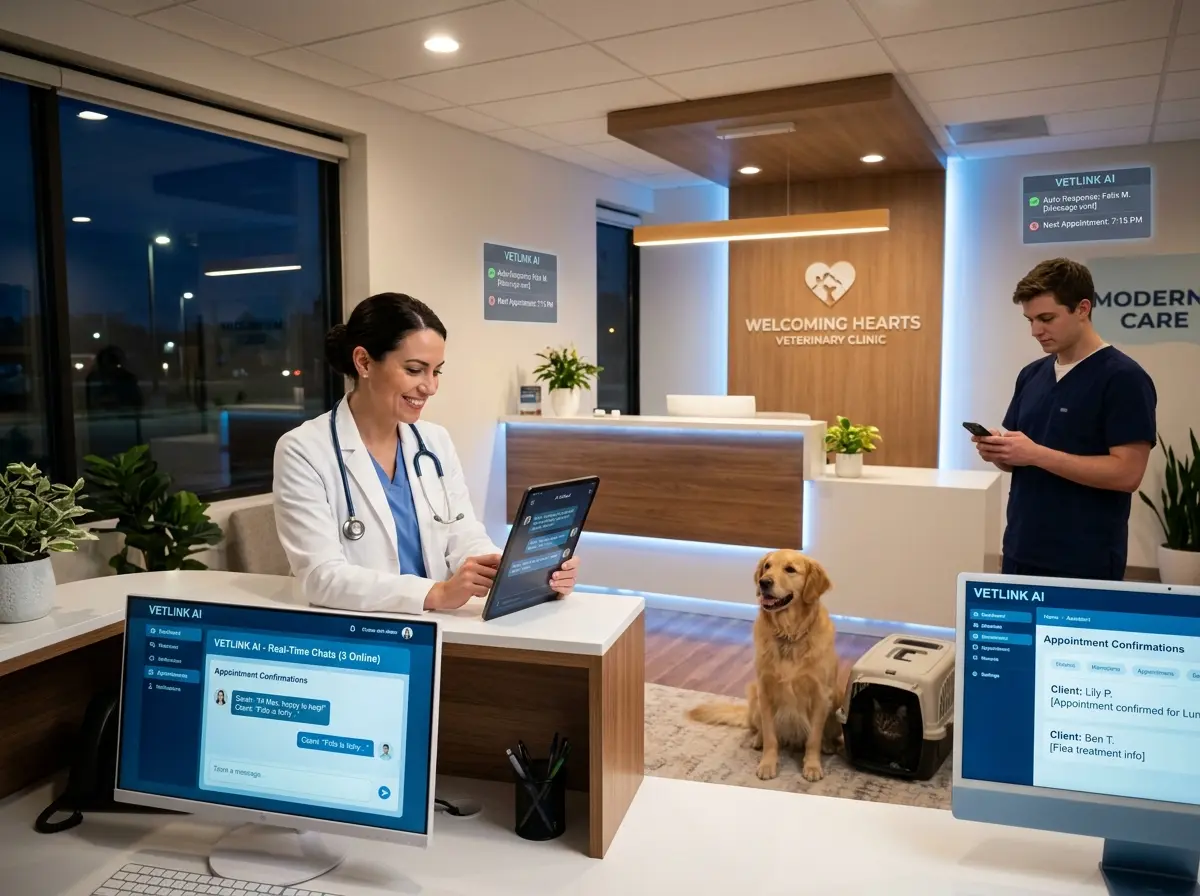
This is where modern tools — and yes, AI — genuinely earn their place in your practice. Stella, for example, is an AI receptionist that answers phone calls 24/7, handles routine patient inquiries, collects intake information through conversational forms, and delivers AI-generated voicemail summaries with push notifications to your team. For practices with a physical location, she can also serve as an in-office kiosk presence — greeting patients as they arrive, answering questions about services, and keeping things moving when the front desk is stretched thin.
What makes Stella particularly useful for medical practices is her built-in CRM — complete with custom fields, tags, notes, and AI-generated patient profiles. Every phone interaction, every intake form submission, every collected contact detail flows into a single organized system. No sticky notes. No spreadsheets. No "I thought someone else was following up on that." At $99/month with no upfront hardware costs, it's the kind of infrastructure upgrade that pays for itself quickly when you consider the cost of a single missed new patient.
What a Real Patient Communication Platform Should Actually Do
Intake That Doesn't Feel Like a Chore
Consistent, 24/7 Availability Without the Overhead
Data That Actually Informs Your Decisions
A Quick Reminder About Stella
Stella is an AI robot employee and phone receptionist built for businesses of all types — including medical practices. She answers calls around the clock, greets patients at your in-office kiosk, collects intake information, manages contacts through a built-in CRM, and keeps your team informed with smart voicemail summaries and push notifications. All of this runs on a straightforward $99/month subscription with no upfront hardware costs and no complicated setup. She doesn't call in sick, doesn't need onboarding, and never puts a patient on hold to ask a colleague a question she already knows the answer to.
Your Next Steps Toward a Smarter Practice
- Audit your current communication gaps. How many calls go unanswered in a day? How long does intake take? Where does patient data currently live, and who has access to it?
- Define what "better" looks like for your practice. Is it 24/7 call coverage? Digital intake? A centralized CRM? Knowing your priorities helps you choose the right platform rather than the most marketed one.
- Start with infrastructure, not just features. The best communication tools are the ones your staff will actually use — which means they need to reduce workload, not add to it. Look for platforms that integrate naturally into your existing workflow.
- Measure the impact. Track call answer rates, new patient conversions, and staff time spent on routine inquiries before and after implementation. The ROI of a good communication platform is real — but only if you're paying attention to it.