Introduction: Your Water Is Boring and Your Guests Know It
Let's be honest. If your non-alcoholic beverage program currently consists of fountain sodas, iced tea from a mix, and whatever lemonade your kitchen manager threw together last summer, you're leaving money on the table — and your guests are noticing. In an era where a significant portion of the dining population is actively reducing alcohol consumption (hello, sober curious movement), offering a lackluster selection of NA options is roughly equivalent to handing half your customer base a participation trophy and sending them home thirsty.
Here's the good news: a well-executed non-alcoholic beverage program isn't just a courtesy to your non-drinking guests. It's a genuine, high-margin revenue driver that can meaningfully impact your bottom line. We're talking craft mocktails, house-made shrubs, specialty sodas, functional beverages, and zero-proof spirits — all carrying price points that can rival a glass of wine while costing a fraction to produce. The beverage industry is watching this shift with great enthusiasm, and your restaurant should be too.
This guide will walk you through how to build a non-alcoholic beverage program that your guests will actually get excited about, your staff will actually sell, and your accountant will actually appreciate. Let's get into it.
Building the Foundation of Your NA Beverage Program
Understanding Your Audience and Occasion
Before you start muddling herbs and sourcing artisan tonics, take a moment to understand who is sitting at your tables and why. A fast-casual lunch spot has different needs than a fine dining establishment hosting corporate dinners. The sober curious millennial on a first date has different expectations than the pregnant guest who just wants something celebratory that isn't club soda with a lemon wedge dropped in like an afterthought.
Research from NielsenIQ shows that nearly 25% of Americans report trying to reduce their alcohol consumption — and that number continues to climb. Meanwhile, the global non-alcoholic beverage market is projected to exceed $1.6 trillion by 2025. That's not a niche. That's a movement with a credit card. Segment your guest base, consider your daypart mix (lunch versus dinner versus brunch), and design an NA program that feels intentional for each occasion rather than one that feels like it was assembled from leftovers.
Curating a Menu That Commands Attention (and a Premium Price)
The fastest way to ensure your NA beverages don't sell is to bury them at the bottom of the drink menu between "Milk" and "Juice." Presentation matters enormously. Your non-alcoholic options should be showcased, named creatively, and described with the same enthusiasm as your signature cocktails.
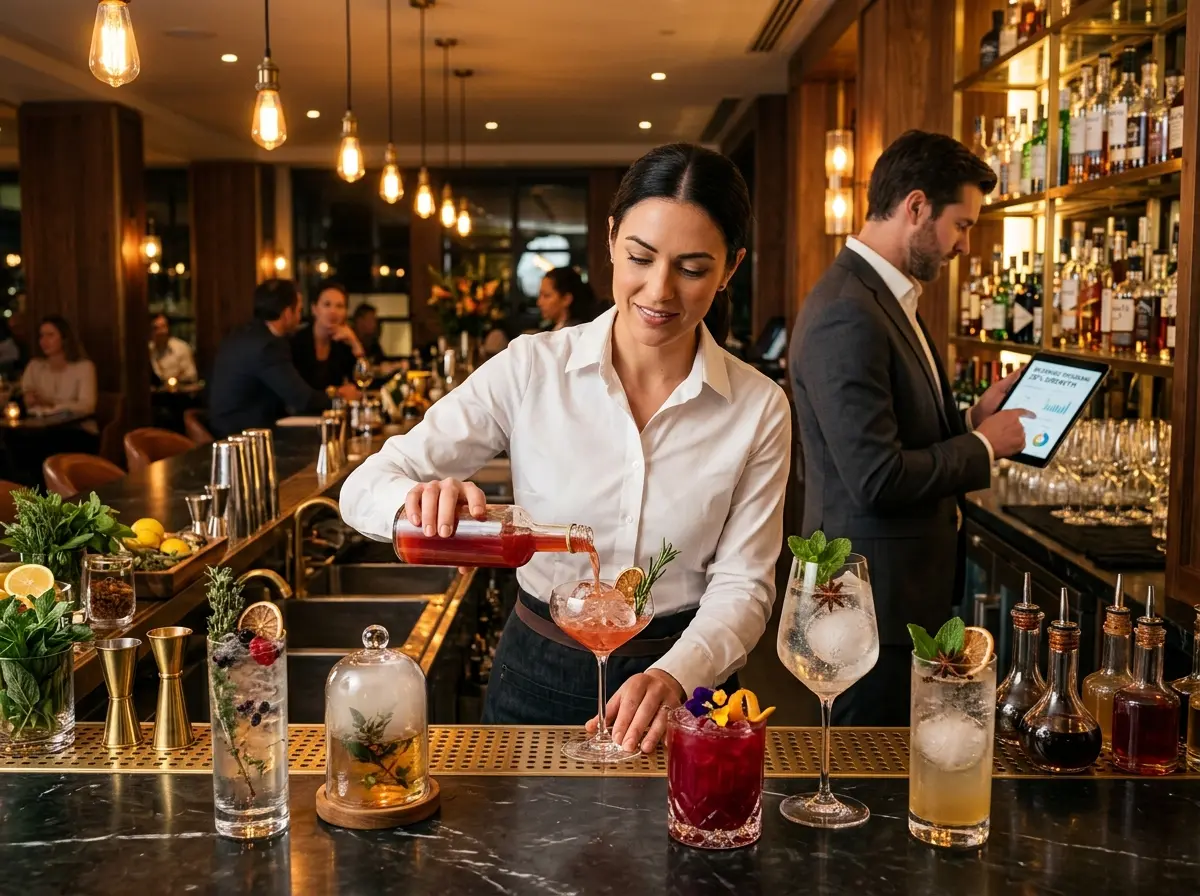
Think about menu architecture: place two or three hero NA beverages in a prominent position. Give them names that tell a story — "The Garden Mule," "Smoked Citrus Elixir," or "Botanist's Remedy" will always outperform "Virgin Mojito" on both perceived value and actual sales. Pair house-made syrups, quality non-alcoholic spirits like Seedlip or Monday, and fresh herbs or botanicals to justify price points in the $8–$14 range. At those margins, even modest volume adds up fast.
Training Your Staff to Actually Sell These Drinks
Here's where most restaurants fumble the handoff. You spend real money developing a beautiful NA beverage menu, and then your servers describe them with all the enthusiasm of someone reading terms and conditions aloud. Staff training is non-negotiable. Your team needs to understand the flavor profiles, know which dishes each drink complements, and feel confident making genuine recommendations without judgment or hesitation.
Run tasting sessions. Role-play ordering scenarios. Incentivize NA beverage upsells the same way you might push high-margin appetizers or desserts. When a server can say, "The Smoked Citrus Elixir is actually one of my personal favorites — it pairs beautifully with the salmon," and mean it, sales follow. Culture drives behavior, and your staff's attitude toward the NA program will either make it or break it.
Using Technology to Support Your Beverage Program
Let Smart Tools Handle What Slows You Down
Running a restaurant is already a spectacular juggling act. Adding a new beverage program means more staff training touchpoints, more guest questions, and more promotional content to communicate. This is exactly where Stella, the AI robot employee and phone receptionist, becomes a quietly brilliant addition to your operation.
In your physical location, Stella's in-store kiosk presence means she can proactively engage guests as they arrive — mentioning your new seasonal mocktail program, answering questions about ingredients or allergens, and making recommendations before your server even arrives at the table. That's one more touchpoint driving awareness of your NA menu without adding a single task to your team's plate. On the phone side, Stella answers calls 24/7 and can share current specials, promotions, and featured beverages with any caller — meaning your new NA program gets promoted even during your busiest dinner rush when no one has a free hand to pick up the phone.
Pricing, Margins, and Making the Math Work
The Margin Opportunity Is Real — If You Price Intentionally
Non-alcoholic beverages, when executed thoughtfully, carry some of the best margins in the house. Your input costs are typically low: fresh herbs, house-made syrups, fruit, and quality mixers. A mocktail that costs $1.50–$2.50 to produce and sells for $10–$13 is operating at food cost percentages that would make your chef raise an eyebrow in the best possible way.
The key is resisting the temptation to underprice these drinks out of some misplaced guilt that guests aren't getting "the real thing." Premium non-alcoholic spirits, quality sparkling water, and artisan garnishes justify premium pricing. Guests who are thoughtfully abstaining from alcohol are not looking for a discount — they're looking for an experience that respects their choice. Price accordingly, and don't apologize for it.
Seasonal Rotation and Limited-Time Offers Drive Repeat Visits
One of the smartest moves you can make is treating your NA beverage program like a seasonal menu rather than a static one. A fall harvest shrub, a winter spiced cider mocktail, or a summer watermelon basil cooler gives returning guests a reason to come back and try something new. Limited-time offerings create urgency, support social media content, and give your staff fresh talking points that keep the selling feeling natural rather than scripted.
Document what sells and what doesn't. Track guest feedback. Build a playbook of your top performers so that even as individual items rotate, you're always leading with your strongest recipes. Treat this program like the revenue center it is — with data, intention, and ongoing refinement — rather than a set-it-and-forget-it menu section.
Bundling and Pairing to Increase Average Check
Another underutilized tactic is structured pairing recommendations. Just as wine pairing elevates the dining experience and increases check size, NA beverage pairings can do the same. Train your team to recommend a specific mocktail or specialty soda alongside particular dishes, and consider creating a prix-fixe or tasting menu option that includes an NA beverage pairing for guests who don't drink. This positions your restaurant as thoughtful and inclusive while simultaneously increasing the average ticket — which is, frankly, the dream scenario for any operator.
Quick Reminder About Stella
Stella is an AI robot employee and phone receptionist designed to help businesses like yours operate more smoothly and profitably. She greets guests in-store, promotes your current specials, answers guest questions, and handles phone calls 24/7 — all for just $99/month with no upfront hardware costs. Whether you're rolling out a new beverage program or simply trying to reduce the load on your team, Stella is built to support both your physical location and your phone lines without ever calling in sick.
Conclusion: Your Next Steps Start Today
Building a non-alcoholic beverage program that actually moves the needle doesn't require a massive investment or a James Beard Award-winning mixologist on staff. It requires intention, creativity, and a willingness to treat this category with the same seriousness you bring to your food menu and your alcoholic offerings.
Here's a straightforward action plan to get started:
- Audit your current NA offerings — be ruthlessly honest about what's exciting and what's embarrassing.
- Develop three to five signature NA beverages with compelling names, quality ingredients, and margin-friendly cost structures.
- Update your menu design to give these drinks prominent, enthusiastic placement.
- Run a staff training session focused specifically on selling and describing your NA program with confidence.
- Set a seasonal rotation schedule and commit to refreshing your NA offerings at least twice per year.
- Track your data — sales volume, guest feedback, and cost percentages — so you can refine and improve over time.
The sober curious guest, the designated driver, the pregnant diner, the wellness-minded millennial — they're already sitting at your tables. The only question is whether you're giving them a reason to spend confidently and come back enthusiastically. Build a program worth ordering, price it like you mean it, and watch what happens to your bottom line. It turns out water doesn't have to be boring after all.