First Impressions Are Everything (No Pressure)
You have approximately three to five seconds. That's the window — pun fully intended — in which a passerby decides whether your store is worth a second glance or just background scenery on their way to get coffee. Three to five seconds. Less time than it takes to read this sentence out loud.
Window displays are one of the most underestimated marketing tools in retail. They cost relatively little compared to paid advertising, they work around the clock, and they speak directly to foot traffic that is already physically close to your front door. Yet somehow, a shocking number of business owners treat their windows like an afterthought — slapping up a "SALE" sign in Comic Sans and calling it a day.
If you're serious about converting curious passersby into paying customers, your window display needs to do real work. It needs to tell a story, create desire, communicate value, and do all of that before someone can check their phone. This guide breaks down exactly how high-converting window displays are built — so you can stop wasting prime real estate and start turning window shoppers into actual shoppers.
The Building Blocks of a Display That Actually Works
Visual Hierarchy: Guide the Eye, Don't Confuse It
The number one mistake businesses make with window displays is trying to say too much at once. When everything competes for attention, nothing wins. High-converting displays use visual hierarchy — a deliberate arrangement that guides the viewer's eye from the most important element to supporting details in a logical sequence.
Think of it like a billboard. The headline is big and bold. The subtext is smaller. The call-to-action is clear and distinct. Your window should operate the same way. Choose one hero element — a flagship product, a seasonal promotion, or a lifestyle image — and let everything else support it rather than compete with it. Supporting props, signage, and lighting should reinforce the focal point, not distract from it.
A practical rule of thumb: step outside, squint at your display, and ask yourself what the first thing your eye lands on is. If the answer isn't your intended focal point, something needs to change.
Color Psychology and the Power of Contrast
Color is doing more work than you might realize. Studies show that up to 90% of snap judgments about products are based on color alone. The right color palette can communicate luxury, urgency, playfulness, or trustworthiness before a single word is read.
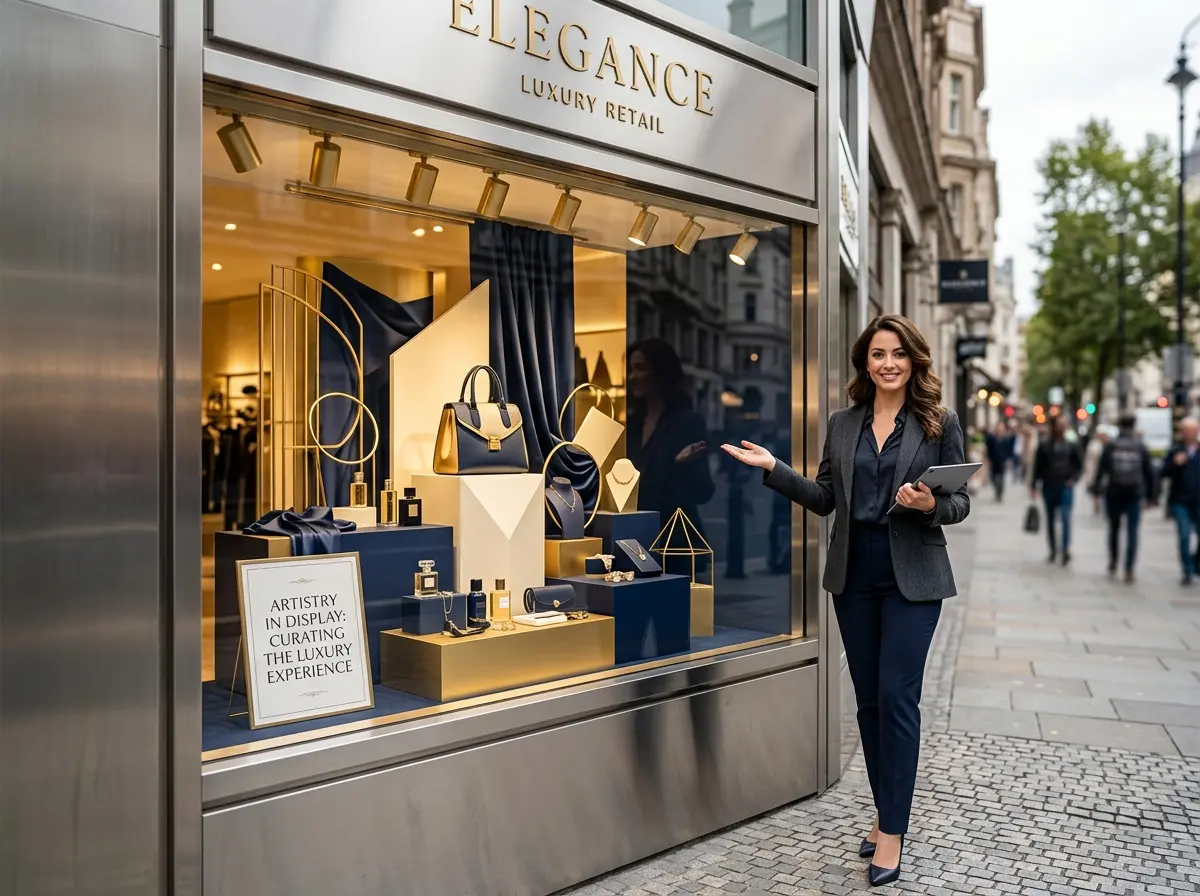
High-contrast displays consistently outperform low-contrast ones in terms of stopping power. A product displayed against a background that clashes with it (in a good way) will always draw more attention than one that blends in. Consider the emotional associations of your palette — warm reds and oranges suggest urgency and energy, cool blues and greens evoke calm and trust, while black and gold reliably signal premium quality.
Seasonal alignment matters too. Your color choices should feel timely and relevant. A spa using icy blues and whites in January feels intentional. The same spa using those same colors in August just feels like they forgot to update the display.
Messaging That Speaks to Desire, Not Just Features
If your window display says "New Arrivals" or "Open Daily," you're not selling — you're filing a report. Great window copy speaks to what the customer wants to feel, not just what you're offering. "Look effortlessly put-together this season" sells better than "New Fall Clothing." "Your most relaxing hour of the week" sells better than "Massage Services Available."
Keep text minimal and punchy. A passerby won't stop to read a paragraph, but they will absorb a well-crafted five-word phrase. Pair that phrase with a strong visual and you have the core of a compelling display. When in doubt, focus on the transformation or outcome your product or service delivers — that's what people actually buy.
Staying Fresh Without Losing Your Mind
The Update Schedule That Keeps Displays Relevant
A window display that hasn't changed in four months isn't a display — it's wallpaper. Regular customers stop seeing it entirely, and new foot traffic isn't getting your best pitch. Industry best practice suggests updating displays at minimum once per month, and more frequently around seasonal shifts, holidays, or major promotions. Block time on your calendar for it the same way you would for payroll or inventory.
You don't need a complete overhaul every time. Swapping out one or two key elements — a featured product, a backdrop color, updated signage — can refresh the feel significantly without requiring a full redesign from scratch. Build your display infrastructure so components are modular and easy to swap.
Let Your In-Store Presence Work Smarter
Getting someone through the door is only half the job. Once they're inside, the experience needs to deliver on the promise your window made. This is where having a strong, consistent in-store presence becomes critical — and where tools like Stella, the AI robot employee and phone receptionist, can quietly pull a lot of weight. Stella stands inside your store and proactively greets customers, answers questions about products, services, hours, and current promotions, and even upsells and cross-sells — all without requiring a staff member to drop what they're doing. She also answers your phone calls 24/7, so the customer who sees your window display at 9pm and calls to ask a question doesn't hit voicemail and wander off to a competitor.
Advanced Tactics for Maximum Conversion
Using Storytelling and Themed Displays
The most memorable window displays don't just show products — they build a world. Themed displays that tell a cohesive story create emotional engagement and make your brand feel alive and intentional. A home goods store doesn't just show throw pillows; it creates a cozy Sunday morning scene that makes you want to live inside the window. A clothing boutique doesn't just hang dresses; it stages a rooftop dinner party that makes you feel like you need that dress now.
The theme doesn't need to be elaborate or expensive to be effective. What matters is that all the elements — products, props, colors, signage, and lighting — are working together toward the same emotional destination. Customers may not be able to articulate why they were drawn in, but they'll feel it. And feelings drive purchases far more reliably than logic does.
Incorporating Social Proof and Urgency
Two of the most powerful psychological triggers in marketing are social proof and urgency, and both can be built directly into your window display. Social proof might look like a brief customer review printed on a clean card next to a featured product, a "Best Seller" badge, or an award or recognition your business has received. These small signals communicate that other people have already made the decision to trust you — which makes it significantly easier for a new customer to do the same.
Urgency, when used honestly, is equally effective. "This week only," "Limited quantities," or "Offer ends Sunday" give passersby a reason to act now rather than telling themselves they'll come back later (they won't). The key word there is honestly — manufacturing fake urgency damages trust the moment customers figure it out, and they always figure it out.
Lighting: The Detail That Separates Good from Great
Lighting is the most overlooked element of window display design, and it might be the one that matters most after dark. If your display isn't properly lit in the evening, you're losing all the foot traffic that passes after business hours — people walking to dinner, heading home from work, or strolling on weekends. Directional spotlights on your hero product, warm accent lighting to create ambiance, and backlit signage for key messages can transform an average display into something genuinely compelling at any hour. It's a relatively modest investment that extends your display's working hours considerably.
Quick Reminder About Stella
Stella is an AI robot employee and phone receptionist that greets customers in-store, promotes your current deals, answers questions, and handles phone calls 24/7 — all for $99/month with no upfront hardware costs. She's always on, always professional, and never asks for a day off. For retail businesses especially, she's a natural complement to a strong window display strategy — making sure the curiosity your window generates converts into real engagement once customers step inside or pick up the phone.
Put It All Together and Start This Week
A high-converting window display isn't the result of a big budget or a design degree. It's the result of intentional decisions about hierarchy, color, messaging, storytelling, and upkeep — applied consistently over time. The businesses with the most compelling windows aren't necessarily the ones spending the most; they're the ones treating their windows as active marketing assets rather than decorative obligations.
Here's where to start: walk outside right now and look at your window with fresh eyes. Ask yourself whether a stranger walking by would understand in three seconds what you sell, why it matters, and why today is a good day to come in. If the answer is no to any of those three questions, you have your to-do list.
From there, build a simple monthly update schedule, invest in proper lighting if you haven't already, and make sure your in-store experience is ready to deliver on whatever promise your window is making. Small, consistent improvements compound quickly — and in a competitive retail environment, the business owners who treat every square inch of their storefront as a selling opportunity are the ones who tend to win.
Your window is on 24 hours a day. Make sure it's earning its keep.