Why "Only 3 Left!" Is the Most Powerful Sentence in Retail
Let's be honest — if you've ever walked past a store window with a sign screaming "LIMITED STOCK — ONLY 2 PAIRS REMAINING!" and felt your pulse quicken just a little, you already understand scarcity marketing. You didn't even want those shoes five seconds ago. Now you're doing mental math about your credit card balance.
Welcome to the beautiful, slightly manipulative, entirely legitimate world of scarcity-driven sales. For sneaker store owners, this psychological principle isn't just a gimmick — it's a proven revenue strategy. The sneaker market is already wired for exclusivity. Limited releases, hyped colorways, and regional exclusives have trained sneakerheads to act fast or go home empty-handed. Your job is to channel that energy intentionally and turn it into consistent, urgent sales — not just during Nike drop season, but year-round.
This post breaks down the art of scarcity: how to do it ethically, how to communicate it effectively, and how to make sure no customer walks out the door (or hangs up the phone) without knowing exactly what's at stake if they wait.
Understanding the Psychology Behind Scarcity
Before you slap a "LAST PAIR" tag on everything in your store and wonder why nobody trusts you anymore, it's worth understanding why scarcity works — and how to use it without torching your credibility.
Loss Aversion: The Real MVP of Purchasing Decisions
Behavioral economists like Daniel Kahneman have shown that people feel the pain of losing something roughly twice as intensely as the pleasure of gaining the same thing. In plain English: the fear of missing out on those Air Jordans hits harder than the joy of simply owning them. When you communicate limited availability, you're not just informing customers — you're activating a deeply wired survival instinct that says, act now or regret it later.
Studies back this up. Research published in the Journal of Consumer Research found that perceived scarcity consistently increases product desirability and purchase intention. And in the sneaker world, where cultural cachet is tied directly to exclusivity, this effect is amplified even further. Limited drops aren't just marketing — they're practically mythology.
The Three Types of Scarcity (And When to Use Each)
Not all scarcity is created equal. Smart sneaker retailers know how to deploy the right type at the right moment.
- Quantity Scarcity: "Only 4 pairs left in size 10." This is your bread and butter — honest, specific, and highly effective when it's true. Real-time inventory counts displayed in-store or on your website do the heavy lifting here.
- Time Scarcity: "This price expires Sunday at midnight." Flash sales, weekend promos, and countdown timers create urgency without relying on low stock. Perfect for moving older inventory or seasonal styles.
- Exclusivity Scarcity: "Members-only access to the new drop." This one builds loyalty while creating a tiered sense of belonging. Your VIP customers feel special; your regular customers have an incentive to level up.
The golden rule? Only claim scarcity that's real. Customers who feel manipulated don't just leave — they leave reviews. Use your actual inventory data, set genuine sale deadlines, and let the truth do the selling for you.
Communicating Scarcity Without Sounding Desperate
There's a fine line between "Only 2 left — grab yours!" and "PLEASE BUY THIS WE HAVE TOO MUCH INVENTORY." Tone matters enormously. Confident, matter-of-fact scarcity messaging ("These are moving fast — just a heads up") feels far more credible than frantic all-caps pleading. Train your staff to mention stock levels the way they'd share insider knowledge — casually, helpfully, and with the quiet authority of someone who knows what sells.
Practical Scarcity Tactics That Actually Move Sneakers
In-Store Scarcity Signals That Create Buzz
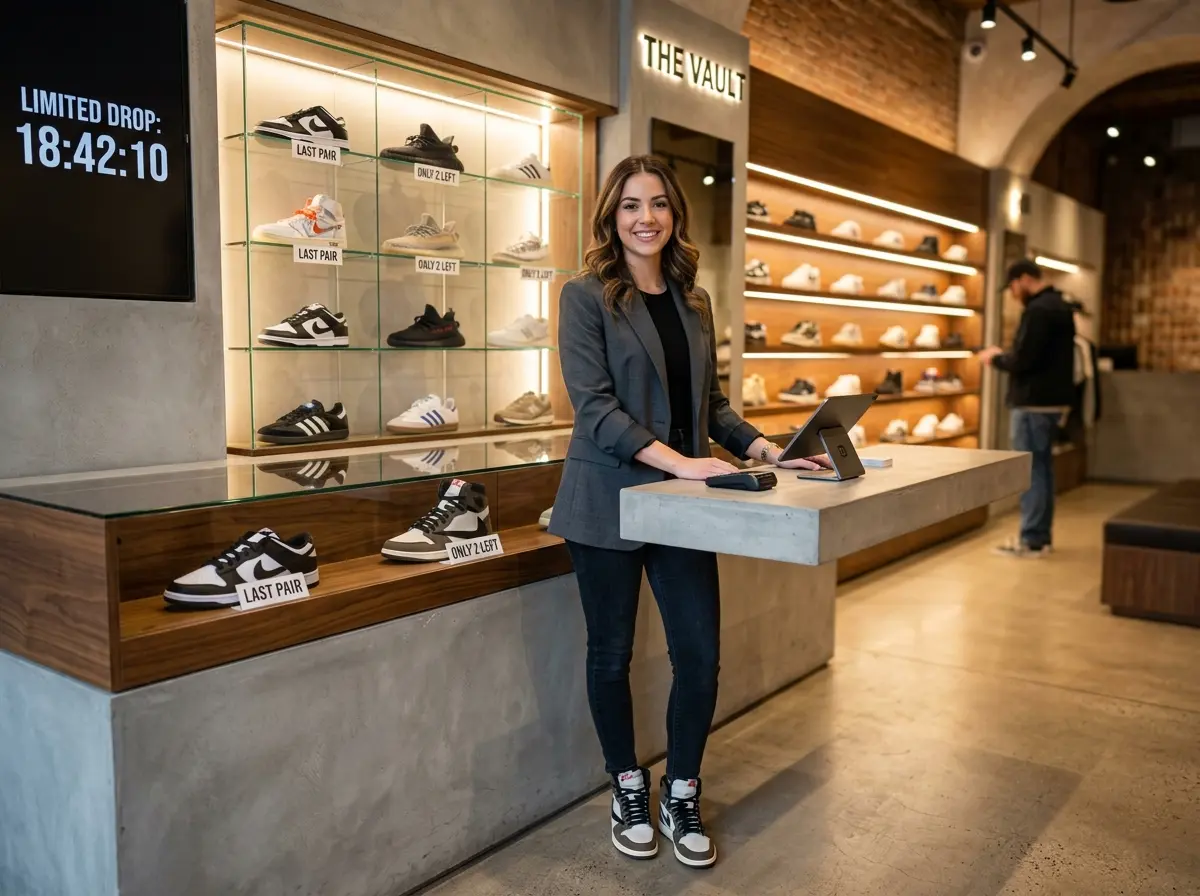
Your physical store is a stage, and scarcity is a prop you're not using nearly enough. Simple, well-placed visual cues can dramatically increase conversion rates without a single word being spoken. Low-stock shelf tags, "last size available" indicators, and a dedicated "Almost Gone" display section all signal urgency passively. Place your near-sold-out styles near high-traffic areas — when customers see a sparse display with one or two boxes left, their brain fills in the story: everyone wants these.
Consider a weekly "Final Pairs" feature near your register. A small rack or shelf with genuinely limited inventory, cleanly labeled with remaining quantities, creates an organic conversation starter for your staff and a powerful last-minute impulse zone for customers who came in for something else entirely.
Digital Urgency: Email, SMS, and Social That Converts
Your in-store scarcity strategy needs a digital counterpart that reaches customers before they even walk through your door. A well-timed SMS message — "Hey [Name], the colorway you tried on last week is down to 2 pairs in your size. Just thought you'd want to know." — is practically a sales superpower. According to industry data, SMS open rates hover around 98%, and response times are measured in minutes, not days.
Your email and social strategy should follow the same logic. Instead of generic promotional blasts, send targeted low-stock alerts to customers who've shown interest in specific styles. Instagram Stories with countdown stickers on limited releases, TikToks showing your "last pairs" sell out in real time, and email subject lines like "Going, Going…" all tap into scarcity psychology without feeling cheap. The key is specificity — vague urgency is unconvincing, but a named shoe in a specific size with a concrete number remaining? That's a message people act on.
How Stella Fits Into Your Scarcity Strategy
Stella, the AI robot employee and phone receptionist, is a surprisingly natural fit for scarcity-driven retail. In your store, Stella greets every customer who walks by and can proactively mention current promotions, limited stock alerts, and time-sensitive deals — consistently, enthusiastically, and without ever forgetting the script or getting distracted by a text message. She's essentially a tireless hype person who always knows what's running low and what's worth talking about.
On the phone side, Stella answers calls 24/7 and can inform callers about current limited-stock offers, confirm product availability, and create that same sense of urgency for customers who prefer to shop by phone or call ahead before visiting. No more missed calls during a busy Saturday drop event — Stella handles the overflow so your human staff can focus on the customers already in the store.
Building a Repeatable Scarcity System
Inventory Awareness Is the Foundation
You can't execute a scarcity strategy without knowing your numbers. This sounds obvious, but a shocking number of small retailers operate on gut feel and rough estimates rather than real-time inventory data. Invest in a solid point-of-sale system that gives you live stock levels by SKU, size, and colorway. Set automated low-stock alerts so you're never caught off guard, and more importantly, so you can proactively activate your scarcity messaging the moment a product hits a certain threshold — say, five pairs or fewer.
Build a simple internal trigger system: when a product hits low-stock status, it automatically gets added to your "Almost Gone" display, flagged for SMS outreach to interested customers, and mentioned by your in-store team in their daily talking points. Systematizing this removes the guesswork and ensures you're capitalizing on every scarcity opportunity rather than noticing it after the product is already gone.
Creating a Scarcity Calendar for the Year
Beyond reactive low-stock alerts, the most effective sneaker retailers plan their scarcity moments in advance. Map out your year with intentional scarcity windows: major brand drop dates, holiday flash sales, end-of-season clearance events, and loyalty member pre-access periods. Each of these is an opportunity to build anticipation, communicate urgency, and drive concentrated sales volume.
A scarcity calendar also helps you stagger promotions so customers don't become desensitized. If every week is "LAST CHANCE," no week is. Treat genuine urgency like a limited resource itself — deploy it strategically, and it stays powerful. Overuse it, and you become the retailer who cried wolf, which is arguably worse than no urgency messaging at all.
Post-Sale Follow-Up: Turning FOMO Into Future Loyalty
When a customer misses a limited drop, that's not a dead end — it's a golden opportunity. A well-crafted follow-up message that says "Those sold out fast, but we have a new drop coming that you'll want first access to — want us to add you to our early list?" converts disappointment into anticipation. Customers who missed out once are often your most motivated buyers the next time around. Capture that energy with a waitlist, a loyalty program, or a VIP notification list, and you've turned scarcity into a customer acquisition and retention engine.
A Quick Word About Stella
Stella is an AI robot employee and phone receptionist built for businesses like yours. She stands in your store, greets customers, promotes your deals, and answers questions — all day, without breaks. She also answers your phone calls 24/7 with the same product knowledge she uses in person, so your scarcity messaging stays consistent whether a customer walks in or calls in. At $99/month with no upfront hardware costs, she's one of the easiest upgrades a retail owner can make.
Turn Scarcity Into a Sales System, Not a Sales Trick
The difference between a gimmick and a genuine strategy comes down to intentionality and honesty. Scarcity marketing works because it's rooted in real human psychology — but it only keeps working if your customers trust you. Build that trust by using real inventory data, delivering on your urgency claims, and following through with excellent service when customers do act fast.
Here's your action plan to get started:
- Audit your current inventory system and ensure you have reliable, real-time stock data by size and style.
- Set low-stock thresholds that trigger automatic alerts and activate your in-store and digital scarcity messaging.
- Create a scarcity calendar for the next 90 days that maps planned urgency events alongside organic low-stock moments.
- Train your team (human and AI alike) to mention limited availability naturally and confidently in customer conversations.
- Build a follow-up flow for customers who miss out, capturing their interest for future drops and limited releases.
The sneaker market rewards speed, exclusivity, and cultural savvy. Your customers are already primed to respond to scarcity — they just need you to show up with the right message at the right moment. Do that consistently, and you won't just move more inventory. You'll build the kind of store that people talk about, come back to, and tell their friends about — which, as any seasoned retailer will tell you, is worth more than any single sale.