Your Dental Practice Is Losing Money Every Night — And You're Probably Asleep When It Happens
Picture this: it's 9:47 PM on a Tuesday. A potential patient just chipped a tooth biting into what they'll later describe as "a perfectly reasonable crouton." They grab their phone, Google "dentist near me," find your practice, and call. What happens next? If you're like most dental offices, they hear a generic voicemail greeting, leave an awkward message, and then call the next practice on the list — one that actually picked up.
You just lost a patient. And probably a crown, two follow-up appointments, and a referral or two down the road.
The after-hours revenue problem is real, and it's quietly bleeding dental practices dry. The good news is that it's also entirely solvable — without hiring a full-time overnight receptionist or bribing your office manager with unlimited PTO. This post breaks down why your practice is leaving money on the table after 5 PM, and what you can actually do about it.
Why After-Hours Calls Are More Valuable Than You Think
Patients Don't Schedule on Your Schedule
Here's an uncomfortable truth: your patients are busy during the same hours your office is open. They're at work. They're wrangling kids. They're doing literally anything except sitting by the phone ready to book a cleaning at 2 PM on a Wednesday. Research consistently shows that a significant portion of dental appointment requests — some estimates put it as high as 40% — come in outside of standard business hours. Evening and weekend call volume is not a trickle; it's a stream that most practices simply let run down the drain.
When a patient finally does sit down at 8 PM with the intention of booking an appointment, that moment of motivation is fleeting. If they can't reach anyone, that motivation evaporates fast. They either forget entirely or find someone who made it easy for them.
First Response Wins the Patient
Studies on lead response time — yes, "leads" applies to dental patients too — show that the odds of converting a prospective patient drop dramatically with every hour that passes without contact. One widely cited study found that responding within five minutes makes you 100 times more likely to connect with a prospect than responding after 30 minutes. Imagine what happens when the response comes the next business morning, 12 hours later.
Dental practices that respond quickly — even via an automated but intelligent interaction — consistently outperform competitors who treat incoming inquiries like they'll still be warm in the morning. Spoiler: they're not.
Emergency Calls Are Especially High Stakes
Dental emergencies don't wait for business hours, and patients in pain are highly motivated to find help immediately. A practice that captures dental emergency calls after hours — even just to gather patient information, explain next steps, and communicate warmth — builds enormous trust and loyalty. The patient who called you in a panic at 10 PM and got a real, helpful response will be your patient for life. The one who got voicemail is now Dr. Competitor's patient for life.
How Modern Dental Practices Are Plugging the After-Hours Gap
Letting Smart Technology Handle the Front Lines
This is where things get genuinely interesting — and where Stella, the AI robot employee and phone receptionist, comes into play. Dental practices using Stella have a friendly, knowledgeable presence answering phone calls around the clock, every single day. She knows your hours, your services, your insurance policies, your current promotions, and how to handle new patient inquiries — all without requiring your front desk team to work a night shift or your office manager to keep their ringer on.
When a patient calls after hours, Stella doesn't give them a cold voicemail box. She has a real conversation. She can collect patient intake information through a conversational flow, answer common questions about procedures or pricing, and take detailed voicemails with AI-generated summaries that get pushed directly to whoever needs to see them — so your team walks in the next morning with a clear, organized picture of every after-hours interaction. Her built-in CRM also logs patient contacts automatically, complete with custom fields, tags, and AI-generated profiles, so no inquiry ever falls through the cracks. For practices with a physical location, she also stands inside the office as a kiosk, greeting and engaging walk-ins when staff are tied up. At $99/month, she costs less than a few missed appointments.
Building a Real After-Hours Strategy for Your Practice
Start With an Honest Audit of What Patients Experience Right Now
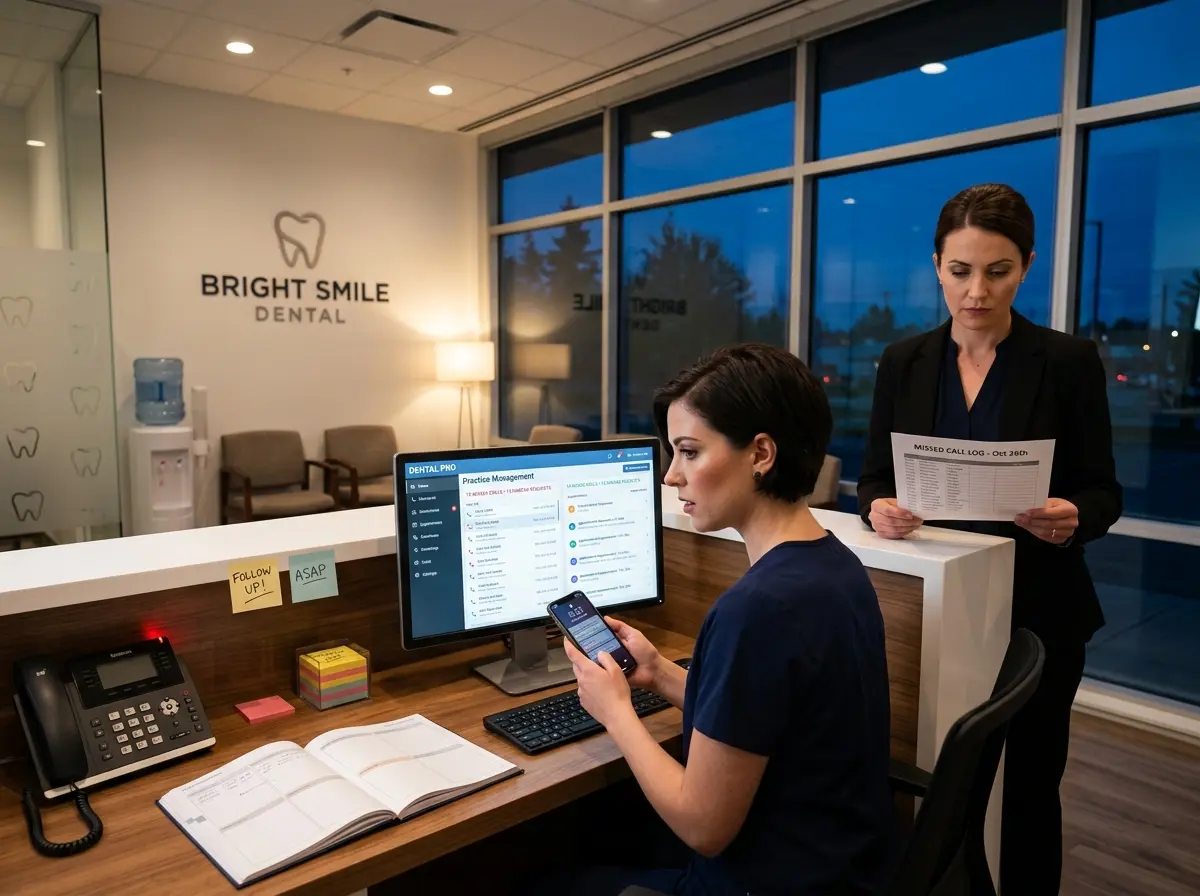
Before you can fix the problem, you need to feel it. Call your own practice at 7 PM tonight. What happens? Listen to the greeting. Is it warm and helpful, or does it sound like a compliance checkbox? Does it give patients a clear next step, or does it just say "leave a message and we'll get back to you"? Do you even know how many after-hours calls you're getting, or how many of those callers never called back?
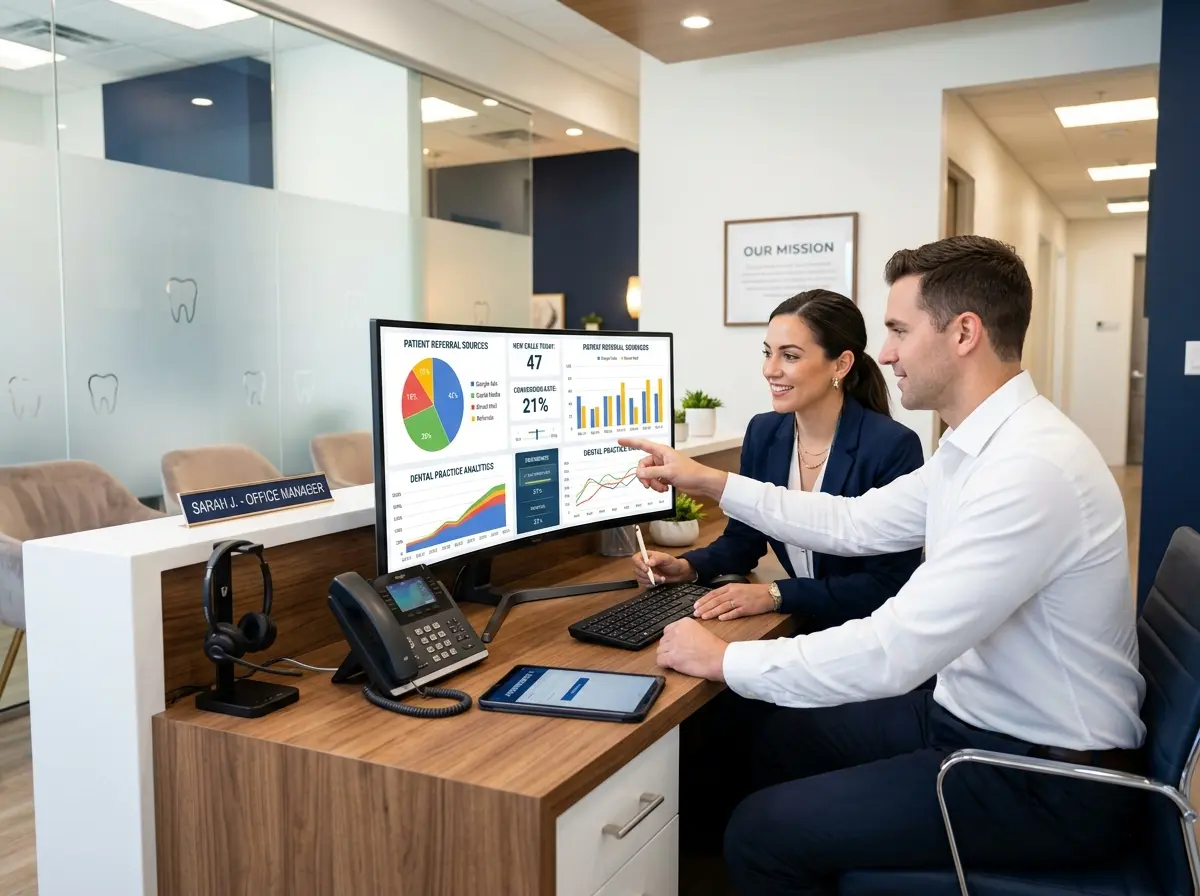
Most practices are genuinely shocked when they dig into this data. Start by reviewing your call logs and tracking after-hours call volume if you aren't already. If your phone system doesn't give you this information, that's a problem worth solving on its own.
Create Clear Protocols for Urgent vs. Non-Urgent After-Hours Contacts
Not every after-hours call needs the same response, and a good strategy acknowledges that. Consider segmenting your after-hours communication into a few clear categories:
- Dental emergencies — calls involving acute pain, trauma, or swelling that may need same-day or next-day urgent care
- New patient inquiries — people who found you and want to book, but aren't in crisis
- Existing patient questions — post-procedure concerns, billing questions, appointment changes
- General inquiries — hours, services, insurance questions
Each of these deserves a different protocol. Emergencies might warrant a direct call forward to an on-call provider. New patient inquiries might be best handled by gathering information and promising a prompt morning follow-up. General inquiries can often be answered immediately by a knowledgeable system without any human involvement at all. The point is to be intentional rather than treating every after-hours contact as equally unimportant.
Make It Easy to Book — Even Without a Human
Online booking has become table stakes for dental practices, and if yours doesn't offer it, you're already behind. But online booking alone isn't enough if patients can't find it easily or if your after-hours experience doesn't guide them toward it. Every after-hours touchpoint — your voicemail, your automated phone system, your website chat — should make booking the obvious and effortless next step. Remove friction wherever you can. The patient who almost booked at 9 PM but couldn't figure out where to click is a patient you didn't get.
Quick Reminder About Stella
Stella is an AI robot employee and phone receptionist designed to help businesses — including dental practices — maintain a professional, knowledgeable presence both in-person and on the phone, 24 hours a day. She answers calls, handles inquiries, promotes your services, collects patient information, and keeps your team informed — all for $99/month with no upfront hardware costs. She's the after-hours staff member who never calls in sick, never puts someone on hold for twelve minutes, and genuinely enjoys talking about dental hygiene.
What to Do Starting This Week
The after-hours revenue problem isn't complicated to understand — it's just easy to ignore because the losses are invisible. You never see the patient who called at 8 PM and hung up. You never know about the emergency inquiry that went to your competitor. But they're happening, and they add up to real money and real missed relationships over the course of a year.
Here's what you can do right now to start turning this around:
- Audit your current after-hours experience by calling your own practice tonight and listening critically to what a patient hears.
- Pull your call data and find out how many after-hours calls you're getting and what percentage result in no follow-up.
- Define your after-hours protocol by categorizing inquiry types and deciding how each should be handled.
- Invest in intelligent coverage — whether that's a smarter voicemail system, an AI phone receptionist, or both — so no call goes unanswered in a meaningful way.
- Make booking frictionless by ensuring every after-hours touchpoint points patients toward a clear next step.
Your practice works hard during business hours. There's no reason to let all of that effort go to waste the moment the front door locks. The patients are still out there in the evening, still chipping teeth on croutons, still Googling dentists in their area. The only question is whether your practice is ready to meet them there — or whether you're happy letting the practice down the street do it instead.