First Impressions Happen on the Phone (Yes, Really)
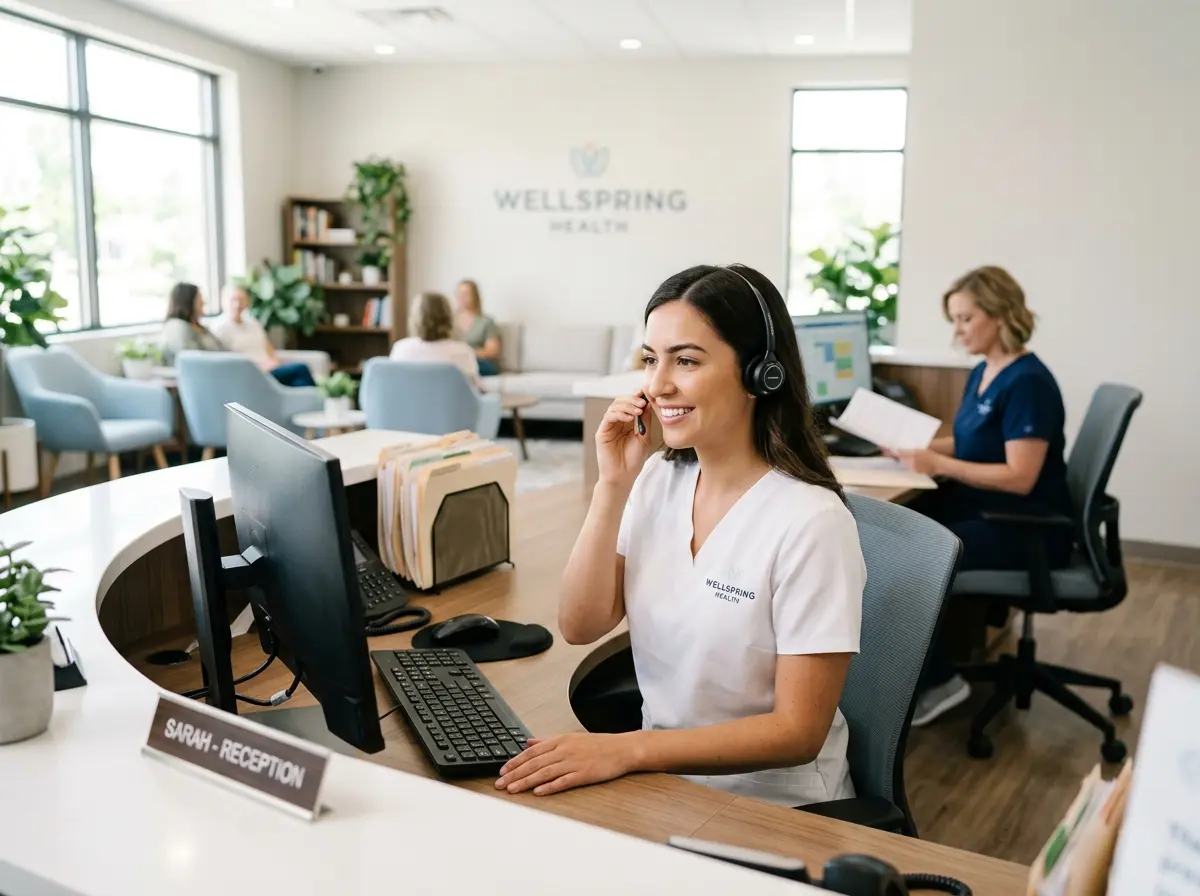
The patient experience doesn't start when someone walks through your door. It starts the moment they decide to reach out — and how you handle that first phone interaction sets the tone for everything that follows. In healthcare, where trust, clarity, and compassion are non-negotiable, a fumbled phone call isn't just an inconvenience. It's a lost patient relationship.
The Anatomy of a Great Medical Office Phone Call
Answer Promptly and with a Human (or Human-Like) Touch
Studies consistently show that nearly 70% of callers who are put on hold will hang up — and a significant portion of them won't call back. In a medical setting, that's not just a missed appointment. That's a person who didn't get care. Answering promptly and warmly isn't a nice-to-have; it's a clinical and business imperative.
A great greeting does three things: it identifies the practice, it sounds genuinely welcoming, and it sets the caller at ease. Something like "Good morning, thank you for calling Riverside Family Medicine — how can I help you today?" is simple, warm, and professional. What it should never sound like is a robot reading a legal disclaimer at 2x speed. (Unless the robot is actually charming. More on that shortly.)
Triage Calls Intelligently — Not Just Chronologically
Consider categorizing incoming calls into tiers: urgent clinical concerns that need immediate clinical staff attention, administrative matters like scheduling and billing that your front desk can handle, and general inquiries about hours, services, or insurance. Most offices field a remarkable number of calls that fall into that last category — questions that could be answered without tying up a staff member for five minutes per call.
Collect the Right Information the First Time
How the Right Tools Can Transform Your Front Desk Operations
Modernizing Call Handling Without Losing the Personal Touch
This is where AI-powered tools are starting to make a real difference. Stella, the AI robot employee and phone receptionist, can handle incoming calls 24/7 with the same warmth and business knowledge used in person. For medical offices, she can answer questions about hours, services, insurance accepted, and general policies — routing urgent matters to on-call staff or capturing voicemails with AI-generated summaries pushed directly to managers as notifications. Her built-in CRM and conversational intake forms also make it easy to collect new patient information right on the first call, so your front desk isn't starting from scratch when the patient arrives. At $99/month with no hardware costs, it's a practical solution for practices that want to extend their responsiveness without extending their staffing budget.
Training Your Team to Communicate Like Pros
Empathy Is a Skill, Not a Personality Type
Train your team to acknowledge the caller's concern before diving into logistics. A simple "I'm sorry you're dealing with that — let's get you taken care of" before launching into scheduling questions does more for patient trust than a perfectly executed script. Role-play difficult call scenarios during team training sessions. Yes, it feels awkward. Yes, it works.
Also, coach staff on the art of active listening — not just waiting for the caller to stop talking so they can respond, but actually processing what the person is saying and asking clarifying questions that show they're engaged. Patients notice the difference.
Handle Complaints and Difficult Calls with Confidence
Don't Neglect the Voicemail and After-Hours Experience
After-hours handling deserves the same attention as live call handling. If patients are redirected to an answering service, make sure that service actually understands your protocols. If they're leaving voicemails, make sure those voicemails are checked — and returned — within a clearly communicated timeframe. Same business day is the standard patients expect. Anything longer starts eroding trust.
A Quick Reminder About Stella
Stella is an AI robot employee and phone receptionist designed to help businesses handle customer and patient interactions without the gaps, the hold music, or the burnout. She answers calls 24/7, collects intake information, routes inquiries intelligently, and keeps managers in the loop with AI-generated voicemail summaries — all for $99/month. For medical offices looking to modernize without a massive investment, she's worth a serious look.
Your Phone Is a Front Door — Start Treating It Like One
- Audit your current call handling process. Mystery-call your own office during peak hours and after hours. Be honest about what you find.
- Standardize your greeting and intake scripts. Consistency builds trust, and trust starts with the first hello.
- Train your team on empathy and de-escalation. Role-play is uncomfortable. It's also one of the most effective training tools you have.
- Establish clear call triage protocols. Not every call needs a clinician. Route smarter, not just faster.
- Close the after-hours gap. Whether that's an AI receptionist, a reputable answering service, or a clearly communicated voicemail system — have an answer for callers who need one outside of business hours.