Nobody Calls Back a Bad Voicemail (Including Your Customers)
Let's be honest: most business voicemails are terrible. A monotone recording mumbles something about being "unavailable right now," promises to "return your call at the earliest convenience," and then signs off with a beep that makes the caller question every decision that led them to this moment. The customer hangs up, pulls up your competitor's website, and that's the last you ever hear from them.
Here's the uncomfortable truth — 80% of callers who reach a voicemail hang up without leaving a message, and of those who do leave one, a significant portion never get a callback. For service-based businesses especially, every missed call is a missed sale. Whether you run a salon, a law firm, an HVAC company, or a med spa, your phone line is one of your highest-intent marketing channels. People who call you want to buy something. They just need a reason to stay engaged long enough to let you sell it to them.
The good news? A well-crafted voicemail script — both outbound and inbound — can dramatically increase the number of people who leave messages, respond to your follow-ups, or stay on the line long enough to actually book. This post breaks down exactly what goes into a voicemail that gets results, so you can stop losing leads to the void of unanswered beeps.
Why Most Voicemail Scripts Fail (And What to Do Instead)
The Deadly Sins of the Default Voicemail
The default voicemail greeting that came pre-loaded on your business phone system was not designed to convert customers. It was designed to let people know the call didn't connect — full stop. Using it as your permanent greeting is the telephonic equivalent of putting a "maybe open" sign on your front door.
The most common mistakes service businesses make with voicemail include being vague about when (or whether) you'll call back, offering no alternative contact method, using robotic or overly formal language, and — perhaps worst of all — giving the caller zero reason to leave a message in the first place. If your greeting sounds like a legal disclaimer, don't be surprised when people treat it like one and skip right past it.
The Psychology of a Callback-Worthy Message
People return calls — and leave messages — when they feel confident that doing so will be worth their time. That means your voicemail needs to do three things quickly: establish trust, create a sense of responsiveness, and give the caller a clear, low-friction next step.
Research in sales psychology consistently shows that specificity builds trust. "We'll call you back within two business days" is forgettable. "We return all calls by the end of the same business day — usually within a few hours" is a promise that feels real and makes the caller believe someone is actually paying attention. Pair that with a warm, human tone and a specific ask ("Please leave your name, number, and the best time to reach you"), and you've already outperformed 90% of your competition.
The Anatomy of a High-Converting Inbound Voicemail Greeting
Here's a proven structure that service businesses can adapt immediately:
- Warm greeting + business name — Confirm they reached the right place. ("Hi, you've reached Riverside Wellness Spa!")
- Brief, honest explanation — Don't over-apologize. ("We're currently with a client but we don't want to miss you.")
- Specific callback commitment — Give a real timeframe. ("We return all calls the same day, Monday through Saturday.")
- Clear ask — Tell them exactly what to leave. ("Please leave your name, your number, and a quick note about what you're looking for.")
- Optional alternative — Give them an escape hatch if they're impatient. ("You can also text us at this number or visit our website to book online.")
- Warm close — End like a human. ("We look forward to speaking with you soon — thanks for calling!")
Short, specific, and human. That's the formula. You'd be amazed how many businesses skip two or three of these steps and then wonder why their voicemail box is a graveyard.
How Smarter Phone Handling Starts Before the Beep
Let Technology Do the Heavy Lifting
The best voicemail script in the world is still a consolation prize. What service businesses really need is a front line that doesn't miss calls to begin with — and that's where tools like Stella come in. Stella is an AI robot employee and phone receptionist that answers calls 24/7, handles common questions about your services, hours, and pricing, and only routes calls to your staff when truly necessary. For businesses with a physical location, she also operates as an in-store kiosk that greets walk-in customers, promotes current specials, and collects customer information — all without taking a coffee break or calling in sick.
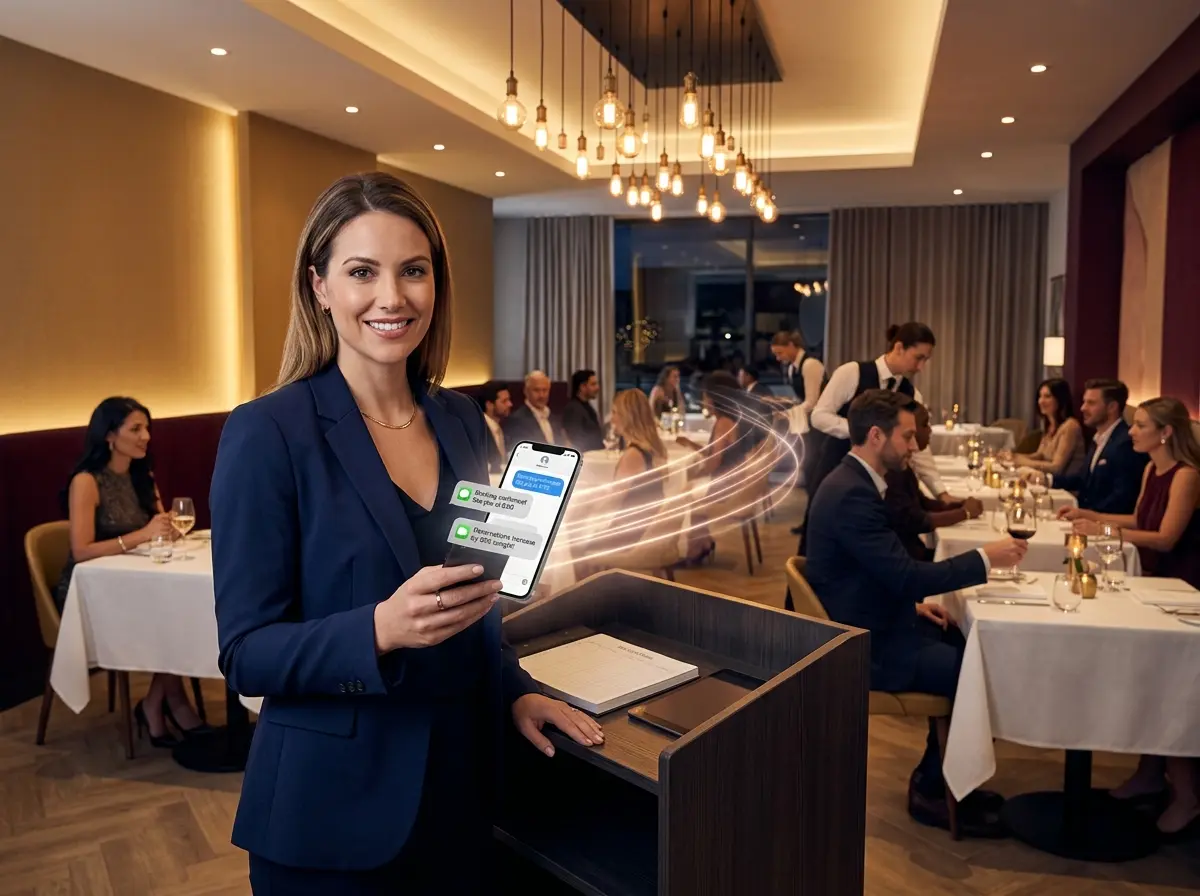
When a call does need to go to voicemail, Stella doesn't just record a message and leave you to fish through it later. She generates an AI-powered summary of the voicemail and sends a push notification directly to your managers — so your team knows immediately who called, why, and what they need. Her built-in CRM also captures caller information, allowing you to tag, track, and follow up with leads without any manual data entry. If you've ever lost a lead because a sticky note fell behind the counter, you'll appreciate this more than you expect.
Outbound Voicemail Scripts That Actually Get Callbacks
The Follow-Up Call Nobody Returns (Until Now)
Leaving an outbound voicemail is an art form that most salespeople and service providers have not mastered. The average outbound voicemail is too long, too vague, and ends with a phone number rattled off at a speed that would challenge a court stenographer. The result? Deleted without a second thought.
Effective outbound voicemails for service businesses need to be under 30 seconds, reference something specific about the prospect or their situation, include a clear and singular call to action, and repeat the callback number slowly — twice. If you're following up after an inquiry or estimate, mention it explicitly: "Hi Sarah, this is James from Precision Plumbing — I'm following up on the estimate we sent over Tuesday for your water heater replacement." That one sentence tells her you're not a robocall and that there's actual context to the conversation. That matters.
Voicemail Scripts by Service Business Type
Here are a few adapted templates you can use or modify for your industry:
For a Salon or Spa:
"Hi [Name], this is [Your Name] from [Business]. You reached out about booking a [service], and I wanted to personally follow up. We have some openings this week that I think would work well for you. Give me a call back at [number] — I'll say it again, that's [number] — and we'll get you on the calendar. Talk soon!"
For a Medical or Dental Office:
"Hi [Name], this is [Your Name] calling from [Practice Name]. I'm following up regarding your inquiry about [service/appointment]. We want to make sure we get you taken care of — please call us back at [number], and one of our team members will be happy to help. We're available Monday through Friday, 8 to 5."
For a Home Services Business (HVAC, Plumbing, Landscaping):
"Hey [Name], it's [Your Name] from [Company]. I'm calling back about the estimate request you submitted for [job type]. I have some availability this week and wanted to get you taken care of before the schedule fills up. Call me back at [number] — again, that's [number]. Looking forward to it!"
The Cadence: When and How Often to Follow Up
Leaving one voicemail and giving up is almost as bad as leaving no voicemail at all. Studies suggest that it takes an average of 8 touchpoints to convert a lead — and yet most businesses stop following up after one or two attempts. For service businesses, a reasonable outbound cadence looks like this: call and leave a voicemail on day one, follow up with a text or email on day two, try another call on day four, and send a final "closing the loop" message on day seven. After that, move them to a long-term nurture list rather than cold silence.
The key is persistence without being annoying — which, admittedly, is a tightrope walk. Spacing your contacts out, varying your channels, and always referencing why you're calling keeps things professional and relevant rather than desperate.
Quick Reminder About Stella
Stella is an AI robot employee that works as both an in-store kiosk and a 24/7 phone receptionist for service-based businesses — greeting customers, answering questions, taking voicemails with AI summaries, and managing leads through a built-in CRM. She's available for just $99/month with no upfront hardware costs and no learning curve to speak of. For businesses tired of losing leads to missed calls and forgotten voicemails, she's worth a serious look.
Stop Losing Leads to the Beep — Here's What to Do Next
The voicemail problem isn't going away, but it is solvable. Start by auditing your current inbound greeting — call your own number right now and listen to it like a stranger would. If it's vague, robotic, or doesn't give callers a reason to leave a message, rewrite it using the six-step framework above. Then build two or three outbound templates for your most common follow-up scenarios and train your team to use them consistently.
From there, think about the bigger picture. Every missed call, every unreturned voicemail, and every dropped lead represents real revenue walking out the door. The businesses that win in service industries aren't always the ones with the best services — they're often just the ones who are easiest to reach and fastest to follow up. Getting your voicemail strategy right is a low-cost, high-impact move that most of your competitors haven't bothered to make.
And if you want to take it a step further — so that fewer calls go to voicemail in the first place — explore what an always-on AI receptionist can do for your phone line and your in-store experience. Your future customers are calling right now. Make sure something worth talking to is on the other end.