So You Want Doctors to Send You Their Patients — Great Idea
Let's be honest: running a fitness studio is part passion project, part small business miracle. You're managing schedules, chasing leads, motivating members who disappear every February, and somehow keeping the lights on. The last thing you probably have bandwidth for is building a formal medical advisory board. And yet, here you are, reading this article — which means you're already smarter than most of your competitors.
Here's the thing: professional referrals from physicians, physical therapists, and other healthcare providers are among the most high-converting leads a fitness studio can receive. A patient who has been told by their doctor to start exercising isn't browsing Instagram ads and comparison shopping — they're motivated, they're ready, and they trust the recommendation. Studies suggest that physician-referred patients are significantly more likely to maintain exercise habits long-term, which means better retention numbers for you.
Building a medical advisory board partnership isn't as intimidating as it sounds. It's not about having a corner office and a mahogany conference table. It's about creating structured, mutually beneficial relationships with healthcare professionals who share your goal: helping people move better and live longer. Here's how to do it without losing your mind — or your integrity.
Laying the Foundation: What a Medical Advisory Board Actually Is
Before you start cold-calling every orthopedic surgeon in town, it helps to understand what you're actually building. A medical advisory board for a fitness studio isn't the same as a hospital's clinical oversight committee. It's a small, curated group of healthcare professionals who lend their expertise to your programming, validate your approach, and — yes — refer appropriate patients your way.
Choosing the Right Partners
Not every doctor makes a natural partner for a fitness studio. You want professionals whose patient populations directly overlap with the services you offer. Think physical therapists, sports medicine physicians, cardiologists running cardiac rehabilitation programs, endocrinologists managing diabetic patients, orthopedic surgeons with post-surgical clients, and even mental health professionals who prescribe exercise as part of treatment plans.
The key is alignment. A bariatric surgeon and a functional fitness studio are a natural fit. A cosmetic dermatologist, less so. Start by mapping your current member demographics and your most popular programs, then identify which medical specialties serve similar populations. That's your target list.
Defining What's In It for Them
Healthcare providers are busy people. They are not going to join your advisory board out of the goodness of their hearts — and frankly, you shouldn't want them to, because that arrangement doesn't last. You need to offer genuine value in exchange for their time and credibility.
Consider what you can provide: a monthly newsletter featuring exercise science updates relevant to their specialty, co-branded educational content for their patients, continuing education opportunities, priority access to your facility for staff wellness, or even a modest honorarium for formal advisory roles. The more concrete the value exchange, the more durable the relationship. Vague partnerships dissolve the moment someone gets busy — which in medicine is approximately always.
Building the Referral Pipeline That Actually Works
Creating a Seamless Referral Process
Even the most enthusiastic physician will stop referring patients to you if the process is clunky. Imagine a doctor telling a patient, "Go check out that studio on Maple Street" — that's not a referral pipeline, that's a suggestion that will be forgotten by the time the patient reaches the parking lot.
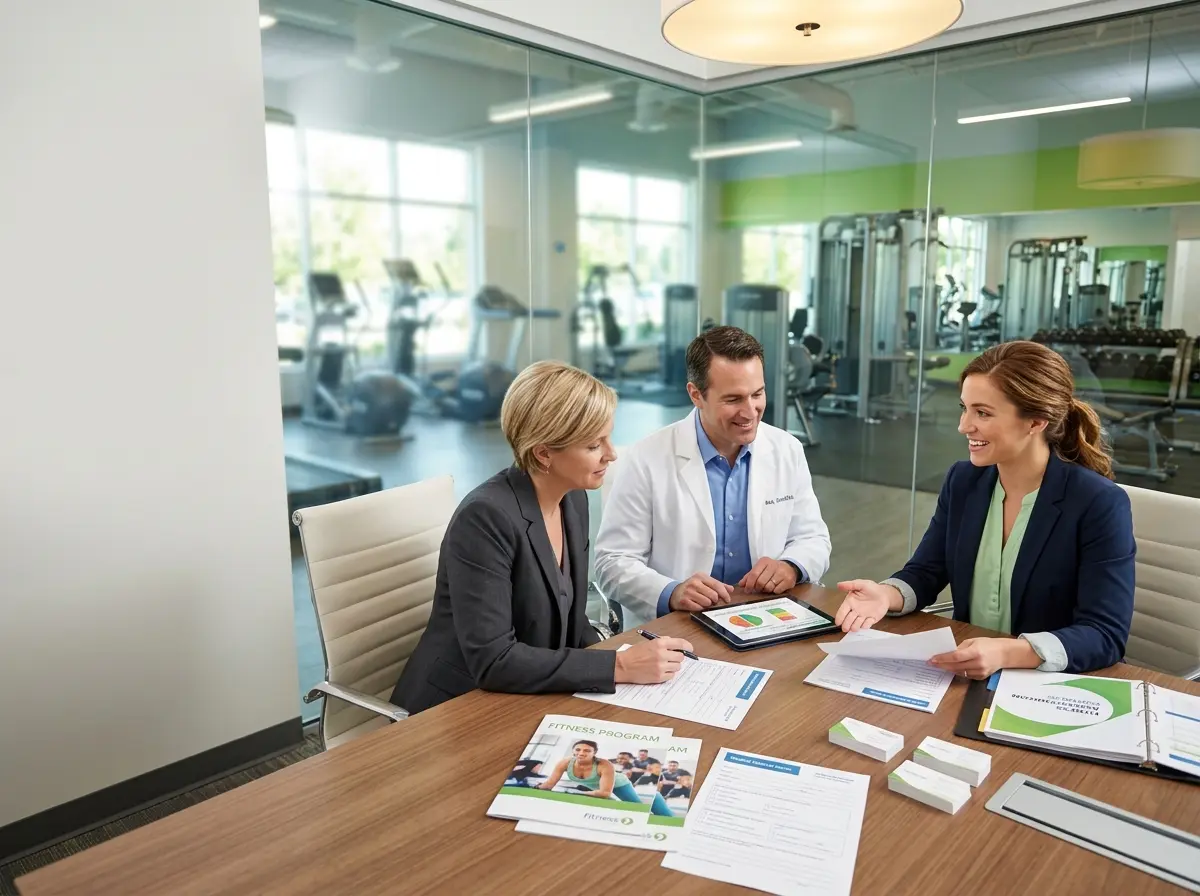
Instead, build infrastructure. Create a simple, one-page referral form — physical and digital — that physicians can hand directly to patients. Include your intake process, what new patients can expect, your relevant certifications, and a direct contact method. Ideally, when a referred patient calls your studio, they should be greeted professionally and immediately, with staff who already understand the referral context. Consider building a dedicated landing page for physician-referred patients that speaks their language: clinical outcomes, progressive programming, qualified staff.
Tracking Outcomes and Reporting Back
This is the step that separates fitness studios that get referrals once from fitness studios that become trusted clinical partners. With proper consent from your members, track progress metrics that matter to their referring providers: resting heart rate improvements, functional movement assessments, weight changes, attendance consistency, and self-reported pain levels.
Send quarterly outcome summaries back to your referring partners. Keep it clean, keep it professional, and make it easy for a physician to look at and think, "This is working, and I should send more patients here." This kind of closed-loop reporting is so rare in the fitness industry that doing it at all will make you stand out dramatically.
How Stella Can Support Your Referral Operations
Here's where things get practical for the day-to-day. Building a medical advisory board takes relationship capital, and maintaining it takes consistent, professional communication — which is hard when you're also running classes, managing staff, and troubleshooting broken treadmills.
Stella, the AI robot employee and phone receptionist, can help fill the operational gaps that often undermine referral programs before they gain traction. When a physician refers a patient and that patient calls your studio, Stella answers — 24/7, professionally, with full knowledge of your services, intake process, and current offerings. No voicemail purgatory. No rushed front desk staff who forget to collect the referring provider's name. Stella can handle the call, collect intake information through conversational forms, and log it directly into her built-in CRM so nothing falls through the cracks.
For studios with a physical location, Stella's in-store kiosk presence means that walk-in referrals are greeted immediately and professionally — even during your busiest class times when your human staff simply can't be in two places at once. At $99/month, she's the front-line professional presence your referral program deserves without the overhead of an additional hire.
Maintaining and Growing the Partnership Over Time
Communication Rhythms That Keep Partners Engaged
Medical professionals are relationship-oriented people who also happen to be extremely time-poor. Your job is to stay top of mind without becoming a nuisance — a balance that requires intentional communication rhythms rather than random outreach whenever you remember to reach out.
Consider a quarterly touchpoint strategy: a brief email update on studio programming changes, a personal thank-you note when a referral joins, an annual in-person meeting or facility tour for your advisory board members, and occasional co-branded content opportunities like a joint social media post or a patient education handout. None of these gestures are enormous, but together they signal that you take the partnership seriously — and that signal is worth more than any single grand gesture.
Expanding the Board Strategically
Once you have one or two strong medical partnerships in place, you have something powerful: social proof within the healthcare community. Physicians talk to each other. Physical therapists refer to specialists. A warm introduction from an existing advisory board member is exponentially more effective than any cold outreach you could attempt.
Grow your board deliberately and slowly. Adding five new advisors who are loosely engaged is far less valuable than deepening your relationship with two who are genuinely invested in what you're building. Quality over quantity is not just a fitness cliché — it's a solid advisory board strategy.
Protecting Your Reputation and Staying Compliant
A quick but important note: any partnership involving patient referrals touches on healthcare regulations, including anti-kickback statutes. This varies by region and by the nature of the arrangement, but the general rule is simple — keep value exchanges professional, transparent, and proportionate. When in doubt, consult a healthcare attorney before formalizing any referral arrangement that involves compensation. The last thing you want is a thriving referral program and a compliance problem. Build it right from the start.
A Quick Reminder About Stella
Stella is an AI robot employee and phone receptionist designed for businesses like yours — she greets customers in-store, answers calls around the clock, collects intake information, manages your contacts through a built-in CRM, and promotes your services without ever needing a break or a benefits package. At $99/month with no upfront hardware costs, she's one of the easiest ways to ensure that every referred patient who contacts your studio gets a professional, informed first impression — exactly when your medical partners are counting on you to deliver one.
Conclusion: Start Small, Build Deliberately, Reap Referrals
Building a medical advisory board partnership is not a weekend project — it's a long game that pays off in some of the highest-quality, highest-retention members your studio will ever see. The businesses that build these relationships well don't do it through grand gestures or aggressive pitching. They do it through consistency, professionalism, genuine value exchange, and the operational infrastructure to back it all up.
Here's your action plan to get started:
- Map your ideal referral partners by matching your studio's programming to relevant medical specialties in your area.
- Draft a value proposition — specific, concrete, and honest — that explains what advisory board members receive in exchange for their time and credibility.
- Build your referral intake process before you make a single outreach call. Know exactly what happens when a referred patient contacts you.
- Create a quarterly communication rhythm to keep partners engaged and informed without overwhelming them.
- Track outcomes and report back to your referring providers with clean, professional summaries.
The fitness studios that build strong medical partnerships don't just survive — they become trusted institutions in their communities. That's worth far more than any ad spend. Now go make some friends in white coats.