Your Legal Team Is Busy. Your Phone Isn't Helping.
Let's set the scene: your attorney just sat down to draft a complex motion, a paralegal is elbow-deep in discovery documents, and the phone rings. It's someone asking whether you handle parking ticket disputes. Spoiler: you don't. Now multiply that by a dozen calls a day, sprinkle in a few "I just have a quick question" callers who somehow need 25 minutes of free legal advice, and you start to understand why your legal team looks slightly haunted by 2pm.
For law firms — and really any business with a specialized, time-sensitive team — unfiltered phone traffic is a silent productivity killer. Every unqualified call that reaches a human costs real time, real money, and real patience. The good news? You don't have to choose between ignoring callers and overwhelming your staff. AI-powered pre-screening gives you a third option: letting technology handle the initial conversation so your legal team only picks up when it actually matters.
Why Call Pre-Screening Matters More Than You Think
The Hidden Cost of Unqualified Calls
It's easy to underestimate how much unfiltered phone calls cost your firm. According to various legal industry studies, attorneys can spend anywhere from 30 to 60 minutes per day on calls that don't convert to billable work or meaningful client relationships. Over a year, that's weeks of productive time quietly evaporating into the ether. And that's just the attorneys. Paralegals and front-desk staff? They're often fielding the same volume at the same cost to their focus and workflow.
Beyond time, there's the issue of consistency. Human receptionists — as wonderful as the good ones are — get tired, get sick, go on lunch breaks, and occasionally have bad days where their tone is a bit more "don't talk to me" than "welcome to our firm." Intake quality varies, information gets missed, and follow-ups fall through the cracks. Pre-screening through AI standardizes the entire first-touch experience, capturing the same key information every single time.
What "Pre-Screening" Actually Looks Like in Practice
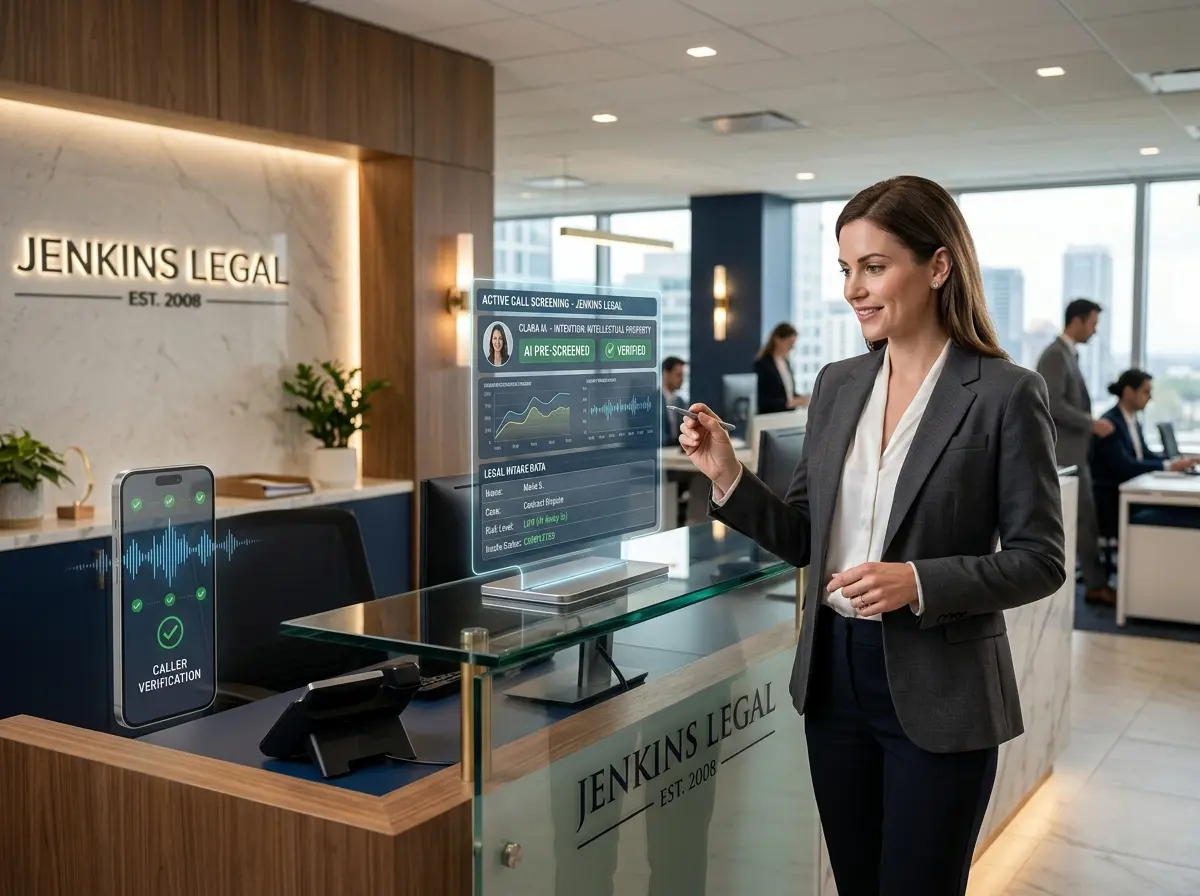
Effective AI pre-screening isn't just a glorified voicemail. Done right, it's a conversational intake process that qualifies callers based on criteria your firm actually cares about. Think of it as your first filter: before a call ever reaches an attorney, the AI has already asked the right questions.
A well-designed pre-screening flow for a law firm might include questions like:
- What type of legal matter are you calling about?
- Has this matter involved any court dates or deadlines?
- Are you a current client or a new inquiry?
- What's the best way to reach you, and when are you available?
Based on the answers, the AI can then route the call appropriately — connecting urgent matters to available staff, scheduling callbacks for new inquiries, or politely letting the caller know that this particular issue falls outside your practice areas. No awkward transfers, no wasted 15-minute conversations, and no attorney pulled away from billable work to explain that, no, you cannot help retrieve someone's impounded vehicle.
The Qualification Criteria Your Firm Should Define
The real power of AI pre-screening comes from your configuration. Every law firm has different intake criteria, and your AI receptionist should reflect that. Personal injury firms might prioritize calls where a recent incident occurred and medical treatment was sought. Family law practices might screen for jurisdiction and whether children are involved. Estate planning firms might distinguish between new estate creation and existing document amendments.
Spending an afternoon mapping out your ideal intake questions — and the logic for how calls should be routed based on responses — is one of the highest-ROI investments your firm can make. You essentially build a decision tree once, and then it runs flawlessly on every call that comes in, whether it's 10am on a Tuesday or 11pm on a holiday weekend.
How Stella Can Streamline Your Legal Intake Process
A Receptionist That Never Misses a Call (or a Detail)
Stella is an AI robot employee and phone receptionist built to handle exactly this kind of front-line communication. For law firms, she can answer incoming calls 24/7, walk callers through a customized intake flow, and collect all the relevant information before any human gets involved. She forwards calls to your team only when configurable conditions are met — meaning your attorneys hear their phone ring and already know it's worth picking up.
What makes Stella particularly useful for legal intake is her built-in CRM and conversational intake forms. Every piece of information a caller provides — practice area, contact details, urgency, case type — gets captured automatically and stored in a structured contact profile. No more scribbled notes on Post-its that end up under someone's coffee mug. Your team gets push notifications with AI-generated summaries of voicemails and intake conversations, so they're always walking into a follow-up call with context. For law firms with a physical office, she also operates as an in-person kiosk, greeting walk-in clients and handling initial check-ins with the same consistency she brings to the phones.
Building a Pre-Screening Workflow That Actually Works
Map the Journey Before You Automate It
Before you hand anything off to AI, get clear on your existing intake process — or the one you wish you had. Interview your front-desk staff about the most common call types they receive. Categorize them: qualified leads, unqualified inquiries, existing clients, vendors, and the miscellaneous chaos that defies categorization. This exercise alone usually reveals surprising patterns, like the fact that 40% of your incoming calls are existing clients with questions that could easily be handled through a client portal or FAQ.
Once you have your categories mapped, define the ideal outcome for each one. Should the AI schedule a callback? Transfer immediately? Collect information and send a summary to the intake coordinator? Having clear answers to these questions before you configure anything means your AI pre-screening system will actually reflect your firm's real-world workflow rather than just being a fancier hold queue.
Set Clear Escalation Triggers
Not every call should be resolved by AI, and a good pre-screening system knows that. Escalation triggers are the conditions under which a call gets pushed to a live human — and getting these right is critical. For a law firm, obvious escalation triggers might include existing clients calling about upcoming court dates, callers expressing distress or urgency, or specific practice areas that require immediate attorney involvement.
The goal isn't to create an impenetrable AI wall between callers and your team. It's to make sure the humans on your team are spending their time on the calls that genuinely need them. When escalation is handled thoughtfully, callers don't feel bounced around — they feel efficiently helped, which is a surprisingly rare experience when calling a professional services office.
Measure, Refine, and Actually Look at the Data
One underutilized advantage of AI pre-screening is the data it generates. Every call is a data point: what type of inquiry was it, how was it routed, did it convert, how long did it take? Over time, this information tells you whether your intake criteria are well-calibrated, whether certain call types are more common at certain hours, and whether your AI screening is improving or hurting your conversion rate on new client inquiries.
Review your call data monthly, at minimum. Look for patterns that suggest your qualification criteria need adjustment. If you're seeing a high volume of escalated calls that your attorneys still consider unqualified, tighten the screening questions. If qualified leads are occasionally getting stuck in the AI loop without reaching a human, that's a routing logic problem worth fixing. Treat your pre-screening setup as a living workflow, not a one-time configuration you never touch again.
A Quick Reminder About Stella
Stella is an AI robot employee and phone receptionist that works 24/7 for just $99/month — no upfront hardware costs, no sick days, and no learning curve for your staff. She answers calls, pre-screens and qualifies callers, collects intake information, manages your CRM, and only escalates to your human team when it's actually warranted. For businesses with a physical location, she also stands in-store as a kiosk, greeting and engaging customers or clients in person with the same professionalism and knowledge she brings to the phones.
Stop Letting Your Phone Work Against You
Your legal team's time is one of the most expensive resources in your business. Letting unqualified, unscreened calls eat into that time isn't just inefficient — it's costing you real money and quietly draining the people who do your most important work. AI pre-screening is no longer a luxury reserved for large firms with dedicated IT budgets. It's accessible, affordable, and increasingly expected by clients who want responsive, organized communication from the businesses they work with.
Here's what you can do right now: spend 30 minutes this week documenting your current intake process — what questions get asked, who asks them, and what happens with the answers. That document becomes the foundation of your pre-screening workflow. From there, explore how an AI receptionist like Stella can automate the first layer of that process, freeing your team to focus on the work that actually moves your firm forward.
Because the goal was never to answer every call. The goal was always to win every call worth taking.