If Your Best Clients Are Spending the Same as First-Timers, We Need to Talk
Let's set the scene: a client walks into your med spa for the third time this month. She's had two hydrafacials, a lip filler touch-up, and she's eyeing your new body contouring package. She's loyal. She's enthusiastic. She's practically an ambassador for your brand — and yet, she's paying the exact same price and getting the exact same experience as the person who walked in off the street after seeing your Instagram ad. Does that seem right to you?
If you answered "no," congratulations — you're already halfway to understanding why a client loyalty tier system might be the single most impactful revenue strategy you haven't implemented yet. If you answered "yes," well, stick around anyway. We need to have a conversation.
Loyalty tier systems — the kind used by airlines, hotels, and retail giants — aren't just for companies with massive marketing budgets. They're a proven mechanism for increasing average client spend, improving retention, and turning occasional visitors into devoted regulars. And in the med spa industry, where competition is fierce and client relationships are deeply personal, a well-designed tier system can be a genuine game-changer.
Building a Loyalty Tier System That Actually Works
Structure Your Tiers Around Real Spending Behavior
The first mistake most med spas make when designing a loyalty program is pulling tier thresholds out of thin air. Your tiers need to reflect how your actual clients actually spend — not how you wish they would. Start by pulling your client data and segmenting clients by annual or quarterly spend. Look at where natural clusters form. If you notice a large group spending between $500–$900 per year and another cluster at $1,500+, those natural breakpoints are your tier boundaries.
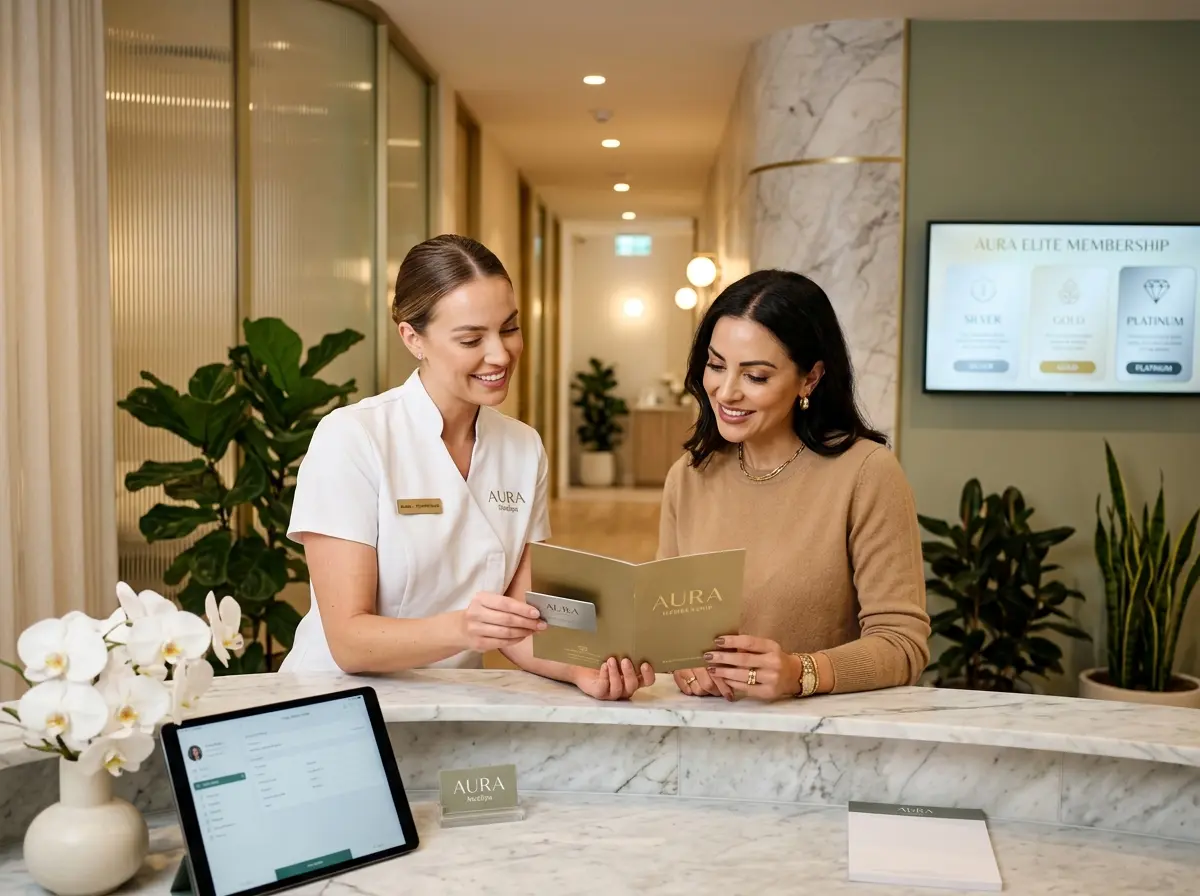
A common three-tier structure might look like this: a Silver tier for clients spending up to $800 annually, a Gold tier for $800–$1,800, and a Platinum tier for anything above. The exact numbers will vary depending on your market and service mix, but the principle holds — tiers should feel attainable at the entry level and aspirational at the top.
Make the Benefits Genuinely Desirable (Not Just a Free Pen)
Here's where many loyalty programs quietly die: the rewards aren't compelling enough to change behavior. A 2% discount and a birthday email is not a loyalty program — it's a newsletter with extra steps. Your higher tiers need to offer benefits that clients actually want and that have a real perceived value, even if the cost to you is relatively low.
Think about what your best clients already love and build from there. Effective med spa tier benefits might include priority booking for in-demand providers, complimentary add-ons (a collagen mask with every facial, for example), early access to new treatments, members-only pricing on product bundles, or invitations to exclusive events like product launch evenings or "VIP treatment nights." The goal is to make the upper tiers feel like a club worth joining — because a client who feels like a VIP will spend like one.
Use the Tier System to Nudge Clients Upward
A loyalty program isn't just a reward mechanism — it's a behavioral nudge. Done well, it creates a quiet, ongoing conversation between your spa and your client: "You're this close to Gold. Just one more visit." That psychological pull toward the next level is enormously powerful, and it's why airlines have been printing money with frequent flyer programs for decades.
Train your staff (and your systems) to let clients know where they stand. A simple statement like, "By the way, you're only $150 away from Gold status — which includes complimentary lymphatic drainage add-ons for the whole year," is not pushy. It's genuinely helpful, and it works. When clients know what they're working toward, they book sooner, spend more per visit, and come back more frequently. That's not a coincidence — it's the tier system doing exactly what it's supposed to do.
Technology That Helps You Run the Program Without Losing Your Mind
Automate the Tracking So Your Team Can Focus on Service
Let's be honest: if your loyalty program depends on your front desk team manually tracking client spend in a spreadsheet, it will collapse within three months. The operational overhead of managing a tier system manually is real, and it's one of the biggest reasons great ideas never make it past the "we should do this" phase. The solution is automation — specifically, a system that tracks client history, updates tier status, and surfaces that information at the point of interaction without your staff having to dig for it.
This is an area where Stella, the AI robot employee and phone receptionist, can genuinely support your med spa. Stella's built-in CRM with custom fields, tags, and AI-generated client profiles makes it easy to track loyalty tier status and client history in one place. Whether she's greeting a client at her in-store kiosk or answering a phone call to book an appointment, Stella can reference client information conversationally — and her intake forms help capture new client data from the very first interaction, so every contact starts with a profile, not a blank slate.
Increasing Average Spend Through Strategic Tier Design
Bundle Services to Create Natural Tier Acceleration
One of the most effective ways to increase average spend within a tier system is to design service bundles that are priced just above a tier threshold — making it easy and attractive for clients to reach the next level in a single visit. For example, if a client is $200 away from Gold status, a "Glow Accelerator Package" that combines a signature facial with a LED light therapy add-on for $220 solves two problems at once: the client gets a great deal, and they unlock a tier with long-term benefits. Everyone wins.
Bundles also increase the perceived value of a visit, which encourages clients to treat themselves rather than booking the minimum. When a client feels like she's getting more out of each appointment, she's more likely to rebook quickly and recommend your spa to others — which brings in new clients who are already primed to engage with your loyalty program from day one.
Leverage Tier Exclusivity During Peak Seasons
Seasonality is a genuine challenge in the aesthetics industry. Many med spas see surges before summer and the holidays, followed by slower stretches in between. A well-designed tier system can help smooth those dips by creating exclusive seasonal offers available only to Gold and Platinum clients during slower periods. Think: a "Platinum February" campaign offering exclusive access to a new treatment before it opens to the general public, or a members-only Sunday evening spa event in January when bookings typically slump.
This approach accomplishes two things simultaneously. It rewards your best clients with something genuinely special, and it generates revenue during periods when you'd otherwise be staring at an empty treatment room. Exclusive access is one of the most powerful benefits you can offer — and it costs you very little beyond thoughtful scheduling.
Track Tier Performance and Adjust Relentlessly
A loyalty tier system is not a "set it and forget it" situation. You should be reviewing the performance of your program quarterly at minimum, asking questions like: How many clients are progressing between tiers? What percentage of Silver clients are reaching Gold within 12 months? Which benefits are being redeemed most often, and which are being ignored? Are clients who join the program spending more than those who don't?
These metrics will tell you everything you need to know about what's working and what needs adjustment. If clients are stalling at Silver and never reaching Gold, your tier threshold might be too high, your Gold benefits might not be compelling enough, or your team might not be communicating progress effectively. The data will point you toward the answer — but only if you're actually looking at it.
Quick Reminder About Stella
Stella is an AI robot employee and phone receptionist built for businesses like yours — she greets clients at her in-store kiosk, answers calls 24/7, promotes your services and specials, upsells related offerings, and manages client information through a built-in CRM, all for just $99/month with no upfront hardware costs. Whether your front desk is slammed on a Tuesday afternoon or your phones are ringing at 10 p.m., Stella is always on, always professional, and never needs a coffee break.
Start Small, Scale Smart, and Watch Your Revenue Climb
If implementing a full three-tier loyalty system feels overwhelming, start with two tiers. Create a basic member level and a premium level, define two or three meaningful benefits for each, and begin tracking client spend in your CRM. Get comfortable with the mechanics, see how your clients respond, and iterate from there. A simple program that you actually run is worth infinitely more than a sophisticated program that lives in a Google Doc somewhere.
Here's what you should do this week:
- Pull your client spending data and identify natural tier thresholds based on real behavior.
- Draft a list of five to eight benefits you could offer at different tiers — prioritize high perceived value over high cost.
- Identify the technology you'll use to track tier status and surface it at the point of client interaction.
- Train your team on how to communicate tier status and progress during every client interaction.
- Set a 90-day review date to evaluate performance and make your first round of adjustments.
Your most loyal clients are already spending money with you. A tier system simply gives them a reason to spend more — and to feel great about doing it. That's not manipulation; that's smart business. And in a competitive med spa market, smart business is exactly what separates the practices that thrive from the ones that wonder why their retention numbers look the way they do.
Build the tiers. Reward the loyalty. Grow the revenue. Your clients — and your bottom line — will thank you.