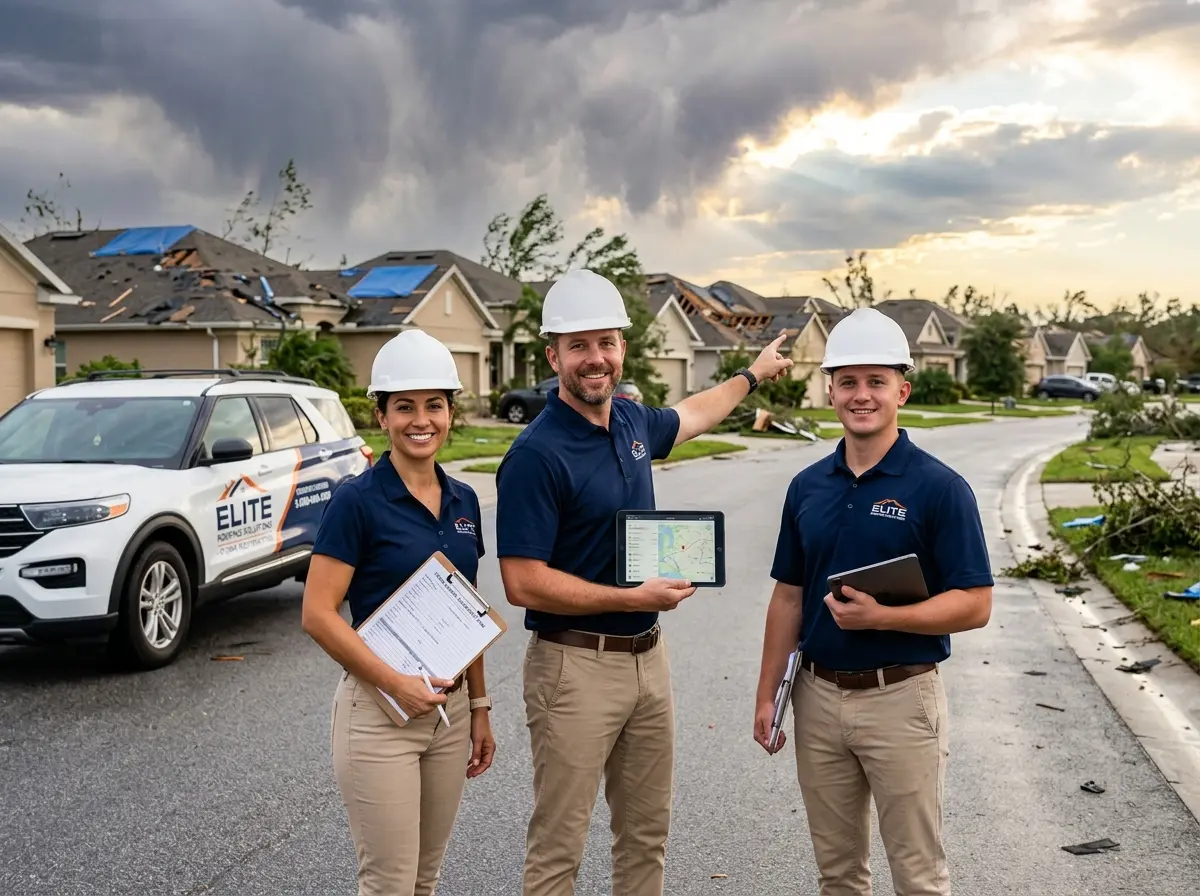
Introduction: When the Storm Clears, the Race Begins
A major storm rolls through town. Shingles are scattered across lawns like confetti. Gutters are hanging on for dear life. And somewhere across the city, every roofing company within a 50-mile radius is loading up their trucks and sharpening their door-knocking skills. Welcome to post-storm canvassing season — the Super Bowl of roofing lead generation, where the prepared win big and the unprepared hand their potential customers to the competition.
Here's the uncomfortable truth: most roofing companies treat post-storm canvassing like a walk in the park. Send out a few guys, hand out some flyers, hope for the best. The result? A pile of business cards in kitchen junk drawers and a conversion rate that would make an accountant cry. The companies that actually generate high-quality leads from canvassing campaigns do it with a system — not just hustle.
This guide is for roofing business owners who want to stop leaving money on storm-damaged rooftops and start running canvassing campaigns that bring in serious, closeable leads. We'll walk through how to prepare your team, what to say at the door, how to follow up like a professional, and how to make sure no lead slips through the cracks while your crew is out in the field.
Before You Knock a Single Door: Planning Your Campaign
Map the Damage Zones Before Your Competitors Do
The first mover advantage in post-storm canvassing is real. Research consistently shows that homeowners who receive a roofing consultation within 24–48 hours of storm damage are significantly more likely to sign a contract than those contacted a week later. By then, they've already talked to three other companies, gotten confused by competing estimates, and decided to "think about it" indefinitely.
Use tools like Xactimate, local hail mapping services, or even free resources like HailTrace and StormAware to identify the hardest-hit neighborhoods before you dispatch your team. Cross-reference storm path data with neighborhood demographics — areas with older housing stock tend to have more legitimate damage claims and homeowners who haven't replaced their roof in 15+ years. That's your sweet spot.
Create a prioritized canvassing grid and assign specific teams to specific zones. Don't let your crew wander aimlessly and overlap territories. That's how you burn time, create awkward double-knock situations, and generally look like you've never done this before.
Equip Your Team With More Than Just Business Cards
Your canvassers are the face of your company the moment a homeowner opens the door. They need to be prepared — professionally dressed, trained on what to say, and equipped with materials that build instant credibility. At minimum, every canvasser should carry branded materials including door hangers, inspection authorization forms, storm damage brochures, and a tablet or smartphone for capturing lead information on the spot.
Equally important is the script. Not a robotic, word-for-word recitation — but a confident, conversational framework that opens with empathy ("We've been helping homeowners in this neighborhood assess storm damage today..."), establishes credibility, and offers a free, no-obligation inspection as the clear call to action. Role-play this with your team before they hit the streets. Yes, it feels awkward. Do it anyway.
Keeping the Phones Answered While Your Crew Is in the Field
Don't Let a Missed Call Cost You a Signed Contract
Here's a scenario that happens more often than roofing companies want to admit: a canvasser knocks on a door, no one answers, leaves a door hanger. The homeowner gets home, sees the hanger, calls the number — and gets voicemail. They hang up and call the next company on the flyer that also ended up on their porch. Lead lost. Contract gone.
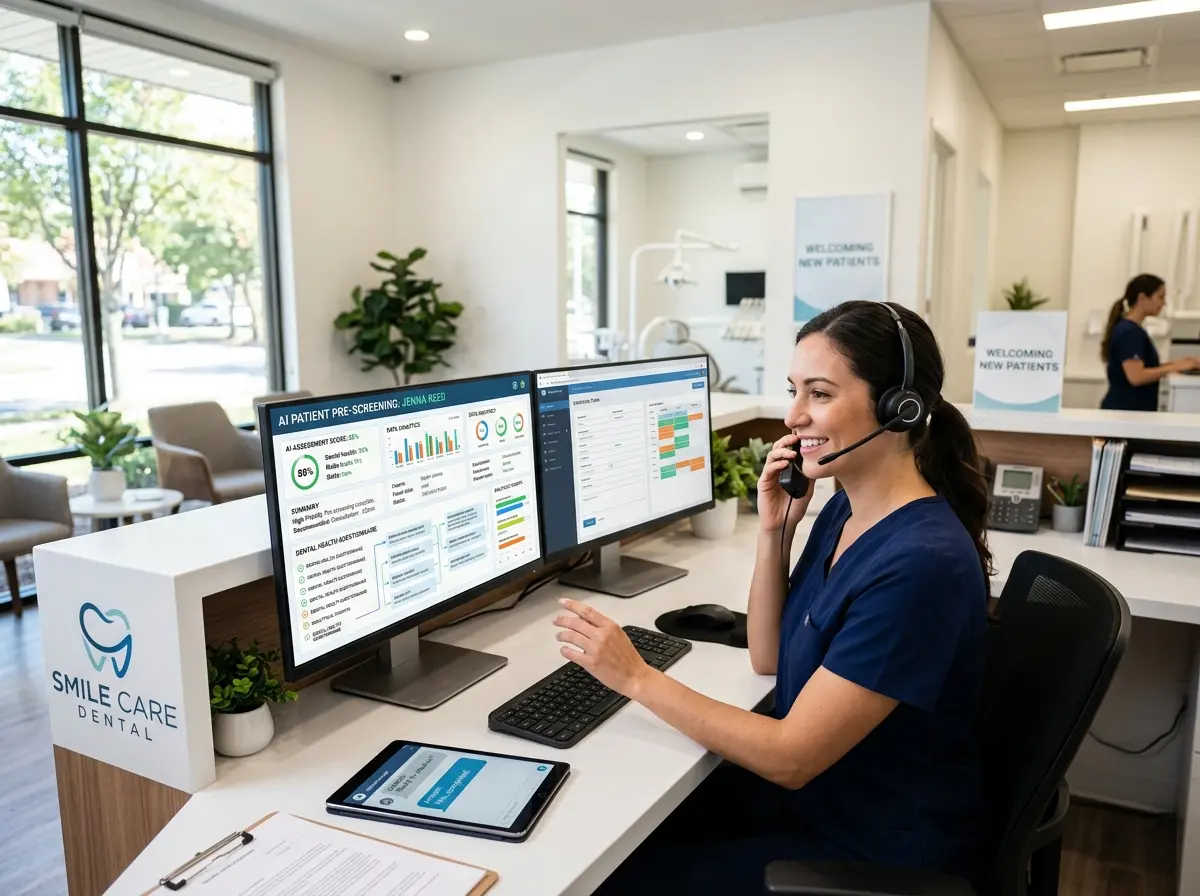
During an active canvassing campaign, your office staff is overwhelmed, your project managers are in the field, and your phone is ringing off the hook with storm-anxious homeowners. This is exactly where Stella — an AI robot receptionist — becomes a genuine competitive advantage. Stella answers every inbound call 24/7, can speak knowledgeably about your services, collect caller information through conversational intake forms, and ensure that every lead is captured and logged — even at 9 PM when your office is closed and a worried homeowner just noticed a ceiling stain. She can forward urgent calls to a human team member when needed, or handle the intake entirely on her own. For roofing companies running high-volume post-storm campaigns, that kind of consistent, professional phone coverage isn't a luxury — it's a necessity. Her built-in CRM means every collected lead goes straight into an organized, tagged contact profile ready for your sales team to follow up on.
At the Door: Turning Conversations Into Committed Leads
The First 10 Seconds Determine Everything
Homeowners are skeptical — and honestly, they have every right to be. Post-storm canvassing also attracts its share of fly-by-night operators looking to cash in quickly and disappear before the work is done. Your job in the first 10 seconds is to not look like one of those people. That means a clean, branded uniform (not a random t-shirt), a calm and friendly demeanor (not overly aggressive or salesy), and a clear, benefit-forward opening statement.
Lead with value: "We're doing free storm damage inspections in this area today — takes about 20 minutes and we'll give you a full written assessment of anything we find, no obligation." That's a low-friction offer that's hard to say no to. Avoid leading with insurance claims or monetary promises on the doorstep — it raises red flags and, in some states, it's legally problematic anyway.
Handle Objections Like a Professional, Not a Used Car Salesman
The three most common doorstep objections your canvassers will face are: "I need to talk to my spouse," "I already have a roofer," and the classic "I'm not interested" before the door closes. Train your team to acknowledge these graciously rather than push through them. A homeowner who feels respected and not pressured is dramatically more likely to call you back later — and more likely to refer their neighbors.
For the "already have a roofer" objection, a simple response works well: "That's great — getting a second opinion on storm damage assessments is always smart. Our inspection is completely free and written, so you'd have something to compare." Plant the seed, leave the door hanger, and move on. You'd be surprised how many callbacks come from houses where you thought you struck out.
Capture Lead Data in Real Time — Not Later, Never
The single biggest operational failure in canvassing campaigns is poor lead capture. Canvassers rely on memory, scribbled notes, or a stack of paper forms that get reviewed two days later. By then, details are fuzzy, leads have gone cold, and follow-up is a mess. Require your team to log every interaction digitally in real time — name, address, damage level observed, homeowner interest level, and any agreed-upon appointment details. Use a simple CRM or even a structured Google Form that feeds into a spreadsheet your office can monitor live. The companies that follow up fastest with the most relevant information close the most jobs. It really is that simple.
Quick Reminder About Stella
Stella is an AI robot employee and phone receptionist that works 24/7 for just $99/month — no upfront hardware costs, no sick days, no dropped calls. She answers your phones, collects lead information through smart intake forms, manages contacts in a built-in CRM, and keeps your business running professionally even when your team is slammed. For roofing companies running post-storm campaigns — when leads are flooding in and every missed call is money left behind — Stella is the kind of backup that actually shows up.
Conclusion: Build the System Once, Win Every Storm Season
Post-storm canvassing doesn't have to be a chaotic scramble. The roofing companies that consistently turn storm events into their most profitable months aren't just working harder — they're working with a repeatable, documented system that covers every stage of the campaign.
Here are your actionable next steps to get that system in place before the next storm hits your market:
- Subscribe to a storm tracking tool so you can identify damage zones within hours of a major weather event.
- Create a written canvassing playbook including territory maps, scripts, objection responses, and required equipment for each canvasser.
- Implement real-time digital lead capture using a CRM or structured form — no more paper, no more memory-based logging.
- Train and role-play with your canvassing team before deployment, not after the first round of awkward doorstep conversations.
- Ensure your phones are covered around the clock so that every homeowner who calls as a result of your canvassing effort actually reaches someone — or something — that can help them.
The storm doesn't care about your schedule. Neither do the homeowners frantically googling "roof repair near me" at 11 PM with a bucket under a drip. Build the infrastructure to meet them where they are, respond faster than your competition, and deliver a professional experience from the first knock to the final invoice. That's how you stop chasing leads — and start closing them.