January Is Either Your Best Month or Your Worst — Here's How One Gym Made It Their Best
Every January, gym owners across the country rub their hands together with glee. New Year's resolutions are flying, guilt from the holidays is at an all-time high, and potential members are practically knocking down the door. It sounds like a golden opportunity — and it is — but here's the thing: so does every other gym in your city. The competition for those resolution-fueled sign-ups is fierce, and if your marketing strategy amounts to "we'll put a sign in the window and hope for the best," you might find yourself watching those leads walk straight into the big-box gym down the street.
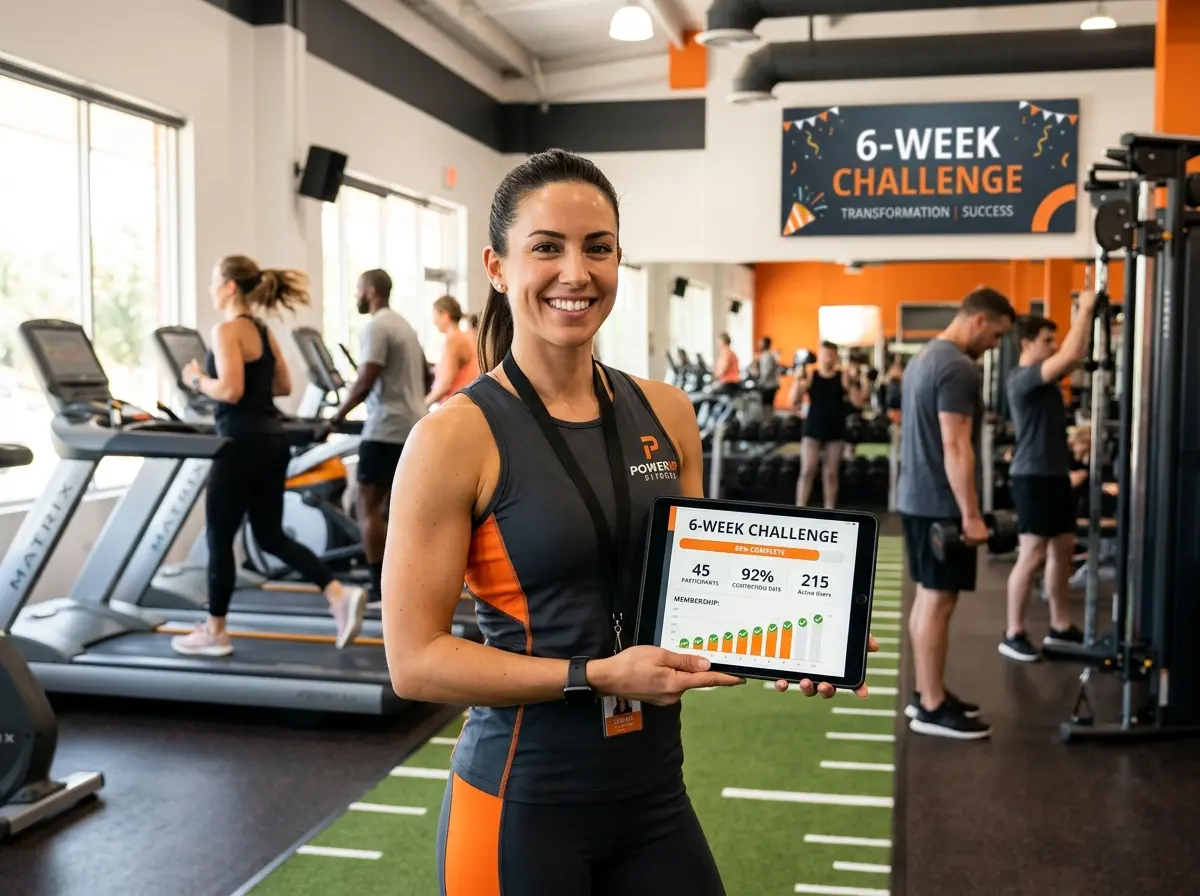
That's exactly the situation Peak Performance Gym in Austin, Texas found themselves in two years ago. Surrounded by larger competitors with bigger budgets, they needed a way to stand out, create urgency, and convert curious window-shoppers into paying members — and fast. Their solution? A tightly executed Six-Week Challenge Campaign that generated 80 new memberships in January alone. Not bad for a 4,500-square-foot independent gym with a staff of eight.
Let's break down exactly how they did it, what made it work, and how you can replicate their success — whether you run a gym, a yoga studio, or honestly any fitness-adjacent business trying to capitalize on the most motivated month of the year.
The Six-Week Challenge: Building a Campaign That Actually Converts
Why Six Weeks (and Not Eight, or Twelve, or Forever)?
The number isn't arbitrary. Six weeks is long enough for participants to see real, measurable results — improved endurance, lost inches, visible muscle tone — but short enough that the commitment doesn't feel overwhelming to a brand-new prospect. "Join us for a year" sounds terrifying to someone who hasn't been to a gym since the Obama administration. "Join us for six weeks" sounds doable. It lowers the psychological barrier to entry while still getting them in the door long enough to form a habit and, ideally, stick around as a long-term member.
Peak Performance structured their challenge with a clear beginning, middle, and end: a kickoff event with body composition assessments, weekly check-ins with coaching staff, and a final celebration with prizes for top performers. Every step was designed to keep participants engaged, accountable, and socially connected to the gym community — because community is ultimately what keeps people coming back after the resolution high wears off in mid-February.
Pricing, Packaging, and the Art of Making It Feel Like a Deal
The gym offered the Six-Week Challenge at a flat rate of $149, which included unlimited access to all classes and the gym floor for the challenge duration. Here's the smart part: at the end of the six weeks, participants who converted to a full monthly membership received a credit of $75 toward their first month. This created a natural and financially incentivized bridge from "challenge participant" to "full member" — and it worked. Roughly 68% of challenge participants converted to ongoing memberships, which is where the real revenue lives.
The pricing was deliberately positioned below the psychological threshold of what felt like a "real" gym commitment, while still being high enough to filter out people who weren't genuinely interested. Free challenges sound appealing in theory, but they tend to attract people who are just as committed as they paid for — which is to say, not very.
Promotion: Getting the Word Out Without Blowing the Budget
Peak Performance didn't run a single television ad. Their promotional strategy was built on three pillars: social media, local partnerships, and word-of-mouth referrals. They ran a targeted Facebook and Instagram campaign for two weeks before January 1st, specifically targeting users within a 10-mile radius who had expressed interest in fitness, weight loss, or health goals. Total ad spend: approximately $800. They also partnered with three local businesses — a smoothie bar, a chiropractor's office, and a running shoe store — to cross-promote the challenge to their respective audiences. Finally, existing members who referred a challenge participant received one free month of membership. The referral program alone accounted for 22 of the 80 new sign-ups.
How Smart Tools Helped Them Stay Organized Without Losing Their Minds
Managing Leads and Inquiries Without Dropping the Ball
Here's a problem that doesn't get talked about enough in these success stories: when a campaign works, it creates chaos. Eighty new leads don't arrive neatly scheduled across the month. They call on Saturday night. They walk in during the busiest class of the day. They submit an online form and expect a response in ten minutes or they're gone. Peak Performance nearly lost a significant number of early inquiries simply because their front desk staff was overwhelmed during peak hours and couldn't respond to every call and walk-in simultaneously.
This is exactly the kind of operational gap that Stella — an AI robot employee and phone receptionist — is built to fill. For gyms with a physical location, Stella stands inside the facility as a human-sized kiosk, proactively greeting walk-ins, answering questions about the challenge, and collecting prospect information through conversational intake forms — all without pulling a staff member away from the floor. On the phone side, she answers calls 24/7, delivers consistent information about current promotions, and routes serious inquiries to human staff based on configurable conditions. Her built-in CRM automatically organizes prospect data, tags leads, and generates AI-powered profiles, so no one falls through the cracks during a high-volume campaign.
Retaining the Members You Worked So Hard to Win
The Conversion Window: When and How to Ask for the Upgrade
The biggest mistake fitness businesses make after a successful challenge campaign is waiting too long to have the membership conversation. Peak Performance trained their coaches to begin planting the seed at week four — not as a hard sell, but as a natural next-step conversation. "You've made incredible progress. Have you thought about what your plan looks like after the challenge?" It's low-pressure, personalized, and timed to hit when the participant is feeling their best about themselves and the gym. By the time week six arrived, the membership offer didn't feel like a sales pitch — it felt like the obvious logical conclusion.
They also sent a personalized email at the start of week five that included each participant's progress data from their initial assessment, a summary of their achievements, and a clear, limited-time offer to convert to a membership at a discounted rate. The combination of personal progress data plus financial incentive plus deadline is a remarkably effective conversion trifecta. People respond to seeing their own results in black and white, and a deadline prevents the "I'll think about it" response that kills conversion rates.
Building Long-Term Loyalty After the Challenge Ends
Getting 80 people to sign up in January is impressive. Keeping 60 of them in July is the real win. Peak Performance built a post-challenge retention strategy that included monthly social events, a member milestone recognition program, and quarterly mini-challenges open only to existing members. This gave members ongoing reasons to stay engaged beyond their initial motivation, which — let's be honest — is probably going to run out around the time Valentine's Day candy hits the shelves.
They also actively encouraged members to become referral ambassadors by sharing their transformation stories on social media and tagging the gym. User-generated content is worth its weight in gold for fitness businesses, and participants who went public with their results were far more likely to remain committed members. Nobody wants to post their before-and-after photos and then quietly cancel their membership two months later.
Quick Reminder About Stella
Stella is an AI robot employee and phone receptionist built for businesses exactly like yours — gyms, studios, salons, and more. She greets customers in person as a physical kiosk, answers phone calls around the clock, promotes your current deals, collects lead information, and keeps your CRM organized, all for just $99 per month with no upfront hardware costs. When your next big campaign drives a surge of inquiries, Stella makes sure you never miss a single one.
Your January Playbook: Making It Happen
The success of Peak Performance's Six-Week Challenge wasn't magic — it was the result of thoughtful planning, smart pricing, targeted promotion, and operational systems that could handle the volume they generated. The good news is that every element of their strategy is fully replicable, regardless of your gym's size or budget.
If you want to run your own version of this campaign, here's your actionable starting point:
- Define your challenge structure — set a clear start date, end date, weekly touchpoints, and a final event or assessment to mark completion.
- Price it strategically — low enough to attract newcomers, high enough to attract serious ones, and include a financial bridge to full membership conversion.
- Start promoting in mid-December — don't wait until January 1st. The best sign-ups happen before the holiday guilt has fully settled in.
- Build a referral incentive — your existing members are your most credible marketers. Give them a real reason to talk.
- Have a system for leads — a surge of interest is worthless if your team can't keep up with inquiries and follow-ups.
- Plan your conversion conversation in advance — don't wing the membership pitch. Script it, train your staff, and time it for week four.
- Design a post-challenge retention plan — because January wins only count if they're still with you in June.
The gyms that dominate January aren't necessarily the ones with the biggest budgets or the fanciest equipment. They're the ones with a real plan, a compelling offer, and the operational infrastructure to execute without falling apart under pressure. Build that, and January stops being a gamble and starts being a growth engine.