When Your Customer Is Seeing Red (And It's Not Just Because of the New Paint Job)
Let's be honest — nobody gets into the auto repair business because they love conflict resolution. You got in because you love engines, diagnostics, the satisfying click of a torque wrench hitting the right setting. But somewhere between your passion for horsepower and your very first week on the floor, you discovered a universal truth: angry customers come with the territory.
According to a study by the American Customer Satisfaction Index, the auto service industry consistently ranks among the lower tiers of customer satisfaction across all sectors. That's partly because customers arrive already stressed — their car broke down, they're late for work, they weren't expecting a $1,200 repair bill, and now they're standing in your lobby rehearsing a speech they've been mentally writing since the tow truck picked them up. You are about to be the audience for that speech, whether you like it or not.
The good news? Handling an angry customer well doesn't just save the relationship — it can actually strengthen it. Customers who have a complaint resolved effectively are often more loyal than customers who never had a problem at all. So consider this your guide to turning those white-knuckled moments into long-term loyalty.
Understanding Why Auto Shop Customers Get Angry in the First Place
Before you can de-escalate a situation, it helps to understand what lit the fuse. Spoiler: it's rarely just about the car.
The Usual Suspects
Most customer anger in auto shops traces back to a few common culprits. Unexpected costs top the list — nobody budgets for a blown transmission on a Tuesday. Close behind that is a lack of communication: the customer dropped off their vehicle at 8 AM and hasn't heard a word by 3 PM. They've called twice, left a message, and are now convinced their car has been disassembled and abandoned in your parking lot.
Longer-than-promised wait times, repairs that didn't fix the original problem, and feeling like they weren't listened to or respected round out the usual grievances. In many cases, the anger isn't really about you specifically — it's about feeling powerless over a situation that significantly impacts their daily life. Their car is their freedom, their livelihood, their way to pick up their kids. When it's out of commission and communication goes dark, anxiety turns into frustration, and frustration turns into the conversation you were really hoping to avoid.
The Danger of Dismissing the Emotional Layer
One of the biggest mistakes shop owners and service advisors make is jumping straight to problem-solving mode before the customer feels heard. You might have a perfectly logical explanation for why the repair took longer or cost more. But if you lead with logic before you've acknowledged the emotion, you'll come across as defensive — and the customer will dig in deeper. The brain doesn't process reason well when it's flooded with frustration. Empathy first, explanation second. Always.
Practical Strategies for De-Escalating Angry Customers
Listen First, Speak Second
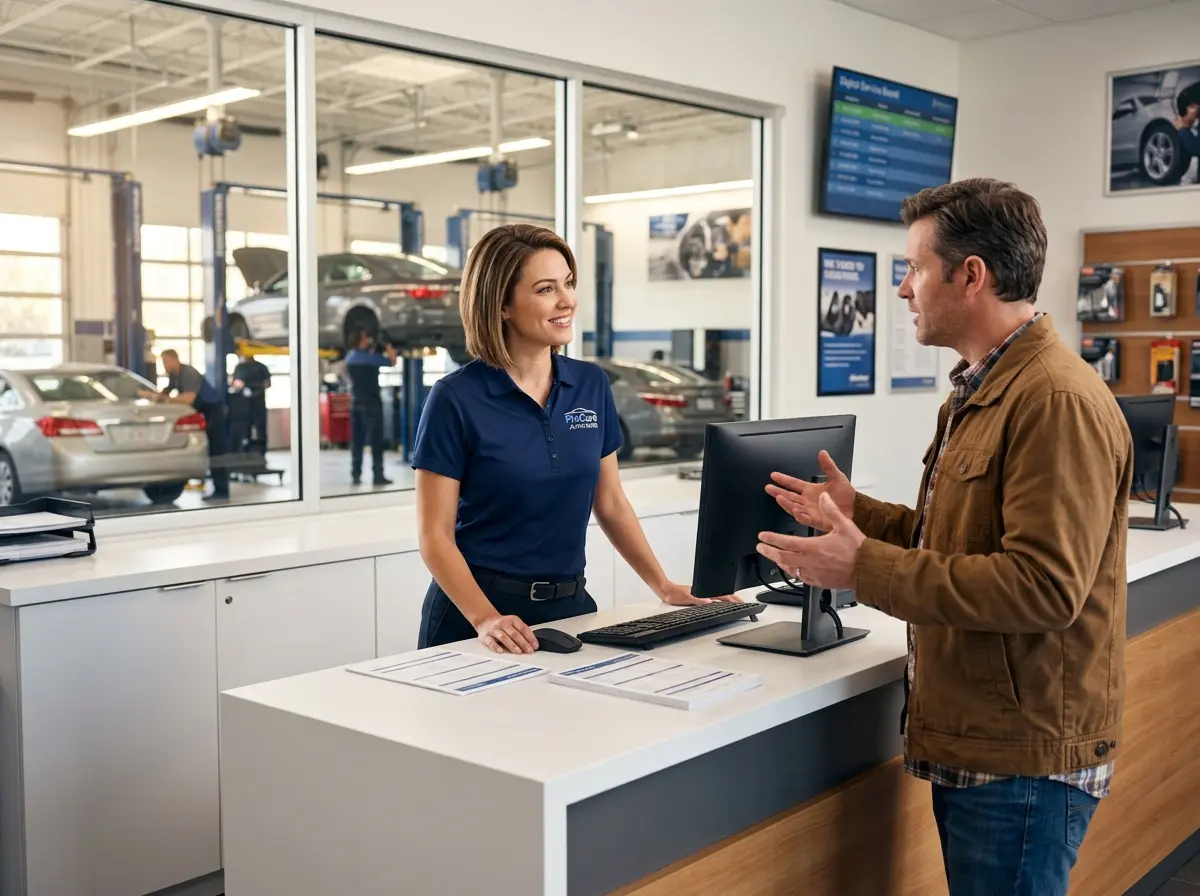
When a customer comes in hot, your first job is to become the most patient person in the room. Let them finish. Don't interrupt, don't cross your arms, and for the love of all things automotive, do not check your phone. Make eye contact, nod appropriately, and let them get it all out. Most people, once they've fully vented, naturally start to calm down — because the act of being heard is itself disarming.
After they've finished, before you say anything else, acknowledge what they went through. Something as simple as "I completely understand why you're frustrated, and I'm sorry this experience wasn't what you expected" can take the temperature of the conversation down several degrees almost instantly. This isn't admitting fault. It's being a human being.
Stay Calm, Even When It's Hard
Your tone is contagious. If you respond to anger with defensiveness or frustration of your own, you've just poured fuel on a fire in your own shop. Take a breath, lower your voice slightly (counterintuitively, speaking more quietly actually draws people in and de-escalates), and maintain a steady, professional demeanor. If you feel yourself getting reactive, it's okay to say, "Let me take a moment to pull up your file so I can give you a complete answer." That small pause can save the entire conversation.
Offer a Real Solution, Not Just an Apology
Apologies without action are just words, and customers know the difference. Once you've listened and acknowledged, pivot toward what you can actually do. This might mean offering a partial discount, redoing a service at no charge, expediting a repair, or simply giving a detailed explanation of what happened and why. Be specific. Vague promises like "we'll make it right" don't build trust — clear commitments do. Document what you agree to, follow through on it, and follow up afterward to make sure the customer is satisfied. That follow-up call is worth more than almost any other service recovery gesture.
How Technology Can Help You Stay Ahead of Customer Frustration
The best conflict resolution strategy is preventing the conflict from happening in the first place. A huge portion of customer complaints in auto shops stem from poor communication — and that's an area where the right tools can make an enormous difference.
Stella: Your Always-On Front Desk
Stella is an AI robot employee and phone receptionist built for businesses like auto shops. In your physical location, she stands as a human-sized kiosk that greets customers, answers questions about your services, and keeps people informed — so no one is left wondering what's going on with their vehicle. On the phone, she answers calls 24/7, which means that customer calling at 5:03 PM — two minutes after your team has gone home — actually gets a real, knowledgeable response instead of voicemail. She can forward urgent calls to staff, take detailed voicemails with AI-generated summaries, and even log customer information through built-in intake forms and a CRM. Fewer missed calls means fewer frustrated customers who feel ignored before they even walk through your door.
Turning a Negative Experience Into a Long-Term Relationship
The Follow-Up Is Where Loyalty Is Made
Most businesses consider a complaint resolved the moment the customer walks out the door. Smart auto shop owners know the real work happens afterward. A simple phone call or text a few days after a tense interaction — just to check in and confirm that everything is running smoothly — communicates something powerful: that you actually care about the outcome, not just the transaction. This kind of follow-up is so rare that it almost always surprises customers, and surprised customers become loyal ones.
Consider building a post-service follow-up into your standard workflow for any customer who expressed dissatisfaction. Even if the conversation was difficult, reaching back out demonstrates professionalism and integrity. It also gives you an opportunity to catch any lingering issues before they become a negative online review — which, in today's world, is its own category of crisis management.
Use Feedback to Actually Fix Things
Every angry customer is telling you something about your operation. If you're hearing the same complaints repeatedly — long wait times, unclear estimates, poor communication between the service desk and the floor — those aren't isolated incidents, they're patterns. Build a simple system to track recurring complaints, and then actually address the underlying process issues. This might mean revising how and when you communicate estimate updates, improving how your team hands off information, or rethinking how your front desk manages call volume during peak hours.
The shops that get this right don't just have fewer angry customers — they have stronger reputations, better online reviews, and significantly higher retention rates. Word of mouth in the auto service industry is powerful. A customer who felt respected after a tough experience will tell people about it. A customer who felt dismissed will also tell people about it, just with considerably more enthusiasm and a one-star rating attached.
Train Your Team, Not Just Yourself
De-escalation skills don't come naturally to everyone, and that's okay — but they can absolutely be taught. Make conflict resolution a regular part of team training, not a one-time onboarding checkbox. Role-play difficult scenarios, set clear guidelines for what service advisors are empowered to offer as resolutions (discounts, complimentary services, callbacks from the manager), and create a culture where handling a tough customer well is recognized and celebrated. When your team feels equipped and supported, they handle difficult moments with confidence instead of panic — and customers feel the difference immediately.
Quick Reminder About Stella
Stella is an AI robot employee and phone receptionist available for just $99/month with no upfront hardware costs. For auto shops, she greets customers at the kiosk, promotes current specials, and answers common questions — all without pulling your team away from the service floor. On the phone, she's available around the clock, so your customers always reach someone knowledgeable, even when your human staff can't pick up.
The Bottom Line: Angry Customers Are a Test You Can Pass
Difficult customer interactions are uncomfortable, occasionally exhausting, and sometimes deeply unfair. But they are also one of the clearest opportunities you have to demonstrate what kind of business you're running. How you handle someone at their worst says everything about your values — and customers remember it.
Start by auditing your communication touchpoints. Where do customers tend to fall through the cracks? Where does information get delayed or dropped? Address those gaps with better processes and better tools. Train your team to lead with empathy and follow with solutions. Build follow-up into your workflow so that resolved complaints become loyalty opportunities. And remember that the customer who came in furious and left feeling genuinely heard is probably going to become one of your most reliable regulars — and one of your best advocates.
The wrench isn't always the right tool for the job. Sometimes what a customer needs most is someone who's willing to put it down and actually listen.