Why Your Best Clients Keep Ghosting You (And What to Do About It)
Let's be honest — you didn't open a dog grooming shop because you love chasing down lapsed clients, manually texting appointment reminders, or trying to remember which Goldendoodle is allergic to lavender. You opened it because you love dogs. (And honestly, same.) But here's the uncomfortable truth: without a solid CRM workflow, you're essentially running a first-date service — clients come in once, have a great time, and then you never hear from them again.
According to industry research, acquiring a new customer costs five times more than retaining an existing one. In a business as relationship-driven as dog grooming, that stat should hit differently. Your existing clients already trust you with their fur babies. They just need a little nudge — and a system — to keep coming back. That's where a well-built CRM workflow comes in. Think of it as your silent business partner who never forgets a birthday, always follows up, and never calls in sick.
This guide will walk you through building a CRM workflow that turns one-time visitors into loyal regulars who not only come back every six weeks like clockwork, but also tell their dog park friends about you. Let's get into it.
Building the Foundation: What Your CRM Actually Needs to Track
A CRM is only as useful as the information you put into it. For a dog grooming business specifically, generic contact management won't cut it. You need a system tailored to the quirks of your clients — both the two-legged and four-legged varieties.
The Essentials: Client and Pet Profiles That Actually Matter
At a minimum, your CRM should store the obvious stuff: client name, phone number, email, and preferred contact method. But for a grooming shop, the real gold is in the pet data. Every client profile should link to detailed pet profiles that include breed, age, coat type, known sensitivities or allergies, behavioral notes (yes, "bites when touched near ears" is critical information), and preferred grooming styles. These details transform a generic appointment into a personalized experience, and personalized experiences are what turn clients into regulars.
Custom fields are your best friend here. If your CRM supports them, create fields specific to your workflow — things like "last groom date," "preferred groomer," "products used," and "notes from last visit." When a client calls to rebook and your staff can immediately say, "Oh, Biscuit — we used the hypoallergenic conditioner last time, right?" — that's the kind of moment that builds loyalty.
Tagging and Segmentation: Stop Treating Every Client the Same
Not all clients are created equal, and your CRM workflow should reflect that. Use tags to segment your client base into meaningful groups. Consider categories like:
- Frequency: Regular (every 4–8 weeks), occasional (every 3–6 months), lapsed (hasn't booked in over 6 months)
- Dog type: High-maintenance breeds (Poodles, Shih Tzus, Doodles) vs. low-maintenance breeds
- Service tier: Basic bath-and-brush clients vs. full groom + extras clients
- Referral source: Walk-in, Google search, social media, referral from existing client
Why does segmentation matter? Because a lapsed client with a Bichon Frise needs a completely different re-engagement message than a loyal weekly client with a Labrador who just wants a quick bath. Generic "we miss you!" emails work about as well as generic anything — which is to say, barely.
Setting Up Your Data Collection Process from Day One
The best CRM in the world is useless if you're not consistently collecting the right data. Build your intake process around gathering information naturally — during the first phone call, through a new client form, or at check-in. Ask about the pet's history, preferences, and health considerations. Make it feel conversational, not like a DMV questionnaire. When clients feel like you're asking because you care (you do!), they're happy to share. And that data becomes the foundation of every personalized interaction going forward.
Streamlining Intake and Client Management with the Right Tools
Even the most carefully designed CRM workflow will fall apart if your front-end intake process is clunky, inconsistent, or — the groomer's classic enemy — "we just ask when they come in and try to remember." That's not a system. That's a prayer.
How Stella Can Help Your Shop Collect Better Data and Stay Organized
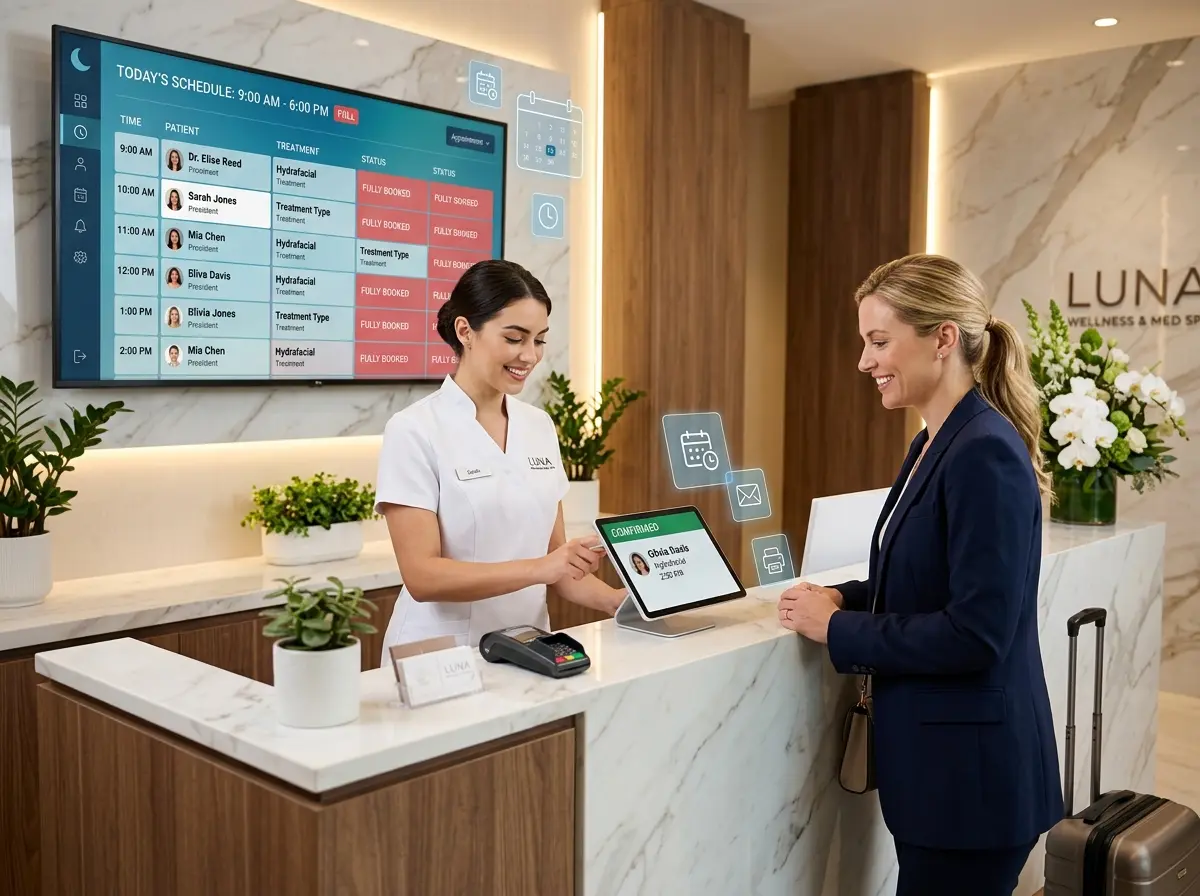
This is where tools like Stella, the AI robot employee and phone receptionist, genuinely shine for grooming shop owners. Stella can handle incoming phone calls 24/7, walking new clients through a conversational intake form that captures exactly the information you need — pet name, breed, coat details, grooming preferences, and contact info — all of which feed directly into her built-in CRM. No more sticky notes. No more "I think I wrote it down somewhere."
Beyond phone calls, Stella also works as an in-store kiosk, greeting walk-in clients, answering questions about services and pricing, and collecting client information right at the point of first contact. Every interaction gets logged, tagged, and organized — automatically. For a grooming shop owner who's elbow-deep in a Bernese Mountain Dog at 11 a.m. and can't answer the phone, that kind of reliable, always-on support isn't just convenient. It's a genuine business advantage.
Designing the Follow-Up Workflow That Actually Brings Clients Back
Collecting data is step one. Using it intelligently is where the magic happens. A strong CRM workflow for a grooming shop isn't just a contact list — it's an automated system of touchpoints that keeps your shop top of mind without requiring you to personally remember every client's rebooking date. (You're a groomer, not a human calendar app.)
The Rebooking Reminder Sequence
The most powerful workflow you can build is a simple rebooking reminder sequence triggered by appointment completion. Here's a proven structure:
- 24 hours after appointment: Send a thank-you message with a photo tip or care advice relevant to their dog's breed and coat type. This adds value and keeps the interaction warm.
- 4–5 weeks after appointment: Send a gentle reminder that it's almost time for their next groom, with a direct booking link or call-to-action.
- 6–7 weeks after appointment: If they haven't rebooked, send a slightly more urgent nudge — perhaps paired with a limited-time offer or seasonal promotion.
- 3+ months without rebooking: Trigger a lapsed client re-engagement campaign. Reference their pet by name, mention their last visit, and make it easy to come back without guilt.
The key to making this work is personalization. A message that says "Hey Sarah, it's been about six weeks since Biscuit's last groom — those curls must be getting wild!" will dramatically outperform "Dear Valued Customer, it's time to rebook." Your CRM data exists precisely to make this level of personalization scalable.
Seasonal Campaigns and Upsell Opportunities
Beyond the rebooking sequence, your CRM workflow should include seasonal campaigns that drive additional revenue. Think pre-summer de-shedding treatments for double-coated breeds, holiday "pamper packages" in November and December, or back-to-school specials in late August when people are reorganizing their routines. Use your segmentation tags to target the right clients with the right offers — there's no reason to promote a de-shedding treatment to Poodle owners.
Upselling through CRM is also wildly underutilized in the grooming industry. If a client's pet profile shows they always book a basic bath but their dog has a coat type that would genuinely benefit from a conditioning treatment, that's a personal, helpful recommendation — not a pushy sales pitch. Train your staff (and your automated messages) to reference pet profiles when suggesting add-ons. Clients appreciate it, and your average ticket value will thank you.
Tracking Metrics That Tell You If It's Working
A workflow you never measure is a workflow you can't improve. Track metrics like client retention rate (what percentage of first-time clients book a second appointment?), average rebooking interval, response rate to follow-up messages, and revenue per client over time. Most decent CRM platforms will surface some of this automatically. The goal isn't to become a data scientist — it's to spot patterns. If your six-week reminder gets a 40% rebooking rate but your four-week reminder gets 15%, adjust accordingly. Let the data do the talking.
Quick Reminder About Stella
Stella is an AI robot employee and phone receptionist designed to help businesses like yours run more smoothly — answering calls around the clock, greeting walk-in clients in person, and managing customer information through a built-in CRM with intake forms, custom fields, and tags. She starts at just $99/month with no upfront hardware costs and is built to be easy to set up and even easier to rely on. For a grooming shop trying to build a consistent, professional client experience without adding to payroll, she's worth a serious look.
Start Small, Stay Consistent, and Watch Your Retention Climb
Building a CRM workflow that genuinely turns first-timers into regulars doesn't require a massive technology overhaul or a marketing degree. It requires commitment to three things: capturing the right information from the start, using that information to personalize every interaction, and following up consistently enough that clients feel remembered rather than forgotten.
Here's your action plan to get started this week:
- Audit your current setup. What data are you collecting today? What's falling through the cracks? Identify the gaps before adding complexity.
- Choose or optimize your CRM. Whether you're using a dedicated grooming software, a general CRM, or exploring tools like Stella, make sure it supports custom fields, tagging, and some form of automated follow-up.
- Build your intake process first. No workflow runs on empty data. Get your new client form dialed in — phone, in-person, or web-based.
- Launch your rebooking sequence. Start with just the thank-you message and the six-week reminder. You can add complexity later. Consistency beats perfection every time.
- Review your metrics monthly. Set a recurring calendar reminder to check your retention numbers. Make one small adjustment per month based on what you see.
Your clients love their dogs more than almost anything. When you demonstrate that you love their dogs too — by remembering their names, their quirks, their preferences, and their history — you stop being just a groomer and start being their groomer. That's the loyalty that no amount of discount advertising can buy. Build the workflow, nurture the relationship, and let the regulars roll in.