Let's Be Honest — Your Front Desk Has a Problem
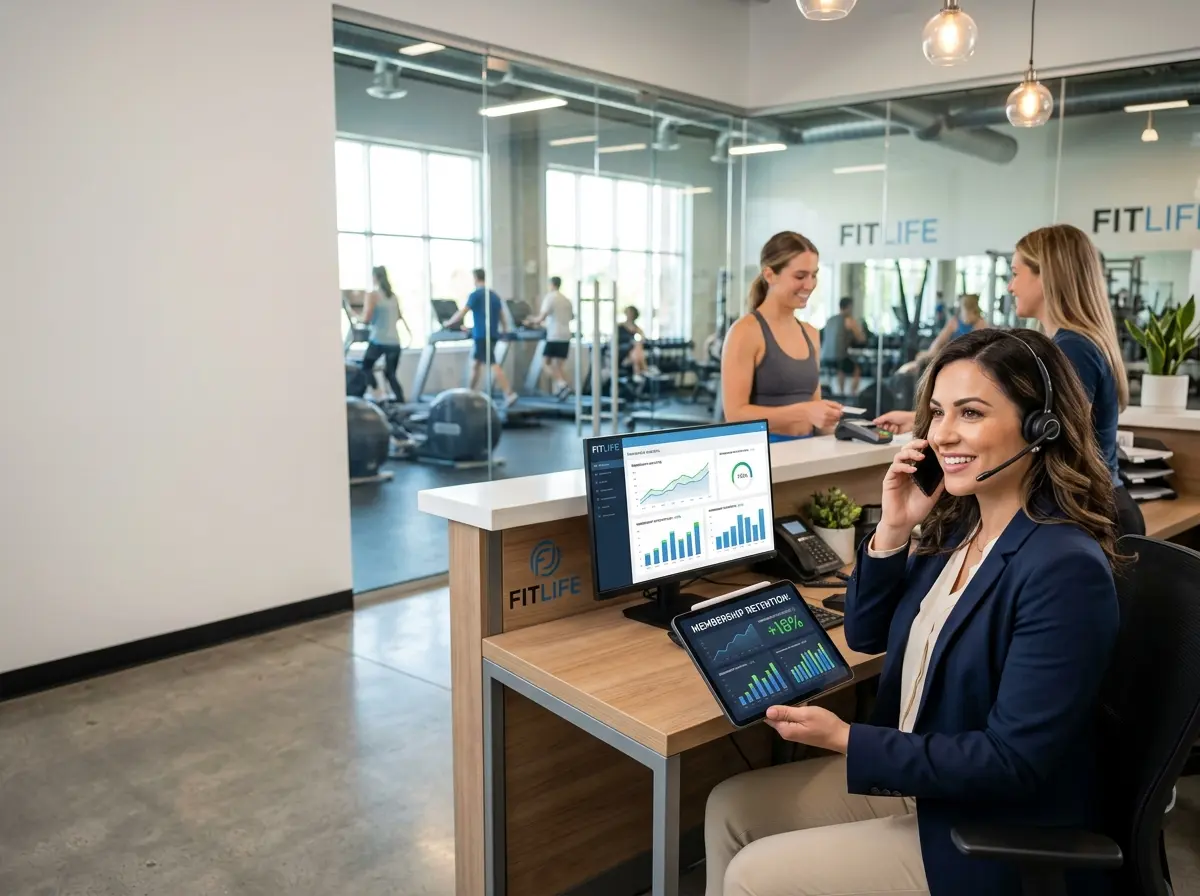
Picture this: It's a busy Monday morning at your gym. The phones are ringing, a new member is waiting to ask about membership pricing, three regulars want to know about the new class schedule, and your front desk staff member is... on break. Or calling in sick. Or just quit to pursue their passion for artisanal candle-making. Sound familiar?
The front desk at a gym is one of the most critical — and most frustrating — positions to manage. It's the first impression your members get, the voice your potential customers hear on the phone, and the face of your entire operation. And yet, it's chronically understaffed, inconsistently trained, and perpetually one "I'm giving my two weeks" away from chaos.
Here's the thing: technology has quietly been solving this exact problem for years, and the gym industry is only just beginning to catch on. AI-powered front desk solutions aren't science fiction anymore — they're practical, affordable, and honestly, pretty good at their jobs. Let's talk about why replacing (or at minimum, seriously augmenting) your front desk with AI might be the smartest business move you make this year.
The Real Cost of a Human Front Desk
The Numbers Don't Lie
Before you get defensive about your beloved front desk team, let's look at the cold, hard math. The average gym front desk employee earns between $28,000 and $36,000 per year. Add payroll taxes, benefits, training costs, and the inevitable overtime during peak hours, and you're looking at a real cost closer to $40,000–$50,000 annually — per employee. For a gym that operates extended hours (and most do), you likely need two or three people to cover shifts properly. That's well over $100,000 a year just to answer phones and check people in.
And that's when everything goes right. According to the U.S. Bureau of Labor Statistics, the hospitality and fitness industries experience some of the highest employee turnover rates in the country — often exceeding 70–80% annually. Every time someone quits, you're back to square one: recruiting, interviewing, onboarding, and training all over again. It's an expensive hamster wheel, and most gym owners are exhausted from running it.
Consistency Is King — And Humans Are Inconsistent
There's another hidden cost that rarely shows up in a spreadsheet: the cost of inconsistency. Your best front desk employee is warm, knowledgeable, and proactive. They upsell personal training packages, mention the new smoothie bar, and remember members' names. Your worst front desk employee is glued to their phone, gives vague answers, and lets potential members walk out without collecting so much as an email address.
The gap between your best and worst employee is costing you members, revenue, and reputation. Training helps, but it doesn't fully solve the problem — people are people, and people have bad days, get distracted, and simply forget. For a business where first impressions are everything, that variability is a real liability.
After-Hours Calls: The Silent Revenue Killer
Here's a scenario worth thinking about: a potential new member calls your gym at 7:30 PM on a Wednesday to ask about membership pricing. Nobody answers. They call the gym down the street. That gym answers — or at least has a system that handles the inquiry intelligently. You just lost a member you never even knew you had.
Research consistently shows that businesses that respond to inquiries within five minutes are dramatically more likely to convert leads than those that respond hours later. When your front desk closes at 8 PM and your potential customers are browsing options at 10 PM, you're leaving revenue on the table every single night. That's not a staffing problem — that's a systems problem.
How AI Can Step In (Without Stepping on Toes)
A Front Desk That Never Calls In Sick
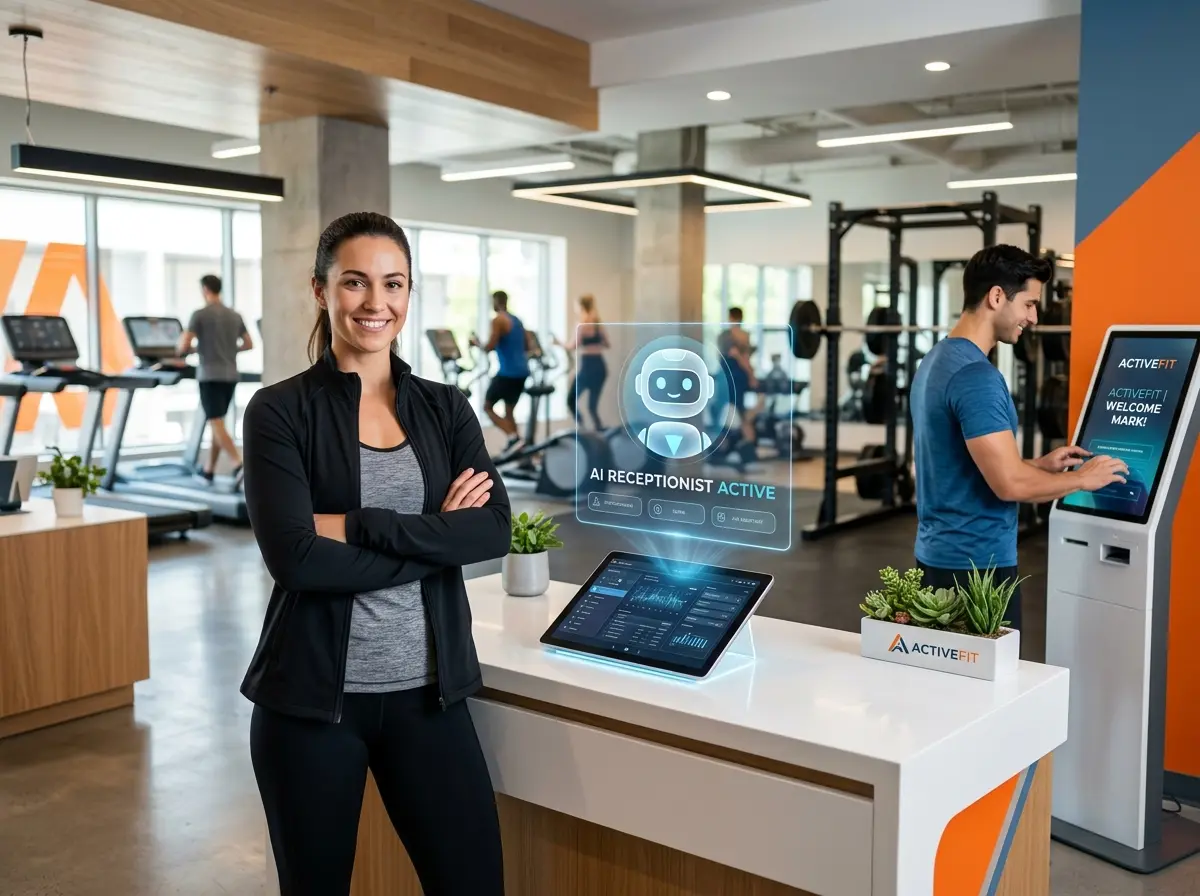
This is where Stella enters the picture. Stella is an AI robot employee and phone receptionist that can handle the full front-of-house experience — both in person and over the phone. As a human-sized kiosk stationed inside your gym, she greets every member and visitor who walks by, proactively engages them in conversation, answers questions about memberships, class schedules, pricing, and promotions, and never once checks Instagram while on the clock.
On the phone side, Stella answers calls 24/7 with the same depth of knowledge she uses in person. She can handle inquiries, collect contact information through conversational intake forms, forward calls to human staff when genuinely needed, and send AI-generated voicemail summaries with push notifications directly to your managers. The result is a front desk experience that's consistent at 9 AM and equally consistent at 11 PM — without a single shift differential.
At $99 per month with no upfront hardware costs, the financial math is not subtle. You're comparing five figures per employee to two figures per month for AI coverage. Even if Stella handles only a portion of your front desk volume, the ROI is immediate and measurable.
What AI Actually Does Better Than Humans at the Front Desk
Proactive Engagement and Upselling
One of the most underappreciated front desk responsibilities is proactive outreach — mentioning the personal training package to the member who always does cardio alone, or pointing out the new nutrition coaching program to someone who just signed up. Human staff often forget to do this, either because they're busy, distracted, or simply not motivated to sell. AI doesn't forget. It doesn't feel awkward about promoting services, and it never decides today isn't a good day to mention the premium membership upgrade.
AI systems are specifically designed to surface relevant promotions and cross-sell opportunities during natural conversation — whether that's at the kiosk during check-in or during a phone call with a prospective member. Over time, this consistent upselling adds up to meaningful revenue that would otherwise slip through the cracks of a distracted or undertrained human team.
Data Collection and Member Insights
Every interaction a member has with your front desk is a data point — and most gyms are throwing that data in the trash. When a human takes a phone call, maybe they jot down a name. Maybe they don't. When a visitor asks about pricing, that conversation evaporates into the air.
AI-powered front desk solutions capture structured data from every interaction: who called, what they asked about, what promotions were mentioned, whether they were interested. This isn't just useful — it's transformational for how you understand your members and refine your marketing. Over time, you start seeing patterns: which promotions get the most questions, what objections people raise most frequently, which membership tiers generate the most interest. That's the kind of business intelligence that used to require a dedicated analyst.
Freeing Your Human Staff to Do Human Things
Let's be clear: the goal isn't to eliminate your staff — it's to stop wasting their time on tasks that don't require human judgment, empathy, or creativity. When AI handles the repetitive, high-volume front desk tasks, your human team is free to focus on relationship-building, member retention, conflict resolution, and all the nuanced interactions that genuinely benefit from a human touch. That's a better use of their skills, and honestly, it makes for a more satisfying job. Nobody went into the fitness industry because they love answering the same phone question about parking for the 40th time this week.
Quick Reminder About Stella
Stella is an AI robot employee and phone receptionist built for businesses exactly like yours. She stands inside your gym as a friendly, knowledgeable kiosk and answers every phone call around the clock — handling member questions, promoting your services, collecting lead information, and keeping your managers in the loop with AI-generated summaries. All of this starts at just $99 per month, with no complicated setup and no upfront hardware investment.
Your Action Plan: Making the Shift to AI-Assisted Front Desk Operations
If you're ready to stop losing sleep over front desk coverage, here's a practical path forward. Start by auditing your current front desk pain points. How many calls are going unanswered after hours? How consistent is your team's product knowledge? How often are promotional conversations actually happening with members? Honest answers to these questions will clarify exactly how much value an AI layer could add to your operation.
Next, think about integration rather than replacement. The most effective approach for most gyms isn't a wholesale swap — it's deploying AI to cover the high-volume, repetitive interactions while keeping human staff focused on higher-value member relationships. This hybrid model gives you the consistency and coverage of AI with the warmth and adaptability of a great human team.
Finally, track the results. Once you've implemented an AI front desk solution, measure what changes: lead conversion rates, after-hours inquiry volume, upsell attachment rates, and staff satisfaction. You'll likely find that the numbers tell a convincing story pretty quickly.
The fitness industry is competitive, and the gyms that win are the ones that run tighter operations, deliver more consistent member experiences, and make smarter use of their resources. Your front desk is not a sacred institution — it's a function. And when technology can perform that function better, more consistently, and at a fraction of the cost, the only real question is: what are you waiting for?