Introduction: Because Word of Mouth Doesn't Groom Itself
Let's be honest — you didn't open a dog grooming business because you love cold-calling strangers. You opened it because you love dogs, you're good with scissors, and someone had to save the neighborhood Goldendoodles from themselves. But here's the thing: being the best groomer in town doesn't mean much if nobody knows you exist.
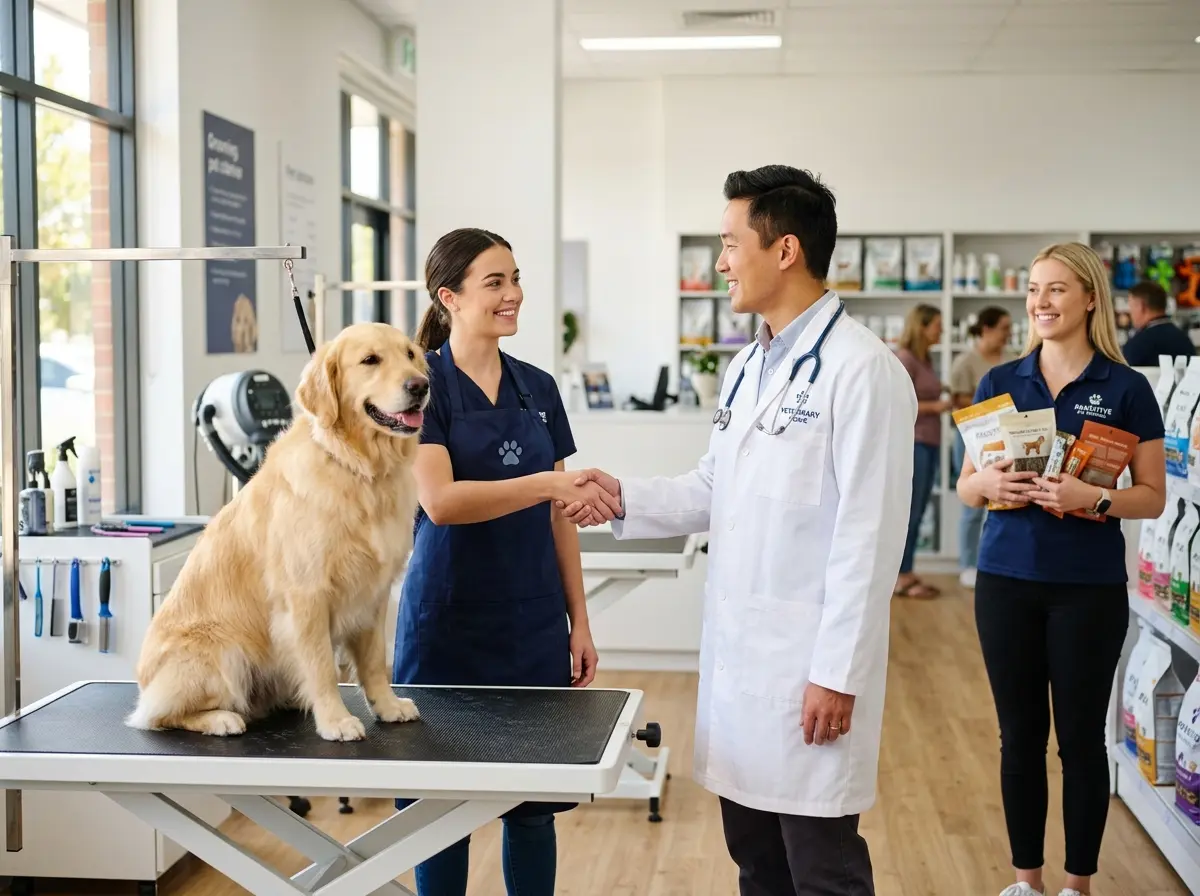
The good news? You're sitting on a goldmine of untapped referral potential, and it's closer than you think. Local veterinary clinics and pet stores are essentially pipelines of pet owners who already care about their animals — and those animals need grooming. A well-built referral network with these businesses can transform your appointment book from "a few regulars" to "fully booked three weeks out." No ad spend required. No awkward cold emails. Just strategic relationship-building with the right neighbors.
This guide walks you through exactly how to build those partnerships, what to bring to the table, how to keep the momentum going, and — because we're living in the future — how a little technology can help you look polished enough that your new partners are proud to send clients your way.
Building the Foundation: How to Approach Vets and Pet Stores
Do Your Homework Before You Walk In the Door
Walking into a veterinary clinic and announcing "Hey, send me your clients!" is a fast track to being politely ignored forever. Before you reach out to any local business, spend a little time understanding what they actually care about. A veterinary clinic's number one priority is animal health and client trust. A pet store's priority is repeat customers and community goodwill. Your pitch needs to speak to those priorities — not just your own need for referrals.
Research the clinics and stores in your area. Look at their Google reviews, their social media presence, and whether they currently recommend any grooming services. If they already have a groomer they refer to, that's useful information too — it means they're open to the concept, and you just need to make a compelling case for why you're the better fit. Come prepared with your credentials, your specialties (breed-specific cuts, senior dog handling, anxiety-friendly grooming), and any certifications or training you've completed.
Make an Offer They'd Be Silly to Refuse
The most effective referral partnerships are mutually beneficial — emphasis on mutually. Don't just ask for referrals; think about what you can offer in return. Consider proposing a complimentary grooming session for the clinic's office dog or the store's resident mascot. Offer to provide branded referral cards they can hand out at checkout. Some groomers create a simple loyalty benefit for clients who arrive via a specific partner, which gives the referring business something tangible to promise their customers.
You might also offer to cross-promote their services — mention the vet clinic on your website, tag them in your social posts, or include their business cards at your front desk. Reciprocity is the language of partnerships. The more generous you are upfront, the more invested your partners become in actually sending people your way.
Put It in Writing (Loosely Speaking)
You don't need a 12-page legal document, but a simple written agreement — even a friendly email summary — helps set expectations and keeps everyone accountable. Outline how referrals will be tracked, what each party agrees to promote, and how you'll stay in touch. Clarity prevents the awkward situation six months later where one party thought the partnership was still active and the other forgot it existed. A brief, professional follow-up after your initial meeting goes a long way in showing that you take the relationship seriously.
Keeping Your Business Ready to Impress Every Referral That Comes Through
First Impressions Happen Before Anyone Walks Through Your Door
Here's a scenario nobody talks about: a vet receptionist raves about your grooming salon to a client, the client calls your number that evening after work, and... it rings out. Or they get a voicemail that sounds like it was recorded in a bathroom in 2009. That referral — which your partner worked hard to earn — just evaporated.
This is where Stella, the AI robot employee and phone receptionist, earns her keep. Stella answers every phone call 24/7, greets walk-in customers at your physical location, and handles questions about your services, pricing, availability, and policies with the same professionalism every single time. No hold music. No missed calls. No "let me check on that and call you back." When a referred client calls, they're met with a warm, knowledgeable, competent response — which reflects well on you and on the partner who recommended you. Her built-in CRM and conversational intake forms also make it easy to capture new client information right from that first call, so no lead slips through the cracks.
Nurturing Your Referral Network Over Time
Stay Visible Without Being Annoying
The biggest mistake business owners make with referral partnerships is treating them as a "set it and forget it" arrangement. You shake hands, drop off some business cards, and then wonder six months later why the referrals dried up. Referral relationships require ongoing attention — not in a needy way, but in a genuine, community-minded way.
Schedule a light check-in once a quarter. Stop by with a small thank-you — branded dog treats, a handwritten note, or a box of coffee shop pastries for the clinic staff. Share their posts on social media. Tag them when a pet they've treated comes in looking spectacular post-groom. These small gestures keep you top of mind without requiring a formal business meeting every month. People refer businesses they like and remember. Make yourself likable and memorable.
Track What's Working and Double Down
Not every partnership will be equally productive, and that's fine. Some veterinary clinics will send you five new clients a month. Others will send you zero, despite their best intentions. The key is knowing the difference — and you can only know that if you're tracking your referrals.
Ask new clients how they heard about you. Keep a simple log. Over time, you'll see patterns that tell you which partnerships deserve more of your energy and which might not be the right fit. When a partnership is working well, consider deepening it — co-hosting a pet wellness event, collaborating on a social media giveaway, or creating a joint loyalty program. When something isn't working after a reasonable amount of time and effort, it's okay to redirect your energy elsewhere. Not every business relationship is meant to last forever, and your time is worth protecting.
Expand Your Network Strategically
Vets and pet stores are the obvious starting points, but don't stop there. Dog trainers, doggy daycares, pet photographers, dog-friendly cafes, and even real estate agents who work with relocating pet owners are all potential referral sources. Think about the full lifecycle of a pet owner in your community — every touchpoint is a potential partner. A dog trainer whose clients have freshly groomed pups is a trainer whose clients are happy. That trainer has every reason to keep sending people your way.
As your network grows, consider forming a loose "pet services collective" — a group of non-competing local businesses that actively promote each other. A shared social media post, a combined coupon booklet, or even a joint community event can amplify everyone's reach without requiring a massive individual investment from any single business.
Quick Reminder About Stella
Stella is an AI robot employee and phone receptionist designed for businesses exactly like yours — she greets customers in-store, answers calls around the clock, manages client intake, and keeps your operation looking sharp even when you're elbow-deep in a Saint Bernard. At just $99/month with no upfront hardware costs, she's the kind of team member who never calls in sick and never has a bad day. When your referral network starts sending people your way, Stella makes sure every single one of them gets a first-class experience.
Conclusion: Go Build Something Worth Talking About
Building a referral network with local vets and pet stores isn't a complicated strategy — but it does require intentionality, consistency, and a genuine willingness to invest in relationships before you see returns. The businesses that succeed at this aren't the ones with the flashiest pitch deck. They're the ones who show up, follow through, and make it easy for partners to trust them with their clients.
Here's your action plan to get started this week:
- Identify five local veterinary clinics and three pet stores within a reasonable radius of your salon.
- Research each one — understand their vibe, their clientele, and whether they currently recommend any grooming services.
- Prepare a simple, value-forward pitch that leads with what you can offer, not just what you want.
- Schedule an in-person visit — not a cold call, not an email, an actual visit with a friendly face and a tangible leave-behind.
- Set up a system to track referrals from day one so you know what's working.
- Make sure your phone and in-store experience are ready to impress every referral that walks through the door or picks up the phone.
Your best marketing doesn't happen in an algorithm. It happens when a vet tech tells a worried pet parent, "Oh, you should really take your dog to that groomer." Go become that groomer.