So Your Staff Just Froze When a Customer Asked for a Refund — Let's Fix That
Every retail business owner has seen it happen. A customer walks up with a slightly unreasonable request, or a mildly confrontational tone, or — heaven forbid — a coupon from 2019, and suddenly your most confident employee looks like a deer in the headlights of an oncoming minivan. Training manuals are great, but they have a funny way of evaporating from memory the moment a real human being is standing at the counter with folded arms and an expectation of resolution.
The solution isn't just more training — it's better training. Specifically, the kind that mimics the chaos, awkwardness, and occasional absurdity of real customer interactions. Role-playing scenarios are one of the most effective tools in a retail manager's toolkit, and yet they're consistently underused because, let's be honest, they feel a little awkward to run. Your employees groan. Somebody laughs nervously. The "difficult customer" character gets played way too enthusiastically by that one team member who was clearly born for theater.
But here's the thing: that awkward practice session is exactly what builds the muscle memory your staff needs to stay calm, professional, and helpful when it actually counts. According to research from the Association for Talent Development, employees retain up to 75% of information learned through practice and role-play, compared to just 5% from lecture-based training. So let's talk about how to do it right.
The Scenarios Your Staff Will Actually Encounter
Before you can run effective role-playing exercises, you need to stock your training arsenal with realistic scenarios — not sanitized, everything-goes-smoothly ones, but the kind that reflect what your staff actually deals with on a Tuesday afternoon.
The Unhappy Customer Who Wants a Manager (And Won't Accept Anything Less)
This is a classic. A customer is unhappy about a product, a price, a policy, or — in truly spectacular cases — the layout of the store. They've already made up their mind that only a manager can help them, and your frontline staff member is simply a warm obstacle standing between them and satisfaction.
The goal of this scenario isn't to teach your staff how to avoid escalating — sometimes escalation is the right move. The goal is to teach them how to stay composed, listen actively, and de-escalate when possible before reaching for the manager card. Practice phrases like "I completely understand your frustration, and I want to make sure we get this resolved for you" go a long way. Train your staff to mirror calm energy, not match the customer's frustration level, because that particular competition has no winners.
The Product Knowledge Test (Disguised as a Simple Question)
A customer asks what seems like a simple question — "What's the difference between these two products?" — and suddenly your staff member is on the spot, quietly panicking. This scenario is less about conflict and more about confidence and product fluency. Role-play exercises here should involve one team member playing a genuinely curious, detail-oriented customer who fires follow-up questions naturally.
The objective is twofold: identify gaps in your staff's product knowledge so you can address them in training, and give employees a safe space to stumble, recover, and build confidence before the real version of this conversation happens. Encourage staff to use bridging phrases like "That's a great question — let me make sure I give you accurate information" rather than guessing or going silent.
The Return Without a Receipt (And a Firm Opinion About It)
This one deserves its own scenario because it combines product knowledge, policy enforcement, and conflict management all at once. Role-play this with staff and vary the customer's disposition each time — sometimes politely persistent, sometimes visibly frustrated, sometimes completely convinced they're in the right. The point is to help your staff communicate your store's return policy clearly, kindly, and consistently, without either caving under pressure or becoming robotic policy-quoters who make customers feel dismissed.
How to Actually Run These Exercises Without Everyone Hating You
The mechanics of a good role-playing session matter just as much as the scenarios themselves. A poorly structured exercise can actually reinforce bad habits or create anxiety rather than confidence — which is the opposite of what you're going for.
Set Clear Objectives Before You Start
Each scenario should have a defined learning goal. Is this session about de-escalation? Upselling? Communicating store policies? When your staff knows what they're being asked to practice, they can focus their energy appropriately rather than just trying to "survive" the scenario. Brief the group before each exercise, not after, and keep the objectives specific. "Practice staying calm and offering solutions" is useful. "Do better" is not.
Debrief Like You Mean It
The debrief is where the real learning happens, and most managers rush it or skip it entirely. After each role-play, take five minutes to discuss what went well, what could be improved, and — importantly — what the customer was probably feeling at each point in the interaction. Encouraging empathy as a diagnostic tool is far more productive than a list of "don'ts." Ask your staff: "At what point did the customer seem to feel heard?" and "Was there a moment where we could have turned this around sooner?" These questions produce better insights than any checklist.
Where Technology Can Take Some of the Pressure Off Your Staff
Here's a thought worth entertaining: what if some of the routine, high-volume customer interactions your staff dreads could be handled — reliably, consistently, and cheerfully — without your staff having to handle them at all?
Stella is an AI robot employee and phone receptionist built for exactly this kind of support. In physical retail locations, Stella stands inside the store as a friendly, human-sized kiosk that greets customers proactively, answers product and policy questions, promotes current deals, and handles the kinds of repetitive inquiries that interrupt your staff fifteen times a day. On the phone side, she answers calls 24/7, collects caller information through conversational intake forms, and forwards calls to human staff only when it genuinely makes sense. This means your team can focus their energy on the complex, nuanced customer interactions — the ones that actually benefit from a skilled, well-trained human touch — rather than answering "What are your hours?" for the hundredth time this week. When your staff has fewer low-stakes interruptions, they bring more patience and presence to the interactions that matter.
Building a Culture Where Good Customer Interactions Are the Norm
Role-playing exercises are valuable, but they're most effective when they exist inside a broader culture that genuinely values customer experience — not just as a policy, but as a shared standard.
Make Role-Playing a Regular Habit, Not a Punishment
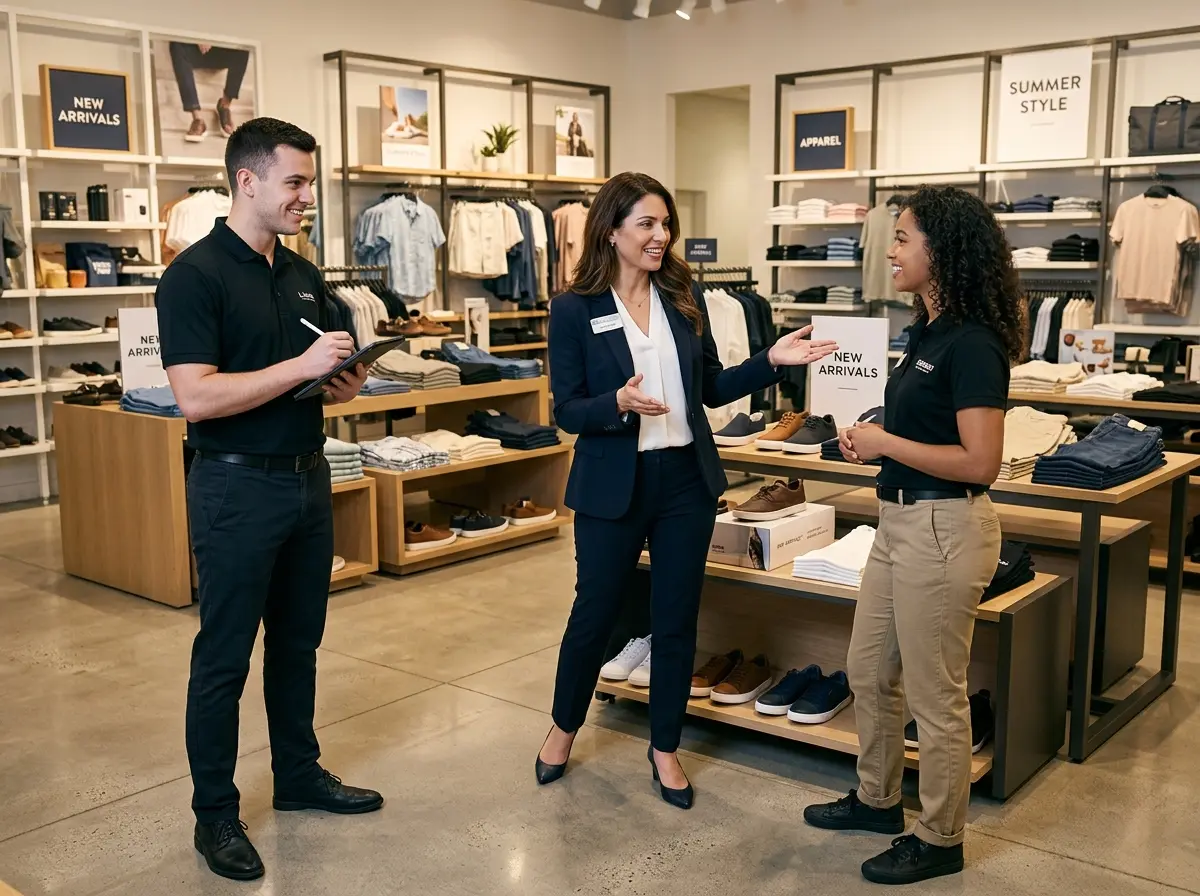
One of the fastest ways to kill the effectiveness of role-playing is to deploy it only when something has gone wrong. If your staff associates these exercises with "somebody messed up," they'll approach them defensively rather than openly. Instead, build short, low-pressure role-play exercises into your regular staff meetings — even 10 minutes per session can compound into significantly better performance over time. Keep the tone collaborative, not evaluative, and rotate who plays the customer so everyone develops empathy for both sides of the counter.
Recognize and Reward Great Customer Handling in Real Time
Training sticks when it's reinforced by positive experience. When you observe a staff member navigating a difficult customer interaction with patience, clarity, and professionalism, say something about it — specifically and promptly. "The way you handled that return situation was exactly what we practice — you stayed calm, you communicated the policy clearly, and the customer left feeling respected" is the kind of feedback that actually shapes behavior. Public recognition during team meetings for specific examples of excellent customer service turns individual wins into shared standards.
Use Real Interactions as Training Material
With appropriate consideration for privacy and professionalism, real customer interactions — particularly challenging ones — can become some of your most powerful training material. Debrief difficult situations as a team without assigning blame, focusing instead on what options were available and what might have worked better. This approach acknowledges that your staff operates in the real world, not a training manual, and builds the kind of adaptive problem-solving skills that no script can fully teach.
A Quick Reminder About Stella
Stella is an AI robot employee and phone receptionist available for just $99/month with no upfront hardware costs. She greets and assists customers in-store, answers phone calls around the clock, promotes your deals, and handles routine inquiries — so your human staff can focus on delivering the kind of thoughtful, skilled service that only comes from great training and real presence. She's essentially the teammate who never calls in sick, never forgets the return policy, and never freezes when someone asks a follow-up question.
The Bottom Line: Practice Makes Professional
Your customers will encounter your staff on their best days and their worst days, during lunch rushes and Monday mornings, when they're thrilled about a purchase and when they're furious about a defect. The only way to ensure a consistently excellent experience is to prepare your team thoroughly — not just with knowledge, but with practice, feedback, and the confidence that comes from having navigated hard situations before, even simulated ones.
Start small. Pick two or three scenarios that reflect the most common challenges your store faces. Run a 15-minute role-play exercise at your next team meeting. Debrief honestly. Then do it again next month. Over time, you'll notice your staff handling difficult moments with more ease, more empathy, and considerably less deer-in-headlights energy.
And if you want to take some of the repetitive customer service load off your team entirely while they're busy becoming excellent — it might be worth taking a look at what Stella can do for your business. Because the best training program in the world works even better when your staff has the bandwidth to actually use it.