Introduction: The Review Gap Nobody Talks About
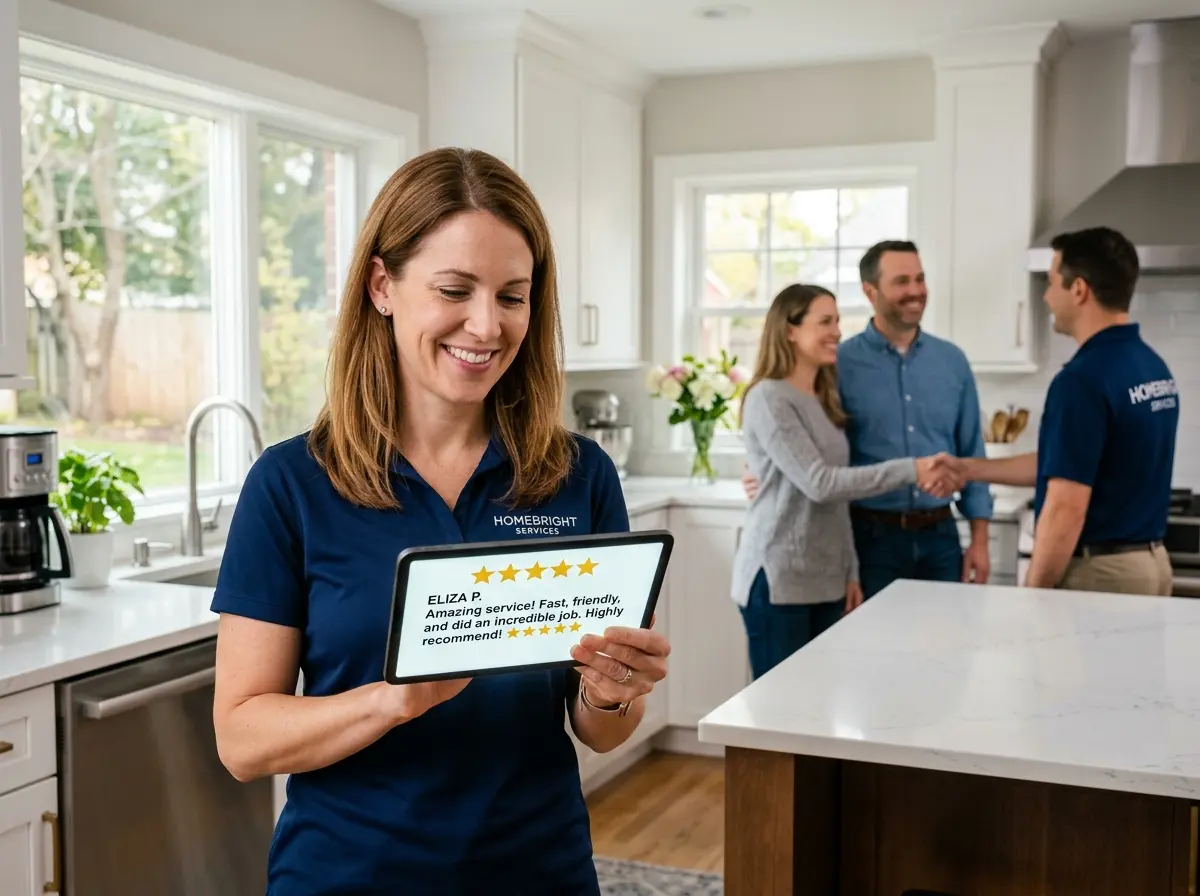
Here's a scenario that plays out every single day in the home services industry: A plumber fixes a burst pipe, saves a family from a flooded kitchen, and the homeowner is thrilled. They shake hands, maybe even offer the tech a bottle of water. The invoice gets paid. Everyone's happy. And then... absolutely nothing. No review. No referral. Just a satisfied customer who quietly disappears back into the internet, taking their five-star experience with them.
Meanwhile, the one customer who had a scheduling hiccup? They found Google Reviews just fine. Funny how that works.
This is the review gap — and it's silently killing the online reputation of otherwise excellent home services businesses. The good news is that it's entirely fixable, and it doesn't require begging, bribery, or a marketing degree. It requires one simple thing: a well-designed post-job survey that does double duty. Done right, a post-job survey captures glowing reviews from happy customers and catches dissatisfied ones before they become a one-star public complaint. This post walks you through exactly how to build and deploy that system.
Why Most Home Services Companies Lose the Review Game
The Timing Problem
Most businesses that do ask for reviews get the timing completely wrong. Sending a review request three days after the job is done is the digital equivalent of asking someone how they liked their meal after they've already driven home, taken a nap, and started a new Netflix series. The moment has passed. Customer satisfaction has a surprisingly short half-life, and the emotional peak — that moment right after a technician solves the problem and leaves the home looking better than it did before — is when the review request needs to land.
Research consistently shows that review requests sent within one hour of job completion generate response rates two to three times higher than those sent the following day. The job is fresh, the relief is real, and the customer is still in the "wow, that was great" headspace. Strike while the iron is hot — or in the case of HVAC companies, while the air conditioning is finally working again.
The Friction Problem
Even when timing is right, most review requests fail because they ask too much. A generic email with a link to a Google profile drops the customer into an unfamiliar interface and essentially says, "Hey, would you mind writing a short essay for us?" Most people won't. Not because they don't care, but because life is busy and the mental effort just isn't worth it in that moment.
A well-designed post-job survey removes that friction. Instead of asking for an open-ended review immediately, it starts with a simple question — "How did we do today?" — and routes the customer experience from there. Happy customers get guided to leave a public review. Unhappy customers get a private channel to express concerns. The result is more reviews, better reviews, and far fewer public complaints.
The Churn Problem Nobody Sees Coming
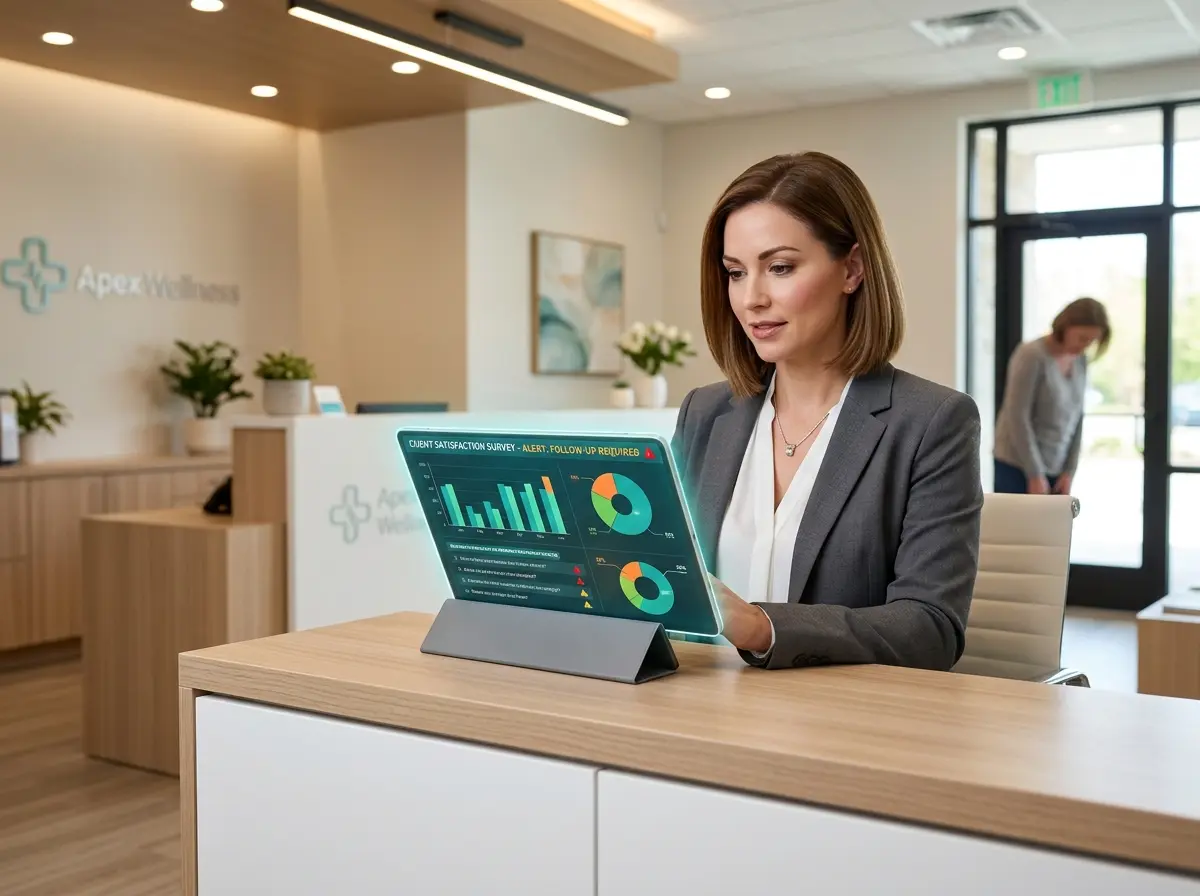
Customer churn in home services is often invisible. Unlike a subscription business where cancellations show up on a dashboard, a dissatisfied homeowner simply never calls again. No drama, no complaint — they just quietly hire your competitor the next time something breaks. A post-job survey creates an early warning system. When a customer rates their experience poorly, that's not a problem — that's an opportunity to call them back, make it right, and turn a near-churner into a loyal advocate. Without the survey, you'd never know the problem existed until it was too late.
Building a Post-Job Survey That Actually Works
Automating Delivery and Follow-Up with the Right Tools
A great survey system doesn't depend on a technician remembering to send a text before driving to the next job. It runs automatically. When a job is marked complete in your scheduling or CRM software, a survey link should fire off within minutes — no human intervention required. This is where having a solid customer management foundation pays off.
Stella, the AI robot employee and phone receptionist, offers a built-in CRM with custom fields, tags, notes, and AI-generated customer profiles that make this kind of automation genuinely practical. Whether a customer first made contact through a phone call (which Stella handles 24/7 as an AI receptionist) or walked into a physical showroom and spoke with her kiosk presence, that customer's information is already captured and organized. Intake forms can collect job details and preferences conversationally — no clipboards, no manual data entry — so your post-job survey has the right context baked in from the start. When your customer data is clean and centralized, follow-up automation becomes dramatically easier to execute.
The Smart Routing Strategy: Separating Happy Customers from Unhappy Ones
The Two-Path Survey Flow
The single most effective structural decision you can make in a post-job survey is to route customers differently based on their initial rating. Here's how a simple but powerful flow works in practice:
- Send a one-question survey immediately after job completion: "On a scale of 1–5, how satisfied are you with today's service?"
- For customers who select 4 or 5 stars: Show a brief thank-you message and a direct link to your Google Business Profile review page. Keep the copy warm and specific — something like, "We're so glad we could help! If you have a moment, sharing your experience on Google helps other homeowners find reliable service."
- For customers who select 1, 2, or 3 stars: Route them to a private feedback form. Ask what went wrong and who they'd like to hear from. Promise a follow-up within 24 hours — and then actually follow up.
This two-path approach is sometimes called "review gating" in casual conversation, and it's worth clarifying: the goal here is not to suppress legitimate negative reviews (which violates Google's policies), but to give unhappy customers a faster, easier private channel to resolve issues before they feel compelled to go public. Most dissatisfied customers don't want to leave a bad review — they want their problem fixed. Give them that path, and most of them will take it.
What to Do When You Catch a Dissatisfied Customer
When a low-rating response comes in, speed matters more than almost anything else. A personal phone call from a manager or owner within a few hours carries far more weight than a templated email. Acknowledge the problem specifically, apologize without making excuses, and offer a concrete resolution — whether that's a return visit, a partial refund, or simply an honest conversation about what went wrong.
Companies that follow up on negative feedback within 24 hours recover a significant portion of those customers. More importantly, customers who experience a problem that gets handled well often become more loyal than customers who never had an issue at all. It sounds counterintuitive, but a well-handled service failure is actually a powerful trust-building moment. Don't waste it by sending an automated email three days later.
Turning Survey Data Into Business Intelligence
Spotting Patterns by Technician, Job Type, and Neighborhood
Once your post-job survey is running consistently, you're sitting on a goldmine of operational data. Start tagging responses by technician, service type, and geographic area. Over time, patterns will emerge. Maybe one technician consistently earns five-star ratings while another generates a disproportionate share of three-star responses. Maybe drain cleaning jobs score lower than HVAC installs. Maybe customers in one neighborhood have longer wait-time complaints than others.
These insights let you have specific, evidence-based conversations with your team — not vague "we need to do better" motivational speeches, but real feedback like "customers are rating post-job cleanup a 3.2 on average; here's what we're going to do about it." That's the difference between managing by gut feeling and managing by data.
Using Reviews as a Hiring and Training Tool
Your best reviews are essentially free marketing copy written by your happiest customers — but they're also a roadmap for what your team should be doing more of. When customers repeatedly mention that a specific technician "explained everything clearly" or "left the work area spotless," that's a training benchmark. Screenshot those reviews. Share them in team meetings. Build your onboarding materials around the behaviors that consistently earn five stars, because clearly those behaviors are working.
Conversely, recurring complaints — even mild ones — reveal training gaps that are costing you referrals and repeat business. A pattern of "the technician was great but the scheduling was confusing" isn't a technician problem; it's a process problem. Survey data helps you tell the difference.
A Quick Reminder About Stella
Stella is an AI robot employee and phone receptionist built to help businesses like yours run more smoothly — without adding headcount. She answers calls 24/7, greets customers in person through her kiosk presence, manages contacts through a built-in CRM, and handles intake forms conversationally so your customer data stays clean and actionable. At $99/month with no upfront hardware costs, she's available to businesses of any size, from solo operators to multi-location home services companies.
Conclusion: Stop Leaving Five-Star Reviews on the Table
The home services industry runs on trust, and trust in 2024 lives on Google, Yelp, and Nextdoor. Every satisfied customer who leaves your job site without leaving a review is a missed opportunity that your competitor is more than happy to benefit from. The fix isn't complicated — it's a consistent, automated, well-timed survey that meets customers while they're still happy, routes feedback intelligently, and gives your team the data it needs to improve.
Here's what to do this week to get started:
- Audit your current review process. How long after job completion does your review request go out? Is it automated or manual? What's your response rate?
- Draft a simple two-question post-job survey. Start with a satisfaction rating, then route happy customers to Google and unhappy ones to a private form.
- Set up an alert for low-rating responses so a manager is notified within minutes and can follow up the same day.
- Connect your survey tool to your CRM so customer feedback is stored alongside job history, making pattern analysis straightforward.
- Review your survey data monthly and share highlights — good and bad — with your team.
Your customers already think you do great work. It's time to make sure the rest of the internet knows it too.