When "We'll Follow Up" Actually Means Something
Most healthcare practices treat patient retention like a happy accident. Patients either come back or they don't, and the front desk staff is already too busy answering phones, checking people in, and hunting for a parking validation stamp to think much about it. Sound familiar?
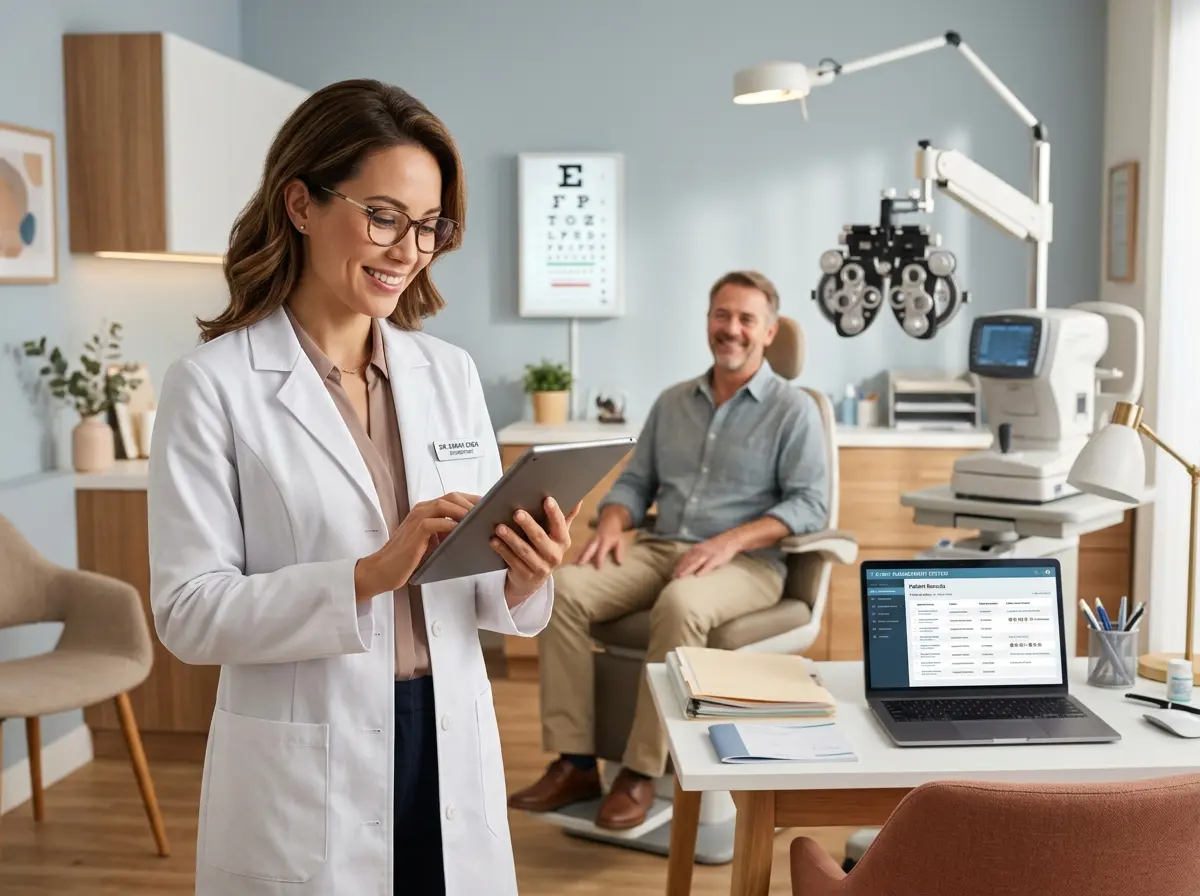
But Dr. Patricia Howe, an independent optometrist in suburban Ohio, decided to take a different approach — and the results were, frankly, a little embarrassing for everyone else in her industry. She built a 90% patient retention rate at a time when the national average for optometry practices hovers around 60–70%. The difference? A simple, systematic follow-up process that didn't require hiring three extra people or installing enterprise software that costs more than a car.
Here's the thing: patient retention in any healthcare setting isn't just a "nice to have." Acquiring a new patient costs five to seven times more than retaining an existing one. Every patient who slips through the cracks isn't just a missed appointment — it's a missed relationship, a missed referral, and a missed revenue opportunity. This post breaks down exactly what Dr. Howe did, why it worked, and how you can adapt it for your own practice.
The Anatomy of a Follow-Up System That Actually Works
Step One: The Post-Visit Check-In (Don't Skip This)
The first pillar of Dr. Howe's system was deceptively simple: every patient received a personal follow-up message within 48 hours of their visit. Not a generic "Thanks for visiting!" auto-blast — a brief, specific message referencing something from their appointment. If a patient was adapting to progressive lenses for the first time, the follow-up acknowledged that and offered a quick tip. If a child had their first eye exam, the message reassured the parents and included advice on monitoring screen time.
This level of specificity matters more than most practices realize. Studies in patient experience consistently show that patients who feel personally recognized are significantly more likely to return and refer others. The bar isn't high — people are so accustomed to being treated like a case number that a single thoughtful message feels remarkable.
Dr. Howe initially did this manually, which took about 20 minutes each evening. She eventually templated the most common scenarios, cutting that to under five minutes. The effort-to-impact ratio was laughably favorable.
Step Two: The Strategic Annual Reminder Sequence
The second pillar was a multi-touch reminder sequence starting 60 days before a patient's annual exam was due. Most practices send one reminder and call it done. Dr. Howe's system sent three: a friendly heads-up at 60 days, a scheduling prompt at 30 days, and a gentle nudge one week out. Each message had a slightly different tone — informative, then practical, then personal.
The results were striking. Her no-show and lapse rates dropped dramatically once the 30-day prompt was added. That middle touchpoint — practical and low-pressure — turned out to be the tipping point for patients who were meaning to book but hadn't gotten around to it. Life is busy. People need more than one nudge, and there's nothing manipulative about acknowledging that reality.
Step Three: Closing the Loop on Missed Appointments
Perhaps the most underrated part of the system was how it handled missed appointments. Rather than silently moving on (the default behavior in most practices), Dr. Howe's team reached out within 24 hours with a simple, non-judgmental message: "We noticed you missed your appointment — no worries at all, life happens. We'd love to get you rescheduled when the time is right."
No guilt. No lecture. Just an open door. Roughly 40% of patients who received that message rescheduled within two weeks. That's a significant number of relationships that would have otherwise quietly expired. A missed appointment doesn't have to mean a lost patient — it just means the follow-up becomes more important, not less.
Using the Right Tools Without Overcomplicating Everything
How Technology Can Do the Heavy Lifting
One reason practices don't implement follow-up systems is the assumption that it requires significant overhead — dedicated staff time, complex CRM software, or both. But the tools available today make this kind of system accessible even to solo practitioners and small independent offices.
Stella, the AI robot employee and phone receptionist, is one example of technology that can meaningfully support a patient retention system like this. For practices with a physical location, Stella stands in the office and engages patients naturally — answering questions about services, collecting intake information, and reinforcing the practice's professionalism from the moment someone walks in. On the phone side, she handles calls 24/7, which means patients can call after hours to reschedule or ask questions without hitting a voicemail dead end. Her built-in CRM captures patient contact details, supports custom fields and tags, and generates AI-powered profiles — exactly the kind of organized data infrastructure that makes a follow-up sequence possible without a full-time administrator managing it.
Stella isn't a replacement for clinical care or human judgment, but she handles the operational layer — intake, communication, and data capture — so that the people on your team can focus on the relationships that actually require a human touch.
Adapting This System for Your Practice
Customize the Touchpoints for Your Patient Population
Dr. Howe's system worked because it was built around how her patients actually behaved, not a generic industry template. Before copying the exact sequence, spend a few minutes thinking about your specific patient base. Are most of your patients busy professionals who prefer text over phone calls? Parents managing multiple family members' appointments? Older patients who prefer a phone call to a digital message? The medium matters as much as the message.
Segmentation doesn't have to be complicated. Even simple tags in your patient records — "prefers text," "family account," "new patient," "contact lens wearer" — can allow you to personalize touchpoints in ways that feel thoughtful rather than automated. That distinction is everything when it comes to how patients perceive your practice.
Measure What Matters (And Keep It Simple)
You don't need a dashboard that looks like mission control. Three numbers will tell you most of what you need to know about how your retention system is performing:
- Retention rate: What percentage of patients return within 14–16 months for their annual visit?
- Reschedule rate after a missed appointment: Of patients who miss or cancel, how many rebook within 30 days?
- Referral rate: Are existing patients sending friends and family? Even a rough count is useful.
Baseline these numbers before you implement any follow-up system, then check back at 90 days. The improvement will either validate your approach or point you toward what needs adjusting. Either outcome is valuable — which is more than can be said for most things that happen in a practice administrator's day.
Train Your Team on the "Why," Not Just the "What"
Any follow-up system will eventually be executed by people, even if technology does a lot of the heavy lifting. And people are remarkably good at undermining systems they don't believe in. Take the time to explain to your front desk staff and clinical team why consistent follow-up matters — not just for revenue, but for patient outcomes, for practice reputation, and for the kind of care environment that makes their jobs more rewarding rather than less.
When staff understand that a follow-up call isn't a sales tactic but a genuine extension of patient care, the tone shifts. Patients feel it too. A follow-up that sounds warm and authentic performs far better than one that sounds like it came from a checklist — even if the words are identical.
A Quick Reminder About Stella
Stella is an AI robot employee and phone receptionist designed to support businesses across industries — including medical and healthcare practices. She greets patients in person, answers calls around the clock, collects intake information, and manages contacts through a built-in CRM, all for $99/month with no upfront hardware costs. If your front desk is stretched thin or your after-hours calls are going unanswered, she's worth a look.
The Takeaway: Retention Is a System, Not a Sentiment
Dr. Howe's 90% retention rate didn't happen because she had a warmer personality than other optometrists or because her office had nicer furniture. It happened because she built a system — a deliberate, repeatable process for staying connected to patients after they walked out the door — and she actually ran it. Consistently.
If you're ready to implement something similar, here's a practical starting point:
- Audit your current follow-up process — or acknowledge that you don't really have one. Honesty is step one.
- Define your three core touchpoints: post-visit check-in, annual reminder sequence, and missed appointment outreach.
- Choose your tools — whether that's a CRM, an AI receptionist, or a well-maintained spreadsheet — and make sure your team knows how to use them.
- Measure your baseline metrics now, before you change anything, so you have something to compare against.
- Revisit and refine at 90 days. Systems improve through iteration, not perfection on the first attempt.
Patient retention isn't a mystery. It's the result of making people feel like they matter to your practice — and then having the operational discipline to prove it, one follow-up at a time.