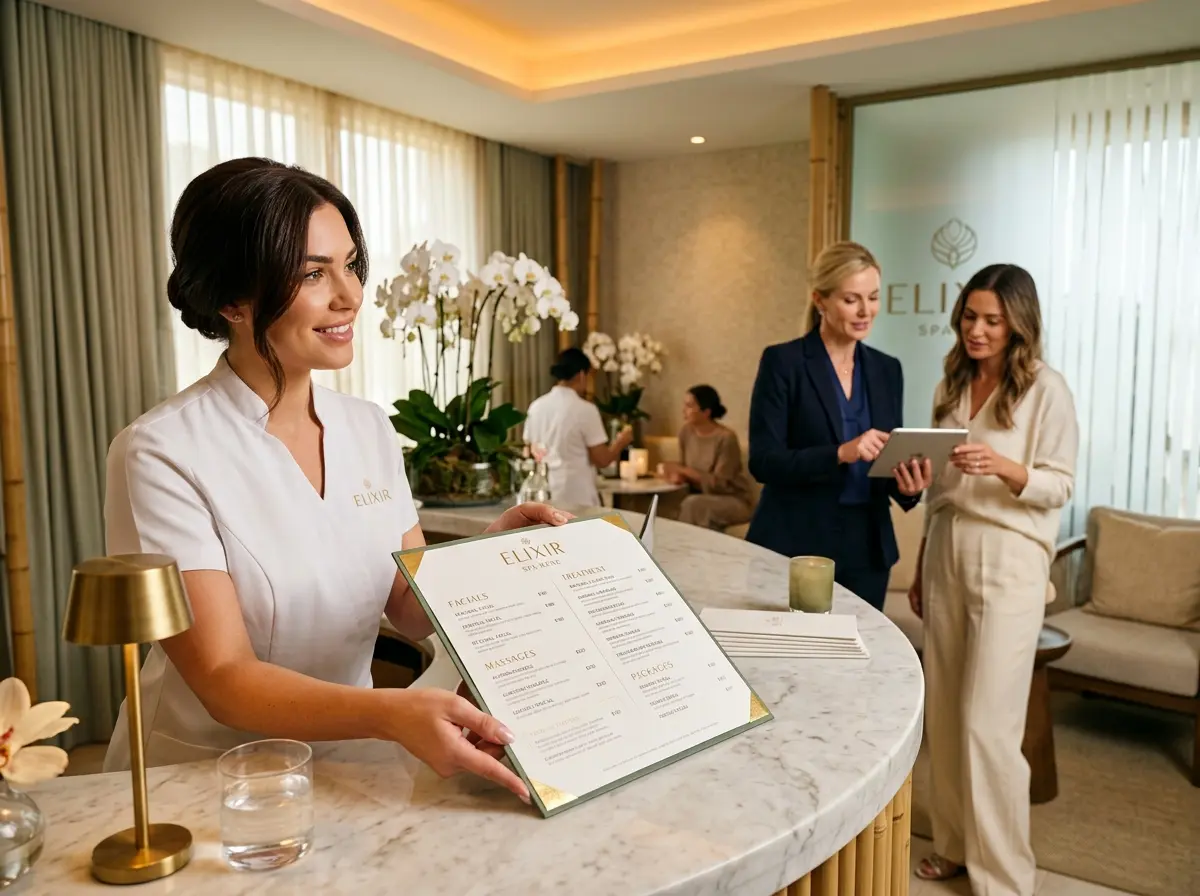
Your Spa Menu Is Either Making You Money or Leaving It on the Table
Here's a fun little experiment: hand your spa menu to someone who has never visited your business and watch what happens. Do their eyes light up with excitement, naturally drawn toward your premium offerings? Or do they squint, flip the page three times, and finally point at the cheapest thing listed just to make a decision? If it's the latter, congratulations — your menu is working against you, and it has been for a while.
Menu design in the spa industry is one of those quietly powerful business levers that most owners drastically underestimate. Unlike a restaurant, where a well-designed menu might nudge someone toward a second glass of wine, a spa menu has the potential to shift a client from a $65 basic facial to a $180 signature treatment — simply by changing how options are presented, described, and organized. That's not manipulation; that's smart communication. And it's one of the most cost-effective upgrades you can make to your revenue per client without hiring a single additional employee or running a single promotion.
This guide walks you through the psychology, structure, and language of strategic spa menu design — and a few tools that can help the whole thing run even smoother.
The Psychology Behind How Clients Choose Services
Before you redesign a single line of your menu, it helps to understand why clients make the choices they make. Spoiler: it usually has very little to do with logic.
The Anchor Effect and Price Perception
One of the most well-documented phenomena in consumer behavior is price anchoring. When clients see a high-ticket service first — say, a $220 full-body wrap and facial combination — every other option on the page starts to look more reasonable by comparison. That $130 deep tissue massage? Practically a bargain. Strategic placement of premium services at the top or beginning of each category subtly recalibrates your client's sense of "normal" pricing, making mid-tier services feel like the sensible, value-conscious choice. They feel smart for picking it. You get a higher average ticket. Everyone wins.
The Paradox of Choice (Less Really Is More)
There's a reason the best spas don't offer 47 variations of facials. Research by psychologist Barry Schwartz consistently shows that too many choices lead to decision paralysis — and a paralyzed client defaults to either leaving or choosing the lowest-risk (read: cheapest) option. Aim for three to five options per service category. If you have more services than that, consider organizing them into curated packages or themed collections rather than listing every individual treatment as a standalone item. Your clients will feel guided rather than overwhelmed, and guided clients spend more.
Descriptive Language That Sells Without Being Pushy
There is a meaningful difference between "Hot Stone Massage – 60 min – $110" and "Warming Stone Ritual – A deeply restorative 60-minute experience using hand-selected basalt stones to melt tension and restore balance – $110." Both describe the same service. One sounds like a line item on a spreadsheet. The other sounds like something worth canceling plans for. Sensory, benefit-driven language activates emotional decision-making, and emotional decisions trend upward in price. Describe the experience, the outcome, and the feeling — not just the mechanics.
Structure and Layout Strategies That Do the Heavy Lifting
The "Goldilocks" Zone: Guiding Clients to the Middle
When you offer three tiers within a service category — entry-level, mid-range, and premium — most clients will gravitate toward the middle option. This is called the compromise effect, and you can design for it intentionally. Structure your facials, massages, or body treatments so that your most profitable service sits comfortably in that middle position. It should feel neither like a splurge nor a sacrifice. Price it accordingly, describe it richly, and watch it become your top seller without a single sales pitch from your staff.
Bundling and Packages as Perceived Value Drivers
Packages are one of the most effective tools for increasing total transaction value because they reframe the conversation from "how much will this cost me?" to "how much am I saving?" A well-constructed spa package that combines a massage, facial, and add-on treatment for $195 — when the individual services would total $230 — feels like a deal even if your margins remain strong. Packages also reduce decision fatigue, encourage clients to try services they might not book independently, and naturally introduce them to higher-value offerings they'll want to return for separately. Start with two or three signature packages built around your most profitable service combinations.
How the Right Tools Keep Your Menu Strategy Working Around the Clock
Designing a great menu is one thing. Consistently communicating it — to every client who walks through your door, calls your front desk, or books online — is another challenge entirely. This is where Stella, the AI robot employee and phone receptionist, becomes genuinely useful for spa owners.
In your physical location, Stella can stand at the entrance or reception area and proactively engage clients while they wait — walking them through current service offerings, highlighting featured packages, and mentioning any promotions in a natural, conversational way. She doesn't have bad days, forget to mention the monthly special, or get distracted by a ringing phone. On the phone side, Stella answers every call 24/7 with the same depth of knowledge about your services, pricing, and packages that your best receptionist has on her best day. She can also collect client intake information through conversational forms and manage that data through a built-in CRM — so your team always has context before a client even sits down in the treatment room. That's menu strategy meeting operational consistency.
Testing, Refining, and Knowing What's Actually Working
Track What Gets Booked (Not Just What Looks Pretty)
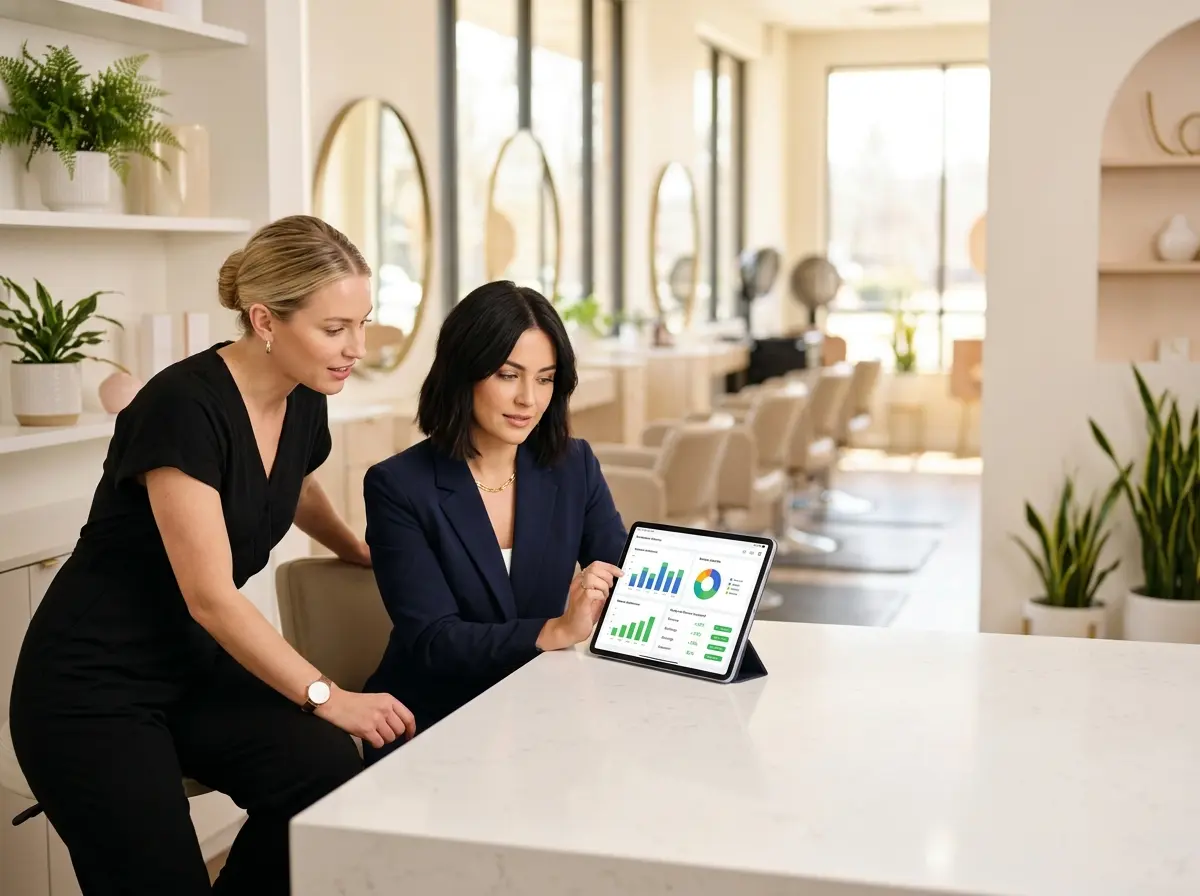
A beautifully designed menu that consistently drives clients toward your $65 basic service is still a poorly performing menu. Make a habit of reviewing booking data by service category at least monthly. Which services are being chosen most often? Which premium offerings are underperforming? Where are clients consistently choosing the entry-level option when a mid-tier service would serve them better? Your booking data is a direct report card on how well your menu is communicating value, and it will tell you things your gut instinct simply cannot.
Seasonal and Promotional Rotation Keeps It Fresh
One of the most overlooked strategies in spa menu management is intentional rotation. Introducing seasonal services — a warming winter body treatment, a brightening summer facial series — creates urgency, generates word-of-mouth, and gives returning clients a reason to try something new. More importantly, seasonal offerings give you a controlled environment to test new price points and service descriptions before committing to them permanently. Treat your menu as a living document rather than a printed artifact, and update it at least quarterly with intention.
Train Your Team to Speak the Menu's Language
Even the best menu design loses its power if your front desk staff describes services in flat, transactional terms. Invest time in training your team to use the same benefit-driven, sensory language you've crafted on the page. When a client asks "What's the difference between the Classic Facial and the Signature Glow Facial?", the answer should paint a picture, not recite ingredients. Role-play these conversations in team meetings. Create a simple reference guide with key talking points for each service. Consistency between your written menu and your verbal communication is what turns a well-designed document into a genuine revenue driver.
A Quick Note on Stella
Stella is an AI robot employee and phone receptionist built for businesses like yours. She greets clients in person at your location, answers calls 24/7, promotes your services and specials, and handles intake and CRM — all for $99/month with no upfront hardware costs. She's basically the world's most consistent receptionist, minus the turnover.
Put Your Menu to Work Starting Today
If there's one takeaway from everything above, it's this: your menu is not just an informational document. It is a sales tool, a communication strategy, and a direct reflection of the value your spa delivers. Treating it like a static price list is the equivalent of hiring a talented salesperson and asking them to stand silently in the corner.
Start with an honest audit of your current menu. Ask yourself whether a first-time visitor would immediately understand your premium offerings and feel drawn toward them. Then make three targeted changes: refine your service descriptions to lead with benefits and outcomes, restructure your category layouts to leverage anchoring and the compromise effect, and create at least one signature package that bundles your most profitable services at a compelling combined price.
From there, track your results with real booking data, rotate your offerings seasonally, and train your team to speak the same language your menu does. With the right design foundation and the right tools supporting your front-of-house communication, your menu stops being a document clients flip through and becomes a quiet, consistent force that moves clients toward higher-value experiences — one beautifully worded treatment description at a time.