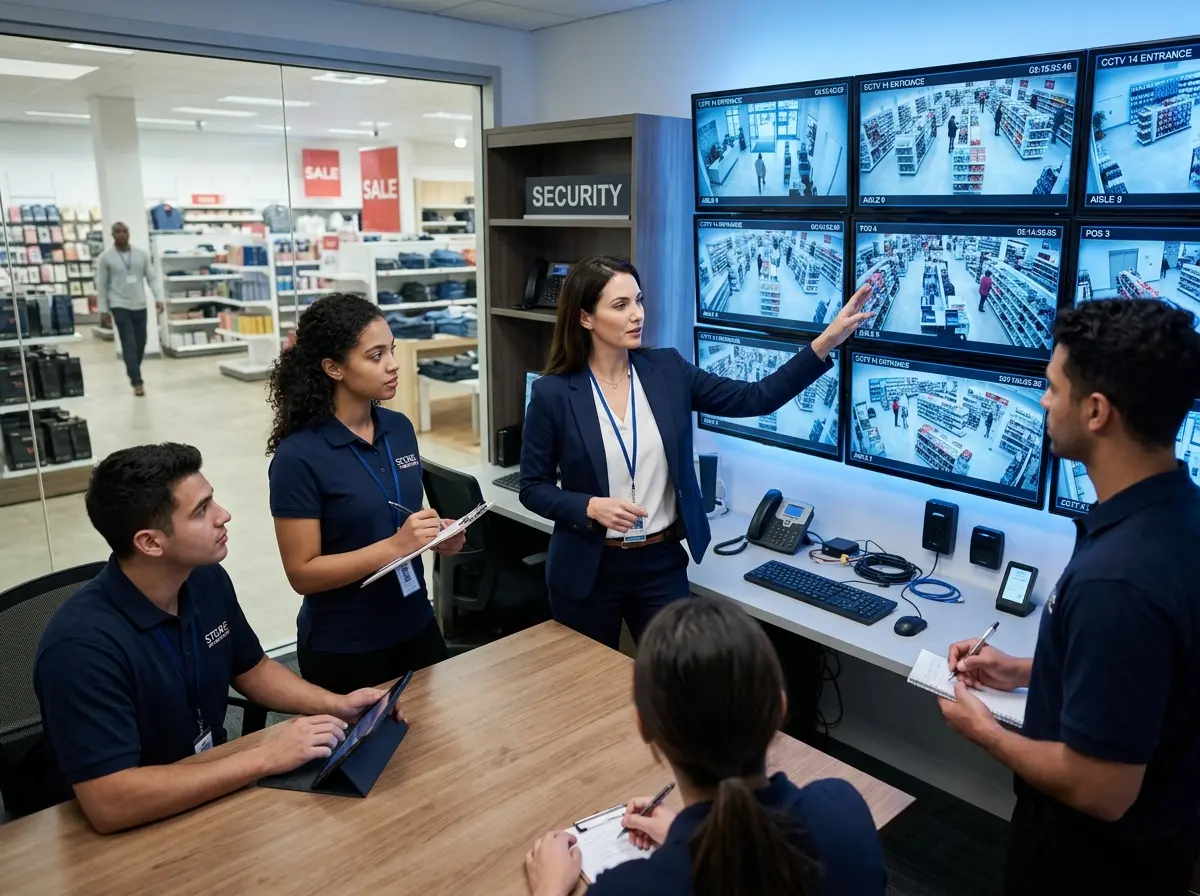
Introduction: Because "Just Don't Steal" Isn't a Loss Prevention Strategy
Let's be honest — when most retail business owners think about loss prevention, they picture a gruff security guard and a grainy CCTV monitor from 1997. The reality is far more nuanced, and unfortunately, far more expensive to ignore. Retail shrinkage — the industry term for inventory loss from theft, fraud, and error — costs U.S. retailers an estimated $112 billion annually, according to the National Retail Federation. That's not a typo. Billion with a B.
The good news? A well-trained team is your single most powerful weapon against shrink. Not a surveillance system. Not a padlock on the stockroom. Your people. The employees who open the store, run the registers, greet customers, and stock the shelves are either your first line of defense or your biggest vulnerability — depending entirely on how well you've prepared them. This post is here to help you train smarter, plug common gaps, and build a culture where loss prevention isn't an afterthought but a daily standard of professionalism.
Building the Foundation: What Your Team Actually Needs to Know
Understanding the Real Sources of Loss
Before your team can prevent losses, they need to understand where losses actually come from — and the answer might surprise them. While shoplifting gets most of the dramatic attention, the NRF reports that employee theft accounts for nearly 29% of shrinkage, while shoplifting accounts for about 37%. Administrative errors and vendor fraud make up the rest. Training your team to understand this full picture removes the "us vs. them" mentality about theft and replaces it with a more honest, systemic awareness.
Start your training by walking employees through each category. Shoplifting includes everything from opportunistic pocket-stuffing to organized retail crime rings. Internal theft ranges from cash skimming to sweethearting — that's when a cashier "forgets" to ring up a friend's items. Administrative errors include mislabeled pricing, inventory miscounts, and receiving errors. None of these are inevitable. All of them are reducible with the right habits and awareness.
Creating Clear, Written Protocols (That People Actually Read)
A verbal rundown during onboarding doesn't cut it. Your loss prevention protocols need to be documented, accessible, and reinforced regularly. This means a written policy that covers:
- Procedures for opening and closing the store, including cash handling and register reconciliation
- How to handle a suspected shoplifter without confrontation or liability
- Rules around employee discounts, returns, and voids
- Reporting procedures for suspicious activity or inventory discrepancies
- Consequences for policy violations — clearly and fairly stated
When protocols exist only in someone's head, they disappear the moment that person quits. Put it in writing, keep it updated, and make sure every new hire signs off that they've read and understood it. Consider a brief annual refresher — retail environments change, and so do the tactics used against them.
Training for Real-World Scenarios, Not Just Theory
Role-playing is your friend here, even if it makes everyone groan a little. Walk your team through realistic scenarios: What do you do if you notice a customer who keeps grabbing items and heading to fitting rooms without buying anything? What's the correct response if a customer becomes aggressive at the register? How do you log a discrepancy you find during a stock count?
Practice makes these responses instinctive rather than panicked. Consider running quarterly scenario drills as part of your team meetings. Frame them not as "gotcha" exercises but as skill-building — because that's exactly what they are. A confident, well-prepared employee is a dramatically better deterrent to theft than any mirror or alarm tag.
How Smart Tools Can Support Your Loss Prevention Efforts
Freeing Up Staff to Stay Alert on the Floor
One often-overlooked contributor to retail loss is distraction. When your employees are constantly pulled away to answer the same five customer questions, manage the phone, or track down a manager to approve a return, they're not watching the floor. Visibility is deterrence — and distracted staff are invisible staff.
This is where Stella, the AI robot employee and phone receptionist, can make a meaningful operational difference. By stationing Stella near the entrance to greet customers, answer product and policy questions, and promote current deals, you're freeing your human team to focus on what requires human judgment — including keeping an eye on the sales floor. She also answers incoming phone calls 24/7, so your staff aren't running to grab the phone mid-transaction. Fewer distractions mean more presence, and more presence means fewer opportunities for theft to go unnoticed.
Everyday Practices That Make a Big Difference
Customer Service Is Your Best Loss Prevention Tool
Here's a truth that surprises a lot of business owners: exceptional customer service actively deters shoplifting. Studies consistently show that shoplifters are far less likely to steal from stores where employees engage them directly. A simple "Hi, let me know if I can help you find anything!" does more than a security camera ever could.
Train your team to greet every customer who enters — not in a robotic, scripted way, but genuinely. Teach them to make periodic, friendly check-ins with customers who have been browsing for a while. This isn't surveillance; it's hospitality. But it has the very useful side effect of communicating that your staff are attentive and present. That awareness alone is enough to deter the majority of opportunistic theft. Build this culture deliberately, because it won't happen by accident.
Cash Handling, Register Discipline, and the Art of the Double-Check
Cash handling errors — whether innocent or intentional — are a significant and preventable source of loss. Establish non-negotiable standards around your register procedures. Every transaction should be handled the same way, every time, by every employee. This includes counting back change verbally, keeping the customer's bill on the register until the transaction is complete, and never leaving a drawer open unattended.
Implement a system of dual verification for register reconciliation at the end of each shift. Two sets of eyes, counted independently. Discrepancies should be logged immediately, investigated without accusation, and tracked over time. Patterns reveal problems — a register that comes up short repeatedly with the same employee isn't a coincidence, and neither is one that never gets counted properly. The paper trail is your protection, both from theft and from unfair blame.
Building a Culture of Accountability Without Paranoia
The goal isn't to make your team feel like suspects — it's to build an environment where doing things the right way is simply how things are done. A culture of accountability starts at the top. When managers follow the same protocols they enforce, when policies apply to everyone equally, and when reporting concerns is encouraged rather than punished, your entire team becomes invested in protecting the business.
Consider implementing an anonymous tip line or reporting mechanism for internal concerns. Many theft incidents go unreported not because employees don't notice, but because they don't feel safe speaking up. Make it easy and safe to do the right thing. Recognize employees who demonstrate exceptional integrity — publicly, if appropriate. Loss prevention is most effective when it's a shared team value, not a surveillance exercise.
Quick Reminder About Stella
Stella is a human-sized AI robot kiosk and phone receptionist built for businesses like yours. She greets customers, answers questions, promotes deals, and handles phone calls around the clock — all for just $99/month with no upfront hardware costs. Whether you're running a retail shop, a salon, or any customer-facing business, Stella keeps things professional and running smoothly while your human team focuses on higher-value work.
Conclusion: Train Today, Save Tomorrow
Loss prevention isn't a one-time training event — it's an ongoing operational discipline. The businesses that take it seriously see measurable results: reduced shrinkage, stronger team cohesion, and a store environment that both customers and employees feel good about. The businesses that don't? Well, they tend to wonder where all the margin went.
Here's where to start this week:
- Audit your current protocols. Do they exist in writing? Are they complete? When were they last updated? Start there.
- Schedule a team training session. Use real scenarios, keep it practical, and make it a conversation — not a lecture.
- Review your cash handling procedures. Identify any gaps or inconsistencies and standardize immediately.
- Reinforce the service-as-deterrence mindset. Remind your team that great customer engagement is great loss prevention.
- Create a reporting culture. Make it clear, safe, and expected that concerns get flagged — not ignored.
Your retail team is capable of being genuinely excellent at loss prevention — they just need the right training, the right tools, and a culture that makes doing the right thing the easiest thing. Start building that today, and your bottom line will thank you for it.