When Your Phone Won't Stop Ringing (And Neither Will Your Customers)
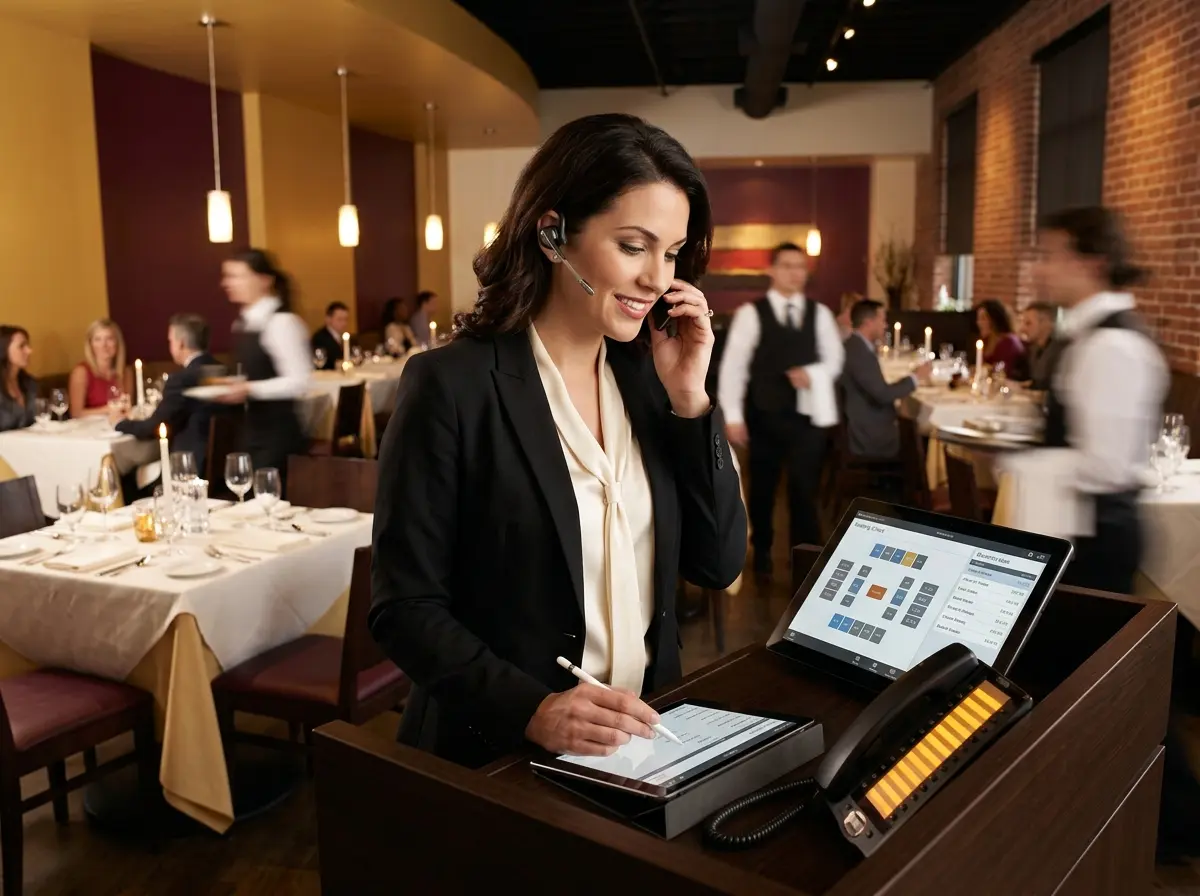
Picture this: It's a Friday night, your dining room is packed, your kitchen is in full swing, and your phone is ringing off the hook. Reservations, takeout orders, questions about your gluten-free options, someone asking what time you close — again. Your host is juggling walk-ins and can barely make eye contact with the guests standing right in front of them, let alone have a cheerful five-minute conversation with someone asking whether you have parking.
Sound familiar? If you run a busy restaurant, this isn't an edge case — it's Tuesday. The modern dining customer expects instant answers, zero hold times, and the kind of warm, knowledgeable service that makes them feel like a regular before they've even walked through the door. Delivering all of that while simultaneously managing a full house and a short-staffed front desk is, to put it diplomatically, a lot.
The good news: there's a smarter way to handle high call volumes without burning out your team, missing revenue opportunities, or making customers feel like an inconvenience. Let's break it down.
Why High Call Volume Is Quietly Costing You
The Hidden Cost of Missed Calls
Every unanswered call is a potential customer who just decided to try the place down the street. Studies suggest that 85% of customers who can't reach a business on the first call won't call back. For a restaurant, that could mean a missed reservation, a lost catering inquiry, or a group of eight that would have ordered three rounds of drinks and dessert.
The math gets uncomfortable quickly. If your average check per table is $120 and you're missing even five calls a week that could have converted to reservations, you could be leaving over $30,000 on the table annually. And that's before factoring in the customers who called once, got no answer, left no voicemail, and never came back.
The Staff Burnout Factor
Here's the thing nobody puts in the employee handbook: constantly interrupting service staff to answer phones is a morale killer. Your host didn't sign up to be a call center operator, and your servers certainly didn't. Every time your front-of-house team has to stop, answer a call, look up the menu, explain your hours, and politely end a conversation — that's attention pulled away from the guests physically in your restaurant right now.
Burned-out staff make mistakes. Mistakes lead to bad reviews. Bad reviews lead to fewer reservations. You can see where this is going.
The Consistency Problem
Even your best employees have off days. Sometimes the new hire doesn't know about the weekend brunch special. Sometimes the answer to "Do you have vegan options?" gets a tentative "I think so?" instead of a confident rundown of your plant-based menu. Inconsistent information frustrates customers and quietly chips away at trust in your brand. When people call a restaurant, they expect accurate, helpful answers — not a guessing game.
Smarter Tools That Actually Solve the Problem
Let Technology Handle What Technology Does Best
Stella is an AI robot employee and phone receptionist designed for exactly this kind of chaos. For restaurants, she answers calls 24/7 with full knowledge of your menu, hours, specials, policies, and promotions — delivering consistent, friendly responses every single time. No bad days, no "let me put you on hold," no accidentally telling a customer you're open on Mondays when you're decidedly not.
Beyond the phone, Stella also operates as a human-sized AI kiosk inside your restaurant, greeting guests, answering questions, and even promoting current deals to people who are already there and already primed to spend. She can collect customer information through conversational intake forms — whether by phone, at the kiosk, or online — and stores everything in her built-in CRM with AI-generated customer profiles, custom tags, and notes. That means every interaction builds your knowledge of your guests, which is the kind of data most restaurants would normally need expensive third-party software to capture.
At $99/month with no upfront hardware costs, she's considerably cheaper than the part-time receptionist you've been meaning to hire.
Practical Strategies for Managing Restaurant Call Volume
Triage Your Calls Like a Pro
Not all calls are equal. A customer asking for your address needs five seconds. A catering inquiry might need fifteen minutes and a follow-up email. The mistake most restaurants make is routing everything through the same bottleneck — usually whoever happens to be standing closest to the phone.
A smarter approach is to set up clear call-handling rules. Routine questions (hours, location, menu items, current specials) should be handled automatically or by a well-briefed team member using a quick-reference sheet. Calls that genuinely need human judgment — complaints, large party bookings, special accommodations — should be escalated to a manager or senior staff. This triage mindset alone can cut the average time your team spends on the phone significantly.
Capture Every Inquiry, Even When You Can't Answer
Voicemail is not a strategy. A generic "leave a message and we'll get back to you" box that nobody checks until the end of the night is the phone equivalent of shouting into the void. If you're going to use voicemail as a safety net, it needs to actually work — which means checking it frequently, following up promptly, and ideally receiving a summary of what was said rather than sitting through fifteen rambling messages.
Whatever system you use, make sure missed calls are flagged immediately with enough context to act on. A customer who left a message at 3pm about booking a private dining room for next Saturday doesn't have until next Wednesday to hear back from you.
Use Your Phone Interactions as a Marketing Opportunity
Every inbound call is a chance to make an impression and potentially increase your revenue before the customer even sets foot in your restaurant. Is your team mentioning the weekend prix fixe? The new cocktail menu? The fact that you do private events?
Most restaurants treat phone calls as pure logistics — answer the question, end the call. But a brief, natural mention of a current promotion or a warm recommendation ("If you're coming in Saturday, our chef's tasting menu is incredible right now") can meaningfully increase check averages and reservation intent. Train your team — or your technology — to make this a habit, not an afterthought.
Quick Reminder About Stella
Stella is an AI robot employee and phone receptionist built for businesses that can't afford to miss a call or drop the ball on customer experience. She answers phones around the clock, greets in-store guests from her kiosk, promotes your specials, handles intake, and keeps your CRM organized — all without a lunch break or a bad attitude. Restaurants, retail shops, salons, medical offices, and more use her to stay responsive and professional at a fraction of the cost of additional staff.
Making the Change: Your Next Steps
If your restaurant is drowning in calls and your staff is feeling the burn, the solution isn't to hire more people and hope for the best. It's to build smarter systems that let your team focus on what they do best — delivering great hospitality to the guests right in front of them.
Here's where to start:
- Audit your current call volume. For one week, track how many calls come in, what they're about, how long they take, and how many go unanswered. You may be surprised — and a little horrified — by what you find.
- Create a quick-reference guide for common questions. Menu FAQs, hours, parking, allergen information, reservation policies — put it all in one place so any team member can answer confidently in under thirty seconds.
- Set up a triage system. Decide which calls can be handled automatically or by front-of-house staff, and which ones need management attention. Document it. Train everyone on it.
- Explore AI-assisted phone tools. If you're fielding dozens of calls a day and your team is stretched thin, an AI receptionist isn't a luxury — it's a practical investment that pays for itself quickly in recovered revenue and staff sanity.
- Follow up faster. Whatever your current response time is for missed calls and messages, cut it in half. Speed communicates that you value your customers' time, and in a competitive restaurant market, that matters.
Running a restaurant is hard enough without letting your phone system become the weak link in your customer experience. Your food is great. Your team works hard. Make sure the first point of contact — that ringing phone — reflects the same level of care you put into everything else. Because the customer who can't get through to you tonight might just be someone else's loyal regular by next weekend.