The No-Show Epidemic Nobody Talks About at Dental Conferences
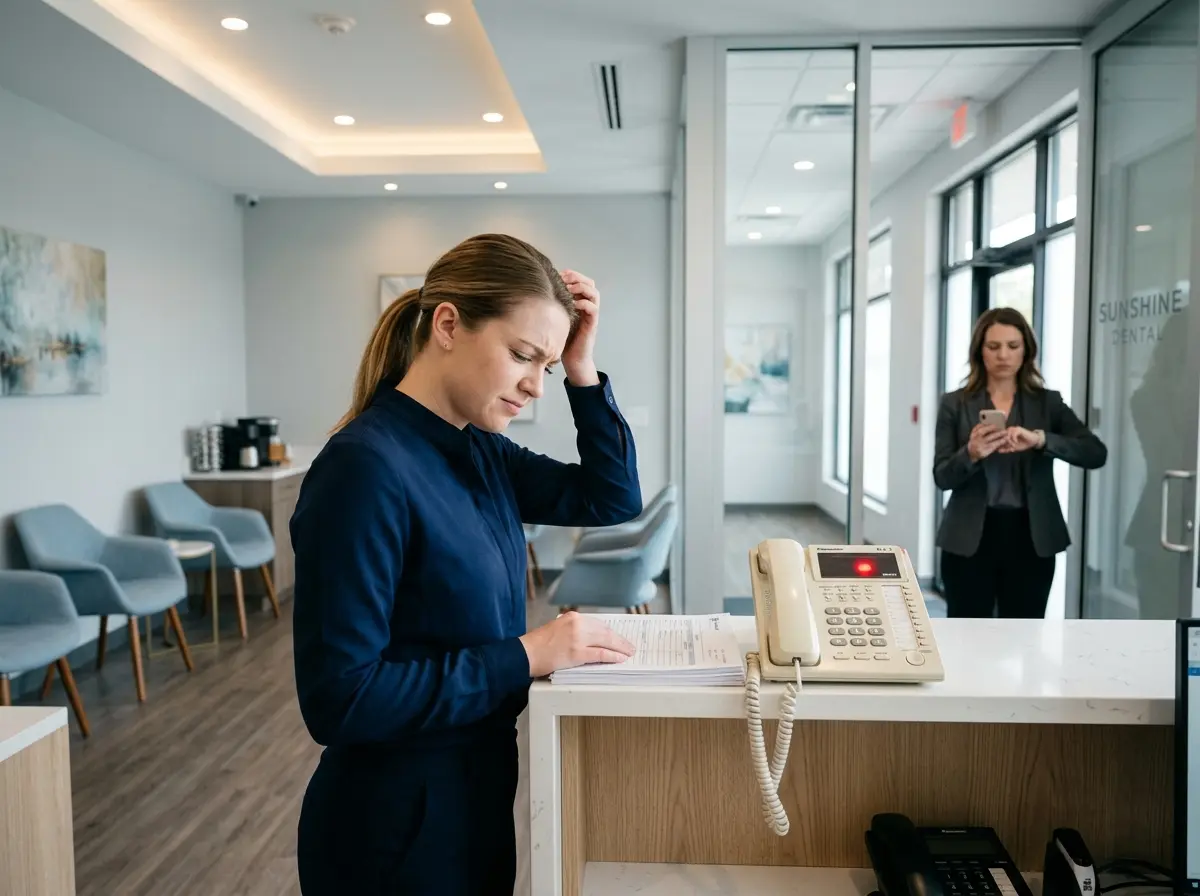
You've done everything right. You've invested in a beautiful practice, hired a talented team, and built a loyal patient base. Then Tuesday morning rolls around, and three of your six scheduled patients simply... don't show up. No call. No warning. Just empty chairs, idle staff, and a very avoidable dent in your revenue. If this sounds familiar, congratulations — you've officially experienced the dental industry's most annoying and expensive tradition.
No-shows are a significant financial drain for dental practices. Studies suggest that the average missed appointment costs a dental office anywhere from $150 to $300 in lost revenue, and that's before accounting for the ripple effects on scheduling, morale, and the patients who actually wanted that slot. For many practices, no-show rates hover between 10% and 30%. That's not a scheduling inconvenience — that's a revenue leak that deserves a serious fix.
The good news? One dental practice cracked the code with something deceptively simple: a better new patient phone script. Not a fancy app. Not an expensive software overhaul. Just a smarter, more human conversation at the very first point of contact — and the results were a 40% reduction in no-shows. Let's break down exactly how they did it.
Why the First Phone Call Is Make or Break
The Psychology of Commitment
Here's something your front desk team probably doesn't think about while scheduling appointments: behavioral psychology. When a patient calls to book their first appointment, they're in a transitional mindset. They're motivated in that moment — maybe they have a toothache, or maybe their last cleaning was embarrassingly long ago — but motivation is a depreciating asset. Without reinforcement, that initial commitment fades faster than a whitening treatment on a coffee drinker.
Research in behavioral science consistently shows that people are far more likely to follow through on commitments when they've verbally stated their intention, understood the value of what they're committing to, and feel a sense of personal connection to the provider. A generic "See you Tuesday at 2pm!" does none of those things. It's the scheduling equivalent of a firm handshake followed by immediately walking away.
What Most Practices Get Wrong
Most new patient phone calls at dental offices follow a pretty predictable script: collect name, date of birth, insurance information, confirm the date and time, and hang up. Efficient? Absolutely. Effective at building commitment? Not remotely. The patient hangs up feeling like they just made a reservation at a restaurant they've never heard of — and we all know how seriously people take those commitments.
The problem isn't the information being collected — that's all necessary. The problem is that the call ends before the patient has any emotional investment in actually showing up. There's no "why this matters," no personal connection, and no clear sense of what to expect. First-time patients, especially anxious ones, are already looking for a reason to reschedule. A cold, transactional call hands them one on a silver platter.
The Script That Changed Everything
The dental practice that achieved a 40% no-show reduction made a handful of targeted changes to how their front desk handled new patient calls. Here's a simplified breakdown of what made the difference:
- Warm welcome and name use: Staff greeted callers warmly and used the patient's name at least twice during the call — not in a robotic, telemarketer way, but naturally. People respond to hearing their own name.
- Brief practice introduction: Instead of diving straight into data collection, the receptionist spent 30 seconds explaining what made the practice a great choice — gentle approach, experienced team, easy parking, whatever was most relevant.
- Explicit commitment language: Before ending the call, staff asked a simple question: "Is there anything that might prevent you from making it in on Tuesday?" This opened the door for rescheduling issues to surface before the appointment, not as a no-show.
- Confirmed next steps: Patients were told exactly what to expect — a confirmation text, a reminder the day before, what to bring, and how long the appointment would take. No surprises means less anxiety and fewer last-minute cancellations.
- Genuine enthusiasm: The call ended with something like, "We're really looking forward to meeting you, [Name]. You're going to love the team here." It sounds small. The data says it isn't.
The entire enhanced script added roughly 90 seconds to each new patient call. Ninety seconds of investment that paid off in a 40% reduction in missed appointments. That math is hard to argue with.
How Technology Can Support Your Front Desk — Without Replacing the Human Touch
Capture the Moments Your Team Can't
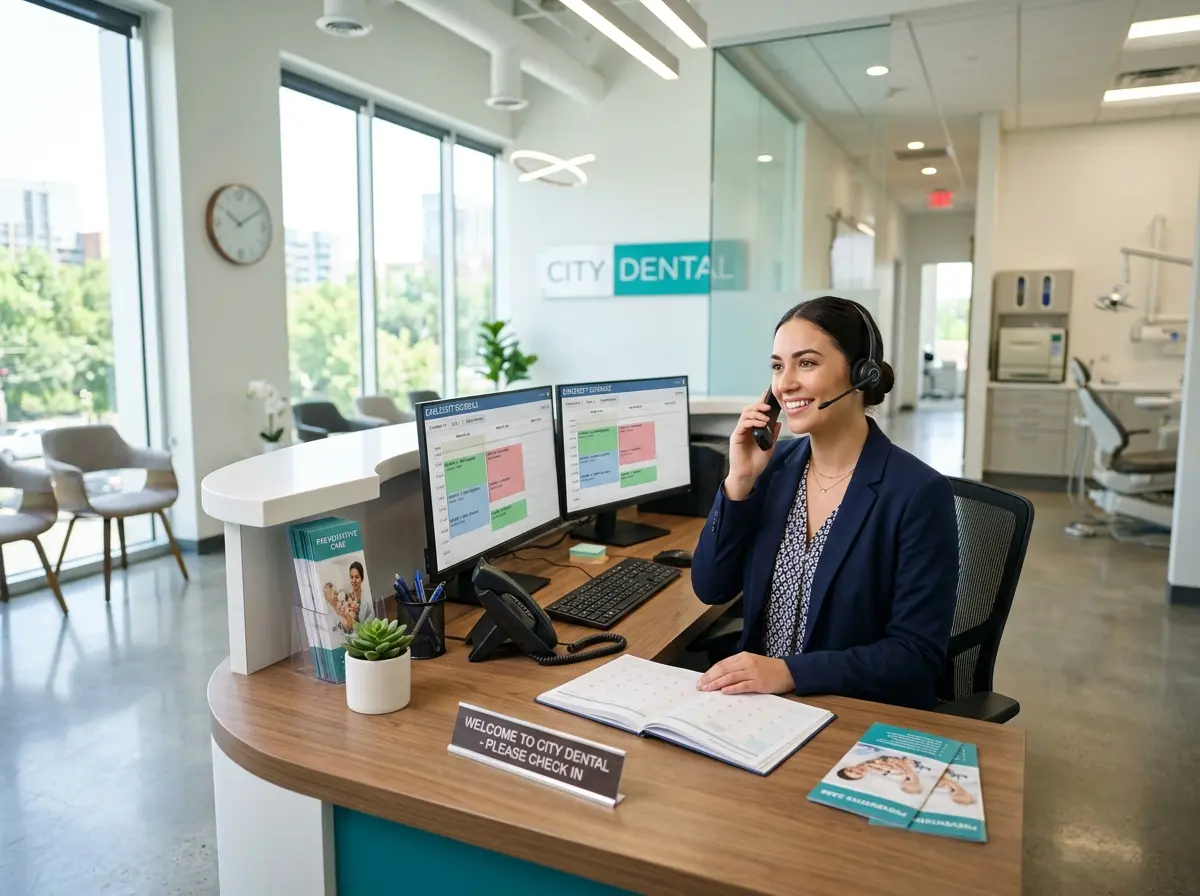
Even the most dialed-in front desk team has limits. They go on lunch breaks. They handle in-office patients. They deal with insurance headaches at exactly the moment a new patient is calling. And in those gaps, calls get missed, voicemails go unreturned, and would-be patients book with the practice down the street instead. This is where technology earns its keep.
Stella, the AI robot employee and phone receptionist, is built for exactly these situations. She answers calls 24/7, engages new patients with a warm and knowledgeable conversation, and can walk callers through a structured intake process — including the kind of commitment-building questions that reduce no-shows. She doesn't rush callers, she doesn't have bad days, and she never puts someone on hold to deal with a walk-in. For dental practices, her built-in CRM and conversational intake forms mean that new patient information is captured accurately the first time, without requiring your front desk to manually transcribe a stack of callbacks at the end of the day.
Stella also generates AI-powered summaries of voicemails and sends push notifications to managers, so nothing slips through the cracks. If your goal is to give every new patient call the same quality experience that script produces — consistently, every single time — having AI handle after-hours and overflow calls is a practical way to extend that standard without extending your payroll.
Turning a Great Script Into a Great System
Train and Roleplay Until It Feels Natural
The fastest way to kill a new phone script is to hand it to your front desk team in a printed memo and hope for the best. Scripts feel awkward when they're new — that's normal. The practice in our case study ran weekly 15-minute roleplay sessions for a full month before the new script became second nature. One staff member played the caller; another used the script. They'd swap, critique gently, and refine the language until it sounded conversational rather than rehearsed.
This investment is worth it. A script that sounds natural builds rapport. A script that sounds scripted does the opposite — it signals to the patient that they're being processed, not welcomed. The goal is for your team to internalize the intent behind each element of the script, so they can adapt it naturally to different callers and situations rather than reading from a page robotically.
Layer In Reminders Strategically
A great intake call is the foundation, but it's not a substitute for a smart reminder strategy. The practice that cut no-shows by 40% also implemented a three-touch reminder approach:
- A confirmation text immediately after booking.
- An email reminder 48 hours before the appointment with a brief "what to expect" overview.
- A personal call or text the morning before, delivered with the same warm tone as the original intake call.
The key insight here is that reminders aren't just logistical — they're relational. Each touchpoint is an opportunity to reinforce the patient's sense that this practice is professional, organized, and genuinely looking forward to seeing them. Patients who feel that don't ghost their appointments. Patients who feel like a number on a clipboard often do.
Track, Measure, and Refine
If you're not measuring your no-show rate right now, start immediately. You can't fix what you can't quantify. Track no-shows by appointment type, day of week, time of day, and whether the patient was new or returning. This data will tell you where your biggest vulnerabilities are and whether your new script is actually moving the needle. Set a 90-day benchmark, evaluate the numbers honestly, and adjust your approach based on what the data shows — not on what feels like it should be working.
Quick Reminder About Stella
Stella is an AI robot employee and phone receptionist that works for businesses 24/7 — answering calls, greeting walk-ins at the kiosk, collecting patient information through intake forms, managing contacts in a built-in CRM, and never once calling in sick on a Monday. She's available for $99/month with no upfront hardware costs and is designed to be up and running quickly, so your practice can start capturing every call — and every first impression — without missing a beat.
Your Next Steps Start With One Phone Call
The story of this dental practice is a useful reminder that the most impactful business improvements aren't always the most expensive or complicated ones. A smarter phone script, trained into your team and backed by consistent follow-up, can meaningfully move the needle on one of the most frustrating and costly problems in healthcare — and honestly, in almost any appointment-based business.
Here's what you can do this week to start seeing results:
- Audit your current intake call. Have someone call your office as a mystery patient and record the experience. What's working? What's missing?
- Draft a revised script that incorporates warm language, commitment questions, clear next steps, and genuine enthusiasm — tailored to your practice's voice.
- Schedule roleplay training with your front desk team. Make it low-pressure, make it regular, and make it fun. Pizza helps.
- Implement a three-touch reminder system if you haven't already, and make sure each touchpoint reflects the same warm tone as the intake call.
- Start tracking your no-show rate so you have a clear baseline to measure progress against.
The empty chair problem is solvable. It doesn't require a massive budget or a complete operational overhaul. It requires attention to the moments that matter most — and the first phone call is one of them. Get that right, and you'll be amazed what follows.