You Missed the Call. And the Customer. And Probably the Sale.
Here's a scenario that plays out in businesses every single day: a potential customer calls your shop, nobody picks up, they don't leave a voicemail, and they call your competitor instead. You never even knew they existed. Somewhere out there, a sale is walking through someone else's door — and it could have been yours.
It's not a dramatic tragedy. It's just Tuesday.
The truth is, missed calls and unengaged customers are one of the most quietly expensive problems a business can have. You don't see the damage on a balance sheet. There's no line item for "customers who gave up and left." But the cost is absolutely real. Studies suggest that 85% of customers whose calls go unanswered will not call back — they'll just move on. For a busy business owner juggling staff, inventory, and operations, that's a sobering number.
The good news? Winning customers back — and keeping them engaged in the first place — is very much a fixable problem. It just requires a little strategy, the right tools, and maybe an honest look at where your customer experience has some, let's say, character-building opportunities.
Where Customers Are Slipping Through the Cracks
The Missed Call Problem Is Bigger Than You Think
Most business owners know they miss calls occasionally. What they often don't realize is how frequently it happens and what it's actually costing them. Between staff helping in-store customers, back-office tasks, lunch breaks, and the chaotic middle hours of a busy day, phones go unanswered far more than anyone would like to admit.
And customers today are not particularly patient. They have three other tabs open and your competitor's number one Google search result away. If you don't answer, they won't wait around. They'll simply redirect their business — and their loyalty — elsewhere. Beyond first-time callers, even existing customers can get frustrated enough by repeated missed calls to quietly take their business somewhere more responsive.
The fix isn't necessarily hiring more staff. It's making sure there's always someone — or something — reliably available to pick up.
The Walk-In Who Gets Ignored Is Already Leaving
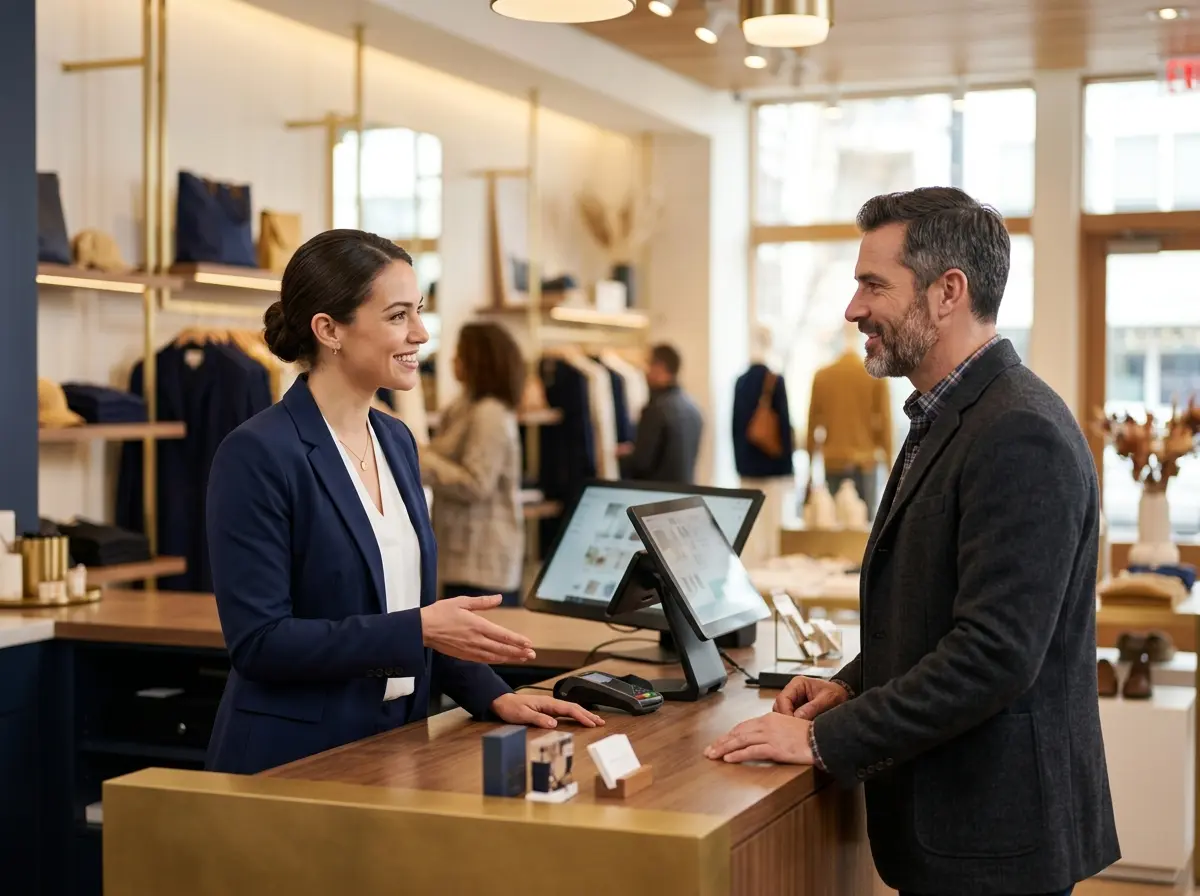
Phone calls aren't the only touchpoint where customers slip away unnoticed. Walk-in foot traffic presents its own challenges. When a customer strolls into your shop and nobody greets them promptly, they do a mental calculation in about thirty seconds: Am I wanted here? If the answer feels like "not really," many of them will turn around without saying a word.
Staff get busy. That's understandable. But the customer browsing near the entrance doesn't know you're understaffed today. They just know they've been standing there for two minutes and nobody has acknowledged them. First impressions are ruthlessly unforgiving, and in retail and service environments especially, the greeting — or the lack of one — sets the entire tone of the visit.
The Follow-Up That Never Happened
Even when customers do make contact — whether by phone, in person, or online — the follow-up is where many businesses drop the ball entirely. A customer asks about a service, gets a vague answer, and leaves with a "we'll get back to you." Then nobody gets back to them. The lead goes cold. The opportunity disappears.
This isn't malicious neglect. It's the reality of running a business without systems in place to track and act on customer interactions. Without a reliable way to log conversations, capture contact information, and prompt follow-up, even the best intentions get buried under the next day's to-do list.
How the Right Tools Change the Game
Letting Technology Handle the First Response
One of the smartest moves a business owner can make is acknowledging that they simply cannot be everywhere at once — and then doing something about it. This is exactly where Stella, an AI robot employee and phone receptionist, becomes genuinely useful. For businesses with a physical location, Stella stands inside the store as a friendly, human-sized AI kiosk that proactively greets customers, answers questions about products and services, promotes current deals, and even upsells relevant offerings. No more awkward silences at the entrance. No more customers wandering around looking confused while staff are occupied elsewhere.
On the phone side, Stella answers calls 24/7 with the same business knowledge she uses in person — hours, services, policies, promotions, and more. Calls can be forwarded to human staff based on configurable conditions, or Stella can handle everything herself. Voicemails get AI-generated summaries and push notifications so managers actually know what they missed. And for capturing customer information, her built-in CRM with intake forms — available over the phone, on the web, or at the kiosk — means contact details and customer context don't fall through the cracks anymore. It's an affordable $99/month subscription with no upfront hardware costs, which, frankly, is less than what most businesses spend on coffee for the break room.
Winning Back Customers Who Already Left
Reach Out Before They Forget You Exist
If a customer came in, made an inquiry, and then went quiet, don't assume the relationship is over. In many cases, they simply got busy or distracted — they haven't made a decision against you, they've just moved on temporarily. A timely, personalized outreach can absolutely bring them back. This might be a follow-up phone call, an email referencing their specific inquiry, or even a targeted promotion tied to something they expressed interest in.
The key word here is personalized. A generic "we miss you!" email blast is easy to ignore. A message that references a specific conversation or interest — "Hey, we still have that appointment slot you asked about" or "The product you were asking about just came back in stock" — shows that you were actually paying attention. People notice that. It builds trust, and trust brings customers back through the door.
Fix the Experience That Lost Them in the First Place
Winning a customer back once is nice. Winning them back only to lose them again because nothing has changed is just an expensive revolving door. Before you launch any re-engagement effort, take an honest look at why customers may have disengaged. Was it unresponsiveness? Long wait times? Unhelpful answers to basic questions? Inconsistent service?
Identifying the weak points in your customer experience isn't about assigning blame — it's about finding the specific friction points that are costing you business. Once you know what they are, you can actually fix them. And then, when you reach back out to lapsed customers, you're not just saying "come back" — you're saying "come back because things are better now." That's a much more compelling invitation.
Build Loyalty Systems That Prevent Churn Before It Starts
The best win-back strategy is one you rarely have to use because your retention is strong to begin with. Loyalty programs, consistent follow-up after purchases or appointments, birthday promotions, and regular communication through email or SMS all serve the same purpose: keeping your business top of mind so customers don't drift away in the first place.
None of this needs to be complicated. Even simple, consistent touchpoints — a thank-you message after a first visit, a check-in a few weeks after a service, a heads-up about an upcoming promotion — can meaningfully increase how often customers return and how long they stay. Retention is, almost always, cheaper than acquisition. Keeping the customers you have is the most cost-effective growth strategy available to any business.
Quick Reminder About Stella
Stella is an AI robot employee and phone receptionist designed to make sure no customer — walk-in or caller — ever feels ignored. She greets customers in person, answers calls around the clock, promotes your offerings, collects customer information, and keeps everything organized so your team can focus on doing what they do best. At $99/month with no hardware costs required, she's the tireless team member you didn't know you were missing.
It's Not Too Late to Make It Right
Missed calls happen. Customers get overlooked during a rush. Follow-ups fall through the cracks. None of that has to be permanent or fatal to your business — but it does require you to take it seriously and make some deliberate changes.
Here's where to start:
- Audit your missed calls — Look at the last 30 days. How many calls went unanswered? How many went to voicemail and were never returned? That number is your baseline, and it probably deserves your attention.
- Identify your highest drop-off points — Where are customers disengaging? At the first greeting? After an inquiry? Post-purchase? Knowing the where is the first step toward fixing the why.
- Set up a follow-up system — Whether it's a CRM, a simple spreadsheet, or an AI tool, you need something that ensures no customer inquiry disappears into the void.
- Reach out to lapsed customers — Make a short list of customers who've gone quiet in the last 60-90 days and send a genuine, personalized message. You may be surprised how many respond positively.
- Fix the experience first — Don't market your way out of a service problem. Address the root causes of churn before investing in re-engagement campaigns.
Your customers aren't gone forever. Most of them just need a reason to come back and a business that's actually ready to receive them this time. Be that business. Answer the phone. Greet the walk-in. Follow up when you say you will. It sounds simple because it is — and yet it's exactly where most businesses are quietly losing the game.
The next call is coming. Make sure someone's there to answer it.