So You Want to Run a Subscription Box — From a Bookstore
Let's be honest: independent bookstores have had a rough few decades. Between the rise of e-commerce giants, digital reading devices, and a general cultural obsession with screens, you've survived on sheer passion, community loyalty, and an almost stubborn refusal to quit. So naturally, the next logical step is to add more work to your plate with a subscription box business. Brilliant.
Here's the thing — it actually is brilliant. Subscription boxes have exploded into a multi-billion dollar industry, and book-themed boxes in particular have found a fiercely dedicated fanbase. According to industry research, the global subscription box market is expected to exceed $65 billion by 2027. Bookish consumers are some of the most loyal subscribers around, and your independent store already has something the big players don't: personality, curation expertise, and a real community.
This guide will walk you through the practical steps of launching a subscription box that actually sells — and actually makes money — without turning your beloved bookstore into a logistics nightmare.
Building the Foundation of Your Subscription Box
Finding Your Niche (Because "Books" Is Not a Niche)
Your first instinct might be to create a subscription box for "book lovers." Wonderful. So does everyone else. The subscription box market rewards specificity, and your independent bookstore's unique voice is your biggest competitive advantage here.
Think about what already makes your store special. Do you specialize in mystery and thriller titles? Are you the go-to shop for local authors? Do you have a cult following for your feminist fiction recommendations? That existing identity is your niche — and it's more valuable than any marketing budget. Consider boxes like "Cozy Crime Monthly" for mystery fans, "Little Readers Club" for children's books by age group, or "Local Lit Box" featuring regional authors and artisan goods from your community.
The more specific your niche, the easier it becomes to source products, write compelling copy, and build a subscriber base that genuinely obsesses over every delivery. Specificity also reduces churn — people who subscribe to a general book box might cancel when life gets busy, but the person who lives for cozy mysteries is a subscriber for life.
Curating Your Box: The Art and the Math
Curation is where your expertise shines, but pricing is where dreams go to die — so let's tackle both. A typical book subscription box includes one to two books plus two to five complementary items like bookmarks, candles, teas, prints, stickers, or locally made snacks. The sweet spot for pricing tends to fall between $30 and $55 per month, depending on your market and box contents.
Here's the math you need to internalize: your cost of goods should stay at or below 40% of your retail price. That means if you're charging $40 per box, your products plus packaging plus inserts should cost you no more than $16. Shipping typically runs $5–$10 for a standard-weight box, which leaves you a workable margin — but only if you're buying smartly. Negotiate with your book distributors for subscriber pricing, partner with local makers for wholesale rates, and never underestimate how much bubble mailer you'll go through.
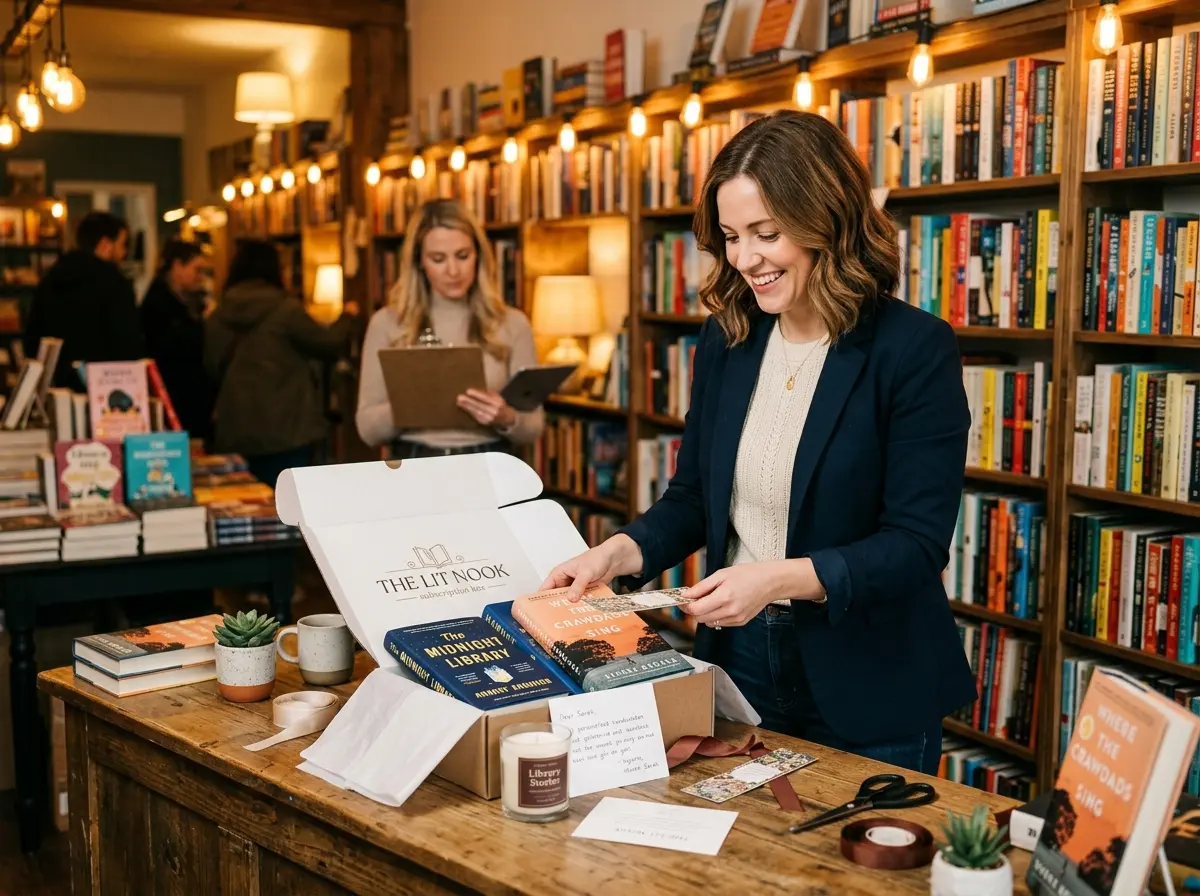
Don't forget the "unboxing experience." Presentation matters enormously in this market. A hand-written note, a themed insert card with book context or reading questions, and thoughtful tissue paper go a long way toward making subscribers feel like they've received something special rather than a package from a warehouse.
Choosing Your Subscription Platform
You don't need to build a custom website from scratch to sell subscriptions — several platforms make this remarkably painless. Cratejoy is purpose-built for subscription boxes and includes a marketplace where new subscribers can discover you organically. Subbly and Bold Subscriptions integrate with Shopify if you already have an e-commerce presence. For simpler setups, even WooCommerce with a subscriptions plugin can work well.
Whichever platform you choose, make sure it handles dunning management (what happens when a card fails), subscriber self-service portals, and flexible billing cycles. The last thing you want is to personally email 200 subscribers because the billing didn't process — you have books to sell.
Keeping Customers Engaged (Without Losing Your Mind)
Turning Your In-Store Presence Into a Subscription Funnel
Your physical bookstore is one of your most underutilized marketing assets for subscription growth. Every customer who walks through your door is a potential subscriber — they're already book buyers, already in your community, and already interested enough in books to leave their house for them. That's a warm lead by any definition.
Consider dedicating a small display near checkout or the front entrance to your subscription box — sample box contents under glass, a QR code to subscribe, and a short stack of promotional cards work beautifully. Host a quarterly "box reveal" event where subscribers come in to pick up their boxes in person, turning the unboxing into a social experience. This also gives you a built-in reason to email your list and drive foot traffic.
This is also where Stella, the AI robot employee and phone receptionist, can quietly do a lot of heavy lifting. Her in-store kiosk presence means she can proactively greet customers, mention your subscription box, and capture sign-up information — all without pulling a staff member away from the register. For customers who call to ask about your store's offerings or hours, Stella handles those calls 24/7 and can answer questions about your subscription box just as fluently as she'd discuss your in-store inventory. Fewer missed calls, more conversions.
Marketing Your Box Without a Marketing Department
Social Media and the Power of the Unboxing Video
If there is one marketing format tailor-made for subscription boxes, it's the unboxing video. Instagram Reels, TikTok, and YouTube Shorts are crawling with bookish content creators who would genuinely love to feature your box — often in exchange for a free subscription rather than payment. This is called influencer gifting, and for small businesses, it's one of the highest-ROI marketing strategies available.
Start by identifying micro-influencers (typically 5,000–50,000 followers) in the "BookTok" or "Bookstagram" communities. These creators often have deeply engaged audiences who trust their recommendations far more than they trust advertisements. Reach out personally, offer them a complimentary box, and let them do what they do best. A single well-received unboxing from a trusted BookTok creator can generate dozens of new subscribers overnight.
Beyond influencer marketing, your own social channels should document the curation process, introduce featured authors, and celebrate subscriber milestones. Behind-the-scenes content — "How We Choose This Month's Book" — performs exceptionally well and costs nothing but a few minutes and a smartphone.
Email Marketing: Your Most Reliable Revenue Channel
Social media algorithms are fickle. Email is not. Building and nurturing an email list is the single most valuable long-term marketing investment you can make for your subscription box business. Every subscriber should be on your list. Every in-store customer should have the opportunity to join it. Every website visitor should be offered a reason to sign up (a discount on their first box, for instance).
Use your email list to announce monthly themes before the box ships — this creates anticipation and dramatically reduces cancellations. Send "last chance to subscribe" emails in the final days before each billing cycle closes. Share notes from featured authors, reading guides, and community spotlights. Make your subscribers feel like members of something, not just customers of something. The difference between a subscriber who stays for three months and one who stays for three years is almost always the sense of community and connection your communications create.
Reducing Churn With Loyalty and Flexibility
Churn — the rate at which subscribers cancel — is the quiet killer of subscription businesses. Industry benchmarks suggest a healthy monthly churn rate is around 5–7%, though many successful boxes achieve lower. The most effective churn-reduction strategies are almost embarrassingly simple: make it easy to pause instead of cancel, offer multi-month prepay discounts that incentivize longer commitments, and follow up personally when someone does cancel to understand why.
Loyalty perks also go a long way. Offer a small gift at the six-month and twelve-month subscriber milestones — an exclusive bookmark, a signed bookplate from a featured author, or early access to new box themes. These gestures cost very little but create outsized goodwill and dramatically improve retention.
A Quick Reminder About Stella
Stella is an AI robot employee and phone receptionist designed to work inside your store and answer your phones — so your human staff can focus on what humans do best. At just $99/month with no upfront hardware costs, she greets customers, promotes your offers (including that subscription box you're about to launch), and handles calls around the clock. She's always on, never in a bad mood, and doesn't call in sick during your busiest Saturday of the month.
Your Next Steps: From Idea to First Shipment
Launching a subscription box from your independent bookstore is genuinely achievable — and genuinely profitable when done thoughtfully. You have curatorial credibility, community trust, and a physical location that most subscription box companies would pay handsomely for. Use those advantages.
Here's how to move from reading this article to shipping your first box:
- Define your niche based on your store's existing identity and customer base.
- Build a sample box and photograph it obsessively — this is your sales asset.
- Choose a subscription platform and set up your storefront before you start promoting.
- Soft-launch to your existing customers — email list, in-store signage, and social followers — before pursuing broader marketing.
- Reach out to five BookTok or Bookstagram micro-influencers for gifted unboxing collaborations.
- Set a minimum viable subscriber threshold (many bookstore box owners recommend 50 subscribers before the first shipment) and work toward it before locking in your launch date.
The independent bookstore that adds a well-run subscription box to its revenue mix isn't just surviving — it's building something that generates income whether the foot traffic is good or not, whether the weather cooperates or not, and whether the algorithm is kind or not. That kind of recurring, predictable revenue is worth every moment of the planning process.
Now go build something your community will subscribe to — literally.