The Treatment Plan Graveyard: Why Accepted Doesn't Always Mean Completed
If this sounds familiar, you're not alone. Studies suggest that anywhere from 50% to 70% of accepted dental treatment plans never get scheduled or completed. That's not just a missed revenue opportunity — it's a genuine gap in patient care. And while the dental industry has always had this problem, the solution has never been more accessible: an automated follow-up sequence that does the chasing for you.
Why Treatment Plans Fall Through the Cracks
The Memory Problem
The Timing Problem
Even when staff do follow up, timing is everything. Call too soon after the appointment and it feels pushy. Call too late and the patient has moved on — or worse, their condition has worsened and now they're frustrated. The sweet spot for follow-up is typically 24 to 72 hours after the appointment, when the conversation is still fresh and urgency is real but not panic-inducing. Few practices hit this window consistently because it requires a level of operational precision that's hard to maintain manually.
The Friction Problem
Building the Automated Follow-Up Sequence
Mapping the Sequence Structure
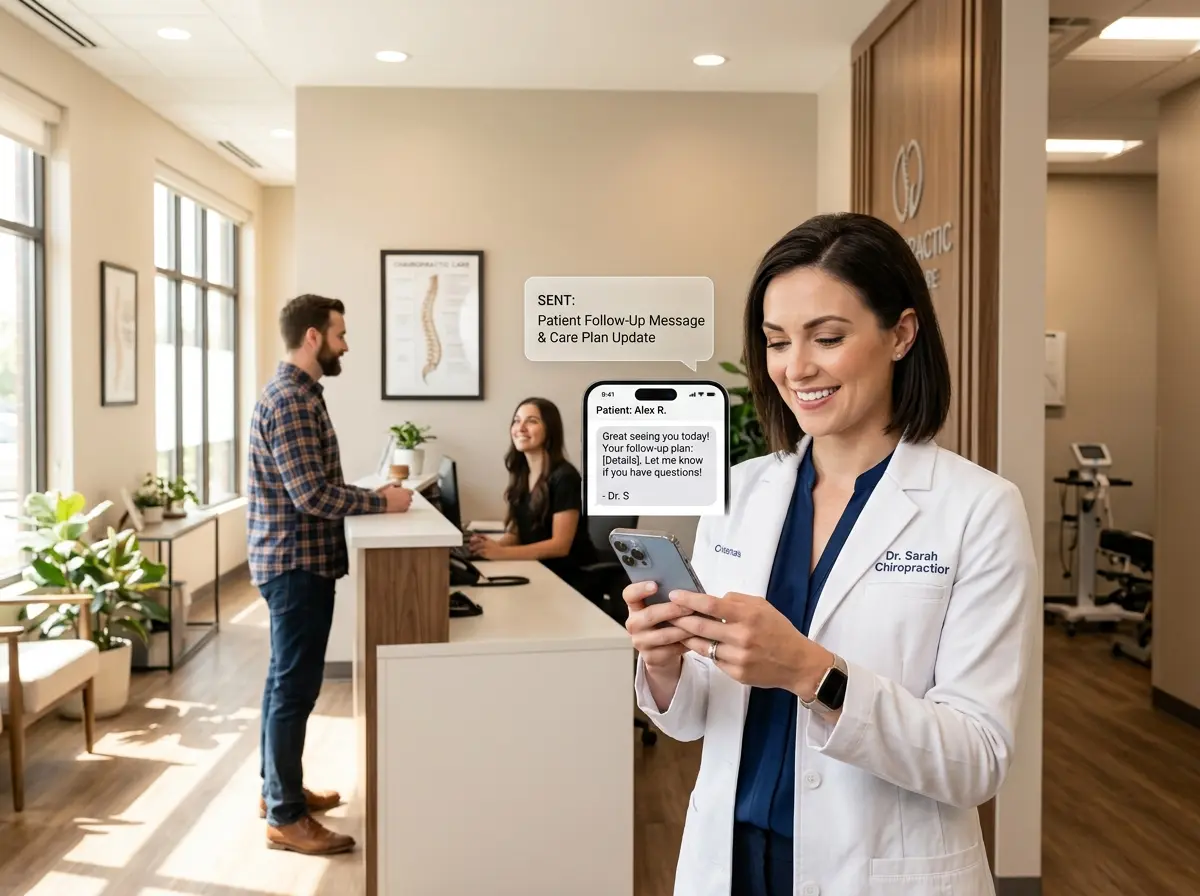
- Day 1 (24 hours post-appointment): Warm SMS confirming the treatment plan discussion and offering a direct booking link.
- Day 3: Email with more detail about the recommended treatment, why it matters, and an easy call-to-action.
- Day 7: A phone call attempt (either from staff or an AI receptionist during off-hours) with a voicemail if unanswered.
- Day 14: A second SMS with a gentle urgency message — noting that the treatment plan has a limited window before conditions may change.
- Day 21: Final email offering a complimentary call with the office to answer any outstanding questions or concerns.
Writing Messages That Actually Get Responses
The content of the messages matters just as much as the timing. This practice tested several message styles and found that empathetic, low-pressure messaging outperformed urgent or clinical language by a significant margin. Messages that acknowledged the patient by name, referenced the specific treatment discussed, and made scheduling feel simple — rather than obligatory — consistently drove higher response rates.
One SMS that performed particularly well read something like: "Hi [Name], just a friendly note from [Practice Name] — your treatment plan is ready whenever you are. Book online in 2 minutes: [link]. Questions? Reply here or give us a call!" Simple, human, and actionable. No guilt trips. No clinical jargon. Just a clear path forward.
How Stella Fits Into the Follow-Up System
Handling Inbound Responses and After-Hours Calls
Stella, the AI robot employee and phone receptionist, is built for exactly this scenario. She answers calls 24/7 with full knowledge of the practice's services, policies, and current offerings — so a patient calling back after hours to ask about their crown procedure or confirm an appointment isn't greeted by voicemail. Stella can also collect patient intake information through conversational phone flows and log it directly into her built-in CRM, which means by the time a staff member follows up in the morning, patient details are already organized and ready. For a dental practice fielding surges of inbound calls from an active follow-up sequence, having Stella as a reliable first point of contact is the operational equivalent of hiring a very competent, never-tired receptionist who costs a fraction of the salary.
Measuring What's Working and Refining the Sequence
The Metrics That Matter
Running an automated follow-up sequence without tracking results is like driving with your eyes closed — technically you're moving, but nobody should be impressed. The key metrics this practice tracks are: open rates on emails, response rates on SMS, call connection rates, and — most importantly — treatment plan conversion rate by touch (i.e., which message in the sequence drives the most bookings). This last metric is gold, because it tells you exactly where the sequence earns its keep.
After 90 days of running the sequence, the practice saw their unscheduled treatment plan conversion rate improve by over 30%. The highest-performing touch? Day 7 — the phone call. Turns out, a real (or AI-assisted) voice still carries weight in a world drowning in automated text messages.
Iterating and Improving Over Time
Getting Staff Buy-In
A Quick Reminder About Stella
Stella is an AI robot employee and phone receptionist that works for businesses across industries — including dental practices — handling inbound calls 24/7, greeting patients, collecting intake information, and managing contacts through a built-in CRM. She's available for just $99/month with no upfront hardware costs, and she never calls in sick the day your follow-up sequence sends out a batch of reminders. Worth knowing.
Your Next Steps Toward Better Treatment Plan Conversion
- Audit your current process. How many unscheduled treatment plans do you have right now? If you don't know the answer, that's your first problem to solve.
- Choose a platform. Whether it's your existing practice management software, a CRM with automation capabilities, or a dedicated patient engagement tool, pick something that can trigger sequences automatically based on patient status.
- Draft your sequence. Use the five-touch structure outlined above as a starting point. Keep messaging warm, specific, and friction-free.
- Set up your inbound response system. Make sure that when patients respond to your follow-ups, someone — or something — is ready to receive them, even after hours.
- Track, refine, repeat. Review your conversion data every 30 to 90 days and make incremental improvements.