So You Want to Add Dental Chews to Your Pet Grooming Shop — Great Idea
Let's be honest: most pet owners are doing a heroic job remembering to feed, walk, and love their animals. Brushing their dog's teeth? That's... a work in progress. In fact, according to the American Veterinary Dental Society, over 80% of dogs show signs of periodontal disease by age three. That's not a fun statistic, but it is a business opportunity — especially for forward-thinking pet grooming shops that want to do more than trim nails and fluff tails.
Adding a vet-recommended dental chew and oral care product line to your shop is one of the smartest moves you can make right now. It deepens customer trust, adds a meaningful revenue stream, and positions your grooming business as a true one-stop shop for pet wellness — not just pet aesthetics. The catch? You can't just throw a bag of mystery bones on the shelf and call it a day. Pet parents are savvy, vets are picky, and your reputation is everything. Done right, though, this product line practically sells itself.
This guide walks you through exactly how to build a credible, profitable dental care product line for your grooming shop — from sourcing products to training your staff to making sure customers actually hear about it.
Building a Product Line Worth Barking About
Understanding What "Vet-Recommended" Actually Means
The phrase "vet-recommended" gets thrown around almost as loosely as "all-natural" on a bag of chips. If you want to build genuine credibility — and avoid some very awkward conversations with actual veterinarians — you need to know what to look for.
The gold standard in pet dental care is the Veterinary Oral Health Council (VOHC) Seal of Acceptance. Products that carry this seal have been independently tested and proven to reduce plaque and tartar. If you stock products with the VOHC seal, you can legitimately and confidently tell your customers these items meet veterinary standards. That's a meaningful differentiator in a crowded retail pet market.
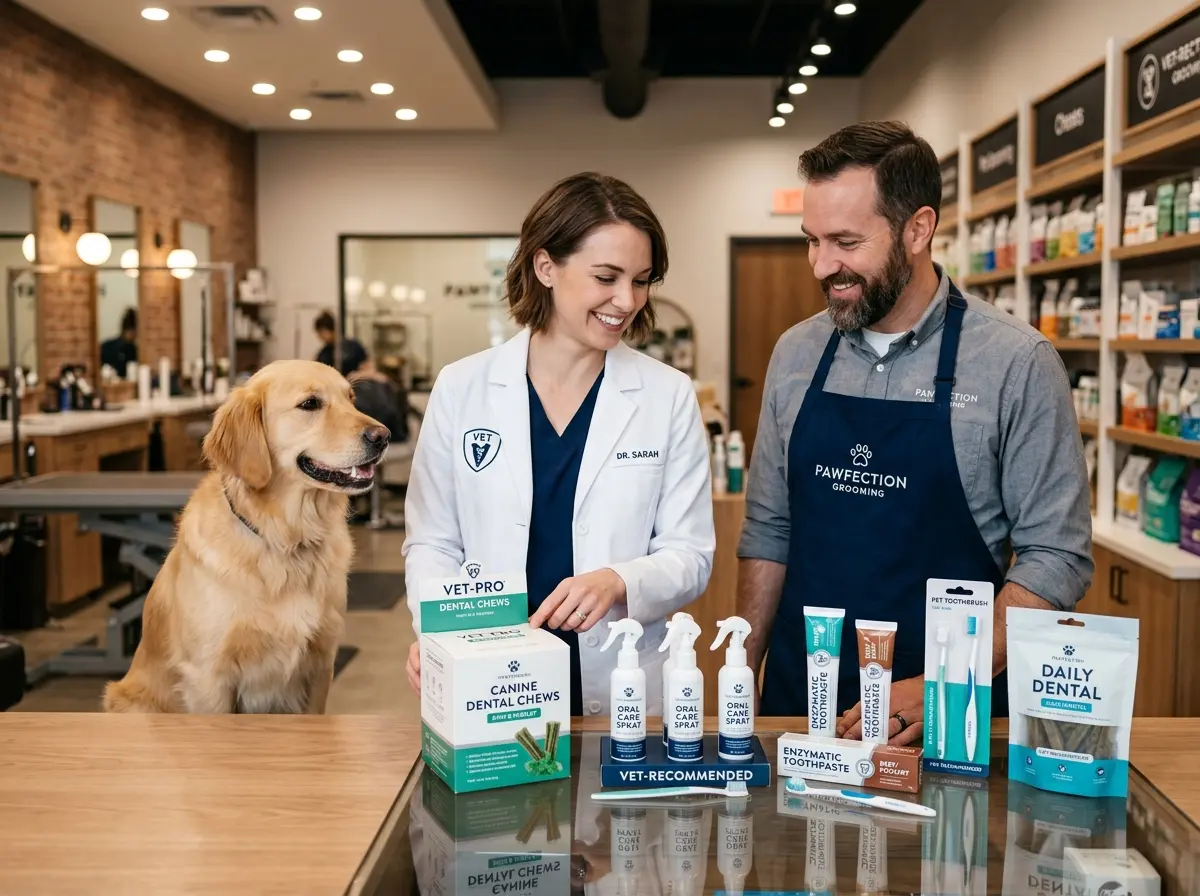
Look for product categories that complement each other: dental chews in multiple sizes (because a Chihuahua and a Rottweiler have very different needs), enzymatic toothpastes, finger brushes, water additives, and dental wipes. Stocking a curated range — rather than an overwhelming wall of options — makes the buying decision easier for customers and easier for your staff to explain.
Sourcing and Partnering with the Right Brands
Your sourcing strategy will define your margin and your reputation simultaneously. Premium brands like Virbac, Greenies, OraVet, and Vet's Best are widely recognized by pet owners and have established trust with veterinary professionals. Reaching out to their wholesale or retail partner programs is a straightforward starting point.
Beyond brand recognition, consider establishing a relationship with a local veterinary clinic. You don't need a formal agreement — even a simple conversation where a nearby vet agrees to "recommend" your shop for at-home dental care products can be mutually beneficial. They get a trusted referral, you get a credibility boost, and pets get healthier teeth. Everyone wins, except maybe the dental disease industry.
Also factor in product freshness and storage. Dental chews have expiration dates, and selling a stale chew is a great way to lose a customer forever. Start with smaller initial orders and reorder based on actual sales data rather than optimism.
Pricing for Profit Without Price-Gouging Your Regulars
A healthy retail markup for specialty pet products typically falls between 40% and 60% above wholesale cost. Dental care products often carry strong margins because customers associate price with quality — a $3 chew feels less trustworthy than an $8 one, strange as that sounds. Bundle pricing works particularly well here: a "Starter Dental Kit" with a toothpaste, finger brush, and a sample pack of chews can move product and introduce customers to items they wouldn't have picked up individually.
Consider a monthly "Dental Health" bundle subscription if your point-of-sale system supports it. Recurring revenue from a $25/month dental bundle? That's the kind of passive income stream that makes accountants smile.
How Your Shop Can Get a Little Help From Technology
Let Your AI Receptionist Do Some of the Heavy Lifting
Here's a scenario: a customer calls your shop to book a grooming appointment. While you're elbow-deep in a golden retriever's bath, your phone rings, goes to voicemail, and a potential upsell — plus possibly a new customer — disappears into the void. Sound familiar? Stella, the AI robot employee and phone receptionist, exists precisely to prevent that.
In your physical shop, Stella stands as a human-sized kiosk that greets customers, answers questions about your dental care line, explains the difference between your VOHC-approved products, and proactively promotes current specials — all without pulling your groomers away from the actual grooming. On the phone side, she answers calls 24/7, handles routine inquiries, and can even mention your new dental product line during booking conversations. It's upselling without the awkward pitch, running all day, every day, for $99/month.
Marketing Your Dental Care Line to Pet Parents Who Didn't Know They Needed It
Education First, Sales Second
The biggest barrier to selling dental chews isn't price — it's awareness. Most pet owners genuinely don't know that periodontal disease is painful, progressive, and entirely preventable with consistent at-home care. Your job isn't to sell a product; it's to start a conversation that leads naturally to a sale.
Train your groomers to briefly mention oral health during every appointment. A simple observation like, "I noticed a bit of tartar buildup while I was grooming Max today — we actually carry some great vet-approved chews that can really help with that" is not pushy. It's professional, caring, and almost always appreciated. Pet owners trust the people who handle their animals. Use that trust responsibly and it will pay dividends in customer loyalty and lifetime value.
In-store signage matters too. A small placard near your dental display that reads "Vet-Approved. Dog-Tested. Owner-Approved." does more work than you'd expect. Keep messaging simple, warm, and benefit-focused rather than clinical.
Digital Marketing and Seasonal Promotions
February is National Pet Dental Health Month — and if you're not running a promotion around it, you're leaving money on the table with a big flashing sign on it. Plan a "Fresh Breath February" campaign with a discount on dental starter kits, a social media series on pet oral health tips, and an email blast to your existing customer list. This kind of themed campaign is easy to plan, easy to execute, and gives customers a reason to come in during what is traditionally a slower winter month.
Beyond February, consider regular social content — short videos of your team explaining how to use a dental chew correctly, before-and-after comparisons (with owner permission, obviously), and customer testimonials about their dog's transformed breath situation. User-generated content about pet dental health tends to perform surprisingly well because, frankly, a dog attempting to chew something is inherently entertaining content.
Turning One-Time Buyers Into Repeat Customers
A customer who buys a bag of dental chews today will need another bag in three to four weeks. Your goal is to make sure they come back to your shop rather than defaulting to Amazon. Loyalty programs work well here — a simple punch card or points system for dental product purchases gives customers a tangible reason to return. You can also offer automatic reorder reminders via email or text if your shop management system supports it.
Ask customers to share their results. A photo of a dog with sparkly teeth (or at least less concerning teeth) shared in a community Facebook group or neighborhood app can drive more foot traffic than a paid ad. Local pet communities are tight-knit, word spreads fast, and a genuine recommendation from a neighbor carries enormous weight.
A Quick Reminder About Stella
Stella is an AI robot employee and phone receptionist built for businesses exactly like yours — she greets customers in-store, answers calls around the clock, promotes your products and specials, and makes sure no inquiry slips through the cracks. At just $99/month with no upfront hardware costs, she's the team member who never calls in sick, never forgets to mention the dental chew special, and never takes a lunch break. For a grooming shop looking to grow, she's worth a serious look.
Your Next Steps: From Idea to Product Line
Building a vet-recommended dental care line for your grooming shop is genuinely achievable — and profitable — when you approach it methodically. Here's your actionable starting point:
- Research VOHC-approved products and identify three to five core SKUs across dental chews, toothpaste, and supplemental products that make sense for your customer base.
- Contact wholesale distributors or brand partner programs for Virbac, Greenies, or similar brands to establish your initial inventory at healthy margins.
- Train your team to naturally incorporate oral health observations into every grooming appointment — no hard sell, just genuine professional recommendations.
- Plan a launch promotion tied to National Pet Dental Health Month in February, including social content, email outreach, and in-store signage.
- Build repeat purchase habits through loyalty programs, reorder reminders, and exceptional customer education.
Your grooming shop is already a trusted part of your customers' pet care routine. Adding a thoughtfully curated dental product line isn't a stretch — it's a natural evolution. And with the right products, the right marketing, and a little technological help keeping things running smoothly, you'll have customers (and their dogs) grinning ear to ear. Fresher breath included.