Introduction: Because "Just Call Us" Isn't a Scheduling Strategy
Let's be honest — running a hair salon is equal parts artistry and chaos management. Between managing stylists, tracking color formulas, keeping up with trends, and somehow finding time to actually do hair, the last thing you need is a scheduling system that feels like it was designed in 1997. Yet, here many salon owners are, still toggling between a paper appointment book, a string of unanswered DMs, and a phone that rings at the worst possible moments.
The good news: appointment scheduling software has come a very long way, and choosing the right platform can genuinely transform how your salon operates. The better news: you don't have to wade through dozens of confusing options alone. This guide breaks down exactly what to look for, what to avoid, and how to actually implement scheduling software so it works for your business — not the other way around. Whether you're a solo stylist or managing a team of ten, there's a right solution out there, and finding it starts here.
What to Look for in Salon Scheduling Software
Industry-Specific Features That Actually Matter
Generic scheduling software is fine for, say, booking a conference room. But a hair salon has unique needs that generic tools simply weren't built for. You need software that understands concepts like service duration variability (a full balayage takes considerably longer than a trim, in case anyone needed that confirmed), buffer time between appointments, and room or station assignments. The best salon scheduling platforms — think Vagaro, Fresha, Booksy, or Square Appointments — offer features specifically designed for beauty businesses.
Look for the ability to assign appointments to specific stylists, track client color and cut history, manage multiple service types with different durations, and allow clients to book based on their preferred team member. Double-booking prevention is non-negotiable. So is the ability to add prep and cleanup time automatically so your stylists aren't sprinting between clients like they're in a relay race.
Client-Facing Booking: The 24/7 Front Desk You Never Had
Modern clients expect to book on their schedule — which often means midnight on a Tuesday when inspiration (or split ends) strikes. If your booking process requires a phone call during business hours, you are leaving appointments on the table. Period. Research consistently shows that over 40% of online bookings happen outside of business hours, so having a robust self-booking portal isn't a luxury; it's a revenue strategy.
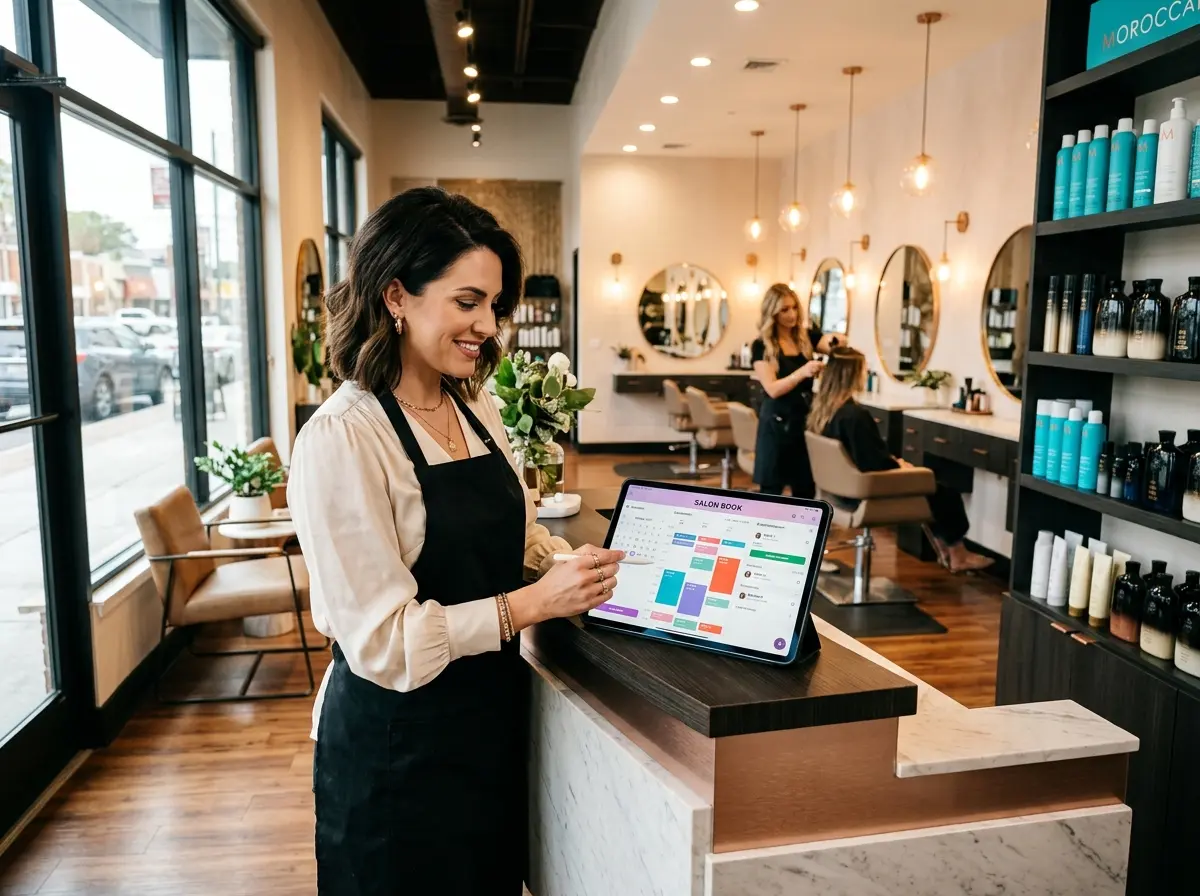
Your client-facing booking experience should be clean, mobile-friendly, and require as few steps as possible. Allow clients to choose their stylist, select services, pick a time, and receive an automatic confirmation — all without a single phone call. Bonus points if the platform sends automated reminders via text or email, because no-shows are the bane of every salon owner's existence and a gentle nudge 24 hours before an appointment can dramatically reduce them.
Payments, Deposits, and Protecting Your Time
While you're evaluating platforms, pay close attention to payment processing capabilities. The best scheduling software doubles as a point-of-sale system, allowing you to charge deposits at booking (protecting you from no-shows), process payments at checkout, track tips, and manage gift cards — all in one place. Requiring even a modest deposit for longer services like color treatments can reduce no-shows by a significant margin while also building a more committed client relationship from the start.
Check the processing fees carefully. Some platforms advertise free plans but make up for it in transaction fees that quietly eat into your margins. Do the math based on your actual booking volume before committing.
Streamlining Your Front-of-House Experience
Fewer Interruptions, More Haircuts
Scheduling software handles bookings beautifully, but what about everything else happening at the front of your salon? Answering questions, greeting walk-ins, explaining services to new clients, and fielding calls while a stylist has color-covered gloves on — these interruptions add up, and they pull focus from the work your team is actually there to do.
This is where Stella, the AI robot employee and phone receptionist, can step in and genuinely lighten the load. Stella handles incoming phone calls 24/7 — answering questions about services, pricing, hours, and policies with the same knowledge she'd use in person. For salons with a physical location, she also operates as a friendly in-store kiosk, greeting customers who walk in, promoting current specials, and answering questions so your stylists can stay focused on the client in their chair. She can even collect client intake information conversationally — before they ever sit down — and store it directly in her built-in CRM. It's not magic; it's just smart infrastructure.
Getting the Most Out of Your Scheduling Software After You've Chosen It
Onboarding Your Team (Without the Eye Rolls)
Here's a scenario that plays out in salons constantly: the owner spends weeks researching and selecting the perfect scheduling software, pays for the subscription, sets it up — and then half the team keeps using the paper book "just for now." Sound familiar? The technology is only as good as the adoption rate, which means onboarding your team properly is just as important as choosing the right tool.
Schedule a dedicated training session, not a five-minute walkthrough between clients. Most major salon platforms offer video tutorials, help centers, and even live onboarding calls — use them. Identify one or two team members who are tech-comfortable and make them your internal champions. When questions come up (and they will), they become the first line of support before anyone needs to call customer service. Make expectations clear: the paper book is retired, and the software is the single source of truth for scheduling. Consistency from day one prevents the dreaded parallel-system problem.
Using Data to Grow Your Business
One of the most underused features in salon scheduling software is the reporting dashboard. Most platforms track everything: booking rates by stylist, most popular services, peak booking times, client retention rates, average ticket value, and more. This data is genuinely valuable, yet many salon owners never open the reports tab.
Make it a habit to review your metrics monthly. Are certain time slots consistently empty? Consider running a targeted promotion to fill them. Is one stylist retaining clients at a significantly higher rate than others? Find out what they're doing and share it. Is your average ticket lower than it should be for your price point? Look at whether add-on services are being offered consistently. The numbers tell a story — your job is just to read it.
Automations That Save Hours Every Week
Once your team is comfortable with the basics, explore automation features to save time and reduce manual work. Most quality scheduling platforms allow you to set up automated appointment reminders, follow-up messages after visits, birthday promotions, and rebooking nudges for clients who haven't returned in a while. These automations run quietly in the background and keep your client relationships warm without requiring anyone on your team to lift a finger.
A simple automated message sent 48 hours after an appointment — "Thanks for coming in! Ready to book your next visit?" — can meaningfully improve your rebooking rate. Set it up once, and let it work for you indefinitely. That's the beauty of modern scheduling software done right.
Quick Reminder About Stella
If your salon is still relying on a human to answer every phone call, handle walk-in questions, and greet customers at the door — all while trying to run a productive floor — Stella is worth a serious look. She's an AI robot employee and phone receptionist available for just $99/month with no upfront hardware costs, and she works around the clock so your team doesn't have to. Think of her as the front-of-house support your scheduling software doesn't cover.
Conclusion: Stop Leaving Appointments to Chance
Choosing and implementing the right appointment scheduling software is one of the highest-leverage decisions a salon owner can make. It reduces no-shows, simplifies your team's workflow, gives clients the booking experience they expect, and gives you the data you need to grow intentionally. The investment in the right platform — typically anywhere from free to $50–$100 per month depending on features — pays for itself quickly when you consider the appointments it protects and the time it saves.
Here's your action plan: start by listing the non-negotiables for your specific salon (stylist-specific booking, deposit collection, text reminders, etc.), then trial two or three platforms that meet those criteria. Most offer free trials, so take advantage of them before committing. Get your team trained properly, retire the paper book with ceremony if needed, and commit to reviewing your data monthly.
Running a salon is hard enough. Your scheduling system should be the easy part. With the right tools in place — and maybe a certain AI robot holding down the front of the house — you can spend less time managing logistics and more time doing what you actually love: making people look and feel incredible.