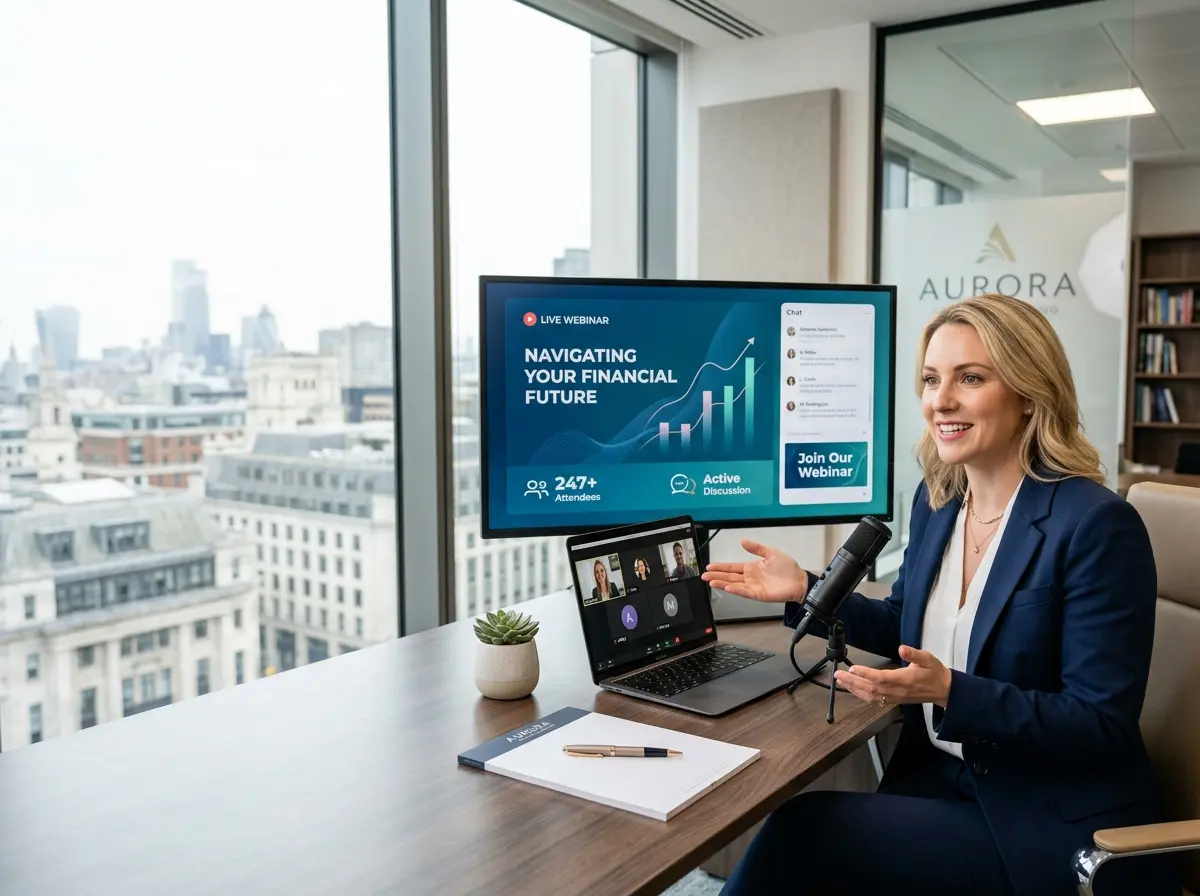
Introduction: The Webinar as Your Best Sales Tool (No, Really)
Let's be honest — as a financial planner, you've probably heard every piece of marketing advice under the sun. Start a podcast. Post on LinkedIn. Cold call until your fingers go numb. And yet, here you are, still searching for a reliable way to attract clients who actually trust you before they ever sit down in your office. Well, congratulations, because you've stumbled onto the one strategy that genuinely works: webinars.
Yes, webinars. Those things people sign up for with full intentions of attending and then watch the replay of at 1.5x speed three weeks later. But here's the secret — it doesn't matter. Whether they attend live or catch the replay, webinars position you as the expert, warm up cold leads, and give potential clients a reason to hand over their email address willingly. According to ON24, webinars generate an average of 500–1,000 leads per event for B2B and professional services firms. For financial planners, where a single converted client can be worth tens of thousands in lifetime revenue, that math is very, very attractive.
This guide walks you through exactly how to use webinars to attract high-quality prospects, keep them engaged, and convert them into paying clients — without turning yourself into a full-time content creator or losing your mind in the process.
Building a Webinar Strategy That Actually Attracts Clients
Choosing a Topic That Speaks Directly to Your Ideal Client
The fastest way to kill your webinar before it starts is to choose a topic that's either too broad or too boring. "Retirement Planning 101" is not going to inspire a busy 45-year-old business owner to block off an hour of their calendar. But "How Business Owners Can Cut Their Tax Bill Before Year-End and Retire 3 Years Earlier"? Now you're talking.
Your topic should do three things simultaneously: address a real, pressing pain point your ideal client has right now, hint at a transformation or result, and subtly signal that you — and only you — have the answer. Think about the questions you get asked repeatedly in discovery calls or client meetings. Those questions are gold. They tell you exactly what your audience is desperate to understand, and a well-crafted webinar topic built around them will fill your registration page faster than any paid ad campaign.
Examples of high-converting financial planning webinar topics include:
- "The 5 Retirement Mistakes High Earners Make (And How to Avoid Them)"
- "Protect Your Family's Wealth: An Estate Planning Roadmap for Parents"
- "How to Turn a Volatile Market Into a Long-Term Advantage"
- "Self-Employed? Here's How to Build a Retirement Plan That Actually Works for You"
Notice what all of these have in common: they speak to a specific person with a specific problem. Niche down, and your registrations will go up. Counterintuitive, but consistently true.
Structuring Your Webinar for Maximum Engagement and Conversion
A common mistake financial planners make with webinars is essentially delivering a free financial planning session and then wondering why nobody books a follow-up call. You're not trying to solve their problem on the webinar — you're trying to show them you can solve their problem, and that the solution is working with you.
A proven structure that converts well looks like this: Start with a compelling hook and your credibility story (keep it brief — nobody needs your entire resume). Spend the bulk of your time delivering genuinely valuable content in a way that opens new questions rather than closing all of them. Wrap up with a clear picture of the transformation clients experience when they work with you. Then make a single, specific call to action — usually a free strategy session or consultation — and make it easy to book immediately.
Aim for 45–60 minutes total, with the last 10–15 minutes reserved for Q&A. Live Q&A is enormously powerful because it shows prospects you're a real human being who thinks on your feet and genuinely cares about their questions. It also keeps attendees on the line longer, which directly increases conversion rates.
Promoting Your Webinar Without Spending a Fortune
You don't need a massive ad budget to fill a webinar — you need a targeted one. Email your existing list first, because warm contacts convert at a dramatically higher rate than cold traffic. Then promote through your LinkedIn network with a combination of organic posts and, if the budget allows, a modest sponsored campaign targeting your ideal demographic. Financial planning webinars tend to perform particularly well when targeted by job title, income range, and life stage — think "small business owners" or "professionals aged 40–55."
Don't overlook your referral network either. Other professionals — CPAs, attorneys, mortgage brokers — often have clients who need exactly what you offer. A quick email to your referral partners asking them to share your webinar invitation can fill seats with highly qualified prospects at zero cost. Registrants from referral sources tend to convert at significantly higher rates because they already come with a layer of trust baked in.
How Technology Can Handle the Gaps (So You Don't Have To)
Automating Your Follow-Up Without Losing the Personal Touch
Your webinar ends. You've delivered brilliantly, the Q&A went great, and your booking link is live. And then... you go back to actually running your financial planning practice. The leads sit there. The follow-up emails go unsent. The momentum evaporates. Sound familiar?
This is where smart automation earns its keep. Set up an automated email sequence that triggers immediately after registration — a confirmation email, a reminder 24 hours before, a reminder one hour before, and a post-webinar email with the replay link and a clear call to action. Tools like ConvertKit, ActiveCampaign, or even simple Mailchimp automations handle this without you lifting a finger after the initial setup. The goal is to stay top of mind from the moment someone registers until the moment they book a call.
Keeping Your Office Running While You're Busy Hosting
While you're delivering your webinar and fielding questions from engaged prospects, your phone doesn't stop ringing. Existing clients call. New inquiries come in. And if nobody answers, those potential clients move on to the next financial planner on their Google search list faster than you can say "compounding interest." Stella, the AI robot employee and phone receptionist, ensures that every call is answered professionally — 24/7 — whether you're on a webinar, with a client, or simply away from your desk. She handles inquiries, collects prospect information through conversational intake forms, and can even forward urgent calls to a human team member when needed. Her built-in CRM also logs and profiles new contacts automatically, so every inquiry from your webinar promotion campaign is captured and ready for follow-up. No dropped balls, no missed opportunities.
Converting Webinar Attendees Into Paying Clients
Crafting a Follow-Up Strategy That Closes Without Feeling Pushy
Most financial planners make one of two mistakes after a webinar: they either follow up once and give up, or they follow up so aggressively that prospects start hiding from them. The sweet spot is a confident, value-driven sequence that respects the prospect's timeline while keeping you present and top of mind.
Send your replay email within 24 hours. Include a brief, genuine message about what you covered, two or three key takeaways, and one clear call to action. Over the next week, send one or two additional touches — perhaps a related resource, a short case study (anonymized, of course), or a brief insight that ties back to the webinar topic. Each touchpoint should offer something useful, not just another reminder to book a call. By the time you send your final follow-up, prospects either convert or self-select out — and that's perfectly fine. Not everyone is ready today, but they'll remember who showed up consistently with value.
The Discovery Call: Where Webinar Leads Become Long-Term Clients
The discovery call is where your webinar investment pays off. Attendees who book a call have already heard you speak for an hour, already trust your expertise, and have already pre-sold themselves on the idea of working with you. Your job on this call is simply not to undo all of that goodwill.
Come prepared with notes on what they said during registration or Q&A. Ask thoughtful questions about their current situation, what they've tried, and what their ideal outcome looks like. Resist the urge to prescribe solutions before you've fully diagnosed the problem. The financial planners who convert discovery calls at the highest rates are the ones who listen more than they talk — and who make the next step (signing on as a client) feel like the obvious, natural conclusion of the conversation rather than a hard sell.
Turning One Webinar Into an Ongoing Client Acquisition Machine
Here's the thing about a well-built webinar: you don't have to start from scratch every time. Once you've refined your topic, structure, and follow-up sequence, you can run the same webinar on a recurring schedule — monthly, quarterly, or whenever your pipeline needs a boost. Record it once, polish it, and consider offering it as an evergreen on-demand webinar that generates registrations passively around the clock.
Pair your evergreen webinar with a small, consistent paid ad campaign and a strong referral outreach effort, and you've effectively built an automated client acquisition funnel that hums along in the background while you focus on serving the clients you already have. That's not a marketing strategy — that's a business asset.
Quick Reminder About Stella
Stella is an AI robot employee and phone receptionist that answers calls 24/7, greets walk-in visitors, collects lead information through built-in intake forms, and manages contacts through a built-in CRM — all for just $99/month with no upfront hardware costs. While you're busy running webinars and closing discovery calls, Stella makes sure no inquiry goes unanswered and no prospect slips through the cracks. She's essentially the front-office staff member who never calls in sick and never asks for a raise.
Conclusion: Your Next Steps Start Today
Webinars are one of the most powerful, scalable, and cost-effective client acquisition tools available to financial planners — and yet they remain underutilized by the majority of the profession. That's genuinely great news for you, because the bar for standing out is surprisingly low.
Here's your action plan: Choose one specific, high-value topic that speaks directly to your ideal client. Build a simple landing page and registration form. Structure your webinar to educate, inspire, and invite — not to overwhelm. Set up your follow-up automation before you ever go live. And make sure the operational side of your business is covered so that while you're building your audience, you're not accidentally losing existing and incoming clients to an unanswered phone.
Start with a single live webinar. Gather feedback. Refine your delivery. Then run it again. Within a few months, you'll have a polished, repeatable system that consistently brings qualified, warm prospects into your pipeline — the kind of prospects who already respect your expertise and are genuinely excited to work with you. In the financial planning world, that kind of trust is priceless. The webinar is just how you build it at scale.