Introduction: The Treatment Ended. The Experience Doesn't Have To.
Your client just floated off your treatment table, skin glowing, stress dissolved, looking like they've discovered the fountain of youth. They're happy. You're happy. And then they walk out the door, go home, touch their face with unwashed hands, and undo half of what you just accomplished. Tragic.
Here's the thing most med spa owners don't fully leverage: the hour after a client leaves your spa is a goldmine — and most businesses are leaving it completely untouched. A well-designed post-treatment home care kit doesn't just protect your clinical results. It extends your brand into your client's bathroom, reinforces their trust in your expertise, and — let's be honest — generates revenue that requires almost zero additional effort on your part.
If your current post-treatment strategy is handing clients a printed aftercare sheet and wishing them luck, it's time for an upgrade. Let's talk about how to build a home care kit that actually works — for your clients and your bottom line.
The Case for Home Care Kits: More Than Just a Goodie Bag
Protecting Your Results (and Your Reputation)
Every treatment you perform is a reflection of your skill and your brand. A laser resurfacing session, a chemical peel, or a microneedling treatment can produce stunning results — but those results are significantly influenced by what happens in the 7 to 14 days post-treatment. Clients who go home without proper aftercare products are, unknowingly, your biggest liability. They'll use the wrong moisturizer, skip SPF, or — bless their hearts — exfoliate two days later and wonder why their skin is angry.
A curated home care kit puts the right products in their hands at exactly the right moment. You're not just selling skincare; you're completing the clinical picture. According to the American Med Spa Association, retail product sales can account for up to 30% of a med spa's total revenue — yet most spas capture only a fraction of that potential. The problem isn't demand. It's that the recommendation isn't happening at the right time, in the right way.
The Psychology of the Post-Treatment Moment
There is perhaps no better time to make a product recommendation than immediately after a treatment. Your client is relaxed, they trust you implicitly, their skin is literally reacting in real time, and they are highly motivated to protect their investment. This is the moment they are most receptive to guidance — not two weeks later when they've forgotten half of what you told them.
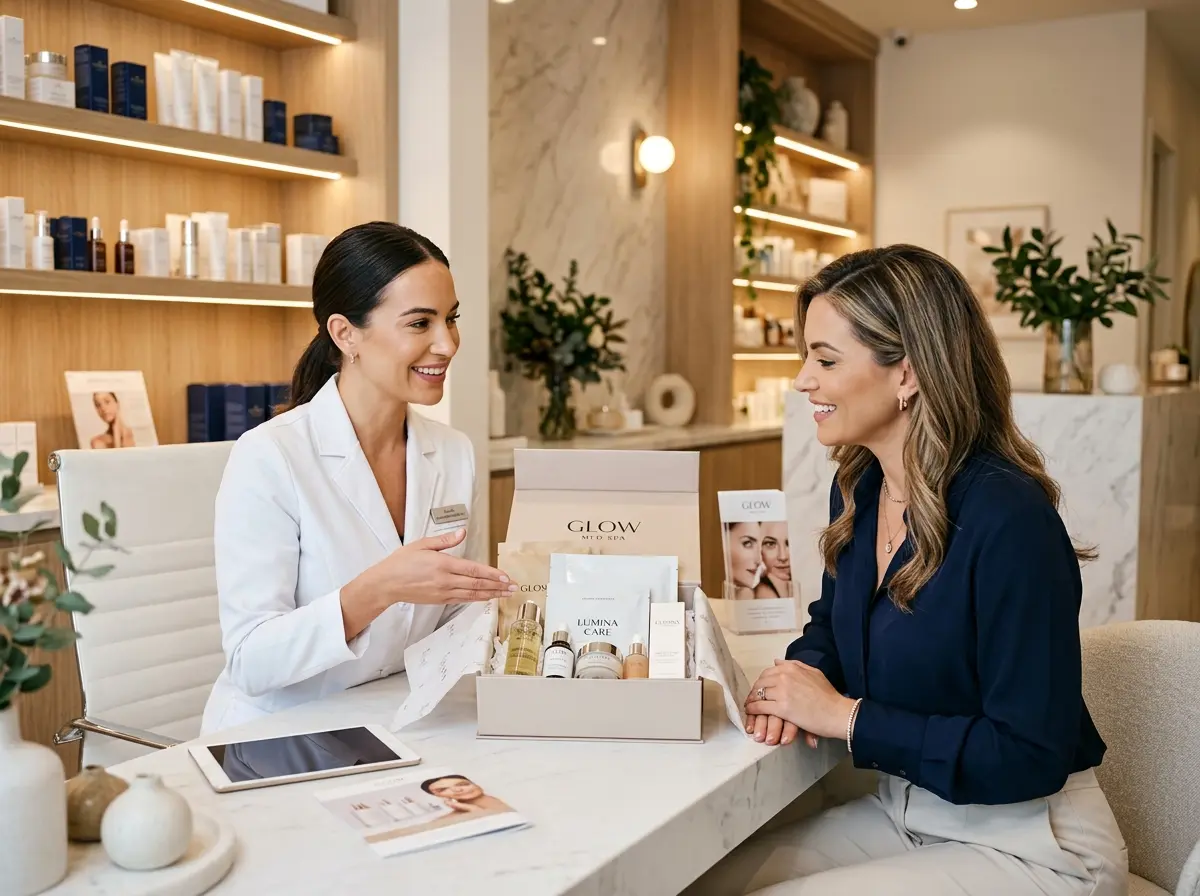
Presenting a ready-to-go home care kit at checkout removes friction entirely. Instead of saying "you should look into getting a gentle cleanser," you're saying "here's exactly what you need, it's already packaged, and here's why each product is in here." Decision fatigue disappears. The upsell feels like a service, not a sales pitch. That's the sweet spot every business owner wants to live in.
Building Loyalty Through Continued Results
When a client uses your recommended products and sees continued improvement at home, who gets the credit? You do. You become the expert who not only transformed their skin in the treatment room but also set them up for success afterward. That kind of trust is what turns a one-time client into a loyal, rebook-every-six-weeks, refers-all-her-friends client. Home care kits aren't just a revenue line — they're a relationship-deepening tool.
How Technology Can Help You Sell Smarter — Not Harder
Letting Your Front Desk Focus on Connection, Not Explanation
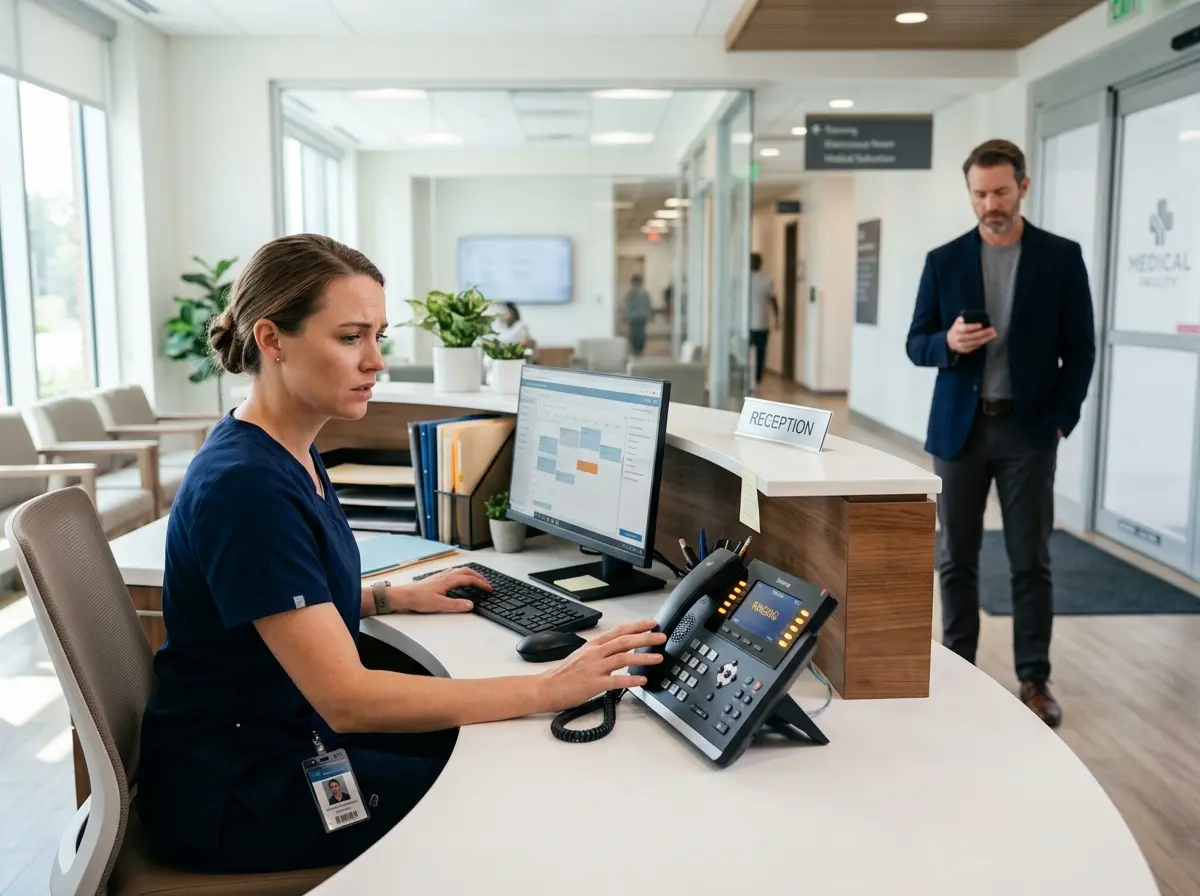
One underrated challenge in selling home care kits is simple bandwidth. Your staff is managing check-ins, checkouts, phones, scheduling, and a dozen other things simultaneously. Asking them to also consistently explain the contents of a post-treatment kit — with enthusiasm, accuracy, and personalization — during every single checkout is a tall order. Consistency suffers. Revenue suffers.
This is where Stella, the AI robot employee and phone receptionist, can quietly become one of your best team members. Positioned at your kiosk, Stella can proactively engage clients in the waiting area or at checkout — explaining the benefits of your home care kits, answering questions about specific products, and highlighting any current promotions. She's consistent, she never has an off day, and she genuinely enjoys talking about your offerings (because that's literally what she was built to do). On the phone side, Stella handles inquiries 24/7 — meaning a client who calls after hours to ask "what should I use after my peel?" gets a real, helpful answer instead of a voicemail black hole.
Building the Perfect Post-Treatment Home Care Kit
What to Include (and What to Leave Out)
The best home care kits are treatment-specific. A one-size-fits-all kit feels generic and misses the opportunity to demonstrate clinical depth. Consider building tiered kits for your most popular treatments:
- Post-Laser Kit: Gentle cleanser, medical-grade barrier repair cream, broad-spectrum SPF 50, cooling mist.
- Post-Chemical Peel Kit: Enzyme-free cleanser, hydrating serum (hyaluronic acid-based), nourishing moisturizer, SPF.
- Post-Microneedling Kit: Peptide serum, calming moisturizer, SPF, and a gentle makeup brush or applicator.
- Post-Filler/Botox Kit: Arnica gel, gentle cleanser, cooling eye mask, SPF.
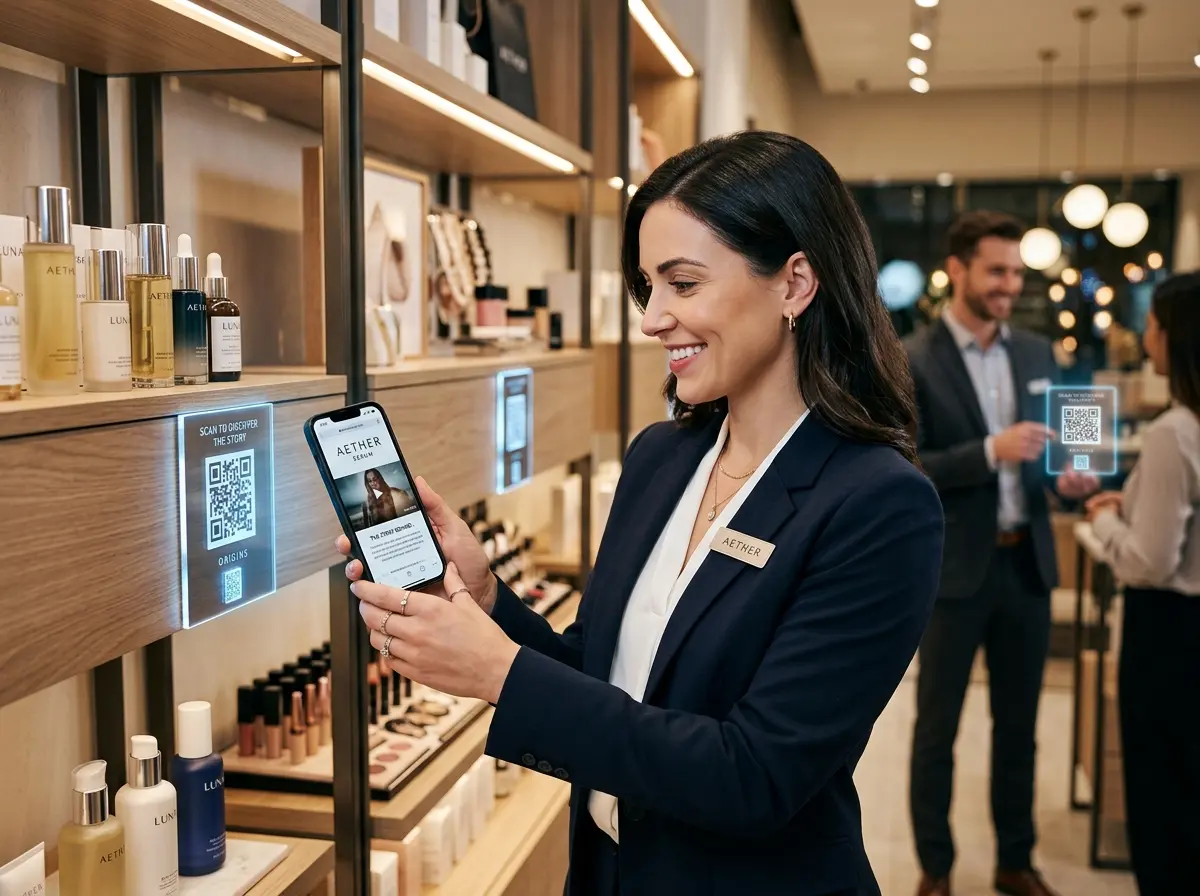
The key is to keep kits focused. Resist the urge to throw in every product you carry. Three to five targeted products with clear instructions are far more valuable — and more likely to be used — than an overwhelming bag of seventeen items. Include a simple card explaining what each product does and when to use it. Bonus points if it has your branding and a QR code linking to your rebooking page.
Pricing Your Kits for Profitability
Pricing home care kits is both an art and a science. You want a margin that makes business sense without making clients flinch. A general best practice is to price kits at a 10–20% discount compared to purchasing each product individually — enough to feel like a deal, not enough to cannibalize your individual retail sales. For example, if your post-peel products retail for $120 total, a kit priced at $100 to $105 feels like a smart buy for the client and still delivers excellent margin for you.
Consider offering a "kit upgrade" option at booking — where clients can add the home care kit to their treatment at a slight discount when they pre-purchase. This improves cash flow, increases average ticket size, and means the conversation doesn't even have to happen at checkout. Many med spa owners find that pre-purchasing kits increases compliance, because clients feel more committed to using products they've already paid for.
Marketing Your Kits Without Being Pushy
The easiest way to sell a home care kit is to make it feel inevitable — a natural extension of the treatment rather than an add-on. Train your providers to introduce the kit during the treatment itself: "After today, I'm going to set you up with a recovery kit that has everything your skin will need for the next two weeks." This framing positions the kit as part of the clinical recommendation, not a sales pitch at checkout.
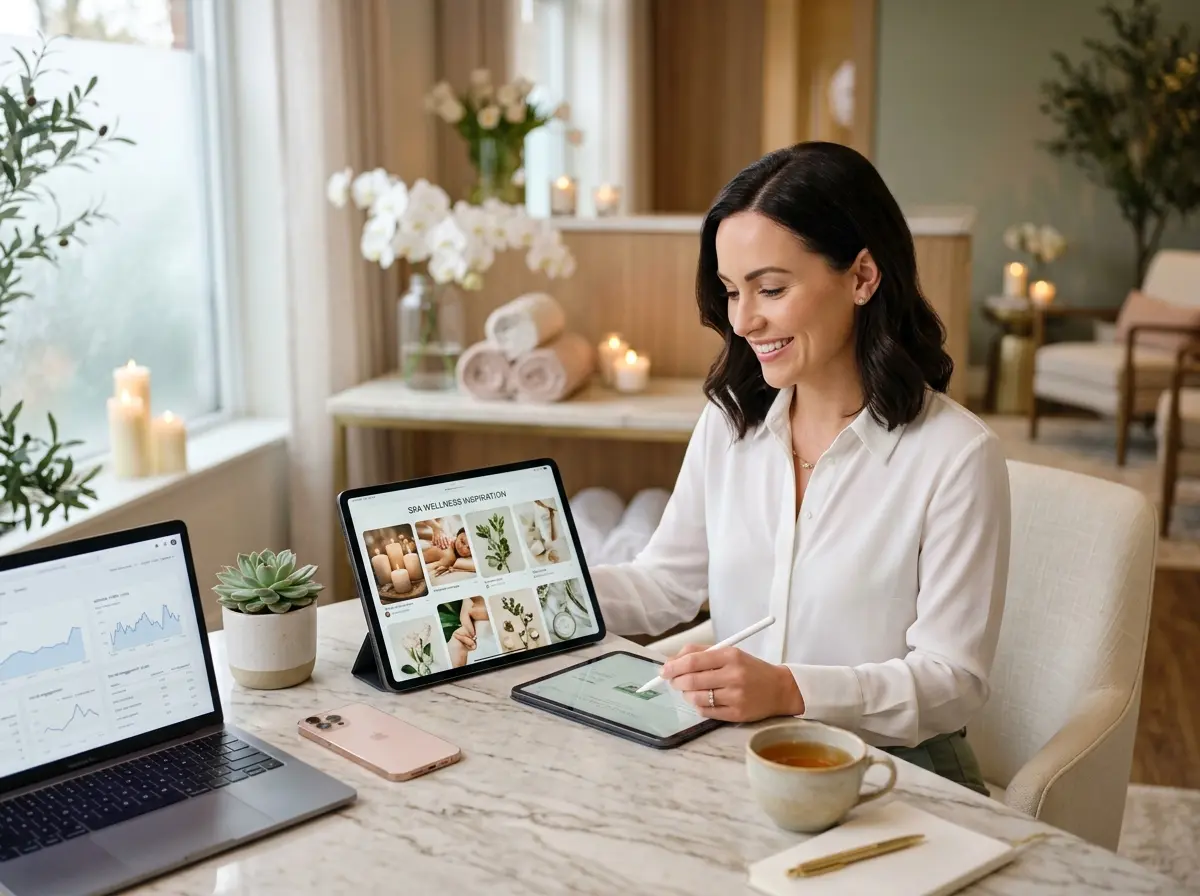
On your digital channels, showcase real client results and explicitly tie them to your home care protocol. Instagram Reels showing the "what's in my post-treatment kit" format perform incredibly well in the aesthetic medicine space — and they double as social proof that your process is thorough and professional. Email sequences triggered after appointments are another low-effort, high-return channel for reinforcing the value of home care and prompting reorders when clients are likely running low.
Quick Reminder About Stella
Stella is an AI robot employee and phone receptionist that works inside your med spa as a kiosk and answers your phone calls 24/7 — handling questions, promoting services, and supporting your team without breaks or turnover. For just $99 per month with no upfront hardware costs, she's one of the most affordable ways to add a consistently professional presence to your business. If you haven't explored what she can do for a client-facing environment like yours, it's worth a look.
Conclusion: Small Box, Big Impact
A post-treatment home care kit is one of those rare business opportunities that genuinely benefits everyone. Clients get better results and a more complete experience. Your providers get the satisfaction of knowing their work is protected. And your business gets a reliable, scalable revenue stream that doesn't require hiring anyone new or running a complicated promotion.
Here's your action plan to get started:
- Audit your top five treatments and identify the products each one requires for optimal recovery.
- Build treatment-specific kits with three to five focused products and clear usage instructions.
- Set your pricing strategy — bundle discount on kits, pre-purchase option at booking, and individual retail as an alternative.
- Train your team to introduce the kit during the treatment, not as an afterthought at checkout.
- Promote your kits digitally through email follow-ups, social content, and your booking confirmation workflow.
Your clients are already investing real money in feeling and looking their best. They want to protect those results. All you have to do is make it easy for them — and maybe stop letting them go home empty-handed. The glow-up doesn't end at your front door. Make sure your business model knows that, too.