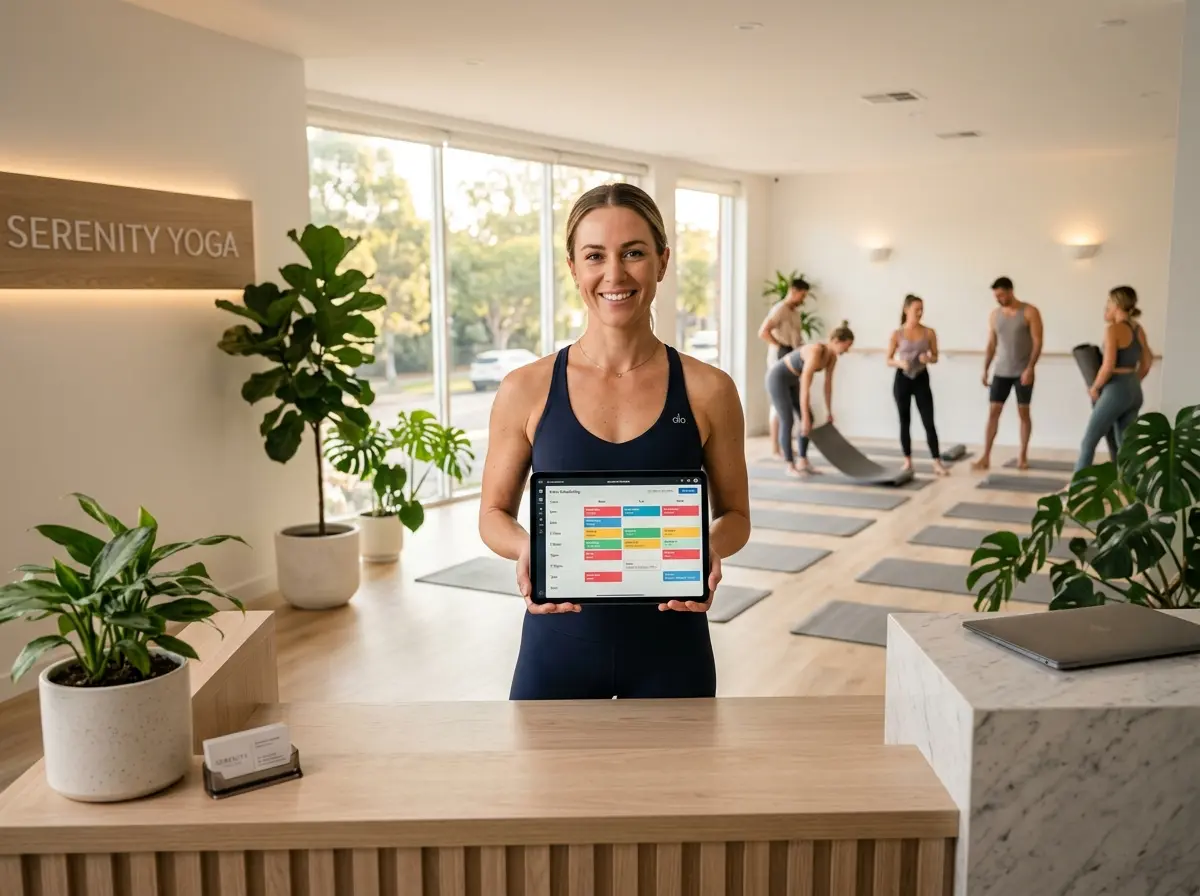
So, Your Yoga Studio Is a Scheduling Nightmare — Let's Fix That
Picture this: It's 6:45 AM. Your 7 AM vinyasa class is fully booked. Your front desk phone is ringing off the hook with people hoping to snag a spot. Your instructor is trying to center herself before class. And somewhere in the chaos, three people who were on the waitlist just showed up — but two of them weren't notified, and one of them wasn't even on the list anymore. Namaste, indeed.
Class scheduling, waitlist management, and capacity control are the unsexy backbone of a thriving yoga studio. Everyone wants to talk about curating playlists and perfecting their warrior two cues, but the studios that actually grow — and retain loyal clients — are the ones that have their operational systems dialed in. The good news? You don't need to be a logistics genius. You just need a solid strategy, the right tools, and maybe a little humor to get through the growing pains.
Let's break it down.
Building a Class Schedule That Actually Works
A well-designed class schedule isn't just a grid of time slots — it's a strategic asset. It reflects your community's lifestyle, your instructors' strengths, and your studio's capacity to deliver consistent, high-quality experiences. Getting it right takes more iteration than most studio owners expect.
Know Your Peak Hours (And Respect Them)
Most yoga studios see predictable traffic patterns: early mornings before work (6–8 AM), the lunch window (12–1 PM), and the post-work rush (5:30–7:30 PM). Saturdays tend to draw leisurely mid-morning crowds, while Sunday evenings can be surprisingly strong for restorative or yin classes. These aren't universal truths — your specific demographic matters enormously — but they're a solid starting point.
Use your scheduling software's attendance data to identify which classes consistently fill up and which ones feel like a ghost town. If your Tuesday 2 PM hot yoga class has averaged four people for three months, that's not a marketing problem. That's a scheduling problem. Move it or lose it — your instructor's time and your studio's energy are both worth more than four half-hearted sun salutations.
Match Class Types to Time Slots Strategically
Not all classes are created equal, and the time of day genuinely influences what people are in the mood for. High-energy, heated, or flow-based classes tend to perform better in morning and evening peak windows. Restorative, yin, meditation, and beginner-friendly sessions often thrive in off-peak hours, serving a different but equally loyal segment of your community — retirees, parents with school-age kids, remote workers with flexible schedules.
Consider building a schedule that serves multiple audience segments rather than stacking all your premium offerings during the same two-hour evening window and then wondering why your midday revenue is flat. Variety isn't just a cultural value in yoga — it's a revenue strategy.
Don't Over-Schedule Your Instructors (Or Your Space)
Instructor burnout is one of the most common — and most preventable — reasons studios lose their best talent. If your star instructor is teaching six classes a week and subbing for two more, you're borrowing against future quality. Build buffer time into instructor schedules, make substitution coverage part of your hiring process, and be honest about what's sustainable. A well-rested instructor leads a better class, and a better class retains more students. The math isn't complicated.
Similarly, if your studio only has two rooms, scheduling overlapping high-attendance classes during peak hours is a recipe for locker room gridlock and frayed nerves at the front desk. Know your physical capacity — not just your legal occupancy limit, but your comfortable capacity — and schedule accordingly.
Waitlist Management: Where Good Intentions Go to Die
Waitlists are a sign that your classes are in demand — congratulations! They're also a operational landmine if you don't manage them carefully. A poorly run waitlist erodes trust faster than almost anything else you can do as a studio owner.
Set Clear Rules and Communicate Them Relentlessly
Your waitlist policy needs to be clear, consistent, and communicated at every touchpoint: your website, your booking app, your confirmation emails, and verbally at the front desk. How many hours before class does a spot need to open for the waitlist to activate? Do waitlisted members get automatically enrolled, or do they need to confirm? Is there a cutoff time after which the spot opens to the general public? These aren't bureaucratic details — they're the difference between a client who feels treated fairly and one who leaves you a three-star Google review about "poor communication."
Automated notifications are non-negotiable at this point. If your current system requires a staff member to manually call or text waitlisted clients when a spot opens, that system is working against you. Most modern scheduling platforms handle this automatically — and if yours doesn't, it might be time to upgrade.
How Technology (and a Little AI) Can Help
This is where smart tools start to pull significant weight. Stella, the AI robot employee and phone receptionist, can handle incoming calls from clients asking about class availability, waitlist status, or how to get added to a list — 24 hours a day, seven days a week, without putting your front desk staff in the middle of it. For studio owners who've ever had an instructor interrupted mid-warm-up because someone was on hold asking about the Saturday 9 AM flow, this alone is worth its weight in gold.
Stella also greets walk-in clients at the kiosk, answers questions about your schedule and policies, and collects client information through conversational intake forms — keeping your staff free to focus on the actual humans in the room who need hands-on attention. If your studio receives a lot of calls from new clients asking about class types, pricing, or membership options, Stella's built-in CRM and intake forms mean you're capturing that lead data automatically, not on a sticky note that'll end up under someone's mat bag.
Capacity Management: Filling the Room Without Breaking It
Managing class capacity well is part science, part hospitality. The goal isn't just to maximize attendance — it's to create an experience that makes people want to come back. A class that's technically within fire code but practically impossible to move in is not a win.
Set Realistic Capacity Limits by Class Type
Different class formats warrant different capacity thresholds. A guided meditation session can comfortably accommodate more participants in a given space than a dynamic vinyasa flow where everyone needs room to extend fully without smacking their neighbor in the face. Restorative classes with bolsters and blankets need even more floor real estate per person. Take the time to walk through your space with each class type in mind and set capacity limits that reflect the actual experience you want to deliver — not just the maximum number of bodies that can technically fit.
Once you've established those limits, enforce them. It sounds obvious, but studios that consistently bend their own rules "just this once" erode both the client experience and staff credibility. Your front desk team shouldn't have to negotiate room capacity under pressure during a busy Saturday morning. Make the policy, communicate it, and stick to it.
Use Data to Optimize Over Time
Here's where capacity management gets genuinely interesting. Attendance data — when you actually look at it — tells a rich story. Which classes have a high no-show rate even among enrolled students? Those classes might benefit from a tighter cancellation window or an overbooking buffer (common in industries like airlines, less common in yoga but worth considering). Which classes consistently hit capacity within hours of opening? Those might warrant a second session, a larger room, or a waitlist structure that can absorb the overflow demand.
Review your attendance reports monthly, not just when something goes wrong. Patterns emerge over time that are invisible in the day-to-day chaos of running a studio. Seasonal shifts, new instructor effects, membership promotion impacts — these all show up in your data if you take the time to look.
Late Cancellations and No-Shows: Have a Policy With Teeth
This is the part nobody enjoys writing, but every yoga studio owner eventually learns the hard way: a lenient cancellation policy is a liability. When clients can cancel an hour before class without consequence, you're left with empty spots that could have gone to waitlisted members, and your instructors are walking into half-empty rooms. A reasonable late cancellation fee — typically applied within 8 to 12 hours of class — dramatically improves attendance reliability without alienating your community. Most clients actually respect a studio more for having clear, consistently enforced standards.
Quick Reminder About Stella
Stella is an AI robot employee and phone receptionist designed to support businesses like yours around the clock — answering calls, greeting walk-ins, promoting your offerings, and handling routine questions so your human team can focus on delivering exceptional experiences. At $99/month with no upfront hardware costs, she's one of the more practical investments a growing studio can make. Whether it's a client calling at 10 PM to ask about tomorrow's schedule or a walk-in wondering about your membership options, Stella handles it with the same professionalism every time.
Running a Tighter Ship Starts Today
Here's the honest summary: the studios that consistently grow aren't necessarily the ones with the best instructors or the most Instagram-worthy aesthetic (though those things don't hurt). They're the ones that make it easy to book a class, easy to get off a waitlist, and easy to show up knowing exactly what to expect. Operational clarity is a competitive advantage — and right now, most of your competitors are still running on spreadsheets and good intentions.
Your action plan is straightforward. Audit your current schedule against your actual attendance data and make adjustments based on what the numbers tell you, not what you hoped would work. Review your waitlist policy, make sure it's clearly communicated everywhere clients might encounter it, and verify that your notification system is automated and reliable. Set capacity limits that reflect the experience you want to deliver, and enforce them consistently. And finally, implement a late cancellation policy with enough structure to actually protect your instructors' time and your waitlisted clients' opportunities.
None of this requires a complete overhaul overnight. Pick one area, tighten it up, measure the results, and move on to the next. Your future self — the one who isn't fielding frantic calls at 6:45 AM — will thank you.