Introduction: The Right Message, Wrong Timing (Sound Familiar?)
Picture this: A patient just completed their first teeth whitening session at your dental practice. They're thrilled. Their smile is gleaming. And then — two days later — they receive an automated email from you promoting a free consultation for... teeth whitening. Perfect timing, truly inspired marketing. They unsubscribe. You wonder why your open rates are tanking.
This is the painful reality of CRM automation done wrong. And unfortunately, most medical and healthcare practices are still either doing it wrong or not doing it at all. According to Salesforce, 78% of customers are more likely to make a repeat purchase when they receive personalized offers — yet the majority of small practices are still blasting the same generic newsletter to every patient on their list and calling it "marketing."
The good news? CRM automation, when set up thoughtfully, is one of the most powerful tools a practice can use to drive repeat visits, increase revenue per patient, and actually make people feel like you know them — not just their insurance card. This guide walks you through how to use CRM automation to send the right offer to the right patient at exactly the right time. No guesswork. No cringe-worthy mistimed emails. Just smart, strategic communication that converts.
Understanding the Foundation: Segmentation, Triggers, and Timing
Why Segmentation Is Non-Negotiable
Sending one message to your entire patient list is the marketing equivalent of shouting into a crowded waiting room and hoping the right person hears you. It doesn't work, and deep down, you already know it doesn't work. Effective CRM automation starts with segmentation — dividing your patient base into meaningful groups based on shared characteristics, behaviors, or needs.
For a medical or healthcare practice, meaningful segments might include new patients who haven't yet scheduled a follow-up, long-term patients who haven't visited in six or more months, patients who have purchased a specific treatment or service, or patients who have shown interest in premium offerings but haven't committed. The more granular your segments, the more relevant your messaging — and the more relevant your messaging, the higher your conversion rate. It really is that simple, even if the execution takes a bit of work upfront.
Trigger-Based Automation: Let Behavior Do the Talking
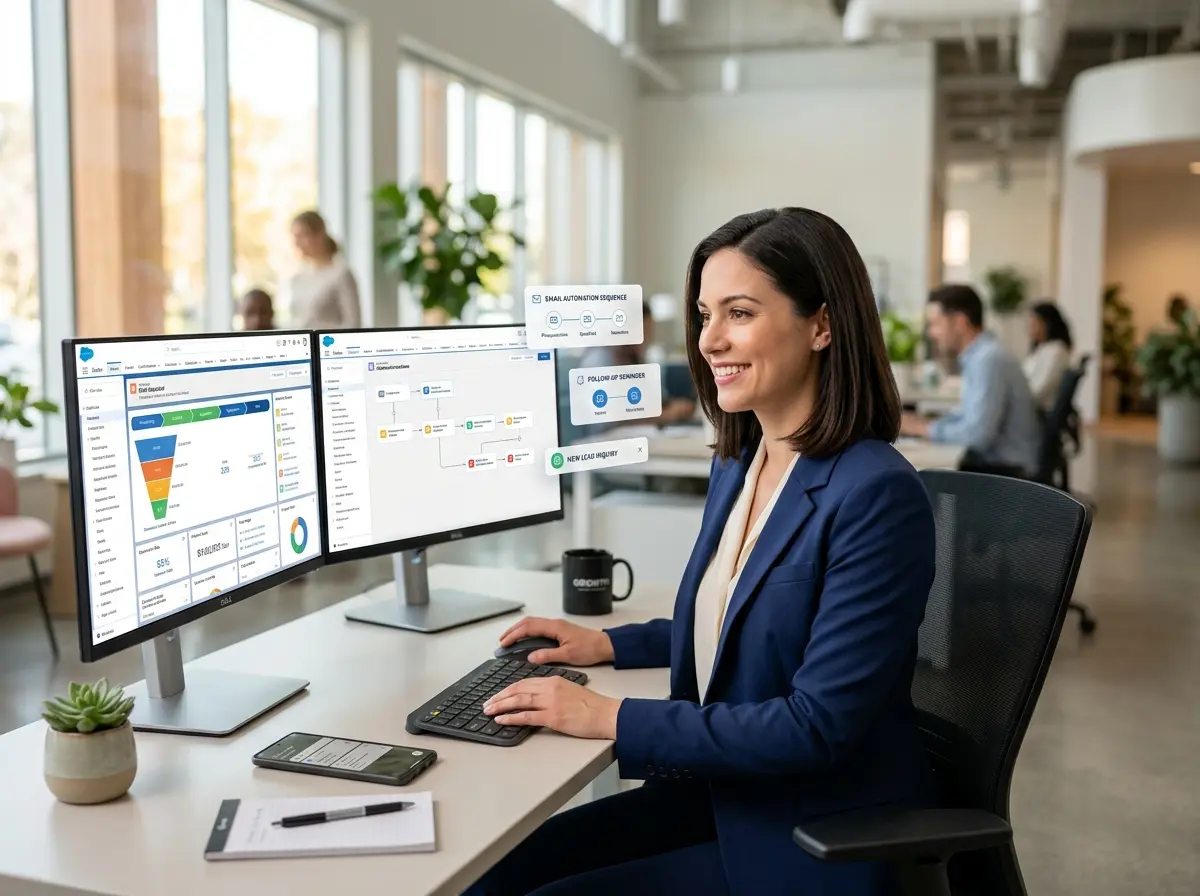
Once you have your segments defined, the real magic happens through trigger-based automation. Instead of scheduling messages in advance and hoping for the best, you set up workflows that activate automatically based on a patient's specific action — or inaction.
Common and highly effective triggers for healthcare practices include:
- Appointment completion: A patient finishes a service → trigger a follow-up care message 24 hours later, followed by a complementary service offer one week later.
- Inactivity threshold: A patient hasn't booked in 90 days → trigger a re-engagement offer with a time-sensitive incentive.
- Birthday or anniversary: A personal touch that costs you almost nothing but earns significant goodwill (and often a booking).
- Intake form completion: A new patient submits their information → trigger a welcome sequence that educates them on your services and sets expectations.
Trigger-based automation respects the patient's timeline rather than your marketing calendar. That distinction is everything.
Timing: The Underrated Variable
Even the most perfectly crafted message will fall flat if it lands at the wrong moment. Research consistently shows that emails sent on Tuesday, Wednesday, and Thursday mornings have the highest open rates, but for healthcare specifically, you should also consider where the patient is in their treatment journey. A promotional offer sent the day after a procedure feels tone-deaf. The same offer sent two weeks later, once the patient has had time to enjoy their results, feels like excellent service.
Build delays and conditional logic into your automation sequences. Most modern CRM platforms allow you to say things like "send this message only if the patient has not already booked another appointment" — and that kind of intelligence is what separates good automation from great automation.
How Stella Can Streamline Your Patient Data Collection
Capturing the Right Data From the Very First Interaction
All the segmentation and trigger logic in the world is useless if you don't have clean, accurate, and detailed patient data to work with. This is where many practices quietly struggle. Data collection is often inconsistent — some patients fill out paper forms, some speak with a receptionist who may or may not log everything, and some details simply fall through the cracks during a busy afternoon.
Stella, the AI robot employee and phone receptionist, addresses this problem directly. Whether she's greeting patients at your front desk as an in-store kiosk or answering phone calls after hours, Stella collects patient information through conversational intake forms that feel natural — not like homework. That data flows directly into her built-in CRM, complete with custom fields, tags, notes, and AI-generated patient profiles that give you a clear picture of who each person is and what they're interested in. Every conversation she has, whether in person or over the phone, is a data collection opportunity that your CRM automation can actually use.
When your CRM is fed consistently accurate data from day one, your segmentation becomes sharper, your triggers fire more reliably, and your offers land with the kind of precision that makes patients feel genuinely understood rather than marketed at.
Building Offer Sequences That Actually Convert
The Anatomy of a High-Converting Patient Offer
A well-timed offer is more than a discount. The most effective patient offers in healthcare marketing share a few key characteristics: they are relevant to the patient's history or expressed interests, they include a clear and specific call to action, they create a reasonable sense of urgency without feeling manipulative, and they are written in a tone that matches your brand and your patient relationship.
For example, a med spa might set up a sequence for patients who recently received a Botox treatment. Seven days after their appointment, the patient receives a message checking in on how they're feeling about their results. Fourteen days later, they receive an educational piece about how Botox and dermal fillers complement each other. Twenty-one days later, they receive a limited-time offer for a filler consultation at a preferred patient rate. This three-step sequence is relevant, builds trust before making an ask, and converts significantly better than a standalone promotional blast.
Cross-Selling and Upselling Without Being That Guy
Cross-selling and upselling in healthcare can feel uncomfortable if approached clumsily, but when done with genuine care for the patient's outcome, it is simply good practice — literally. The key is to frame every offer around patient benefit, not practice revenue. Patients are perceptive; they can tell the difference between "we think this would genuinely help you" and "we'd like to hit our Q3 numbers."
Your CRM automation should be configured to recommend complementary services based on what each patient has already received. A chiropractic patient who regularly books spinal adjustments might be an excellent candidate for an offer on massage therapy. A dental patient who just completed Invisalign treatment is a natural audience for teeth whitening. Map out these logical service relationships in your CRM, tag patients accordingly, and let your automation do the rest. Done well, this doesn't feel like upselling — it feels like attentive, personalized care.
Measuring, Testing, and Improving Over Time
One of the greatest advantages of CRM automation is that everything is measurable. Open rates, click-through rates, conversion rates, and revenue attributed to specific campaigns — all of it is trackable if your system is set up correctly. Commit to a culture of testing. Run A/B tests on subject lines. Try different offers with similar patient segments and compare results. Adjust the timing of your sequences based on what the data tells you.
Most practices set up their automation once, declare victory, and never look at it again. Don't be most practices. Schedule a quarterly review of your automation sequences to identify what's working, what's stale, and what new patient segments have emerged that deserve their own tailored communication track. CRM automation is not a one-time setup — it is a living system that should grow smarter as your practice grows.
Quick Reminder About Stella
Stella is an AI robot employee and phone receptionist available for just $99 per month with no upfront hardware costs. She greets patients at your physical location, answers calls around the clock, collects intake information, manages your CRM contacts, and promotes your current offers — all without breaks, sick days, or turnover. For practices looking to improve data quality and patient engagement simultaneously, she is worth a serious look.
Conclusion: Stop Guessing, Start Automating Intelligently
CRM automation is not about replacing the human element of patient care — it is about making sure the right human moment happens at the right time, supported by smart systems running quietly in the background. When your offers are relevant, your timing is deliberate, and your data is clean, you stop feeling like a marketer and start feeling like a trusted provider who genuinely pays attention.
Here are your actionable next steps to get started:
- Audit your current patient data. Identify gaps, inconsistencies, and missing fields that would improve your segmentation.
- Define three to five patient segments that represent meaningfully different groups within your practice.
- Map out one trigger-based sequence for your highest-value service — just one to start — and build from there.
- Establish a quarterly review process to evaluate performance and refine your automation logic.
- Consider how your data is being collected at every patient touchpoint, and whether there are gaps that technology could fill.
Your patients are telling you what they need through their behaviors, their appointment histories, and their questions. CRM automation is simply your practice's way of listening at scale — and responding in a way that makes every patient feel like your only patient. That is not just good marketing. That is good medicine.