So You've Got a Dental Practice — Now What?
Let's paint a picture: someone just moved into your area. They've got a new house, a new commute, and absolutely zero idea where to find a good dentist. They're going to Google something eventually, sure — but what if you could reach them before they even finish unpacking the good dishes? That's the entire premise of new mover marketing, and for local dental practices, it's one of the most underutilized growth strategies out there.
Here's the cold, hard truth: approximately 40 million Americans move every year, and when people relocate, they need to rebuild their entire roster of local service providers — doctors, dentists, mechanics, you name it. New movers are essentially a blank slate of potential long-term patients, and the practice that reaches them first has a significant advantage. Studies suggest that new movers are 5 times more likely to become loyal customers of businesses that contact them shortly after relocation.
So if you've been relying solely on word-of-mouth and the occasional Instagram post featuring a stock photo of a toothbrush, it might be time to level up. This guide walks you through building a real, functional new mover marketing program for your dental practice — one that actually brings patients through the door.
Building the Foundation of Your New Mover Program
Getting Your Hands on New Mover Data
Before you can market to new movers, you need to know who they are and where they live. Fortunately, you don't have to stake out moving trucks in your neighborhood. There are several reliable data sources and service providers that compile new mover lists, including companies like Porch Group Media, Melissa Data, and USPS's Every Door Direct Mail (EDDM) program. Many of these services allow you to filter by zip code, household income, and even family size — useful if you're trying to target families who likely need pediatric dental services alongside adult cleanings.
For a dental practice, a radius of 5 to 10 miles from your office is typically a sweet spot. You want to reach people who are realistically going to drive to your location for a twice-yearly cleaning, not someone 45 minutes away who will cancel their appointment the first time it rains.
Choosing Your Marketing Channels
Now comes the fun part — actually reaching those new movers. The most effective new mover campaigns for dental practices typically use a combination of channels rather than betting everything on one approach.
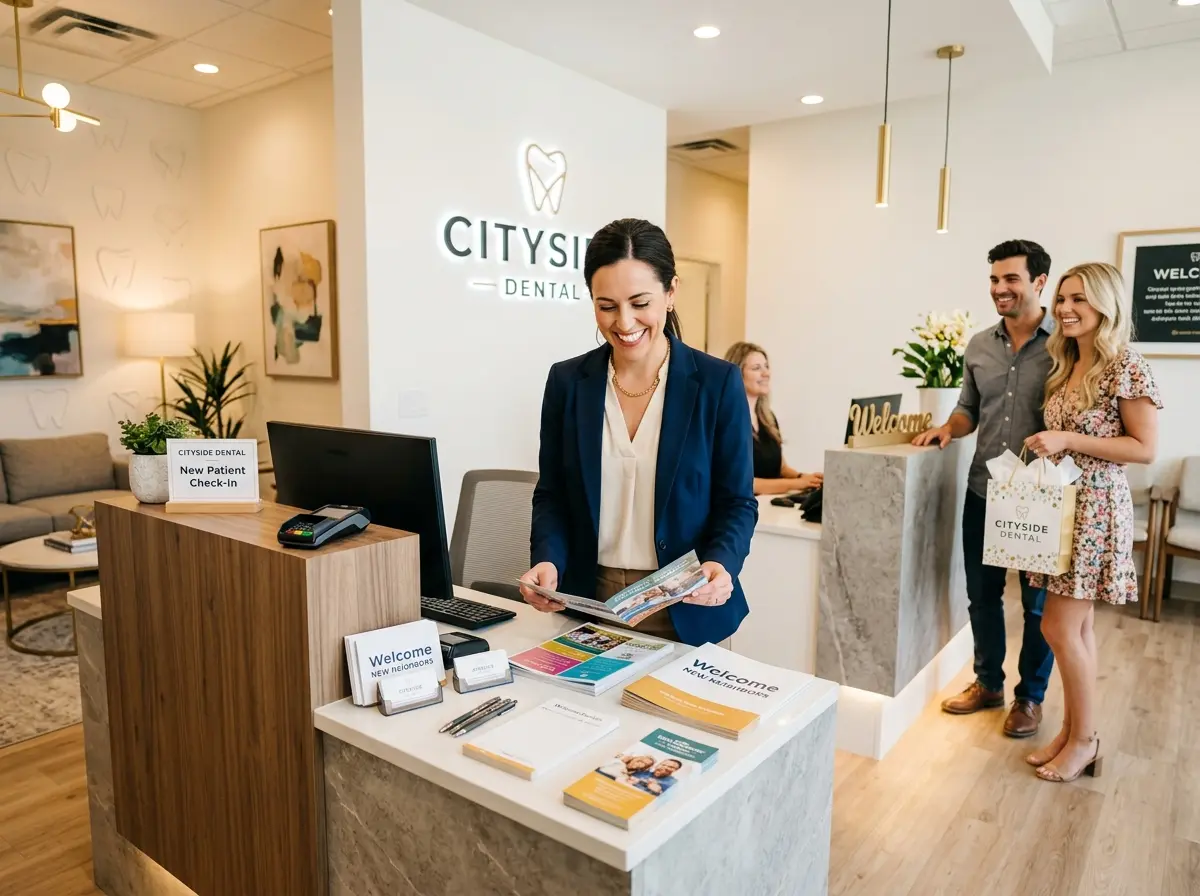
- Direct Mail: Old-fashioned but remarkably effective. A well-designed postcard with a compelling new patient offer lands in a new homeowner's hands when they're actively looking for local services. Consider including a "Welcome to the Neighborhood" message — it feels personal rather than spammy.
- Email Marketing: If your data provider supplies email addresses, a short welcome email sequence can complement your mailer and keep your practice top of mind.
- Digital Retargeting: Some platforms allow you to target new movers via Facebook and Google Ads using location-based data. This keeps your practice visible as they browse online.
- Local SEO and Google Business Profile: Make sure your Google Business Profile is fully optimized. New movers searching "dentist near me" should find you quickly, with glowing reviews and accurate hours.
Crafting an Irresistible New Patient Offer
Here's where a lot of practices drop the ball. They send out beautiful mailers and then offer... nothing particularly compelling. "We're here!" is not a call to action. New movers are being bombarded with marketing from every local business imaginable, so your offer needs to stand out.
Consider offers like a free first exam and X-rays for new patients, a discounted whitening treatment bundled with a cleaning, or a new mover welcome kit that includes a small dental hygiene package. Whatever you offer, make sure it has a clear expiration window — typically 60 to 90 days — to create urgency without feeling aggressive. The goal is to get them in the chair once; after that, your team's charm and competence do the rest of the selling.
Streamlining Your Follow-Up with the Right Tools
Why Your Follow-Up Process Matters as Much as Your Outreach
Here's a scenario that plays out in dental offices everywhere: a new mover receives your postcard, gets excited, calls your office — and nobody answers because your front desk is busy with a patient. They hang up and call the next dentist on their list. You just lost a potentially decade-long patient relationship because of a missed phone call. Infuriating, right?
This is exactly where Stella, the AI robot employee and phone receptionist, can make a meaningful difference for your practice. Stella answers every incoming call 24/7, handles new patient inquiries with natural conversation, and can collect intake information directly over the phone — so no lead slips through the cracks, even at 9 PM on a Tuesday. For practices with a physical location, Stella also operates as an in-office kiosk, greeting patients when they arrive and answering questions about services, insurance, or current promotions. Her built-in CRM lets you tag new mover patients specifically, track where they came from, and follow up with personalized communication — all without adding to your front desk's already full plate.
Measuring, Optimizing, and Turning New Movers Into Lifelong Patients
Tracking What's Actually Working
If you're not measuring your new mover campaign, you're essentially driving with your eyes closed and hoping for the best. Fortunately, tracking doesn't have to be complicated. The simplest approach is to use a dedicated phone number on your new mover mailers — call tracking services like CallRail make this easy and affordable. You can see exactly how many calls came from your campaign, listen to recordings, and measure conversion rates.
Similarly, train your front desk to ask new patients how they heard about the practice. It takes two seconds and gives you invaluable data. Over time, you'll be able to see which channels are performing and which ones are quietly burning your marketing budget.
Converting a One-Time Visit Into a Long-Term Relationship
Getting a new mover in for their first appointment is a victory, but it's just the beginning. The real prize is a patient who comes back every six months, refers their spouse and kids, and leaves a glowing five-star review. To get there, you need a solid post-visit follow-up strategy.
Start with a personalized thank-you message after their first visit — a text or email goes a long way. Set up automated appointment reminders at the 6-month mark so they don't drift away simply because life got busy. Consider a patient loyalty or referral program that rewards them for bringing in friends and family. And don't underestimate the power of staying in touch between visits through occasional newsletters, seasonal promotions, or even a simple birthday message. You're not just a dentist — you're becoming part of their new community, and that emotional connection is what keeps patients loyal for years.
Scaling Your Program Over Time
Once you've validated that your new mover program is generating a positive return on investment, the natural next step is to scale it up. That might mean increasing your geographic radius, investing in higher-quality data lists, adding additional marketing channels, or increasing the frequency of your outreach. Some practices even segment their new mover audiences — sending different offers to families with young children versus young professionals versus retirees — to make their messaging more targeted and relevant.
The key is to treat your new mover program as an ongoing system, not a one-time campaign. New people move into your area every single month, and each one represents a potential long-term patient. Build the machine once, optimize it regularly, and let it run.
A Quick Reminder About Stella
Stella is an AI robot employee and phone receptionist designed for businesses like yours — she greets patients at your front desk as a friendly in-office kiosk and answers every phone call around the clock so you never miss a new patient inquiry. At just $99/month with no hardware costs, she's built to give your practice a reliable, professional presence without the overhead. If you're investing in new mover marketing, making sure someone — or something — is always there to answer the call is a smart complement to that effort.
Your Action Plan Starts Now
Building a new mover marketing program for your dental practice isn't complicated, but it does require intentionality. To recap, here's your roadmap:
- Source your new mover data through a reputable provider and define your target radius.
- Design a compelling new patient offer with a clear call to action and an expiration date.
- Launch a multi-channel outreach campaign combining direct mail, email, and digital advertising.
- Optimize your follow-up process so that every call and inquiry gets a prompt, professional response.
- Track your results using dedicated phone numbers, CRM tags, and simple intake questions.
- Nurture first-time patients into long-term relationships through consistent, personalized communication.
The dentists winning in their local markets aren't necessarily the ones with the fanciest equipment or the most Instagram followers. They're the ones who show up consistently, make it easy for new patients to choose them, and actually follow through on their promises. New mover marketing, done well, is one of the most reliable ways to keep a steady stream of new patients coming through your door — and now you've got everything you need to get started.