You Did the Work. You Sent the Quote. Then… Nothing.
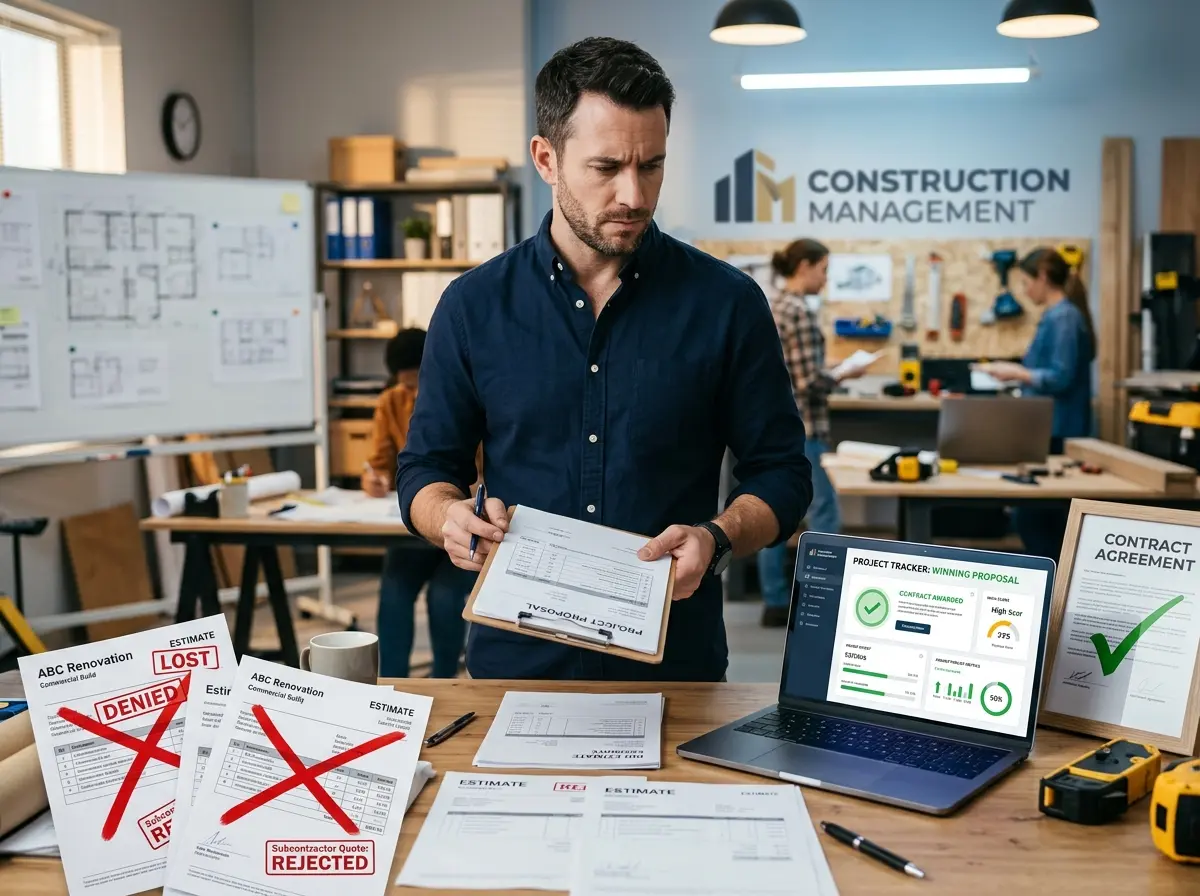
You've been there. You spend an hour on-site, measure everything twice, put together a detailed, professional quote, send it off — and then you wait. And wait. And wait some more. Eventually, you follow up. Maybe twice. Then you find out they went with the other guy. The one who charged more. The one whose work you've seen and quietly judged at neighborhood cookouts.
So what happened? How does a contractor lose a job to a more expensive competitor? The answer, almost always, has nothing to do with price. It has everything to do with the gap between quoting and closing — and how most contractors handle (or mishandle) that window of time.
The quote-to-close problem is one of the biggest silent revenue killers in the contracting world. You're not losing on quality. You're not losing on price. You're losing on process — and that's actually great news, because process is fixable.
Why Contractors Lose Bids Before the Customer Even Decides
Speed Is the New Professionalism
Here's a stat worth sitting with: according to research from the Harvard Business Review, businesses that follow up with leads within an hour are seven times more likely to qualify that lead than those who wait just one hour longer. In the contracting world, where customers are often getting three or more quotes, being the first to respond — and the first to follow up — creates an enormous psychological advantage.
Customers aren't just evaluating your price. They're evaluating what it's going to be like to work with you. If you take four days to return a call or send a quote, they're already imagining what it's going to be like when there's a problem mid-project. Speed signals reliability. It signals that you're organized, that you value their time, and that you actually want the job. Showing up fast — even just with a "Got your message, I'll have a full quote to you by Thursday" — builds trust before you've laid a single board or turned a single wrench.
The Follow-Up Failure
Most contractors follow up once, get no response, and quietly assume the customer went elsewhere. This is understandable — nobody wants to be pushy — but it's also leaving serious money on the table. Studies suggest it takes an average of five to eight touchpoints before a prospect makes a buying decision. Most contractors tap out at one or two.
A thoughtful follow-up sequence doesn't mean calling someone every day until they block your number. It means spacing out professional check-ins across a couple of weeks, offering something useful each time — a timeline estimate, answers to common questions, a reminder that your schedule is filling up. Each touchpoint keeps you top of mind and reinforces the impression that you're communicative and professional. That's exactly what nervous homeowners are looking for when they're about to hand someone keys to their house.
Your Quote Isn't Doing Enough Work
A quote that's just a list of line items and a total number is doing the bare minimum. It's not selling. It's not differentiating you. It's just a number on a page competing against other numbers on other pages. The contractors who close more jobs treat their quotes like a soft sales document — one that reminds the customer why they're the right choice.
Consider adding a brief summary of the scope in plain language, a short explanation of your process, your timeline, and what makes your work worth what you're charging. Include photos of similar past projects if you can. Make it easy for the customer to say yes — and harder to justify going with someone who just sent a number on a sticky note. The extra thirty minutes it takes to build a better quote template will pay for itself many times over in closed jobs.
How Better Communication Infrastructure Changes Everything
You Can't Follow Up If You're Under a Crawlspace
Here's the uncomfortable truth about contracting: the same hustle that makes you good at the job makes it nearly impossible to run the business side of the job. You're on-site, covered in drywall dust, managing a crew, and simultaneously supposed to be answering calls, sending quotes, and nurturing leads. Something always falls through the cracks — and it's usually the follow-up.
This is where tools that work for you — even when you're not available — become genuinely valuable. Stella, the AI robot employee and phone receptionist, is one option worth knowing about. For contractors operating out of a physical office or showroom, Stella greets walk-in customers and answers questions proactively. For any contractor — including solopreneurs working out of a truck — she answers phone calls around the clock with real business knowledge, collects customer information through conversational intake forms, and manages contacts through a built-in CRM. That means when a potential customer calls at 7pm on a Tuesday while you're finishing a job, they get a professional, informed response instead of voicemail. And you get a summary of the call with the customer's details already logged. That's not a luxury anymore. That's a competitive edge.
Closing the Gap: What High-Performing Contractors Do Differently
They Create a Simple, Repeatable Follow-Up System
High-closing contractors aren't necessarily more charming or more talented. They're more consistent. They have a follow-up process they actually stick to — and it's usually simple enough that it doesn't require remembering to do it. Whether it's a CRM that reminds them to follow up, a shared calendar, or a trusted team member whose job it is to make the calls, the system does the heavy lifting so the lead doesn't go cold.
If you don't have a follow-up system today, here's a basic one to start with: send the quote, then follow up on day two, day five, and day ten. Each follow-up should be brief, friendly, and add something — a timeline update, a question about whether they have any concerns, or a note that your schedule is limited. Simple. Repeatable. Effective.
They Make It Easy for Customers to Say Yes
Friction kills deals. If a customer has to call you back, leave a message, wait for a callback, and then schedule a time to discuss — they might just not bother. The contractors who close consistently make the next step obvious and easy. A clear call to action on the quote. A simple way to approve or ask questions. A direct number that actually gets answered. Remove every unnecessary obstacle between "interested" and "signed."
This also means being available — or at least appearing available. If your voicemail is full (yes, this still happens in the year we're living in), you have already lost that customer. If your callback takes three days, you've probably lost them too. Availability, whether real or perceived through good communication systems, is a massive factor in who gets the job.
They Ask for the Business — Clearly
It sounds almost too simple, but a surprising number of contractors never actually ask for the job. They send the quote and wait for the customer to make all the moves. Confident, professional contractors ask directly: "Does this look good to you? What questions do you have before we move forward?" It's not pushy — it's professional. It signals that you're ready, you're capable, and you'd like to earn their business. Customers respond to that kind of confident clarity. It makes the decision easier for them and positions you as a leader rather than someone waiting to be picked.
Quick Reminder About Stella
Stella is an AI robot employee and phone receptionist designed to help businesses — including contractors and service providers — stay responsive and professional without adding overhead. She answers calls 24/7, collects lead information, manages customer contacts in a built-in CRM, and keeps your business moving even when you're on the job. At $99/month with no upfront hardware costs, she's built to be accessible for businesses of every size.
Stop Leaving Jobs on the Table
The quote-to-close problem is frustrating precisely because it's so preventable. You're doing the hard part — showing up, assessing the job, putting together a fair price. The part that's costing you work is what happens (or doesn't happen) after you send that quote.
Here's where to start: audit your last ten lost bids. How fast did you follow up? How many times? What did your quote actually look like? You'll probably spot the pattern pretty quickly. Then pick one thing to fix — a better quote template, a simple follow-up schedule, or a tool that helps you stay responsive — and build from there.
You don't need to overhaul your entire business this week. You just need to be a little more systematic than the next contractor. In a market where most of your competitors are winging it, a little structure goes a very long way.