The Art of Selling Without Selling (Yes, It's a Real Thing)
Picture this: a customer settles into your barber chair, you've just delivered a flawless fade, and you casually mention the pomade sitting on the shelf. Their eyes glaze over, they give you a polite nod, and they walk out the door having purchased exactly nothing. Sound familiar? You're not alone — and you're also not doomed.
Selling retail products in a barbershop can feel awkward, almost like trying to upsell dessert at a funeral. But here's the thing: your clients already trust you with their hair. You've earned that. The problem isn't the selling itself — it's the approach. Most barbers either skip the conversation entirely (leaving real money on the table) or go full used-car-salesman (leaving clients uncomfortable). Neither is great for business.
The good news? There's a middle ground, and it's surprisingly profitable. This guide walks you through how to build a product culture in your barbershop that feels natural, serves your clients better, and — let's be honest — pads your bottom line in a way that won't make you feel like you need a shower afterward.
Building a Product Culture That Doesn't Feel Forced
The barbers who sell the most retail product aren't the ones with the loudest pitch — they're the ones who've woven product education into everything they do. It starts before a single word about price is spoken.
Use Products During the Service (Visibly and Deliberately)
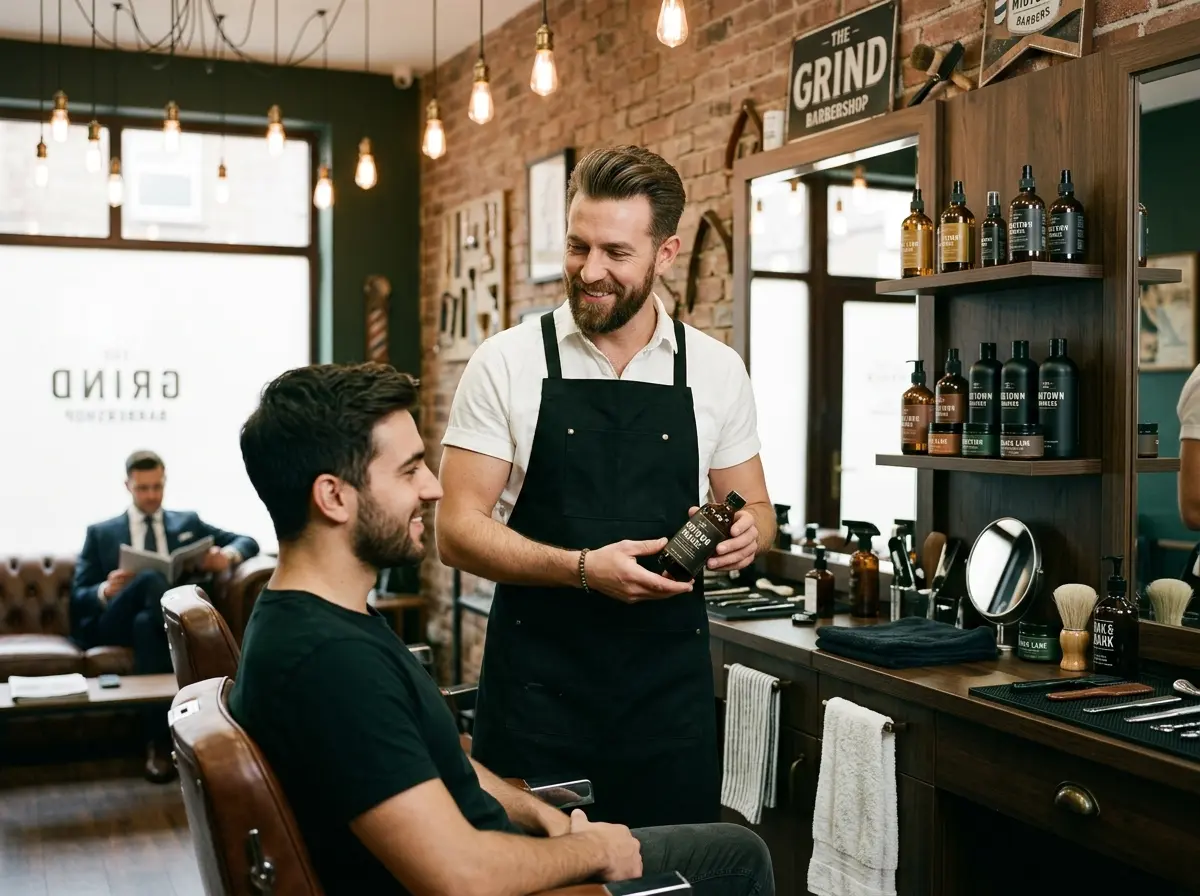
Your service chair is the best showroom you have, and you're not using it to its full potential if products are just sitting quietly on a shelf like shy students who didn't do the homework. When you reach for a product, narrate what you're doing and why. "I'm using this clay-based pomade because it gives a matte finish with medium hold — works great for your texture." That's not a sales pitch. That's expertise. Clients eat it up.
Studies on retail in salons and barbershops consistently show that clients are significantly more likely to purchase a product they've seen used on them. The logic is simple: they already know it works for their hair. You've removed the guesswork. At that point, the only barrier left is convenience — which brings us to the next point.
Make Products Physically Impossible to Ignore
If your retail shelf is tucked in a corner behind the coat rack and a stack of old magazines, don't be shocked when clients don't buy anything. Placement matters enormously. Products should be visible from the chair, within arm's reach of the client during checkout, and organized in a way that makes sense to a non-professional. Group them by purpose — styling, scalp care, beard grooming — not by brand. Clients don't walk in knowing they need a Layrite vs. a Suavecito. They walk in knowing they need "something that holds but doesn't look greasy."
Consider a small display near the checkout counter with a "barber recommended" tag on a rotating featured product. Keep it simple. Keep it visible. Change it occasionally so regulars notice.
Train Your Staff to Talk Product (Without a Script)
Nothing kills a product recommendation faster than it sounding rehearsed. Clients can tell when someone is going through motions versus genuinely sharing what works. Give your barbers product knowledge — hold a quick team session when you bring in a new line, let them try the products themselves, and encourage them to share their honest opinions with clients. A barber saying "I actually use this one at home" is worth more than any shelf tag.
Set a soft cultural expectation: every client should hear about at least one product during their visit, even if it's just a passing mention. Not a hard close — just a mention. You'll be surprised what a difference it makes over time.
Let Technology Carry Some of the Conversational Weight
Here's where a lot of barbershops leave easy wins behind: they rely entirely on their barbers to handle every touchpoint — the greeting, the consultation, the upsell, the checkout conversation, and the ringing phone in the background. That's a lot to ask of someone who's also trying to execute a clean taper.
How Stella Can Help in the Shop and on the Phone
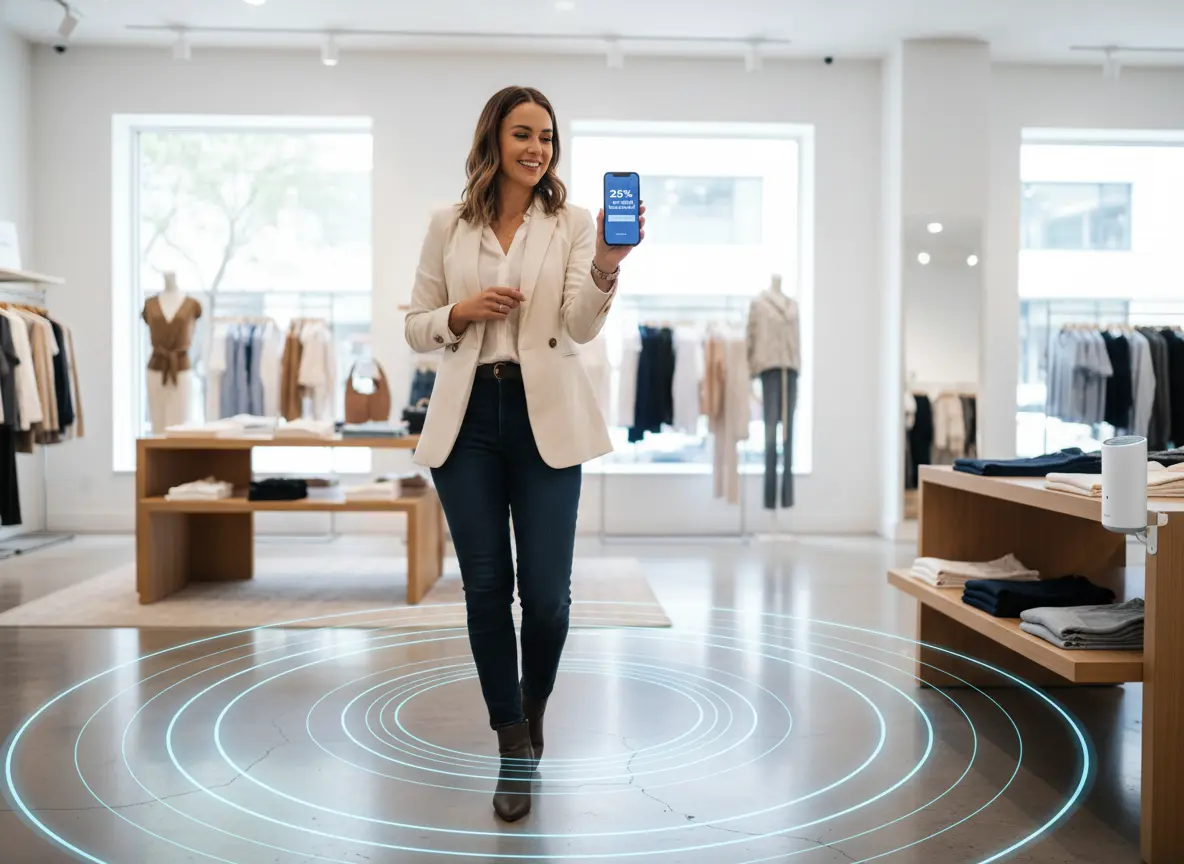
Stella is an AI robot employee and phone receptionist that can take on several of those ambient tasks without your barbers breaking focus. As an in-store kiosk, she greets walk-ins, answers product and service questions, highlights current promotions, and can spark the initial product conversation before a client ever sits down — so your barbers aren't starting from zero. She's particularly effective at surfacing deals and featured products in a low-pressure, informational way that doesn't feel like a pitch.
Stella also answers phone calls around the clock, handles appointment inquiries, and keeps your staff from having to shout "can someone grab that?" mid-haircut. At $99/month with no upfront hardware costs, she's less expensive than a part-time front desk employee and considerably more reliable. For barbershops looking to sell more product without burning out their team, she's a practical addition worth considering.
Turning One-Time Buyers Into Repeat Retail Customers
Getting a client to buy a product once is a win. Getting them to come back for it — and tell their friends — is a business model. The difference lies in the follow-through, and most barbershops completely skip this part.
Recommend Repurchase Timing (And Say It Out Loud)
When a client buys a product, tell them roughly how long it should last with regular use. "That should get you about six to eight weeks" is more useful than it sounds — it plants a mental flag that brings them back around the time they're running low. Even better, it positions your shop as the obvious place to restock rather than sending them to search Amazon at midnight. If you can connect a product repurchase to their next haircut appointment, you've just created a natural recurring reason to visit.
Create Subtle Loyalty Around Your Product Selection
Consider carrying at least one or two products that clients genuinely can't find at the drugstore or big-box retailers. Professional-grade or barbershop-exclusive lines give you a built-in competitive advantage that has nothing to do with discounting. When a client knows they can only get that specific product from you, your shop becomes part of their grooming routine — not just a place they stop by every few weeks.
You can reinforce this with simple loyalty mechanics: a punch card for retail purchases, a small discount on products when combined with a service, or even a "barber's pick of the month" that gets a brief mention on your social media. None of this requires a marketing degree or a big budget. It requires consistency and a small amount of intentionality.
Ask for Feedback on Products (Seriously, Just Ask)
When a returning client comes in and you notice the product they bought last time, ask how it worked out. This is almost comically simple and almost universally skipped. A client who tells you "actually it was a little too heavy for me" has just handed you the perfect opportunity to recommend something better — and they'll remember that you listened. A client who says "I loved it" has just handed you a free testimonial you can share with the next client in that chair. Either outcome is a win. The ask takes about four seconds.
Quick Reminder About Stella
Stella is an AI robot employee and phone receptionist built for businesses like yours — she greets customers in-store, promotes products and specials, and answers calls 24/7 so nothing slips through the cracks. She works on a simple $99/month subscription with no hardware costs and is easy to get up and running. If your team is stretched thin or you're tired of missed calls and missed upsell opportunities, she's worth a look.
Start Small, Stay Consistent, and Watch the Numbers Move
Retail revenue in a barbershop rarely explodes overnight — but it does build reliably when the right habits are in place. The barbers who do this well aren't running aggressive promotions or pressuring clients. They're just doing a few things consistently: using products visibly during services, talking about them naturally, placing them where clients can see and grab them, and following up in small but meaningful ways.
Here's a practical starting point you can implement this week:
- Pick two or three products to actively feature this month. Don't try to move your entire inventory at once.
- Brief your barbers on those products — what they do, who they're for, and what to say naturally during a service.
- Reposition your retail display so it's visible from the chair and within reach at checkout.
- Add one product mention per client visit as a soft team expectation. No hard close required.
- Track what sells over 30 days and double down on whatever's working.
The hard sell has never been your brand — your craft is. When product recommendations come from the same place as your skill and your service, clients don't feel sold to. They feel taken care of. And that's the kind of experience that builds a genuinely loyal clientele, one great haircut (and well-placed pomade recommendation) at a time.