Your Front Desk Is Costing You More Than You Think
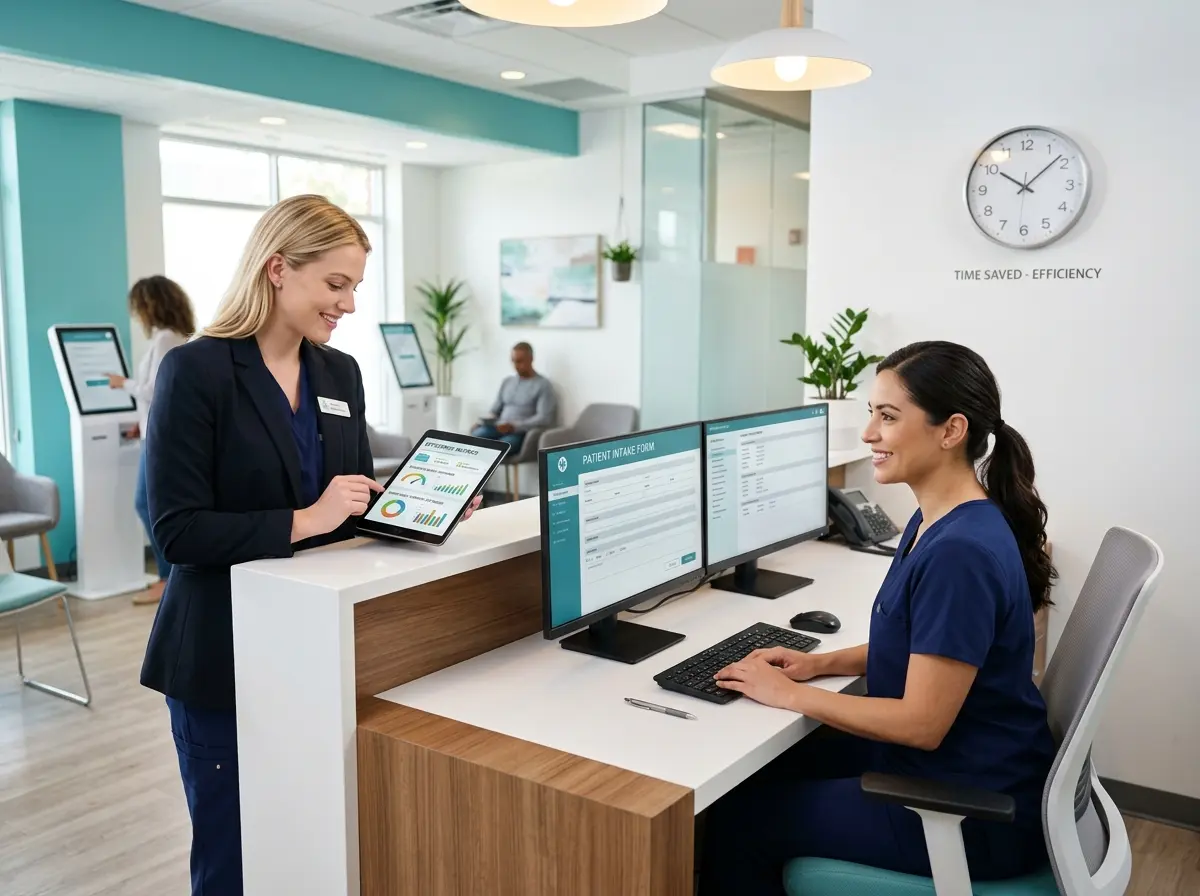
Let's paint a familiar picture: it's a busy Monday morning at your medical office. The phones are ringing, the waiting room is filling up, and your front desk staff — who are, bless them, only human — are simultaneously trying to greet patients, verify insurance, answer questions about copays, and manually transcribe the same intake information that patients have now written on paper forms for the third time. Sound familiar? Of course it does.
Here's the uncomfortable truth: the traditional patient intake process is a beautiful disaster. According to a study by the Medical Group Management Association, front desk inefficiencies cost medical practices an average of 14 hours per week in administrative overhead — time that could be spent on actual patient care, billing, or frankly, anything more valuable than deciphering a patient's handwriting for "current medications."
The good news? Digital intake forms have evolved well beyond a simple PDF you email to patients and pray they remember to bring. When implemented correctly, a smart digital intake system doesn't just collect information — it transforms your entire patient flow. And we're going to show you exactly how to make that happen.
Why Traditional Intake Is Quietly Draining Your Practice
The Hidden Cost of Paper and Manual Entry
Paper intake forms feel harmless enough. Patients fill them out, your staff enters the data, everyone moves on. Except that's not quite how it works in practice. In reality, patients arrive late and rush through forms, leaving half the fields blank. Staff then spend time chasing down missing information — sometimes mid-appointment. Data gets entered manually into your EHR, creating a second opportunity for error. And somewhere along the way, a form gets lost, misfiled, or rendered unreadable because someone decided to complete it in pencil during a bumpy car ride.
When you add up staff time spent on manual data entry, error correction, follow-up calls for missing information, and re-entering data from paper to digital systems, most practices are looking at 3 to 5 hours of pure administrative overhead per day. That's not a staffing problem — that's a process problem.
The Patient Experience Problem Nobody Talks About
Patients are also consumers. They book restaurant reservations on their phones, manage their bank accounts without ever speaking to a human, and increasingly expect the same frictionless experience from their healthcare providers. Handing someone a clipboard with eight pages of forms the moment they walk through your door is not the first impression you want to make — especially when that same patient just spent twenty minutes filling out the exact same information on your website portal that nobody told them about.
Poor intake experiences contribute directly to patient dissatisfaction scores and, more practically, to no-shows and cancellations. When onboarding feels like a chore, patients are more likely to delay scheduling follow-ups. A streamlined digital intake form, sent automatically before the appointment, respects your patients' time and signals that your practice is organized, modern, and worth coming back to.
The Staff Burnout Factor
It would be easy to dismiss administrative inefficiency as just a numbers problem, but there's a human element worth acknowledging. Front desk staff who spend the majority of their day doing repetitive data entry and answering the same questions on repeat are not doing their best work — and they know it. High turnover in medical front desk roles is notoriously expensive, with replacement costs averaging 50% to 200% of an employee's annual salary when you factor in recruiting, onboarding, and lost productivity. Reducing the tedious, repetitive parts of the job doesn't just save time — it makes the job better.
How Smart Tools Can Handle the Heavy Lifting
Automating Intake Before the Patient Even Arrives
The most effective digital intake systems don't wait for patients to walk through your door. They trigger automatically when an appointment is booked, sending a secure link to a mobile-friendly form that patients can complete on their own time — on the couch the night before, in the car (as a passenger, presumably), or at literally any point that isn't the moment they're trying to get settled in your waiting room. By the time they arrive, your team already has everything they need.
This approach alone can eliminate the majority of that manual data entry overhead, because the information flows directly into your system without a human middleman transcribing it. Less transcription means fewer errors, and fewer errors mean fewer awkward phone calls to patients asking them to confirm their date of birth for the fourth time.
Where Stella Comes In
For medical offices looking to go a step further, Stella — the AI robot receptionist — offers a genuinely practical solution for both in-office and phone-based intake. When a patient calls to schedule an appointment, Stella can handle the entire intake conversation over the phone, collecting contact details, insurance information, reason for visit, and more through a natural, conversational intake form. No hold music. No "let me grab a pen." Just efficient, friendly information gathering that happens automatically.
Stella also comes with a built-in CRM that stores patient contact profiles with custom fields, tags, and AI-generated summaries — so your team always has context before a patient interaction, without digging through notes or playing phone tag. Whether she's answering after-hours calls, greeting patients at a kiosk in your waiting room, or collecting intake data on the web, she's handling the administrative groundwork so your staff can focus on care. It's like hiring a receptionist who never calls in sick and doesn't need a lunch break.
Building a Digital Intake Process That Actually Works
Design Forms for Patients, Not for Filing
The biggest mistake practices make when going digital is simply taking their paper form and converting it into a digital version — every field, every redundancy, every question that hasn't been relevant since 2009, now just on a screen instead of paper. This is not a transformation. This is just a worse version of the same problem.
Effective digital intake forms are designed with the patient experience in mind. That means asking only what you genuinely need before the appointment, using conditional logic so patients only see questions relevant to their visit type, and writing questions in plain language rather than medical billing shorthand. A patient who understands what they're being asked is far more likely to provide accurate, complete information — which is the whole point.
Integrate Directly With Your Existing Systems
A digital intake form that lives in isolation — collecting data that your staff then has to manually copy into your EHR anyway — isn't saving you much time. The real efficiency gains come from integration. When your intake form connects directly to your practice management software or EHR, data flows automatically, appointment records are updated in real time, and your front desk can spend their energy on actual patient care rather than copy-paste work. Most modern intake platforms offer integration with common systems like Epic, Athenahealth, and Kareo, so the barrier to entry is lower than you might expect.
Make Compliance Part of the Design, Not an Afterthought
HIPAA compliance isn't optional, and any digital intake solution you implement needs to be built with it in mind from the start. That means encrypted data transmission, secure storage, proper authorization workflows, and clear patient consent language. The good news is that reputable digital intake platforms handle most of this automatically — but it's your responsibility to verify it before you deploy anything. A compliance failure is exactly the kind of surprise that makes a 10-hour-per-week time savings feel less exciting in retrospect.
Quick Reminder About Stella
Stella is an AI robot employee and phone receptionist built for businesses like yours — available as a friendly in-office kiosk and as a 24/7 AI phone receptionist. She handles patient intake, answers questions, manages contacts through a built-in CRM, and keeps your front desk running smoothly for just $99 per month with no upfront hardware costs. If your intake process needs a serious upgrade, she's worth a look.
Start Small, Scale Fast
Overhauling your intake process doesn't have to happen all at once, and in fact, trying to do everything simultaneously is a reliable way to confuse your staff, frustrate your patients, and abandon the whole initiative by week three. A more sustainable approach is to start with one specific bottleneck — perhaps new patient intake, or appointment confirmation workflows — implement a digital solution, measure the time savings, and then expand from there.
Here's a practical starting point for most medical offices:
- Audit your current intake process. Map every step from appointment booking to the patient sitting in the exam room. Identify where time is being lost and where errors are introduced.
- Choose a compliant digital intake platform that integrates with your existing EHR or practice management software.
- Design your forms intentionally — reduce unnecessary fields, use conditional logic, and test the experience on a mobile device before going live.
- Automate the delivery so intake forms are sent automatically upon booking confirmation, with reminders for patients who haven't completed them.
- Train your staff on the new workflow — not just how to use the tools, but why the change benefits them directly. Buy-in matters.
- Measure results after 30 days. Track time spent on manual data entry, error rates, and patient satisfaction to quantify the impact before expanding.
Ten hours a week sounds like a bold claim until you realize how much time is currently evaporating into clipboard management, manual data entry, and repeat phone calls for missing information. The technology to fix this is available, affordable, and in many cases easier to implement than your last staff meeting. The only thing standing between your practice and a genuinely more efficient intake process is the decision to start.
Your patients deserve a smoother experience. Your staff deserves fewer headaches. And frankly, you deserve to stop paying people to transcribe handwriting. It's time to let the clipboard retire.