Why Interior Designers Should Be Your Best Friends (And How to Make That Happen)
Let's be honest — if you're running a flooring company and you're not actively building relationships with interior designers, you're leaving serious money on the table. Like, embarrassingly serious money. Interior designers are essentially professional referral machines who spend their entire careers telling clients what to buy and where to buy it. And guess what? Flooring is almost always on that list.
The problem is that most flooring companies treat designer relationships as something that "just happens" — a passive, fingers-crossed strategy that amounts to hoping a designer wanders into your showroom and falls in love with your LVP samples. Spoiler alert: that's not a strategy. That's a wish.
A well-structured referral program with interior designers can transform your business from a shop that occasionally gets a designer client to a go-to flooring resource that designers actively recommend, call first, and send their best clients to. This guide breaks down exactly how to build that program — professionally, sustainably, and without bribing anyone with a fruit basket.
Building the Foundation: What Designers Actually Want From You
Before you start drafting referral agreements and printing business cards, you need to understand something fundamental: interior designers are not just referral sources. They are professionals with reputations on the line. They will only send clients your way if they trust you completely — trust that you'll deliver quality, communicate clearly, and not make them look bad in front of a client who's paying $15,000 for a living room refresh.
Know Their World Before You Enter It
Interior designers operate on tight project timelines, have demanding clients, and are juggling multiple vendors at once. What they need from a flooring partner isn't just good product — it's reliability, responsiveness, and someone who understands the bigger picture of a design project. Walk into a designer relationship thinking you're just selling floors, and you'll walk out empty-handed. Walk in thinking you're part of their creative and logistical team, and you'll earn a partner for life.
Take time to learn the basics of how designers work: understand concepts like lead time, spec sheets, and client presentations. Ask designers what their biggest pain points are when working with flooring vendors. You'll likely hear things like slow communication, installation delays, and showroom staff who talk over clients rather than supporting the designer's vision. Those pain points are your opportunity.
Create a Designer-Specific Value Proposition
Your referral program needs to offer something genuinely valuable — not just a commission check, but a full package of professional support. Consider building a Designer Trade Program that includes:
- Trade discounts on materials (typically 10–20% is industry standard)
- Sample loan programs so designers can present flooring options directly to clients
- Dedicated project coordination — a single point of contact who knows their projects
- Priority scheduling for installations on designer-referred projects
- Co-branded marketing support like joint social media posts or showroom features
When designers see that you've built a program specifically for them — not just slapped a referral fee on top of your existing process — they take you seriously. And that's when the referrals start flowing.
Formalize the Relationship (Without Overcomplicating It)
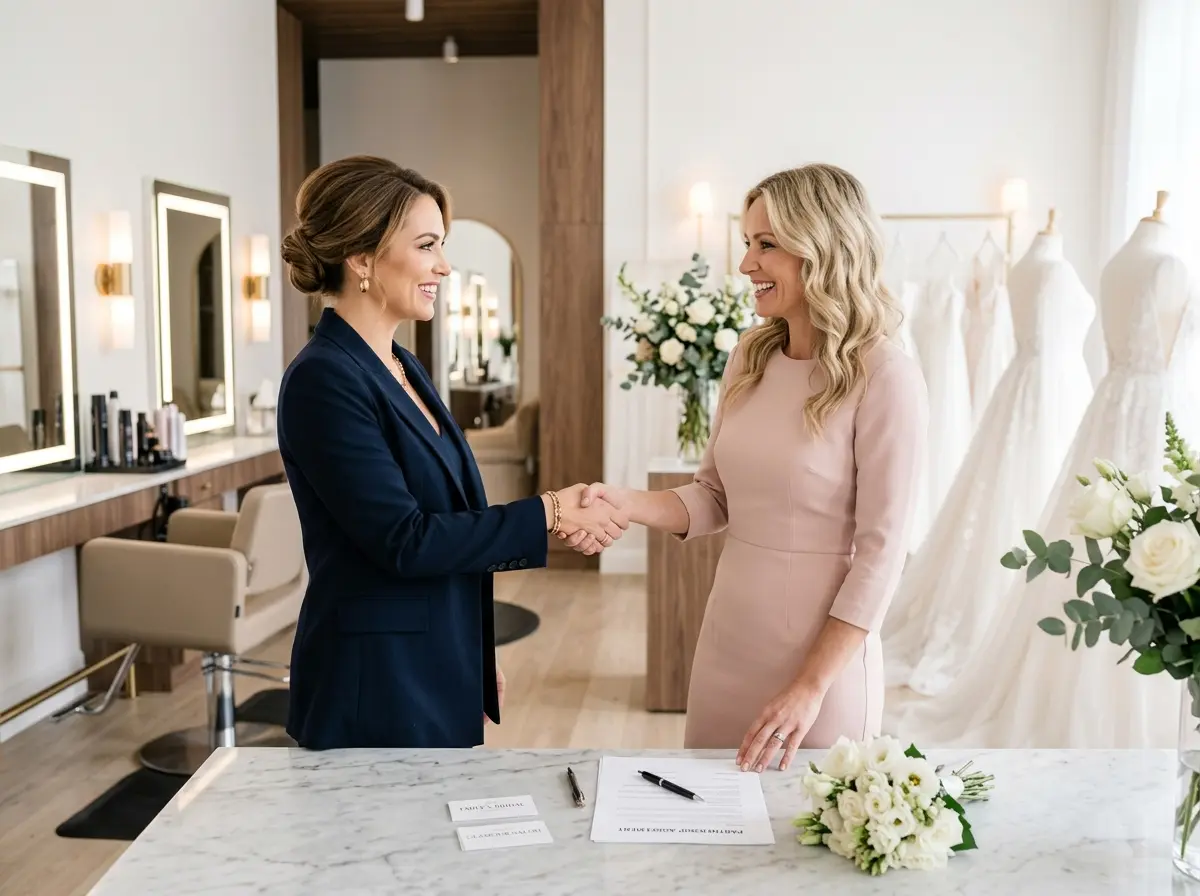
A simple, one-page referral agreement goes a long way toward establishing trust and professionalism. Outline how referrals are tracked, when and how commissions are paid, and what both parties can expect from the partnership. Keep it clean and easy to understand — designers are creative professionals, not contract lawyers, and a 12-page legal document is more likely to end the conversation than start a partnership.
Streamlining Your Operations to Support Designer Partnerships
Here's the part that doesn't get talked about enough: your referral program is only as good as the experience you deliver. You can have the most generous trade discount in town, but if designers can't get a human on the phone or their clients are left waiting in your showroom without being acknowledged, those referrals will quietly stop coming.
Make Every Touchpoint Count — With a Little Help From AI
This is where smart operational tools make a real difference. Stella, the AI robot employee and phone receptionist, can help flooring companies stay sharp on both fronts. In your showroom, Stella greets walk-in clients — including those sent by designer partners — proactively and professionally, answering questions about products, availability, and current promotions without pulling your staff away from consultations. On the phone side, she answers calls 24/7, which matters enormously when a designer is trying to check on an installation timeline at 8 PM the night before a client reveal.
Stella's built-in CRM and intake forms also make it easy to log designer-referred leads properly, tag them by source, and make sure nothing falls through the cracks. Knowing exactly where your best leads are coming from — and being able to show designers that their referrals are being handled with care — is a quiet but powerful way to strengthen those partnerships over time.
Growing and Sustaining Long-Term Designer Relationships
Getting a designer to refer one client is nice. Getting them to refer every flooring project they touch for the next five years is a business transformation. The difference lies in how you nurture the relationship after that first referral comes in.
Communicate Like a Partner, Not a Vendor
Designers need to feel confident that sending you a client won't be the last they hear from you until an invoice arrives. Build a communication rhythm that keeps them in the loop without drowning them in updates. A quick text when installation is confirmed, a photo when the floors are done, and a follow-up to make sure the client is happy — that's it. Three touches that take about five minutes and make you look like the most professional flooring company they've ever worked with.
Consider designating a "Designer Relations" point of contact on your team whose job is to manage these partnerships specifically. This person knows every active designer account, tracks their projects, and makes sure the experience stays consistent. According to a study by the National Wood Flooring Association, contractors who maintain dedicated B2B relationship management see significantly higher repeat referral rates — which, when you think about it, makes complete sense.
Host Designer Events That Actually Add Value
Forget the generic "open house with cheese and crackers." If you want to build real loyalty with designers, host events that are genuinely useful to them. Think:
- Trend preview evenings where you showcase new product lines before they hit the public market
- CEU (Continuing Education Unit) sessions on flooring installation, materials science, or sustainability — designers often need these for licensing
- Styled showroom walkthroughs that help designers visualize how to present products to clients
These events position you as a resource and educator, not just a sales rep trying to fill your schedule. That shift in perception is worth more than any discount you could offer.
Track, Measure, and Reward Consistently
The fastest way to kill a referral program is to be inconsistent with how you recognize and compensate your partners. If a designer refers three clients and only gets credited for two because your tracking system dropped the ball, you've just damaged a relationship that took months to build. Use a reliable system to track every referral from source to close, and make sure commissions or rewards are paid on time, every time.
It's also worth acknowledging your top-performing designer partners with something beyond a commission. A personalized thank-you note, a feature in your newsletter, or a co-branded project showcase on social media costs you very little and makes designers feel like valued partners rather than just a line item in your marketing budget.
Quick Reminder About Stella
Stella is an AI robot employee and phone receptionist designed to help businesses like yours stay professional and responsive around the clock — whether that's greeting clients in your showroom or answering calls from designers checking in on a project after hours. At just $99/month with no upfront hardware costs, she's one of the easiest operational upgrades a flooring company can make while building out a more professional partner experience.
Your Next Steps: From Strategy to Signed Partnerships
Building a referral program with interior designers isn't a one-week project — it's an ongoing investment in relationships that can pay dividends for years. But it doesn't have to be complicated. Start with these concrete actions:
- Identify 10–15 interior designers in your area and research their work, aesthetic, and typical client base to find the best fit for your product offerings.
- Develop a simple Designer Trade Program with clear benefits: a trade discount, sample access, and a dedicated contact person on your team.
- Draft a one-page referral agreement that outlines tracking, payment terms, and mutual expectations — nothing intimidating, just professional.
- Reach out with a personal introduction — not a mass email, not a cold call, but a genuine, targeted message that shows you've done your homework on who they are and what they do.
- Host your first designer event within 90 days — even a small, well-organized preview evening with four or five designers is enough to start building real momentum.
The flooring industry is competitive, but it's not as complicated as it can feel when you're in the thick of it. Interior designers are out there right now, working with clients who need new floors and asking themselves which flooring company to recommend. The question is simply: are you the one they think of first? With a thoughtful, well-structured referral program, the answer can absolutely be yes — and it can stay yes for a very long time.