Why Your Phone Is Ringing Money Down the Drain
Let's paint a picture. A homeowner's pipe just burst. They grab their phone, search "emergency plumber near me," and start calling the first few results. Your number is one of them. It rings. And rings. And rings. They hang up and call your competitor — who answers — and just like that, you've lost a customer who was already ready to hand you their credit card.
If that scenario made you wince, good. That means you're paying attention. The home services industry — plumbers, HVAC techs, electricians, roofers, landscapers, house cleaners, and everyone in between — runs on urgency. Customers don't browse for fun. They have a problem, they want it solved, and they want to talk to someone right now. If your lead capture process isn't built around that reality, you're leaving serious money on the table every single week.
The good news? Building a lead capture funnel that actually works for a home services business isn't rocket science. It just requires the right stages, the right tools, and — critically — the right follow-through. Let's break it down.
The Foundation: What a Lead Capture Funnel Actually Means for Home Services
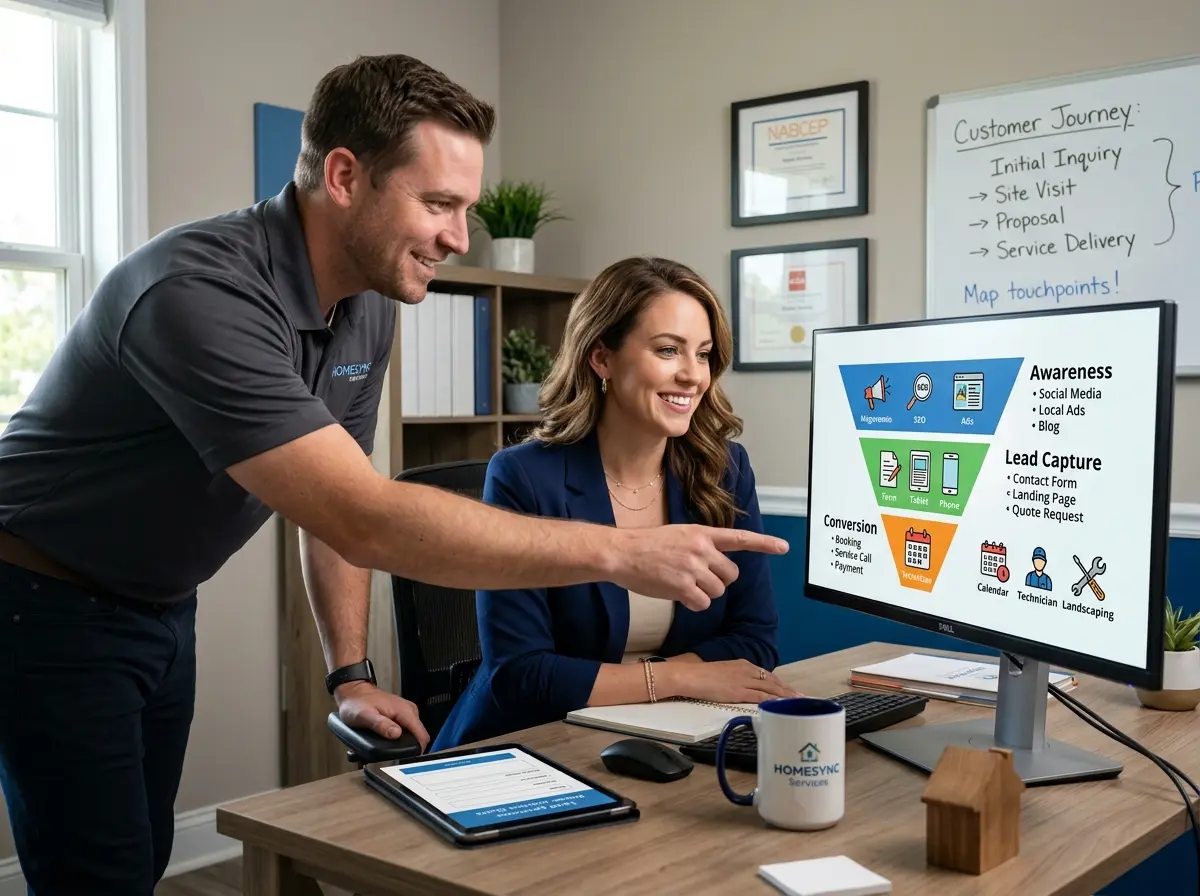
A "funnel" sounds like marketing jargon invented by someone who has never unclogged a drain, but the concept is genuinely useful. A lead capture funnel is simply the series of steps a potential customer goes through — from the moment they realize they have a problem, to the moment they book your service. Your job is to make that journey as frictionless as humanly (or robotically) possible.
Stage 1: Awareness — Getting Found When It Matters
Home services customers don't browse. They panic-search. That means your visibility during high-intent moments is everything. This starts with a solid Google Business Profile, consistent NAP (Name, Address, Phone) information across directories, and a website that loads fast on mobile — because nearly 60% of local searches happen on a smartphone, and a slow or clunky site is an instant bounce.
Beyond the basics, consider Google Local Services Ads (LSAs), which place your business at the very top of search results with a "Google Guaranteed" badge. For home services, LSAs consistently deliver some of the highest-quality leads available because customers are already in problem-solving mode. Pair that with a handful of strong Google reviews and you've got a first impression that actually converts.
Stage 2: Engagement — Turning Interest Into a Conversation
Once someone finds you, the clock starts ticking. Studies show that responding to a lead within the first five minutes increases your chance of conversion by up to 400% compared to waiting just 30 minutes. In home services, that window is even shorter — if a pipe is gushing, nobody's waiting around for a callback tomorrow morning.
Your website needs a clear, prominent call-to-action above the fold: a phone number, a "Book Now" button, or a simple contact form that doesn't ask for their life story. Keep it to the essentials — name, phone, service type, and a brief description of the issue. The faster someone can reach you or submit their information, the more leads you'll capture before they move on to the next result.
Stage 3: Capture — Collecting the Right Information the Right Way
Lead capture isn't just about grabbing a phone number. It's about gathering enough context to follow up intelligently and quickly. A homeowner who submits a form saying "AC not cooling" needs a different response than one who says "need annual HVAC tune-up." The more your intake process collects, the more personalized and effective your follow-up can be — which means higher close rates and happier customers from the very first interaction.
This is also where many businesses drop the ball. They capture the lead, toss it in a spreadsheet or (worse) someone's email inbox, and it sits there aging like forgotten leftovers. A proper CRM — even a basic one — is non-negotiable if you're serious about converting leads, not just collecting them.
Plugging the Biggest Leak: After-Hours and Unanswered Calls
Here's an uncomfortable truth: the average home services business misses a significant chunk of its inbound calls every week. After-hours calls go to voicemail. Midday calls go unanswered when the crew is on a job. High-volume days overwhelm the front desk. Each one of those unanswered calls is a potential customer who is, at that very moment, calling your competitor.
How Stella Fits Into Your Funnel
This is exactly where Stella earns her keep. Stella is an AI robot employee and phone receptionist that answers calls 24/7 with the same knowledge and professionalism you'd expect from your best front-desk hire — minus the sick days, turnover, and 9-to-5 limitations. For home services businesses, she can handle inbound calls after hours, collect customer information through conversational intake forms, and deliver AI-generated summaries with push notifications straight to your phone — so you wake up to a prioritized list of leads, not a wall of voicemails you have to manually decode.
Stella also manages a built-in CRM where every captured lead is automatically organized with custom fields, tags, and AI-generated profiles. For businesses with a physical location — like a showroom or supply store — she's available as an in-store kiosk too, greeting walk-in customers and proactively promoting your current services and deals. No missed opportunities, no awkward hold music, no leads slipping through the cracks at 11pm on a Saturday.
Nurturing and Closing: What Happens After You Capture the Lead
Capturing a lead is only half the battle. What you do in the next few hours — and the next few days — determines whether that potential customer becomes a paying one, or a faded memory who found someone else.
Speed-to-Response Is Your Competitive Advantage
Speed wins in home services, full stop. If your process relies entirely on someone manually checking a form submission inbox during business hours, you have a problem. The businesses that dominate local markets are the ones with systems — automated text confirmations, immediate call-backs, or AI-handled intake — that make the customer feel responded to the moment they reach out. Even a simple automated text that says "Thanks for reaching out — we'll call you within 30 minutes" dramatically increases the likelihood a customer waits for you rather than continuing to shop around.
Follow-Up Sequences That Don't Feel Like Spam
Not every lead converts on the first contact, and that's okay. A structured follow-up sequence — a call, a text, and an email over 48 to 72 hours — is enough to recover a significant portion of leads that initially went cold. The key is keeping it human, brief, and helpful. Reference what they reached out about. Offer something useful, like a free estimate or a seasonal promotion. Don't send four identical "just checking in!" messages in a row. Nobody likes that, and it won't win you any business.
Turning One Job Into Repeat Business
The most overlooked stage of any lead funnel is what happens after the job is done. Home services businesses that build long-term revenue don't just acquire customers — they retain them. A simple post-service follow-up asking for a review, a seasonal reminder about maintenance services, or a loyalty discount for returning customers can dramatically increase lifetime customer value. The customer who hired you to fix a furnace in January is also a candidate for an AC tune-up in April — if you remember to ask.
Quick Reminder About Stella
Stella is an AI robot employee and phone receptionist designed to help businesses of all sizes — including home services providers — capture and manage leads without missing a beat. She answers calls around the clock, collects intake information, manages your CRM, and even greets walk-in customers at a physical location. At $99/month with no upfront hardware costs, she's a straightforward addition to any lead capture setup.
Build the Funnel, Then Stop Leaving Leads Behind
The lead capture funnel every home services business needs isn't complicated — but it does need to be deliberate. To summarize the path forward:
- Get found with a polished Google presence, LSAs, and strong reviews.
- Make contact easy with a clear website CTA and mobile-friendly experience.
- Capture intelligently with intake forms that collect the right information from the start.
- Respond fast — ideally within minutes, not hours — using automation or an AI receptionist to bridge the gaps.
- Follow up consistently over 48 to 72 hours with a multi-channel sequence.
- Retain and re-engage existing customers with post-service outreach and seasonal reminders.
Every step in this funnel represents a place where you're either catching leads or watching them walk out the door and straight to your competition. The businesses winning in the home services space right now aren't necessarily the ones with the best trucks or the lowest prices — they're the ones with systems that make it impossible for a motivated customer to not get a response.
So take a hard look at where your funnel leaks, patch those holes, and start converting the leads you're already generating. Your competitors will not appreciate it — which is exactly how you'll know it's working.