Introduction: The Upsell Opportunity Sitting Right in Your Waiting Room
Let's paint a picture. A customer pulls in for a basic oil change. Your service advisor writes up the ticket, hands them a coffee, and waves them toward the waiting area. Forty-five minutes later, the customer drives off having spent exactly what they budgeted — and nothing more. Meanwhile, your technician noticed worn wiper blades, a dirty cabin air filter, and tires that are one bad pothole away from a blowout.
Sound familiar? If so, you're not alone — and you're leaving serious money on the table. Studies suggest that auto repair shops can increase average ticket value by 20–30% simply through consistent, well-executed upselling. The operative word there is consistent. Because here's the uncomfortable truth: most service advisors aren't upselling poorly because they're lazy or indifferent. They're doing it inconsistently because no one ever gave them a structured roadmap for how to do it well.
A structured upsell training program isn't about turning your service advisors into pushy salespeople — it's about equipping them to have better conversations, present genuine value, and help customers make informed decisions. This post breaks down exactly how to build that program, what it should cover, and how to make it stick long-term.
Building the Foundation of Your Upsell Training Program
Start With the Right Mindset — Service First, Sales Second
The first thing to get right isn't a script or a product matrix — it's mindset. Service advisors who approach upselling as "selling stuff customers don't need" will always underperform, no matter how many training hours you throw at them. The reframe is simple but powerful: upselling isn't about revenue, it's about recommendations. A customer who drives away with worn brake pads because their advisor didn't mention them isn't a win for anyone.
Your training program should open with this philosophy front and center. Use real examples — customer complaints, negative reviews, even liability scenarios — to illustrate what happens when advisors stay silent. Then flip it: show examples where a timely recommendation turned a frustrated customer into a loyal one. When advisors genuinely believe they're doing customers a favor by surfacing issues, the entire tone of the conversation changes. And customers notice.
Create a Standardized Inspection-to-Recommendation Workflow
Inconsistency is the enemy of upsell revenue. If some advisors review every item on a multi-point inspection while others only mention the most glaring problems, your results will be all over the map. A structured program means a standardized process — every time, every advisor, every customer.
Build a workflow that connects your technicians' inspection findings directly to advisor talking points. This should include tiered language for urgency: items that need immediate attention, items to watch over the next few months, and preventive services worth considering. Training advisors to walk through this tiered structure with every customer removes the guesswork and makes recommendations feel like a natural part of the service — not an awkward add-on at the end of the conversation.
Role-Play Scenarios Are Non-Negotiable
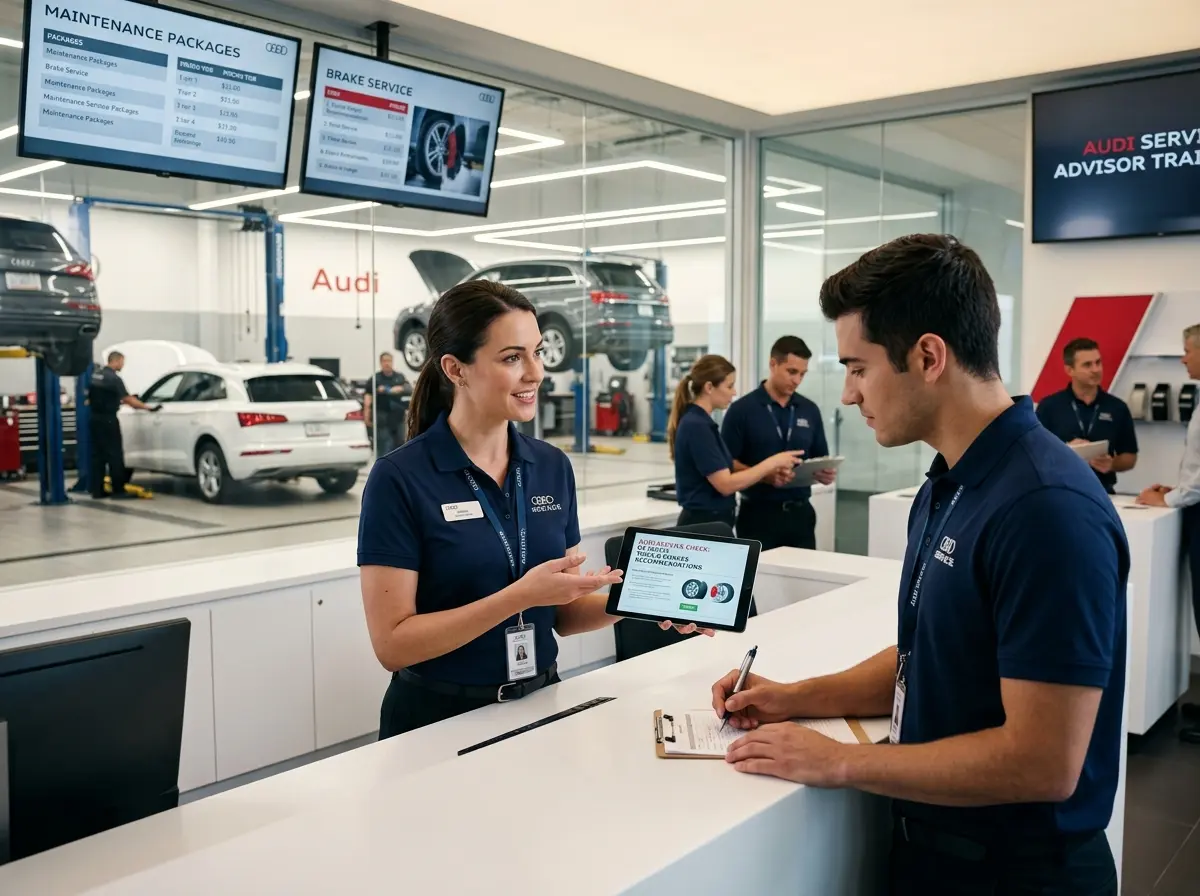
Here's where most training programs die a quiet death: they cover the concepts, hand out a one-pager, and call it done. Don't do this. Role-play is uncomfortable, slightly awkward, and absolutely essential. Advisors need to practice articulating recommendations out loud — especially the tricky ones, like telling a customer their transmission fluid looks like chocolate milk.
Run monthly role-play sessions using real scenarios pulled from your shop's history. Rotate who plays the skeptical customer. Give constructive feedback. Record sessions if possible so advisors can self-review. The goal isn't perfection — it's building the kind of muscle memory that holds up when the waiting room is packed and stress levels are high.
Tools and Technology That Support Your Training Efforts
Leverage Data to Identify Gaps and Wins
A training program without performance data is just a really expensive suggestion. Track upsell rates per advisor, average ticket value, and acceptance rates on specific service recommendations. If one advisor is consistently converting cabin air filter upsells while another never mentions them, that's a coaching conversation waiting to happen — and a best practice worth sharing across the team.
Use your shop management software to pull these numbers regularly. Build upsell performance into your monthly reviews, not just as a metric to hit, but as a discussion point for continuous improvement. When advisors see their own data, the conversation shifts from abstract training concepts to concrete, personal performance — which is a much more motivating place to be.
How Stella Fits Into Your Customer Experience
While your service advisors are focused on in-bay recommendations and customer conversations, there's still plenty of opportunity to support the overall customer experience — and that's where Stella, the AI robot employee and phone receptionist, can quietly pull her weight. As an in-store kiosk, Stella greets customers when they walk in, answers questions about services and pricing, and highlights current promotions — all before your advisor even says hello. That warm, informed customer is a much easier upsell conversation.
On the phone side, Stella handles incoming calls 24/7, answers service questions, and can even collect customer intake information before the appointment — so your advisors walk in prepared, not playing catch-up. Less time spent on logistics means more time for the kind of genuine, trust-building conversations that make upsells land naturally.
Keeping the Training Program Alive Long-Term
Make It a Culture, Not a Quarterly Event
The biggest mistake shop owners make with training is treating it like an event rather than a culture. You run a two-day workshop, everyone's fired up, and within three weeks it's back to business as usual. Real change requires ongoing reinforcement — regular touchpoints, team huddles, and a leadership team that models the behaviors they're asking advisors to demonstrate.
Consider appointing a lead service advisor as your internal "upsell champion" — someone responsible for keeping the energy alive between formal training sessions. This doesn't mean they're management; it means they're a peer advocate who keeps best practices top of mind. Celebrate wins publicly: share stories of advisors who caught a critical issue a customer didn't know about, or who turned a hesitant customer into an enthusiastic yes with the right explanation. Culture is built in small moments, repeated consistently.
Incorporate Customer Feedback Into Your Training Loop
Your customers are giving you free training data every single day — and most shops aren't using it. Post-visit surveys, online reviews, and even casual waiting room conversations reveal exactly how customers perceive your advisors' recommendations. Did they feel informed or pressured? Did they understand why a service was being suggested? Were they surprised by something that could have been flagged earlier?
Build a feedback review process into your training cycle. Quarterly, sit down with a selection of recent reviews and customer comments and identify patterns. If multiple customers mention they felt rushed during the service write-up, that's a training opportunity. If customers consistently praise a specific advisor for being thorough and transparent, dissect what that advisor is doing and replicate it across the team. Feedback loops aren't just for damage control — they're one of the most powerful tools for continuous improvement you'll never have to pay extra for.
Tie Incentives to the Right Behaviors
If you want advisors to upsell well — not just frequently — your incentive structure has to reward quality recommendations, not just volume. An advisor who recommends every service on the menu to every customer isn't doing great upselling; they're doing expensive noise. Track customer acceptance rates alongside upsell attempts. High acceptance rates signal that an advisor is recommending the right things to the right people at the right time. That's the skill worth rewarding.
Consider structuring bonuses or spiffs around average ticket value tied to multi-point inspection follow-through, or around specific high-value services like fluid exchanges, tire packages, or brake jobs. Keep the incentives transparent, achievable, and directly connected to the behaviors your training program is developing. When advisors see a clear line between the skills they're building and the rewards they're earning, motivation takes care of itself.
Quick Reminder About Stella
Stella is an AI robot employee and phone receptionist that works in-store as a friendly kiosk and answers calls around the clock for businesses of all sizes. She handles customer questions, promotes services and specials, collects intake information, and keeps things running smoothly — starting at just $99/month with no hardware costs. While your team focuses on building upsell skills and deeper customer relationships, Stella handles the groundwork so no opportunity gets dropped.
Conclusion: Stop Hoping and Start Training
Great upselling doesn't happen by accident, and it doesn't happen because you hired naturally talented salespeople. It happens because you built a system — a structured training program with the right mindset, consistent processes, ongoing reinforcement, performance data, and incentives that reward the behaviors you actually want to see.
Here's your action plan to get started:
- Audit your current upsell performance. Pull average ticket values and upsell acceptance rates per advisor. Know your baseline before you build anything.
- Define your standardized inspection-to-recommendation workflow. Map out exactly how findings get communicated to customers — every time, by everyone.
- Schedule your first role-play session. Don't overthink it. Pick three scenarios, gather your advisors, and practice. Awkward is fine. Unprepared is not.
- Build a feedback loop. Set a recurring calendar reminder to review customer feedback with your team every 30–60 days.
- Revisit your incentive structure. Make sure you're rewarding quality recommendations, not just upsell attempts.
Your service advisors are your shop's most important revenue lever — and most of them are capable of far more than their current numbers suggest. Give them the structure, the practice, and the support they need, and the results will follow. No magic required. Just a plan and the commitment to stick to it.