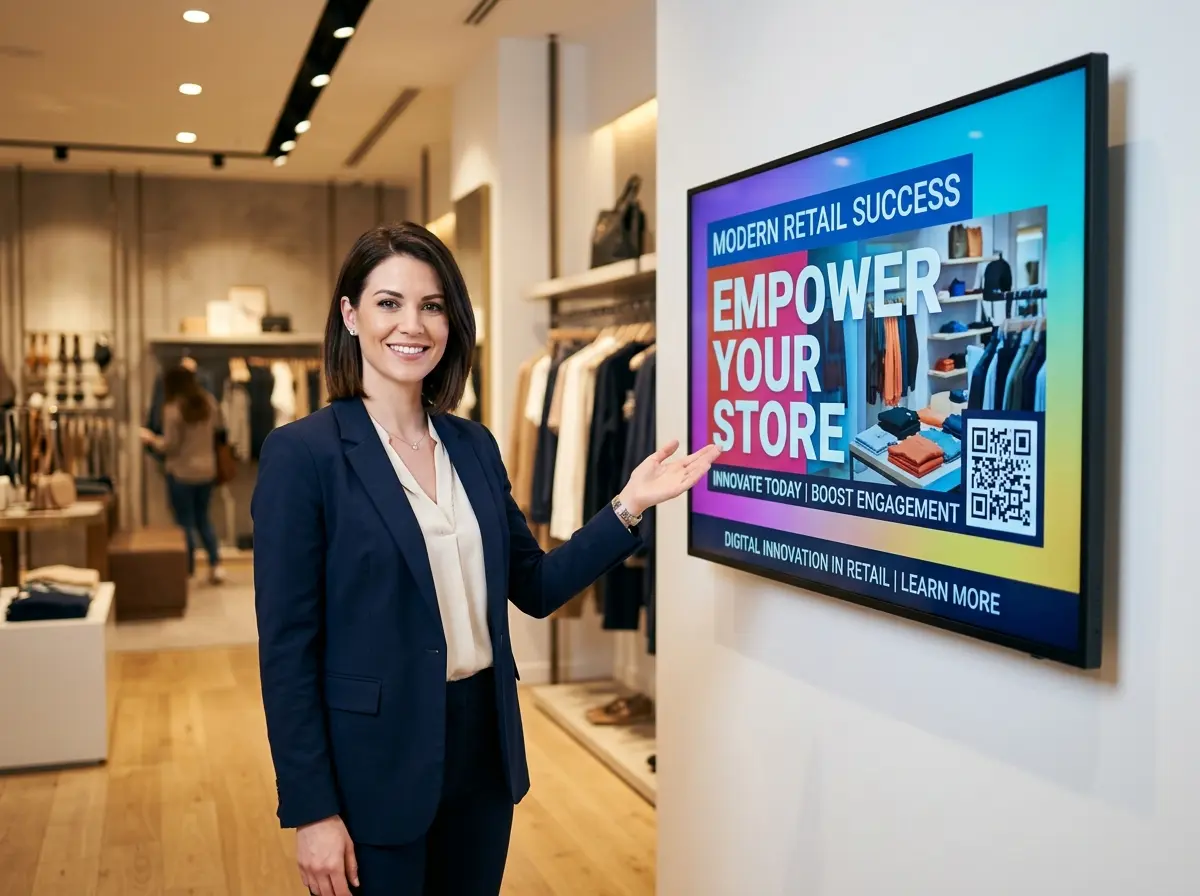
So You Want to Stop Being Invisible
Enter digital signage — one of the most underutilized, surprisingly affordable, and genuinely effective marketing tools available to retailers today. If you've been ignoring it because it sounds complicated, expensive, or like something only big-box stores can pull off, this post is your wake-up call. Digital signage is simpler than you think, and the payoff is very real. According to Nielsen, digital signage captures 400% more views than static displays. That's not a misprint.
What Digital Signage Is (And Why It Actually Works)
The Basics: More Than Just a Fancy TV
Why Customers Actually Pay Attention
Here's the psychology at work: humans are wired to notice movement and light. A glowing, animated screen in a retail environment is almost impossible to ignore — especially when it's showing something relevant to where the customer already is. Digital signage can reduce perceived wait times by up to 35% (according to Lavi Industries), which means happier customers even when your checkout line is moving at the speed of a Monday morning.
Real-World Retail Impact
Consider a small clothing boutique that switches from printed window displays to a rotating digital screen near the entrance. Instead of one static promotion, they can now cycle through new arrivals, their loyalty program, their Instagram feed, and a weekend-only discount — all without printing a single sheet of paper. Customers see more, engage more, and — here's the part you'll like — buy more. Retail studies consistently show that digital signage can increase average transaction value by 3–5%, and impulse purchases are particularly influenced by well-placed, timely messaging.
Pairing Digital Signage With Smarter In-Store Tools
Screens Talk, But Can They Listen?
Digital signage is great at broadcasting, but it's a one-way conversation. It tells customers what you want them to know, but it can't answer a follow-up question, respond to a confused look, or help someone figure out which product is right for their specific situation. That's where things get interesting — and where Stella, the AI robot employee and phone receptionist, comes in.
Stella stands inside your store as a human-sized AI kiosk and actively engages with customers who walk by — greeting them, answering product questions, explaining promotions, and even upselling or cross-selling based on what they're looking for. Think of her as the living, talking companion to your digital signage: the screen gets their attention, and Stella keeps the conversation going. She's also available 24/7 as an AI phone receptionist, so the same knowledge and professionalism she brings to your store floor carries over to every incoming call — no missed calls, no hold music, no "let me transfer you to someone who might know."
Getting Started With Digital Signage: A Practical Playbook
Step 1 — Choose Your Hardware Without Overthinking It
You don't need a $10,000 video wall to get started. A single commercial-grade display (look for "commercial" rather than "consumer" TVs — they're built to run longer hours without overheating) paired with a basic media player or a smart TV with a content management app is enough to get off the ground. Popular platforms like ScreenCloud, Yodeck, or NoviSign offer affordable monthly subscriptions that let you design, schedule, and push content to your screens from any browser. Most have free trials, so you can kick the tires before committing.
Step 2 — Create Content That Actually Serves Your Customers
The biggest mistake retailers make with digital signage is treating it like a billboard — stuffing in too much information, using tiny fonts, or displaying content that hasn't been updated since the last presidential election. Good signage content is simple, visually clean, and rotated regularly. Here are a few content categories that consistently perform well in retail environments:
- Current promotions and limited-time offers — urgency drives action
- New arrivals or featured products — give customers a reason to explore
- Social proof — reviews, ratings, or user-generated content builds trust
- Loyalty program reminders — a gentle nudge that pays off over time
- Behind-the-scenes or brand story content — humanizes your business
Keep individual slides to 5–7 seconds of readable content, use large fonts (readable from at least 8 feet away), and make sure your brand colors and logo are consistently present. If you're not a designer, platforms like Canva integrate directly with most digital signage systems and make template-based content creation genuinely painless.
Step 3 — Measure, Adjust, and Don't Set It and Forget It
Digital signage is not a "set it and forget it" tool — or rather, it can be, but it shouldn't be. The whole advantage over print is that you can respond quickly to what's working. Pay attention to whether the promotions you're displaying are actually converting. If you run a weekend flash sale and display it on your signage, track whether sales of that item increased compared to a normal weekend. Talk to your staff — are customers mentioning the on-screen deals? Are they asking about products they saw displayed?
A Quick Reminder About Stella
If you're investing in making your retail space more dynamic and customer-friendly, Stella is worth a look. She's an AI robot employee who greets customers in-store, promotes your deals, answers questions, and upsells — while also handling your phone calls 24/7 as an AI receptionist. At $99/month with no upfront hardware costs, she's the kind of team member who always shows up, never complains about the closing shift, and remembers every product you carry.