Introduction: The David vs. Goliath Battle Your Optical Shop Didn't Ask For
Let's be honest — nobody opened an independent optical shop dreaming about competing with billion-dollar e-commerce platforms that sell prescription glasses for the price of a decent lunch. And yet, here we are. Online eyewear retailers have spent the last decade convincing consumers that buying corrective lenses for their eyes — their eyes — is basically the same as ordering a phone case off the internet.
The good news? They're wrong. And savvy independent opticians are proving it every single day. While the Warbys and Zenniths of the world are processing tickets, you're building relationships. While their chatbots are fumbling through return policies, you're adjusting a patient's frames with actual human hands. The question isn't whether you can compete — it's whether you're doing everything in your power to make that competitive advantage visible.
This guide is for independent opticians who are tired of watching foot traffic stagnate and are ready to fight back — strategically, professionally, and with a healthy dose of creativity. Let's talk about how you win this thing.
Play to Your Strengths: The Experience Online Retailers Simply Cannot Replicate
The Professional Expertise Advantage
Here's something no online retailer can offer: a licensed optician who can look a patient in the eye (professionally speaking) and catch something a webcam pupillary distance tool will never detect. Independent opticians perform nuanced adjustments, catch fitting issues before they become headaches — literally — and provide a level of professional guidance that an algorithm simply cannot replicate. Lean into this hard.
Make sure your marketing communicates your credentials clearly. If you or your staff hold board certifications, display them prominently in-store and on your website. Consider publishing short educational content — blog posts, social media videos, even simple signage — that explains what actually goes into a proper fitting, why frame selection is more than aesthetics, and why a prescription that looks the same on paper can perform very differently depending on lens type, material, and positioning. Educated customers become loyal customers.
Frame Curation and the Tactile Experience
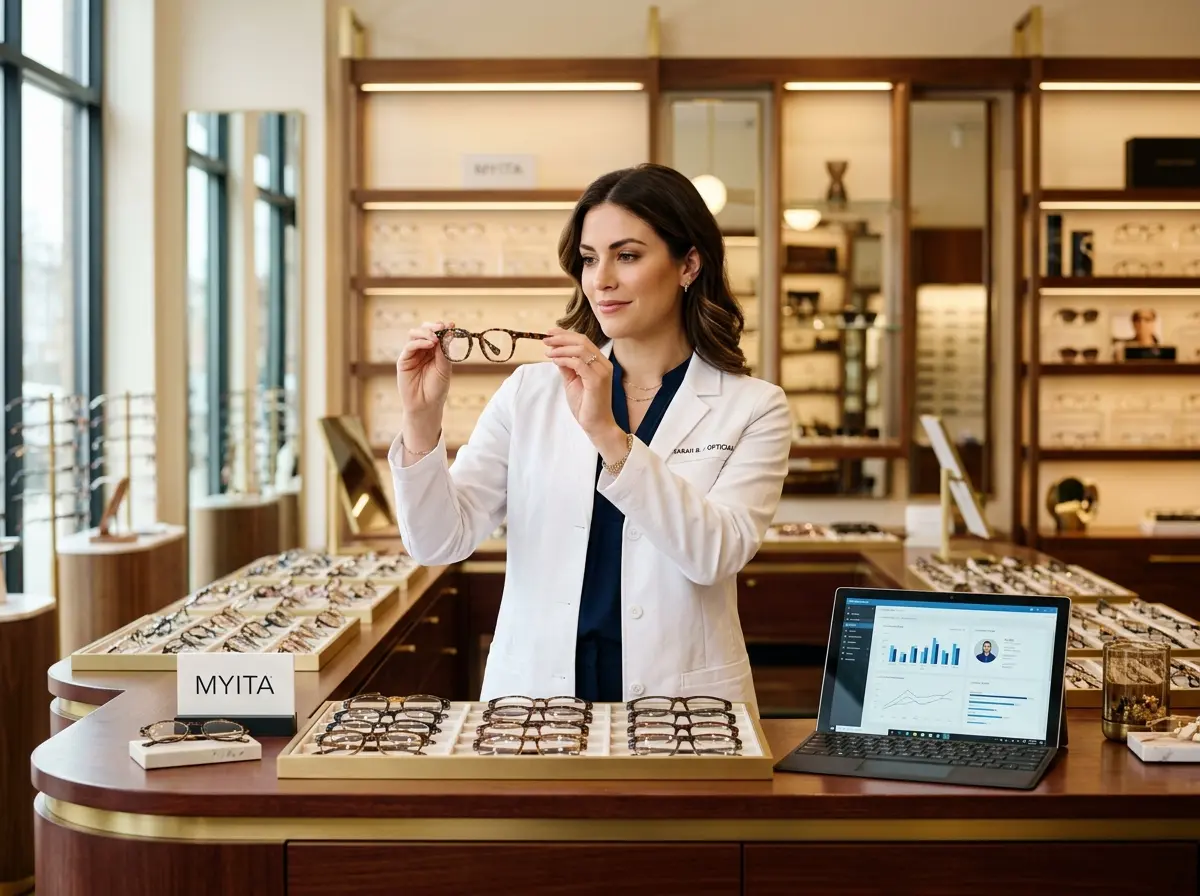
There is a reason high-end boutiques still thrive in the age of Amazon: people want to touch, feel, and try things on. Eyewear is one of the most personal accessories a person wears — it literally sits on their face all day. Your showroom is a competitive weapon. Curate your frame selection deliberately, stock independent designers that online retailers don't carry, and create a shopping environment that feels special rather than transactional.
Consider offering style consultations as a formal service. Train staff to ask thoughtful questions about lifestyle, face shape, and personal style — then guide customers through selections the way a skilled personal shopper would. Many customers who "came in just to browse" will walk out having spent significantly more than they planned, simply because they felt genuinely helped rather than sold to.
After-Sale Service as a Retention Engine
Adjustments, repairs, cleaning, and emergency replacements — these are the unglamorous services that build undying customer loyalty. Online retailers offer a return window. You offer a relationship. Remind your customers of this explicitly. When someone buys frames from you, make sure they know that you'll adjust them for free, check the fit over time, and be there when something goes wrong. That kind of ongoing service partnership is worth far more than a $30 savings on a pair of frames that arrived slightly crooked and can't be properly adjusted through a laptop screen.
Modernize Your Operations Without Losing Your Soul
Technology That Helps You Be More Human
Here's the irony: to beat online retailers at their own game, you need to borrow some of their tools — without becoming them. That means streamlining your operations so your staff can spend less time on administrative friction and more time doing what makes you special: delivering exceptional, personalized care.
One surprisingly effective way to do this is with Stella, an AI robot employee and phone receptionist designed for businesses exactly like yours. In your optical shop, Stella functions as a friendly kiosk presence — greeting customers who walk in, answering common questions about lens options, promotions, or turnaround times, and proactively engaging browsers who might otherwise slip out without speaking to anyone. On the phone side, she answers calls 24/7, handles after-hours inquiries, collects patient information through conversational intake forms, and forwards urgent calls to your staff based on conditions you configure. For a busy optical practice where front-desk staff are often tied up with patients, having a reliable, knowledgeable presence handling routine questions is the kind of operational upgrade that pays for itself quickly.
Marketing Strategies That Actually Move the Needle
Local SEO and Online Reputation Are Non-Negotiable
Before a customer decides between you and an online retailer, many of them will Google their options. If your Google Business Profile is incomplete, your reviews are sparse, or your website looks like it was built during the first Obama administration, you've already lost some of those potential patients before they ever walked through your door. Claim and fully optimize your Google Business Profile, actively request reviews from satisfied customers, and make sure your website clearly communicates what makes you different — including your services, credentials, accepted insurances, and the human beings behind the business.
Local SEO doesn't require a massive budget. It requires consistency. Regular posts on your Google Business Profile, responses to every review (yes, even the grumpy ones), and accurate business information across all directories will put you in front of local searchers who are ready to buy.
Community Presence and Strategic Partnerships
Online retailers are faceless. You are not. Use that. Sponsor a local school's vision screening event. Partner with nearby pediatricians or primary care physicians who can refer patients. Set up a booth at a community fair. Host a "frame styling night" with wine and a local stylist. These aren't just marketing tactics — they're genuine relationship-building activities that create word-of-mouth referrals that no paid ad campaign can replicate.
Consider building a formal referral partnership with local medical offices. General practitioners, pediatricians, and even neurologists regularly encounter patients who need vision care. A simple, professional outreach effort — a visit, a well-designed brochure, a relationship — can generate a steady stream of warm referrals at essentially zero ongoing cost.
Loyalty Programs and Membership Models
One of the smartest things an independent optical shop can do is create a reason for customers to return before they need new glasses. A loyalty program that rewards purchases, referrals, and annual exams keeps your practice top of mind. Some independent opticians have taken this further with a simple membership model — a flat annual fee that covers adjustments, cleanings, a discount on frames, and priority scheduling. It generates predictable revenue, deepens patient relationships, and makes switching to an online retailer feel like giving something up rather than saving money.
Quick Reminder About Stella
Stella is an AI robot employee and phone receptionist available for just $99/month with no upfront hardware costs. She greets customers in-store, answers calls around the clock, promotes your current offers, collects patient information through built-in intake forms and CRM tools, and keeps your front desk from becoming a bottleneck — all while your licensed staff focus on delivering the expert care that keeps patients coming back. Setup is simple, and she's always ready to work.
Conclusion: Independent Isn't a Disadvantage — It's Your Brand
The independent optician who treats their small size as a liability will always be fighting an uphill battle against retailers with deeper pockets. But the independent optician who treats it as a superpower? That's a different story entirely. You can pivot faster, personalize deeper, and build trust in ways that a venture-backed e-commerce platform structurally cannot. Your community knows your name. Your patients know your face. No online retailer in the world can buy that.
Here's your action plan: Start by auditing your in-store experience — does it feel premium, personal, and worth the trip? Next, tighten up your local SEO and make sure your online presence reflects the quality of your physical one. Build or strengthen your community partnerships and referral relationships. Launch a loyalty or membership program if you don't have one. And look seriously at tools like Stella to handle the operational overhead that currently pulls your team away from patient care.
The online eyewear market isn't going away. But neither are independent opticians who are smart, adaptable, and genuinely committed to their patients. Play your game — not theirs — and you'll find there's plenty of room to not just survive, but thrive.