Introduction: The Waiting Room Is Full, But Your Inbox Isn't
Your veterinary clinic is excellent. Your staff is compassionate, your doctors are skilled, and your waiting room has a fish tank that genuinely slaps. And yet, somehow, pet owners in your area are booking appointments at other clinics — clinics that might not even have a fish tank — simply because it was easier to get an appointment there.
It sounds almost insulting, doesn't it? Years of training, a spotless reputation, and five-star reviews on Google, all quietly undermined by a clunky booking process. But here's the uncomfortable truth: in 2024, convenience is currency. A pet owner whose dog just ate something questionable at 10:47 PM is not going to call your clinic, listen to a voicemail greeting, and patiently wait until 9 AM to speak with someone. They're going to find the next clinic that lets them do something — book online, submit a request, get a confirmation — right now, at whatever hour their anxiety peaks.
The good news? This is an entirely fixable problem. Let's walk through why your appointment pipeline might be leaking, what modern pet owners actually expect, and how to stop handing business to your competitors simply because your booking experience feels like it was designed in 2009.
What Today's Pet Owners Actually Expect
The "Amazon Brain" Problem
We've all been conditioned by e-commerce. Two clicks and a package arrives tomorrow. The same psychological rewiring has affected how people approach every service interaction — including veterinary care. When a pet owner visits your website and can't find an obvious, instant way to request an appointment, their brain doesn't think "I'll call during business hours." It thinks "this seems complicated" and quietly closes the tab.
According to a survey by Zocdoc, over 60% of patients (human and animal-adjacent) prefer to book appointments online rather than by phone. Among millennials and Gen Z — who now make up the dominant demographic of pet-owning households — that number climbs even higher. These are people who order groceries, file their taxes, and apply for mortgages from their phones. Asking them to call during a narrow window of business hours to schedule a nail trim is, to put it gently, a friction-heavy request.
After-Hours Is Not Optional Anymore
Here's a scenario that plays out in thousands of households every week: it's a Sunday evening, a pet owner notices their cat has been acting lethargic, and they want to get ahead of it by scheduling an appointment first thing Monday. If your clinic has no mechanism to capture that intent — no online form, no after-hours line that does anything useful, no way to say "yes, we've got you" — that pet owner will almost certainly find a clinic that does. They're not being impatient. They're just doing what any reasonable person does when they want to solve a problem: they find the path of least resistance.
The clinics winning on appointment volume right now aren't necessarily better clinics. They're just available in the moments that matter most to pet owners.
Confirmation, Communication, and the Anxiety Loop
Booking an appointment is only step one. Pet owners — especially first-time visitors or those bringing in anxious animals — want confirmation that their request was received, acknowledged, and logged. The absence of an immediate confirmation triggers what we might lovingly call the "did it go through?" anxiety loop, which often results in follow-up calls that clog your front desk, or worse, a no-show because the owner assumed the booking didn't work.
Simple confirmation messages, automated reminders, and clear communication about what to expect go a long way. These aren't luxuries. They're table stakes for a modern service business.
How Smarter Front-End Communication Can Fill the Gap
Capturing Requests Before They Disappear
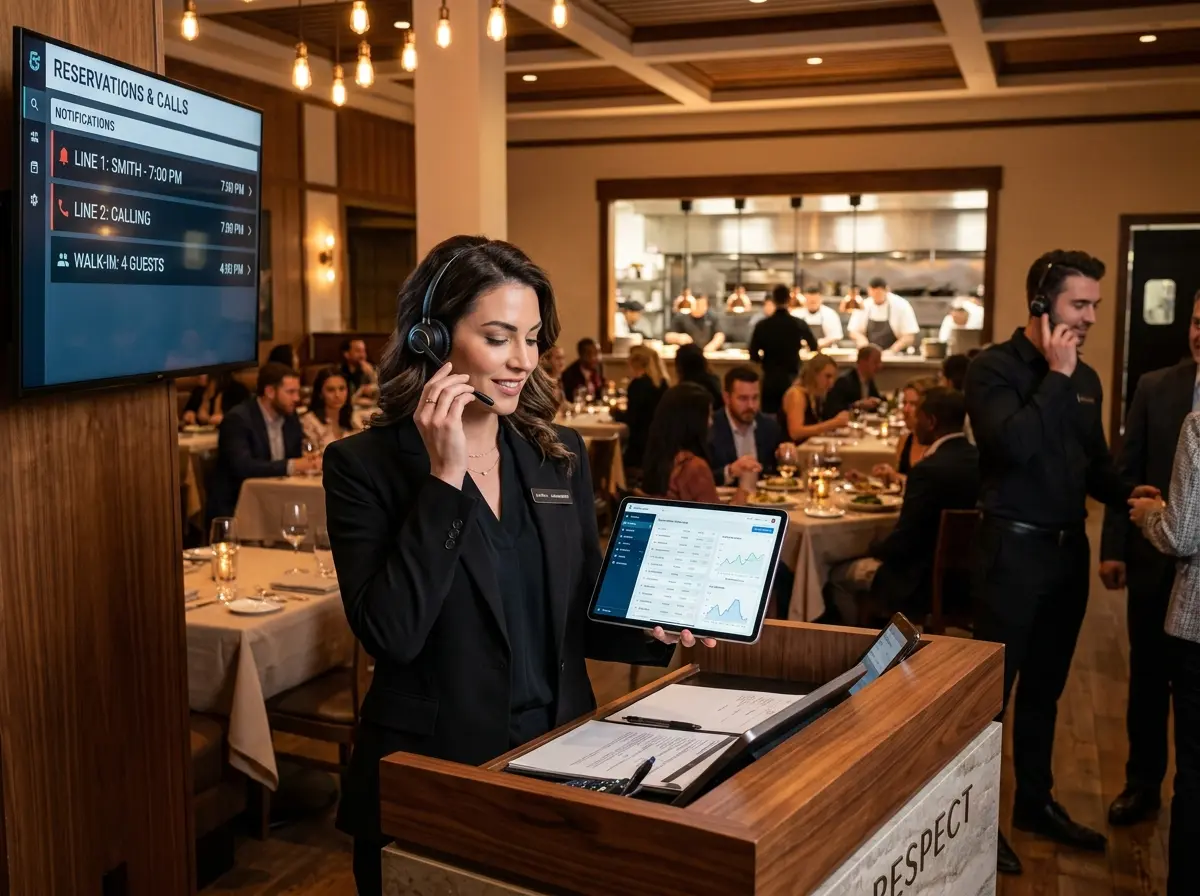
One practical and increasingly popular solution is deploying an AI-powered phone receptionist that can handle incoming calls around the clock — gathering pet information, owner details, and appointment preferences even when your human staff is unavailable. Stella, an AI robot employee and phone receptionist, does exactly this. She answers calls with natural conversation, collects intake information through built-in conversational forms, and stores everything in a CRM — complete with AI-generated contact profiles, custom tags, and notes — so your team walks in Monday morning with a clean, organized list of appointment requests rather than a pile of voicemails to decode.
For clinics with a physical location, Stella also operates as an in-store kiosk, greeting clients as they arrive and helping with check-in questions, service information, or promotions — reducing the workload on your front desk during peak hours. At just $99/month with no upfront hardware costs, it's a genuinely practical option for independent clinics that want a professional, always-on presence without hiring additional staff.
The Hidden Cost of a Frustrating Booking Experience
It's Not Just Lost Appointments — It's Lost Lifetime Value
Let's do some quick math that will make this feel appropriately urgent. The average pet owner spends somewhere between $1,500 and $3,000 per year on veterinary care, depending on the animal, age, and health needs. If your booking friction causes you to lose even five new clients per month to a competitor with a smoother process, that's potentially $90,000 to $180,000 in annual revenue walking out the door — not dramatically, not with a complaint, just quietly, because booking somewhere else was easier. That's a very expensive fish tank you've got there.
And it compounds. Those lost clients aren't just lost for one visit. They establish a relationship with the other clinic. Their pets get records there. They leave reviews there. They refer their friends there. A single friction point early in the relationship can sever a long-term revenue stream before it ever begins.
Your Online Presence Is Part of the Booking Experience
It's worth stepping back and looking at your booking journey the way a new client would. Start from a Google search. How many clicks does it take to find your hours? Is there a clear "Book an Appointment" button, or does the page require some archaeological digging? Does your website work on mobile — because the vast majority of searches are happening on phones? Is the booking form short enough to complete in under two minutes, or does it ask for a full medical history before a first visit?
Every extra step, every confusing layout choice, and every missing piece of information is a micro-exit ramp that nudges potential clients toward a competitor. Audit your own booking experience as if you've never seen your website before. You might be surprised what you find.
Staff Overload Is a Booking Problem in Disguise
There's another angle worth considering: when your front desk is constantly fielding calls to answer the same five questions — "What are your hours?" "Do you see exotic birds?" "How much is a wellness exam?" — that's time not being spent on clients who are already in the building. Overloaded front desk staff make more mistakes, provide less warm service, and burn out faster. Reducing that repetitive inbound load with smarter automation or self-service tools doesn't just improve the customer experience; it protects your team and keeps your in-person service quality high.
Quick Reminder About Stella
Stella is an AI robot employee and phone receptionist designed to help businesses stay responsive, professional, and available around the clock — without adding headcount. She answers calls, collects intake information, manages contacts through a built-in CRM, and operates as a friendly in-store kiosk presence for physical locations. At $99/month with no upfront hardware costs and an easy setup, she's built for independent clinics and service businesses that want enterprise-level responsiveness on a practical budget.
Conclusion: Stop Making It Hard to Give You Money
At the end of the day, the clinics capturing the most appointment requests aren't winning on skill, equipment, or even price. They're winning on accessibility. They show up when pet owners are searching, they make the booking process frictionless, they communicate clearly, and they make it easy to say yes.
Here's where to start:
- Audit your current booking journey from a fresh-eyes perspective. Time how long it takes to request an appointment starting from a Google search.
- Add after-hours capture — whether that's an AI phone receptionist, an online form, or both — so intent doesn't evaporate overnight.
- Simplify your intake process. Ask for the minimum necessary information upfront, and gather the rest at the appointment.
- Send confirmations immediately. Every booking request should generate an instant acknowledgment, even if it's just an automated "we got it" message.
- Review your website on a mobile phone. Right now. We'll wait.
Your clinic's quality deserves a front-end experience that matches it. A pet owner shouldn't have to work hard to become your client. Make it easy, make it fast, make it available — and watch the appointment requests start reflecting what your practice has always been worth.