Introduction: Because "One-Size-Fits-All" Is So Last Decade
Let's be honest — walking into a med spa should feel like a personalized luxury experience, not like filing your taxes. And yet, plenty of med spas are still handing clients a generic paper intake form with all the warmth of a DMV waiting room. The result? Missed opportunities, generic treatment plans, and clients who feel like just another appointment on the calendar.
Here's the thing: your clients aren't coming to you for a cookie-cutter experience. They're coming because they want to look and feel their best — specifically tailored to their skin, their concerns, their lifestyle, and yes, their budget. Consultation forms, when done right, are the secret weapon that turns a first-time visitor into a loyal, raving fan who books every three weeks and refers her entire book club.
The good news is that crafting and using smart consultation forms doesn't require a team of data scientists or a PhD in customer psychology. It just requires a little intentionality — and maybe a few tools that do the heavy lifting for you. Let's dig into how to make your consultation forms actually work for your med spa, not just sit in a filing cabinet collecting dust.
Building Consultation Forms That Actually Tell You Something Useful
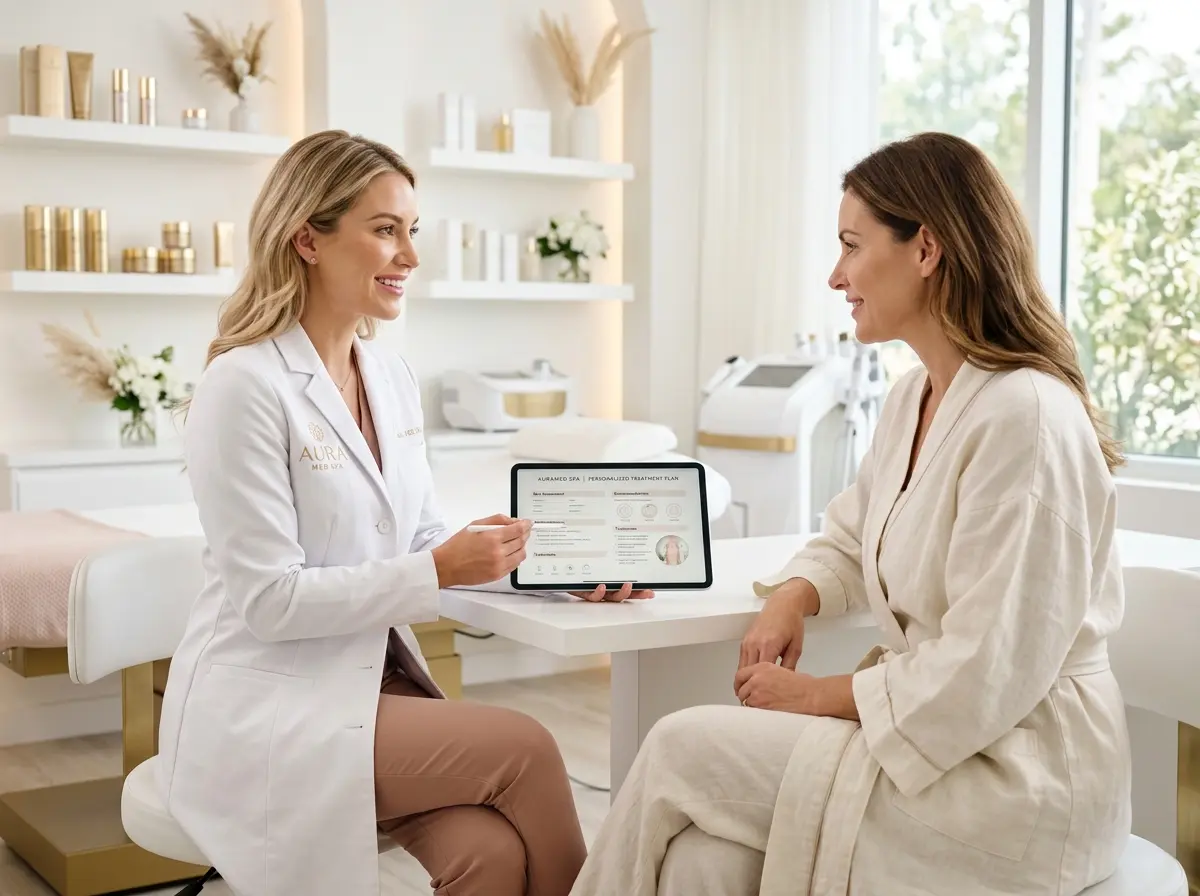
Most intake forms ask for the basics: name, date of birth, allergies, medical history. That's fine — legally necessary, in fact — but it's the bare minimum. If your consultation form stops there, you're leaving a goldmine of personalization data completely untouched. Think of your consultation form as a first conversation, not a legal disclaimer.
Ask About Goals, Not Just Conditions
There's a massive difference between "Do you have any skin conditions?" and "What is your primary skin concern right now?" One question covers liability. The other starts a relationship. When you ask clients about their goals — whether that's reducing fine lines, evening skin tone, or just maintaining what they've got — you gain insight into what they actually value. That directly informs which treatments you recommend, how you position your services, and which upsell opportunities are genuinely relevant rather than pushy.
Consider including questions like: What brought you in today? What would a successful outcome look like for you? Have you tried any treatments before, and what was your experience? These open-ended prompts give your providers the context they need to walk in prepared — rather than spending the first ten minutes of a consultation playing catch-up.
Include Lifestyle and Skincare Routine Questions
A client who travels frequently for work, sleeps five hours a night, and hasn't worn SPF since 2011 needs a very different treatment plan than one who has a ten-step routine and drinks a liter of water before breakfast. Lifestyle questions aren't nosy — they're clinically relevant and they show clients that you're thinking holistically about their care.
Ask about sun exposure habits, current skincare products, stress levels, and even dietary factors if relevant to your services. When providers can reference these details before a session, it eliminates repetitive questioning and makes the client feel genuinely seen. That feeling? That's what keeps people coming back.
Use Tiered Forms for Different Service Types
Not every service requires the same depth of intake. A first-time client booking a chemical peel needs a more thorough form than a returning client adding a HydraFacial to their usual routine. Build tiered forms — a comprehensive new client intake, a shorter returning client update form, and service-specific supplements for more advanced treatments like injectables or laser procedures. This respects your clients' time while ensuring your team always has what they need. Bonus: it also makes you look organized and professional, which matters more than most spa owners realize.
Turning Form Data into a Personalized Experience — With a Little Help
Collecting good data is only half the equation. The other half is actually using it. This is where a lot of med spas fumble — forms get filled out, scanned into a system nobody checks, and promptly forgotten. If your consultation data isn't actively shaping how you communicate with and treat clients, it's just paperwork.
Centralize Your Client Data So Your Team Can Actually Use It
Your providers, front desk staff, and marketing team should all have access to relevant client information in one place. A centralized CRM with custom fields for things like skin type, treatment history, product preferences, and even personal notes ("prefers quiet during treatments," "celebrating a birthday in March") transforms routine appointments into memorable experiences. When a client walks in and your provider already knows her concerns and preferences without her having to repeat herself, that's the kind of service that earns five-star reviews.
This is an area where Stella — the AI robot employee and phone receptionist — can be genuinely useful for med spas. Stella collects client intake information conversationally, whether over the phone, through a web form, or at her in-store kiosk, and stores it directly in her built-in CRM with custom fields, tags, AI-generated client profiles, and notes. That means client details gathered during a phone booking or a walk-in greeting flow seamlessly into your records — no manual data entry, no lost paper forms, no "I thought someone else was handling that." It's the kind of behind-the-scenes efficiency that makes your client experience look effortless.
Using Consultation Data to Drive Smarter Follow-Up and Retention
Here's where consultation forms stop being administrative tools and start being revenue generators. The information your clients give you upfront is a roadmap — and if you're not following it to guide your follow-up strategy, you're essentially getting directions and then ignoring them.
Personalize Post-Appointment Communication
Generic "Thanks for your visit!" emails are fine. Personalized follow-ups referencing specific treatment goals are exceptional. If a client indicated on her intake form that her primary concern is hyperpigmentation, your post-appointment message should reference that goal, note what was addressed during her visit, and suggest a logical next step — whether that's a follow-up treatment, a recommended product, or a maintenance schedule. This kind of communication signals that you were paying attention, which is increasingly rare and therefore increasingly valuable.
Segment your email and text outreach based on intake data. Clients who listed anti-aging as a concern should receive different content than those focused on acne or body contouring. Most email marketing platforms make this kind of segmentation straightforward once the data is actually captured and tagged properly — which, again, starts with having the right fields in your consultation form from day one.
Identify Upsell and Cross-Sell Opportunities Naturally
There's nothing worse than an upsell that feels like an upsell. But when a recommendation is clearly informed by a client's stated goals and treatment history, it doesn't feel pushy — it feels like good advice. If a client's intake form indicates she's concerned about skin laxity and she's been coming in for regular facials, a conversation about microneedling or radiofrequency treatments is a natural next step, not a sales pitch.
Train your providers to review consultation form data before every appointment — new or returning — so that these conversations happen organically, in the context of an ongoing relationship rather than a one-time transaction. Clients who feel understood spend more. It's not complicated, but it does require consistent execution.
Use Aggregate Data to Improve Your Service Menu
Zoom out for a moment. All of that individual client data, when looked at collectively, tells you something important about your client base. Are a significant number of clients listing the same concern? That might indicate demand for a new service or a marketing opportunity you haven't tapped yet. Are clients consistently indicating they found you through a specific channel? That's worth knowing when you're allocating your marketing budget. Your consultation forms are, in aggregate, a market research tool — and most spas never think to use them that way.
Quick Reminder About Stella
Stella is an AI robot employee and phone receptionist built for businesses like yours — she greets clients at your front door, answers calls around the clock, and collects intake information through natural conversation. At just $99 per month with no upfront hardware costs, she's the kind of reliable, always-on team member who never calls in sick and never forgets to update the CRM. If you're looking for a smarter way to capture client information before they ever sit in your treatment chair, she's worth a look.
Conclusion: Your Forms Are Talking — Make Sure You're Listening
Consultation forms aren't a box to check before treatment begins. They're an opening statement from your client — a chance for them to tell you exactly what they need, what they've tried, what they're worried about, and what success looks like to them. The med spas that treat that information as gold are the ones building loyal client bases, generating consistent referrals, and outperforming their competition without necessarily outspending them.
Here's where to start: audit your current intake form. Ask yourself honestly whether the information you're collecting is actually being used — by providers, by your front desk, by your marketing. If the answer is "not really," it's time for a redesign. Build forms with purpose, centralize your data so your team can access it, and create workflows that translate client input into personalized experiences at every touchpoint.
Your clients are telling you what they want. All you have to do is build systems that let you hear them — and then act on it. That's not just good customer service. That's a competitive advantage.