The Retail Elephant in the Room
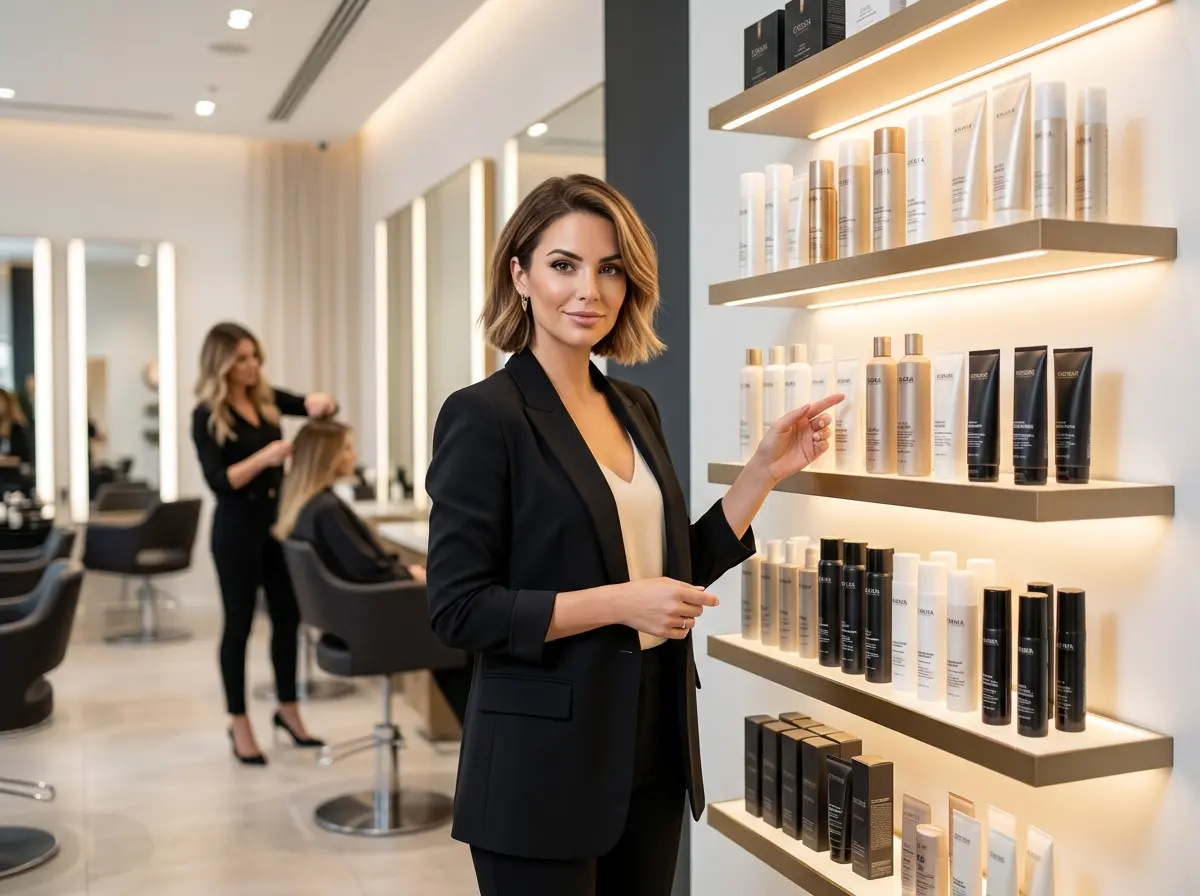
Let's be honest. You spent real money stocking those beautiful shelves with professional shampoos, serums, and styling products. They're arranged artfully. The lighting is perfect. And yet, somehow, your clients leave every single appointment empty-handed — and then buy the drugstore version on their way home. If that stings a little, good. It should.
Retail sales are one of the most underleveraged revenue streams in the salon industry, and the frustrating part is that it doesn't have to be this way. Studies suggest that product retail should account for anywhere from 15% to 20% of a salon's total revenue, but most salons hover somewhere around a dismal 5% to 8%. That gap isn't just a missed opportunity — it's money walking out your door on two legs, carrying a blowout you charged $85 for.
The good news? The problem isn't your products. It isn't your staff (entirely). And it definitely isn't your clientele. The problem is your strategy — or more accurately, the quiet, awkward void where a strategy should be. Let's fix that.
Why Your Current Approach Isn't Working
The "Hope Marketing" Problem
Most salons rely on what can generously be called "hope marketing" — products sit on shelves, stylists occasionally mention something if they feel like it, and the business owner hopes clients will wander over and spontaneously buy things. Spoiler: they don't. Retail doesn't sell itself just because it exists in physical space. Without proactive engagement, your retail display is just expensive interior decoration.
The core issue is that product recommendations feel transactional to both parties when they're not woven naturally into the service experience. Clients get their hair done, they feel great, they say thank you, and then there's this awkward pivot where a stylist suddenly becomes a salesperson. Nobody enjoys that shift, so most stylists avoid it entirely. Can't really blame them.
Inconsistency Across Your Team
Even in salons where management actively pushes retail, execution is wildly inconsistent. One stylist enthusiastically recommends products with every appointment. Another hasn't mentioned a product since the Obama administration. This inconsistency isn't just a revenue problem — it creates an uneven client experience that quietly erodes trust in your brand over time.
Training helps, of course. Incentive structures help too. But neither fully solves the underlying issue: retail recommendations require consistent, proactive touchpoints that don't depend entirely on individual staff motivation. Your product strategy needs to work even on the days your team is slammed, distracted, or simply having a human moment.
You're Missing the Windows of Opportunity
Think about the moments in a client's visit when they're most receptive: while they're waiting to be seated, while their color is processing, while they're browsing near the retail display. These are golden windows — and most salons let them close without a word. A client sitting with foils in for 45 minutes is a captive, curious audience. What are you doing with that time?
The fix isn't to have staff drop everything and start selling mid-service. It's to build a system that fills those windows automatically and naturally — with information, recommendations, and conversation that feels helpful rather than pushy.
A Smarter System for the Salon Floor
Let Technology Do the Proactive Heavy Lifting
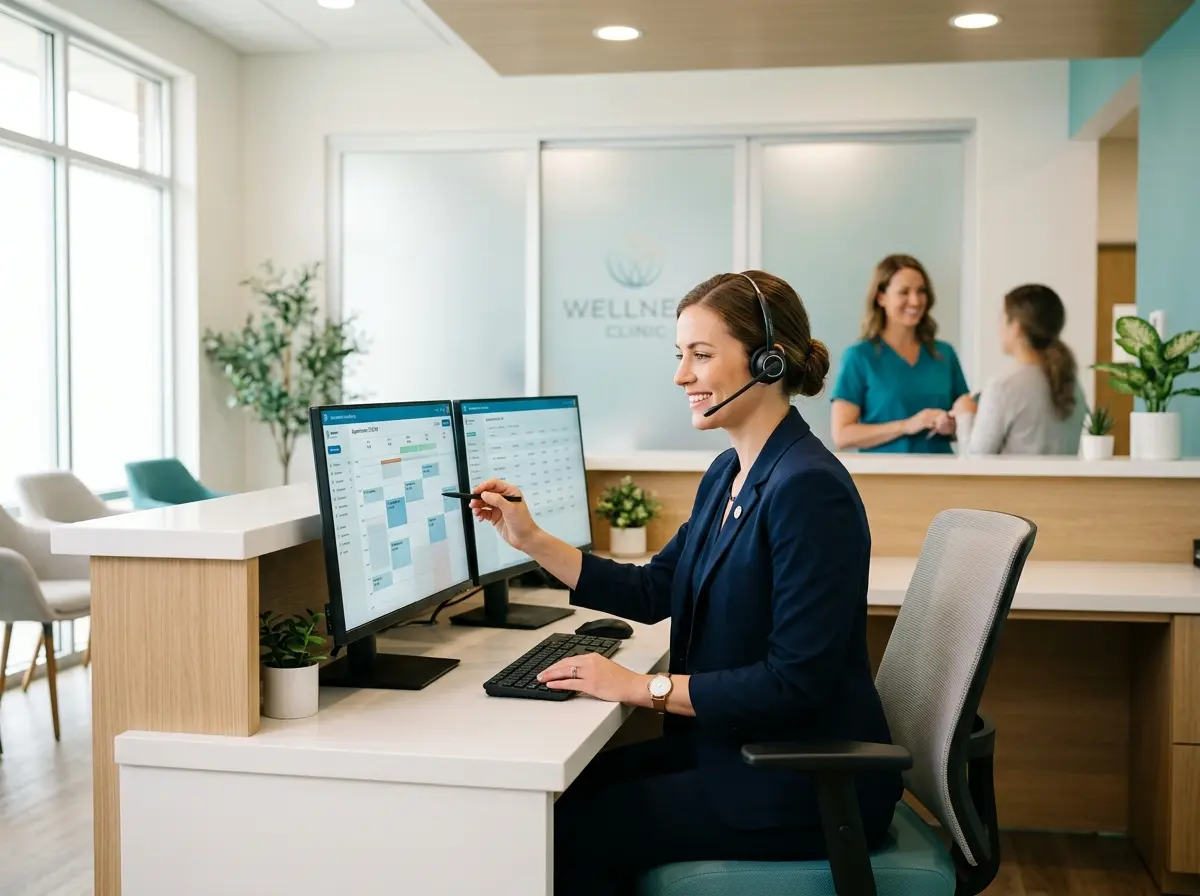
This is where a little creativity goes a long way. Stella, the AI robot employee and phone receptionist, is designed to do exactly what your busy stylists don't always have bandwidth for: proactively greet every customer, engage them in natural conversation about products and services, highlight current promotions, and answer questions — all without pulling your team away from the chair.
As a physical kiosk inside your salon, Stella can fill those waiting-room windows beautifully. While clients wait or browse, she's right there — friendly, knowledgeable, and completely unbothered by a packed Saturday schedule. She can explain the difference between your two most popular smoothing treatments, mention that your keratin line is currently on promotion, or answer questions about ingredients for the client who's curious but too shy to ask a human. No awkwardness. No commission pressure. Just genuinely helpful conversation that moves product.
And beyond the retail floor, Stella answers your phones 24/7 with the same product and service knowledge she uses in person — so clients who call after hours can still get real answers about what you carry, what you recommend, and when they can come in.
Building a Retail Strategy That Actually Sticks
Connect Products to Services — Every Time
The most effective retail strategy in salons isn't a hard sell — it's a logical extension of the service itself. When a stylist uses a specific product during an appointment, they should name it, explain what it does, and mention where to find it before the client leaves the chair. This isn't sales pressure; it's professional advice. Clients trust their stylists. That trust is your most powerful retail asset.
Train your team to build "service-to-product bridges" into every appointment. If you did a deep conditioning treatment, bridge to the at-home maintenance version. If you used a volumizing spray, bridge to the retail version on the shelf. Simple, consistent, and it feels like a natural continuation of the service rather than a pivot into sales mode.
Use Promotions With Purpose
Discounting your retail products is sometimes necessary, but it shouldn't be your default strategy. Rather than slashing prices, use promotions to create urgency and bundle value. A "service and take-home" bundle — say, a cut and style paired with the products used during the appointment at a small discount — is far more compelling than a random 20% off sign on a shelf.
Seasonal promotions also perform well in salons. Back-to-school, holiday gifting, summer heat protection — these themes give clients a relevant reason to buy now rather than "maybe later" (which, as we all know, means never). Rotate your promotions regularly and make sure every staff member, and any in-store technology, is communicating them consistently.
Track What's Working and Adjust
If you're not tracking retail performance by stylist, by product category, and by promotion, you're essentially flying blind and hoping for good weather. Set monthly retail targets per stylist. Review which products are moving and which are collecting dust. Ask clients — formally or informally — how they heard about a product or what prompted them to buy.
Data doesn't have to be complicated. Even a simple spreadsheet tracking monthly retail revenue per staff member will surface patterns quickly. Once you know what's working, you can double down. Once you know what isn't, you can stop wasting shelf space and reorder budget on products that never move.
Quick Reminder About Stella
Stella is an AI robot employee and phone receptionist that works inside your salon as a friendly kiosk and answers your phones around the clock — all for $99 a month with no upfront hardware costs. She proactively engages walk-in customers, promotes your products and specials, and handles incoming calls with the same knowledge she uses on the floor. She's essentially the team member who never calls in sick, never forgets a promotion, and never feels awkward recommending a product.
Your Next Steps Toward a Retail Revenue Boost
The gap between where your retail revenue is and where it should be isn't a mystery. It's a system problem, and system problems have system solutions. Start by auditing your current approach honestly — are your stylists making consistent product recommendations? Are your promotions being communicated at every touchpoint? Are you capturing those waiting-room moments when clients are most open to discovery?
From there, build the bridges. Connect every service to a product. Train your team on specific language that feels helpful rather than salesy. Create promotions with purpose and rotate them regularly. And seriously consider whether your current setup is doing enough proactive work — because if your retail display is silently hoping clients will notice it, it's time to give it a voice.
Retail revenue in a salon isn't a bonus — it's a built-in opportunity that's already paid for every time a client sits in your chair. The clients are there. The products are there. All that's missing is a strategy that consistently connects the two. Now you have one.