Introduction: The Waiting Room Problem Nobody Wants to Talk About
Picture this: It's a Tuesday afternoon, your urgent care clinic is packed, your front desk staff is juggling insurance verifications, ringing phones, walk-in patients, and someone who just sneezed on the clipboard. Meanwhile, every new patient who walks through the door is handed a stack of forms, a pen that may or may not work, and a polite smile that says, "We'll get to you eventually."
Sound familiar? If you're running an urgent care clinic without a patient pre-registration phone flow, you're essentially choosing the hard way — every single day. Pre-registration isn't just a nice operational perk. It's the difference between a clinic that feels chaotic and one that feels competent. Patients notice. And in healthcare, perception of competence is everything.
The good news? Setting up a structured pre-registration phone flow doesn't require a massive IT overhaul or a team of consultants. It requires the right process, the right tools, and a willingness to stop making your front desk staff do everything at once. Let's talk about how to fix this.
The Real Cost of Skipping Pre-Registration
Your Front Desk Staff Are Drowning (And So Is Your Patient Experience)
The average urgent care visit involves collecting a patient's name, date of birth, insurance information, reason for visit, pharmacy preference, emergency contacts, and a signature on at least three documents — and that's before anyone even looks at a symptom. When all of that happens at the front desk, in real time, with a line forming behind the patient, you've created a bottleneck that slows everything down.
Studies have shown that patient wait times are one of the top drivers of negative reviews for urgent care clinics. According to a survey by Vitals, over 30% of patients have left a doctor's office without being seen due to long wait times. That's not just a customer service failure — that's lost revenue walking out the door. Pre-registration directly attacks wait times by moving the administrative work out of the waiting room and into the phone call that happened hours before the patient arrived.
Insurance Verification Surprises Are Nobody's Favorite
Here's another scenario your billing team knows too well: a patient arrives, is seen, receives care, and then — after the fact — you discover their insurance lapsed, or they have a plan your clinic doesn't accept, or there's a coverage question that requires a 45-minute hold with an insurance company. Pre-registration gives your team the window they need to verify coverage before the patient walks in, not after. This protects your revenue cycle, reduces billing disputes, and eliminates that awkward post-visit conversation about unexpected out-of-pocket costs.
First Impressions Start on the Phone, Not at the Front Desk
Most patients will call before they visit — especially for urgent care, where they're deciding between you, the clinic down the street, and whatever the internet told them to do. That phone call is your first real impression. A well-structured pre-registration flow signals professionalism, reduces perceived wait times, and makes patients feel like they're in capable hands before they've even left their driveway. A chaotic or unanswered phone call signals the opposite. You don't get a second chance at that moment.
How to Build a Pre-Registration Phone Flow That Actually Works
The Anatomy of an Effective Pre-Registration Call
A solid pre-registration flow doesn't need to be complicated — it needs to be consistent. Every incoming call from a new or returning patient should move through the same structured sequence. Start with a warm, professional greeting that sets the tone. Then move into data collection: full legal name, date of birth, reason for visit (general category is fine), insurance carrier and member ID, preferred pharmacy, and any known allergies or current medications if the patient is comfortable sharing. Finally, confirm the estimated arrival time and let the patient know what to expect when they arrive. Keep the whole process under five minutes. If it's longer than that, you've over-engineered it.
Tools That Can Automate and Scale the Process
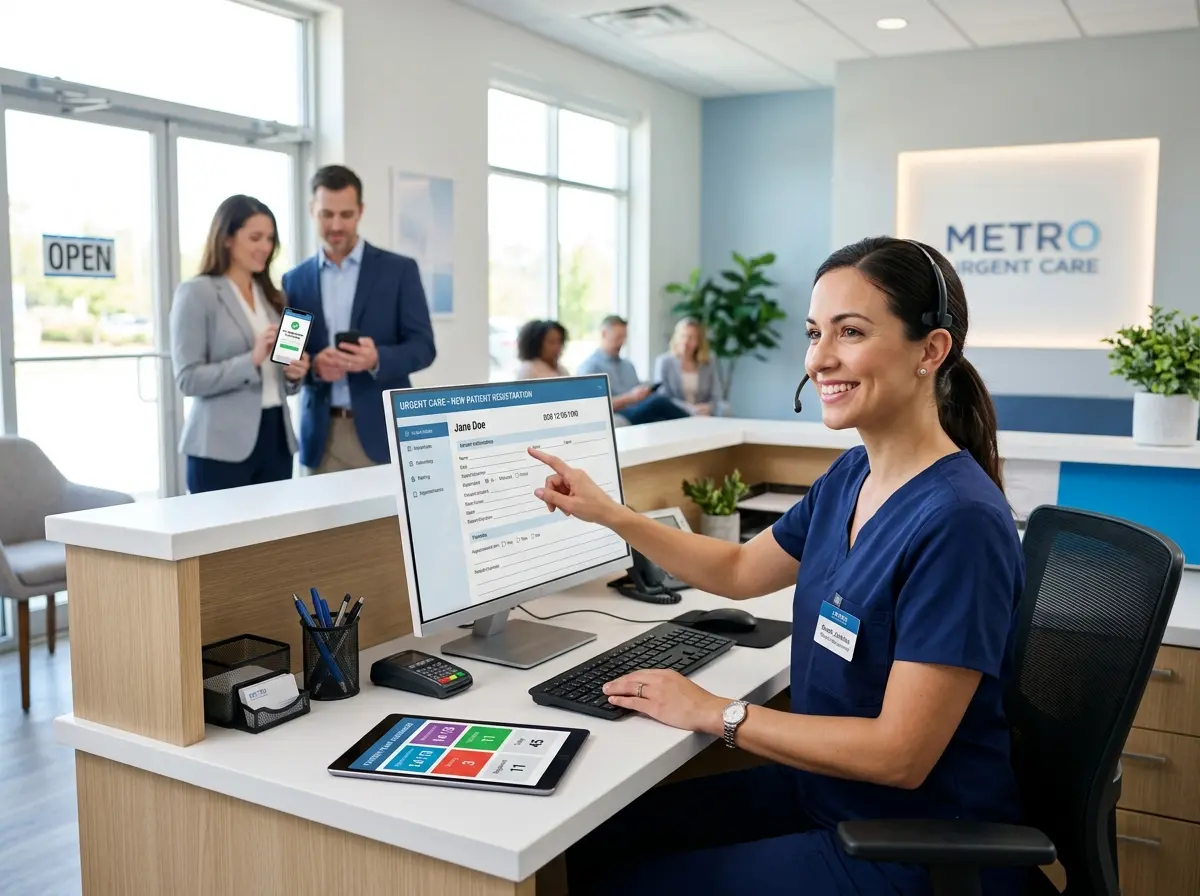
This is where technology becomes your best friend. Stella, the AI robot employee and phone receptionist, is purpose-built for exactly this kind of structured conversational intake. She can handle pre-registration calls 24/7 — which matters enormously for urgent care clinics that receive calls outside of business hours from patients trying to plan ahead. Stella's built-in intake forms and CRM allow her to collect patient information conversationally over the phone, store it with AI-generated summaries, and push notifications to your team so nothing falls through the cracks. For a clinic that's tired of missed calls, incomplete intake data, and front desk staff being pulled in ten directions, Stella offers a genuinely practical solution. She also greets patients at the kiosk inside the clinic, creating a consistent, professional experience from the first phone call to the moment they walk in the door.
Designing the Patient Experience Around Pre-Registration
Set the Right Expectations During the Call
Pre-registration isn't just about data collection — it's about setting expectations that reduce anxiety and build trust. During the call, let patients know approximately how long their wait might be based on current volume, what documentation to bring (insurance card, photo ID, referral if applicable), whether there's a copay due at time of service, and where to park or how to check in upon arrival. This level of detail transforms a nervous, uncertain patient into a prepared, confident one. Prepared patients are easier to serve, faster to process, and significantly more likely to leave a positive review.
Create a Streamlined Arrival Experience That Validates the Pre-Registration
All of your pre-registration effort collapses if the arrival experience doesn't reflect it. When a pre-registered patient walks in, your front desk should be able to pull up their file instantly, confirm two identifying details, hand them a single consent form to sign, and have them seated within three minutes. If your staff is re-asking questions the patient already answered on the phone, you've failed to close the loop — and the patient will notice. Invest in a system where pre-registration data flows directly into your intake workflow. That might mean integrating with your EHR, using a shared CRM, or simply ensuring your front desk team receives a clear, organized summary before the patient arrives.
Handle After-Hours and High-Volume Calls Without Losing Patients
Urgent care demand doesn't follow a nine-to-five schedule. Patients call on evenings, weekends, and holidays — and if no one answers, they move on to the next clinic on their list. A pre-registration phone flow only works if it's reliably available. This means having a solution in place that can handle intake calls even when your staff is off the clock. Whether that's an after-hours answering service, an AI-powered phone system, or a hybrid approach, the goal is the same: no call should result in a patient deciding you're not worth the hassle. The clinics that answer the phone — and answer it well — win the patient. It's that straightforward.
Quick Reminder About Stella
Stella is an AI robot employee and phone receptionist that answers calls 24/7, collects patient intake information through conversational forms, manages contacts through a built-in CRM, and greets patients in person at your clinic kiosk — all for $99/month with no upfront hardware costs. She's always on, never overwhelmed, and ready to make your front desk's life significantly easier. If you haven't explored what an AI receptionist can do for your urgent care workflow, it's worth a serious look.
Conclusion: Stop Making Patients Fill Out Forms in the Waiting Room
A patient pre-registration phone flow is not a luxury for large hospital systems with enterprise IT budgets. It's a practical, achievable operational upgrade that pays for itself quickly in reduced wait times, improved billing accuracy, better staff morale, and a patient experience that actually reflects the quality of care you provide.
Here's where to start:
- Audit your current phone intake process. How much information is being collected before a patient arrives versus at the front desk? Where are the gaps?
- Write a scripted pre-registration flow that covers the five to seven essential data points every patient visit requires. Keep it under five minutes.
- Identify how you'll handle after-hours and high-volume calls. This is where an AI phone solution like Stella can eliminate the single biggest gap in most clinics' intake process.
- Train your front desk team on how to receive and use pre-registration data so the arrival experience actually reflects the work done on the phone.
- Measure the results. Track wait times, front desk call volume, and patient satisfaction scores before and after implementation. The numbers will do the convincing for you.
Your patients are coming to you because they don't feel well. The least you can do is make sure the administrative side of their visit doesn't make things worse. A great pre-registration phone flow is a small investment with an outsized return — and it starts with answering the phone like you mean it.