The Silent Exodus Nobody Warned You About
Picture this: your spa is fully booked on Fridays, your team is talented, your eucalyptus diffusers are doing their thing — and yet, somehow, your repeat client rate is quietly flatlined. Where did everyone go? They didn't leave a bad review. They didn't complain to your front desk. They just... stopped booking. And they're currently getting a hot stone massage somewhere else.
This is one of the most frustrating problems in the spa industry because it's essentially invisible until it's expensive. According to research by Bain & Company, increasing customer retention by just 5% can increase profits by 25% to 95%. Yet most spa owners are so focused on acquiring new clients that they barely notice the ones slipping out the back door — metaphorically speaking, because your back door probably leads to a serene bamboo garden.
The good news? There's a surprisingly simple fix that most spas completely overlook: the client feedback survey. Not the clunky, soul-crushing 47-question kind nobody finishes, but a short, smart, strategically timed survey that tells you exactly what's going wrong before it's too late to fix it.
Why Spa Clients Leave Without Saying a Word
They Feel Like a Transaction, Not a Guest
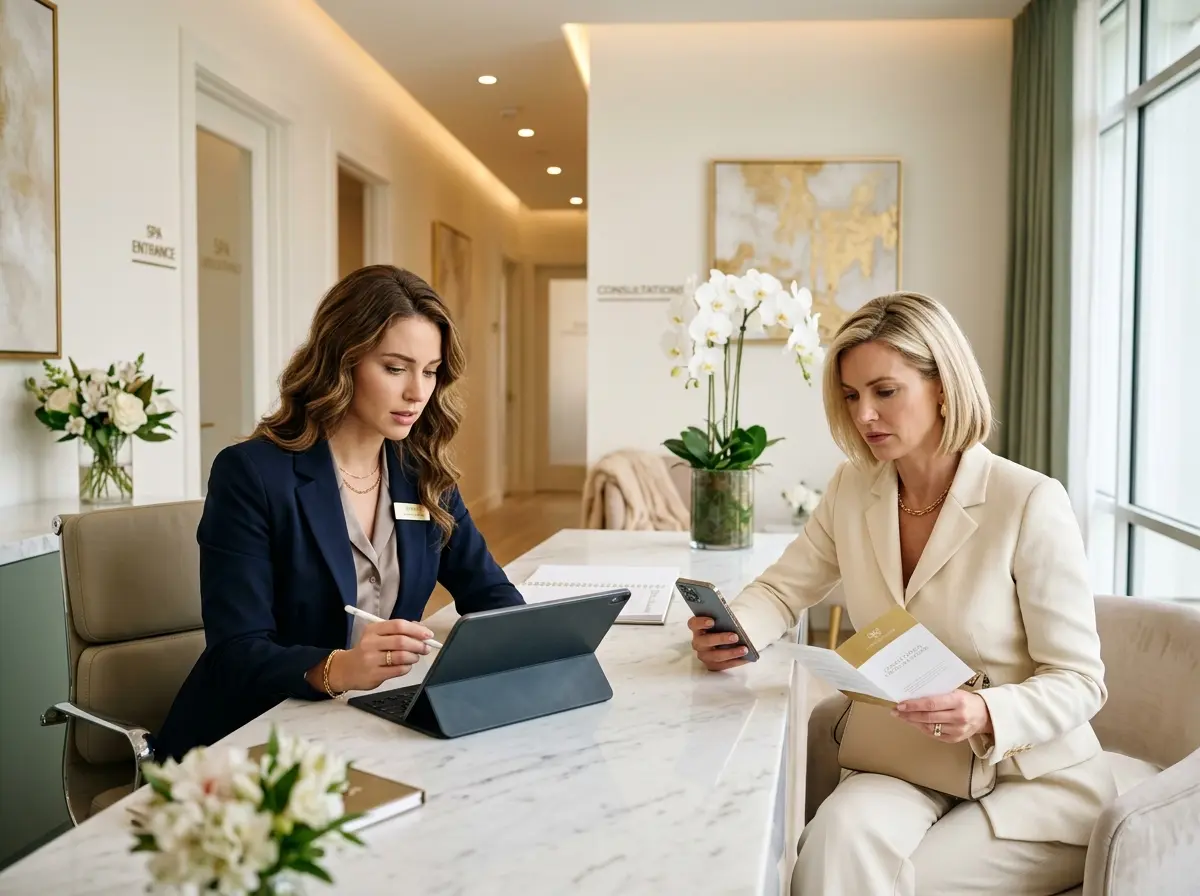
Spa clients are not buying a service — they're buying an experience, an escape, a moment of being genuinely cared for. The moment that illusion cracks, even slightly, they start mentally shopping around. Maybe the front desk was distracted during check-in. Maybe their therapist was great but the booking process was a headache. Maybe they felt rushed out the door before the bliss had a chance to wear off.
These small friction points rarely feel complaint-worthy to the client in the moment, but they accumulate. And in an industry built on the promise of relaxation and personalized care, even minor inconsistencies in the client experience carry more weight than they would in, say, a hardware store.
They Assume You Don't Care About Their Feedback
Here's the uncomfortable truth: most clients don't volunteer negative feedback because they don't believe it will change anything. If no one ever asked them how their visit went — really asked, in a way that felt genuine — they reasonably conclude that you're not particularly interested in knowing. So they say nothing, give a polite smile on the way out, and book their next appointment somewhere that made them feel heard.
A well-timed, thoughtfully worded survey is essentially you saying, "We actually want to know." That alone can shift how a client perceives your business. Even if their feedback reveals a problem, the act of asking builds trust and signals that improvement is a priority.
The Booking and Follow-Up Experience Is Broken
A relaxing 90-minute facial can be completely overshadowed by a frustrating 15-minute booking process, an unanswered phone call, or a follow-up that never came. Clients notice when the hospitality stops the moment they walk out the door. If there's no post-visit touchpoint — no thank-you, no check-in, no gentle nudge to rebook — you're essentially leaving money (and loyalty) on the table while your competitors send a thoughtful follow-up email before your client even gets home.
How Stella Can Help You Stay Connected to Your Clients
A Smarter First Impression — In Person and On the Phone
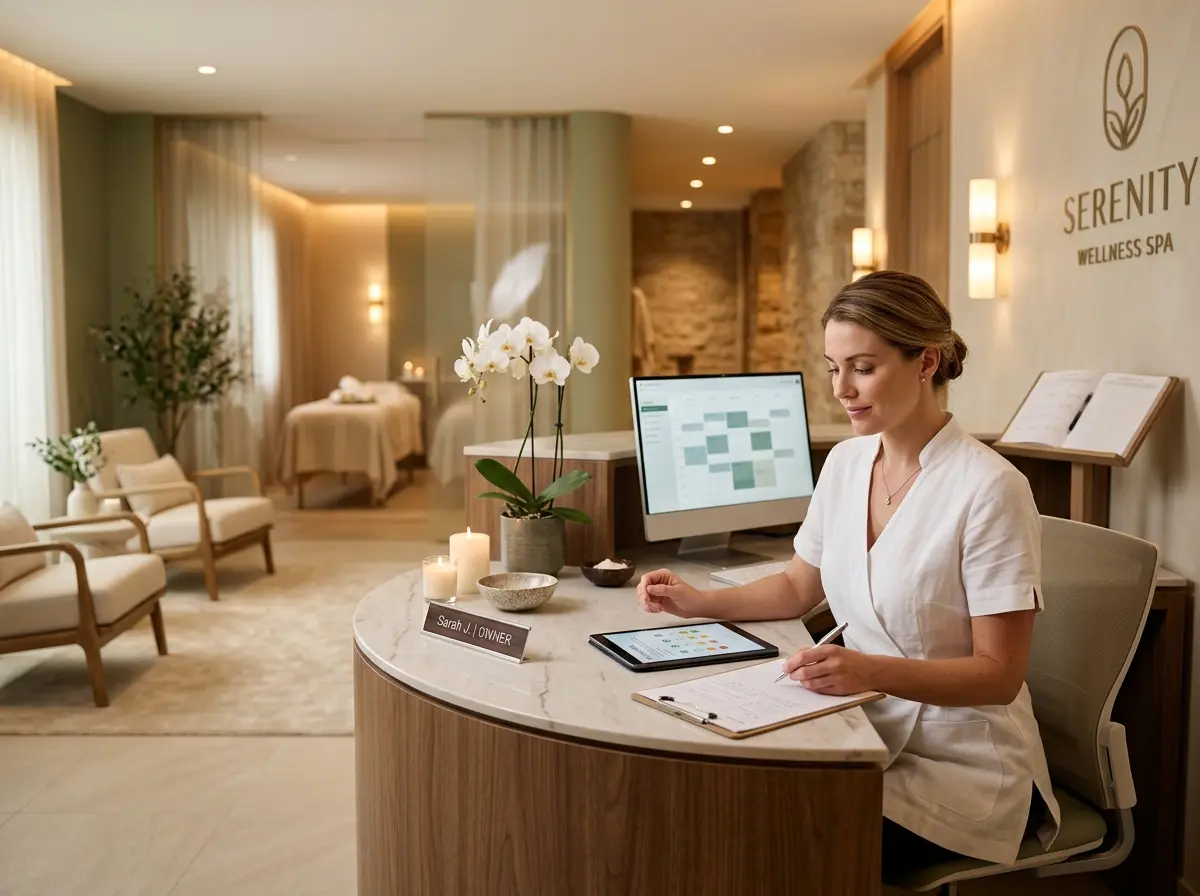
Before a survey can do its job, your clients need to have a great experience worth reflecting on — and that starts the moment they interact with your business. Stella, the AI robot employee and phone receptionist, helps spas create a consistently warm, professional first impression without the inconsistency that comes with staff turnover and busy front desks. In your lobby, Stella greets walk-in clients proactively, answers questions about services and pricing, and promotes current specials — so your human team can stay focused on delivering an exceptional treatment rather than fielding "how much is a deep tissue?" for the eleventh time that day.
On the phone side, Stella answers calls 24/7, handles appointment inquiries, and collects client information through conversational intake forms — all logged in her built-in CRM with AI-generated profiles, custom tags, and notes. That means by the time a client walks in for their first visit, your team already knows who they are and what they're looking for. Combined with a thoughtful post-visit survey strategy, this kind of seamless experience makes clients feel like guests, not strangers.
Building a Survey That Actually Gets Responses (and Results)
Keep It Ruthlessly Short
The most effective post-visit spa surveys are not comprehensive wellness assessments. They're short, focused, and respectful of your client's time — ideally no more than three to five questions. You want to know: Did they enjoy their service? Was there anything that could have been better? Would they recommend you to a friend? That's genuinely enough to identify patterns, catch problems early, and show clients you're paying attention.
Consider sending the survey via text or email within two to four hours of checkout — when the experience is still fresh and the good vibes are still lingering. Tools like Google Forms, Typeform, or your booking software's built-in feedback features make this easy to automate. The goal isn't a research paper; it's a pulse check.
Ask the One Question That Predicts Loyalty
If you're going to ask only one question, make it the Net Promoter Score question: "On a scale of 0–10, how likely are you to recommend us to a friend or family member?" It's deceptively simple, but the data it generates is remarkably powerful. Clients who score you a 9 or 10 are your promoters — your word-of-mouth engine. Clients who score you a 7 or 8 are passively satisfied but vulnerable to switching. Anyone below a 7 is quietly unhappy, and without intervention, they're not coming back.
Following up with a brief open-ended question — "Is there anything we could do to make your next visit even better?" — gives you the qualitative context to understand the numbers. You'll start seeing patterns fast: the same therapist mentioned repeatedly, recurring complaints about wait times, consistent praise for a specific service. That's gold.
Close the Loop Like You Mean It
Collecting feedback is only half the battle. The other half is actually doing something with it — and letting clients know you did. If a client mentions they felt rushed during checkout, fix the checkout process and, if you have their contact info, send a brief personal note thanking them for the feedback. If multiple clients mention the same issue, address it operationally and consider mentioning the change in your next email newsletter.
This kind of follow-through transforms a standard feedback survey into a genuine retention tool. Clients who see their feedback reflected in real changes don't just come back — they become advocates. They tell their friends that you're the spa that actually listens. In an industry where word-of-mouth is everything, that reputation is worth far more than any paid ad.
Quick Reminder About Stella
Stella is an AI robot employee and phone receptionist built for businesses like yours. She greets clients in person at your kiosk, answers phones around the clock, and helps you manage client relationships through built-in CRM tools — all for $99 a month with no upfront hardware costs. She's the kind of employee who never calls in sick, never forgets to mention the monthly facial special, and always makes a great first impression.
Stop Guessing and Start Asking
Client retention in the spa industry isn't a mystery — it's a feedback gap. Most clients who leave quietly would have stayed if someone had simply asked the right questions at the right time and done something meaningful with the answers. The tools to do this are affordable, the surveys themselves take minutes to create, and the impact on your bottom line can be significant.
Here's how to get started this week:
- Set up a three-question post-visit survey using your booking software, Google Forms, or Typeform.
- Automate the send to go out within two to four hours after checkout via text or email.
- Review responses weekly and look for patterns — not just one-off complaints.
- Act on what you find and communicate those changes to your team and, where appropriate, your clients.
- Pair your survey strategy with a great first impression — because a survey can't save an experience that was broken from the start.
Your clients want to love your spa. They want to be regulars. They want to recommend you to every stressed-out friend they have. All you have to do is create an experience worth coming back to — and then actually ask if you're succeeding. The ones who leave without a word aren't gone forever. They're just waiting for a reason to return.
Give them one.