When Life Gives You New Residents, Make Gym Members
Every year, roughly 27.5 million Americans move to a new home. A significant chunk of those people land in your city with zero gym membership, zero local loyalty, and a very real desire to feel like they belong somewhere. They're basically walking, slightly-stressed opportunities — and if you're not running a Google Ad campaign specifically targeting them, someone else's gym absolutely is.
The good news? Google Ads makes it remarkably achievable to zero in on new movers before they've even unpacked their blender or figured out which coffee shop is "their" coffee shop. The better news? This guide will walk you through exactly how to set that up, so you can stop leaving membership revenue on the table and start welcoming people to the neighborhood — your neighborhood, specifically the part with the squat racks.
Building Your New-Mover Google Ad Campaign from the Ground Up
Before you dive into the Google Ads dashboard with unbridled enthusiasm, it helps to understand the mechanics. Targeting new movers isn't a single magic button — it's a combination of audience signals, smart geographic targeting, and messaging that speaks directly to someone who is, emotionally speaking, starting fresh. Let's break it down.
Setting Up the Right Audience Targeting
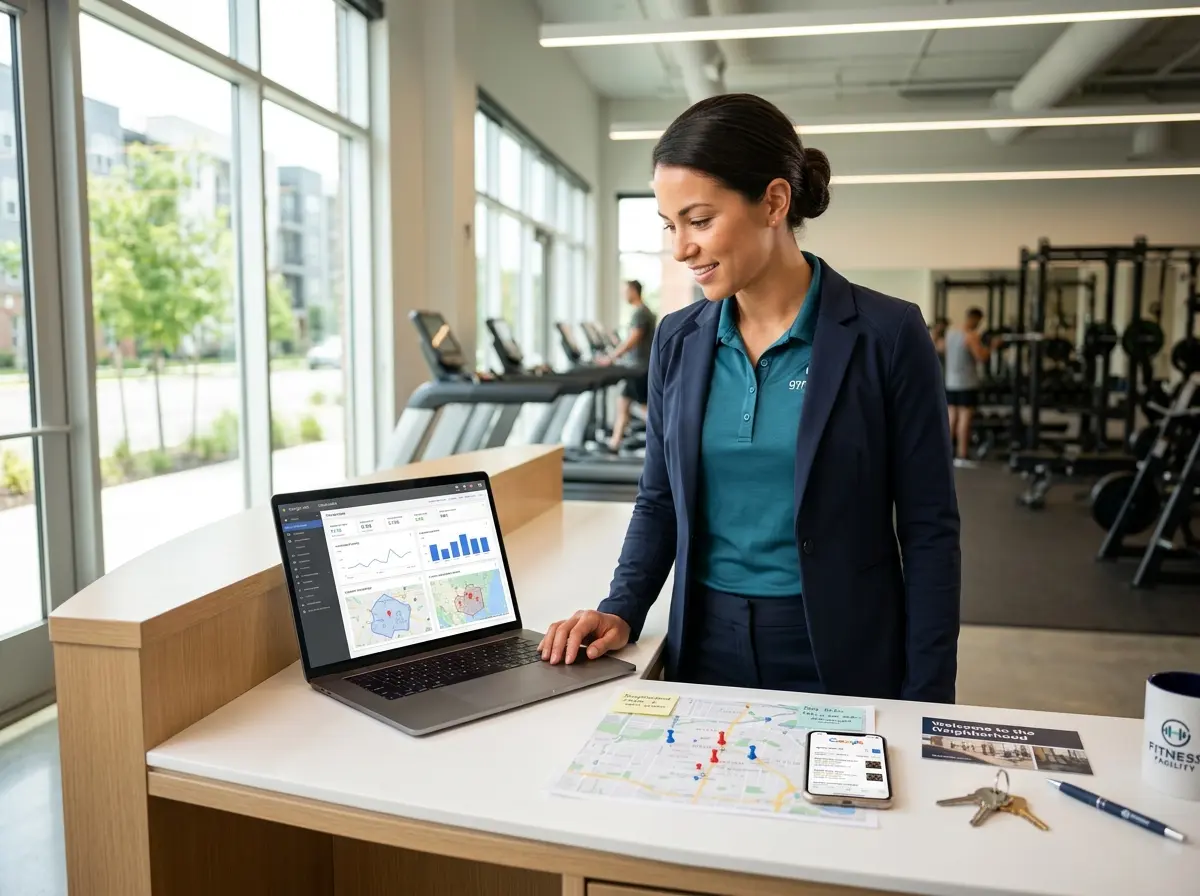
Google Ads doesn't have a segment literally labeled "people who just moved to your zip code last Tuesday," but it does offer tools that get you remarkably close. Start with Life Events targeting, available under the Audience Manager in your Google Ads account. Life Events allow you to target users who Google has identified as currently going through a major transition — including "Recently Moved" and "Planning to Move." These signals are derived from search behavior, Google Maps activity, and other data points that, frankly, Google knows about people before their own family does.
To set this up, navigate to your campaign's audience settings, click "Browse," then select Life Events > Moving. Layer this with your geographic targeting — your city, a radius around your gym, or specific zip codes where your ideal members tend to live — and you've created a meaningful filter that puts your ads in front of people who are actively in transition mode.
For best results, combine the Life Events audience with in-market audiences for health and fitness. This stacks two powerful signals: someone who recently moved AND is actively searching for fitness solutions. That overlap is where your best prospective members live.
Writing Ad Copy That Speaks to the "New in Town" Feeling
Nobody moves to a new city and thinks, "I hope I find a gym with adequate parking." They think, "I hope I find my people." Your ad copy should speak to that emotional reality, not just rattle off amenities. Phrases like "New to [City]? Your gym home is waiting." or "Just moved in? Get your first month free — welcome to the neighborhood." create an immediate sense of relevance and warmth that generic fitness ads simply don't deliver.
Use all available ad extensions — location extensions to show your address, promotion extensions to highlight a new-member offer, and call extensions so people can reach you instantly. Your headline should acknowledge the move. Your description should offer a compelling reason to act now. And your call to action should be specific: not just "Learn More," but "Claim Your Welcome Offer" or "Book Your Free Tour Today."
Structuring Your Offer for Maximum Conversion
New movers are making dozens of decisions simultaneously. To win their attention and their credit card, your offer needs to be both irresistible and low-risk. Consider a first-month-free deal, a discounted initiation fee, or a "New Neighbor" bundle that includes a free personal training session. These offers reduce the barrier to trying you out, which is the entire battle at this stage.
Make sure the landing page your ad points to mirrors the messaging exactly. If the ad says "New to town? First month free," the landing page should say exactly that — not just dump them on your generic homepage. Consistency between ad and landing page dramatically improves your conversion rate and your Quality Score, which in turn lowers your cost per click. Everybody wins, except your competitors.
Converting Clicks into Members Once They Find You
Getting someone to click your ad is half the battle. The other half is what happens when they actually try to reach you — whether that's calling your gym, walking in for a tour, or submitting a form. This is where a lot of gyms quietly lose leads they worked hard to generate.
Making Sure No Lead Slips Through the Cracks
New movers often make decisions quickly — they're in "set up my life" mode — which means if they call your gym and no one answers, they're calling the next gym on the list before your voicemail even finishes. Stella, the AI robot employee and phone receptionist, solves this problem elegantly. She answers every call 24/7, can tell callers about your current new-member promotions, collect their contact information through a conversational intake process, and even forward calls to your staff when the situation calls for it. Meanwhile, her built-in CRM automatically logs new leads with AI-generated profiles so your team has full context before they ever follow up. For a gym investing real money into Google Ads, having Stella handle the front end means none of those clicks go to waste.
Optimizing Your Campaign After Launch
Launching a Google Ads campaign without planning to optimize it is a bit like opening a gym and never cleaning the equipment. It works, technically, until it very much doesn't. The post-launch phase is where you actually start getting smart with your budget.
Monitoring the Metrics That Actually Matter
For a new-mover campaign specifically, the most important metrics to track are conversion rate (are clicks becoming leads?), cost per conversion (what are you actually paying per lead or sign-up?), and search impression share (are you showing up as often as you should be in your target area?). Check these weekly for the first month, then settle into bi-weekly reviews once you've established a baseline.
If your click-through rate is high but conversions are low, the problem is likely your landing page or your offer. If your CTR is low, revisit your headlines and ad relevance. Google's built-in recommendations can be helpful, though treat them with mild skepticism — Google's suggestions often conveniently involve spending more money.
A/B Testing Your Way to Better Results
Run at least two versions of your ads simultaneously with different headlines or offers. Give each version enough time to gather statistically meaningful data — generally at least 100–200 clicks — before declaring a winner. Over time, these incremental improvements compound significantly. A 15% improvement in conversion rate doesn't sound thrilling until you realize it means 15% more members from the same ad spend.
Also test your landing pages. Try a version with a video tour of the gym versus one with a simple sign-up form. Test a "First Month Free" offer against a "No Initiation Fee" offer. New movers respond to different value propositions depending on where they are in their decision process, and data will tell you far more than assumptions will.
Seasonal Adjustments and Budget Scaling
Moving activity peaks in late spring and summer — roughly May through August — when leases turn over and families relocate between school years. This is your window to increase your budget and be more aggressive with bids. During slower moving months, you can pull back slightly and use retargeting campaigns to re-engage anyone who visited your landing page but didn't convert. Retargeting new movers who already showed interest is one of the most cost-effective tactics in your digital marketing toolkit, and it's criminally underused by local gyms.
Quick Reminder About Stella
Stella is an AI robot employee and phone receptionist built for businesses exactly like yours — she greets walk-ins at your gym, answers phone calls around the clock, promotes your current offers, and collects lead information so nothing falls through the cracks. At $99/month with no upfront hardware costs, she's a practical addition for any gym serious about converting ad spend into actual memberships.
Your Next Steps Start Today
Here's the honest truth: new movers are one of the most valuable and underserved audiences available to local gyms. They have no existing loyalty, they're actively building new habits, and they're making decisions fast. A well-built Google Ad campaign targeting them — with the right Life Events audiences, compelling copy, a strong offer, and a landing page that actually converts — can meaningfully shift your membership numbers without requiring a massive budget.
Start by heading into your Google Ads account and setting up a new Search campaign with Life Events targeting for "Recently Moved," layered with in-market health and fitness audiences and tight geographic targeting around your gym. Write two ad variations with emotionally resonant, new-mover-specific copy. Build a dedicated landing page that matches your offer. Set a modest initial budget, track your metrics weekly, and optimize based on what the data actually tells you — not what you hope is happening.
Then make sure that when those leads start calling, someone — or something — is there to answer. Because the best ad campaign in the world doesn't mean much if the phone just rings.